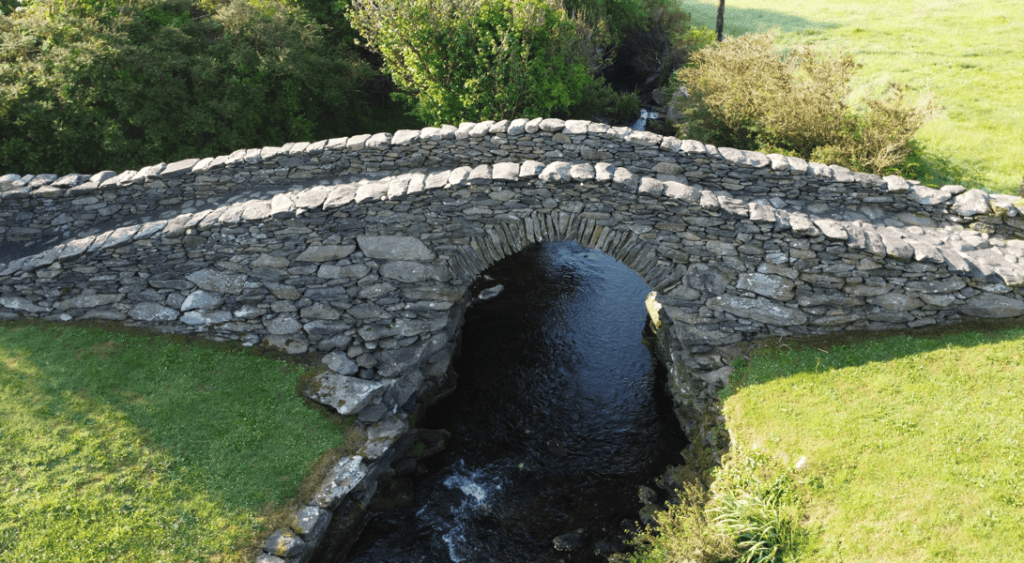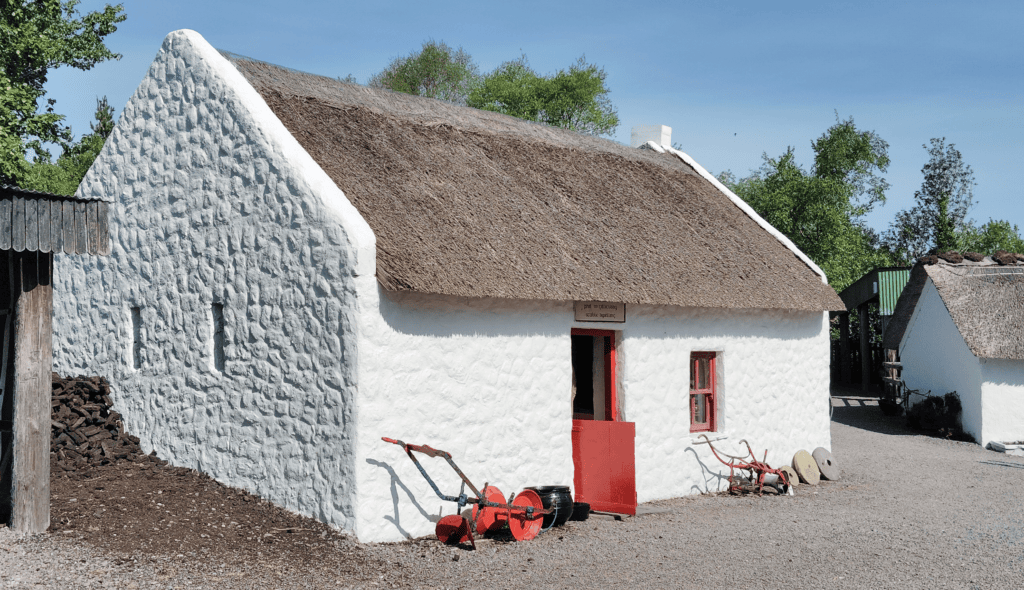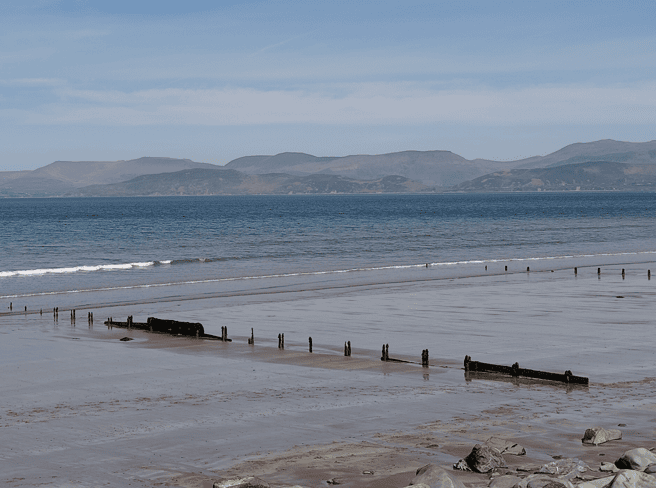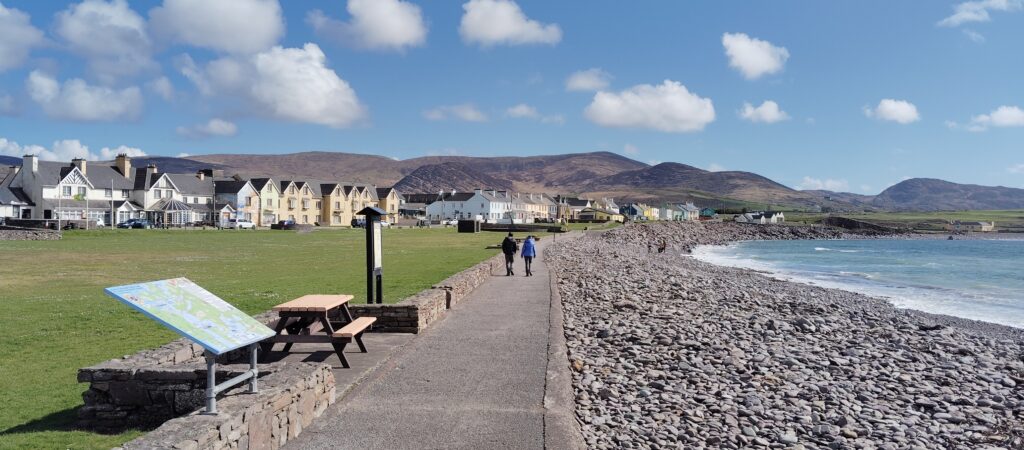
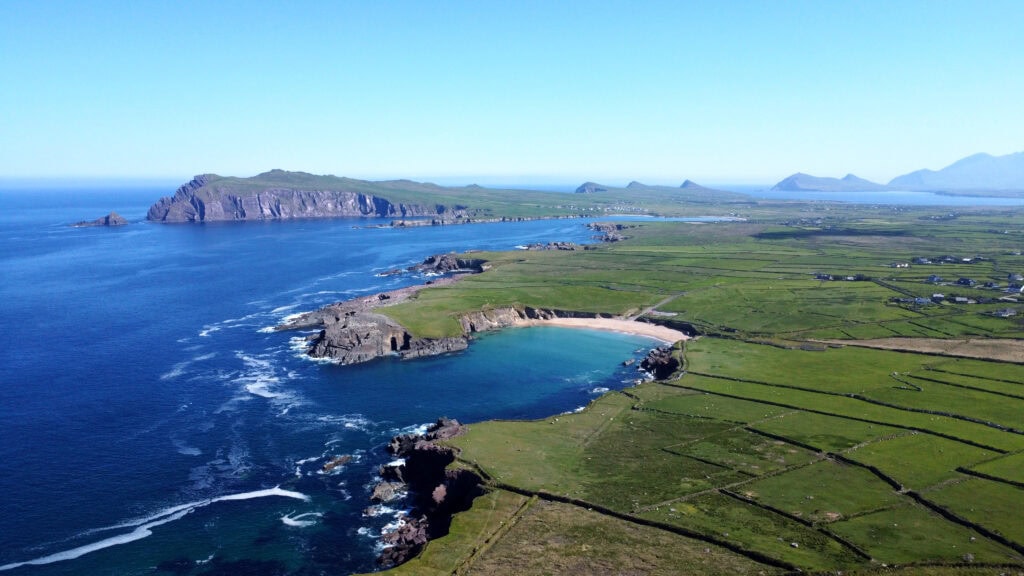
Slea Head Drive is the circular coastal route around the western end of the Dingle Peninsula, beginning and ending in Dingle and following the R559 through Ventry, Fahan, Slea Head, Dún Chaoin and Ballyferriter.
For visitors driving the route themselves, the most important advice is simple:
Drive clockwise from Dingle through Ventry and follow the local Slea Head signs rather than allowing your sat-nav to choose shortcuts.
The roads remain two-way for local traffic, but visitors are asked to follow the clockwise route to reduce congestion on the narrowest sections.
You can complete Slea Head in a few hours, but I recommend allowing at least half a day. If you want to visit archaeological sites, stop for lunch or spend proper time at the Blasket Centre, the route can easily fill most of a day.
What Is Slea Head Drive?
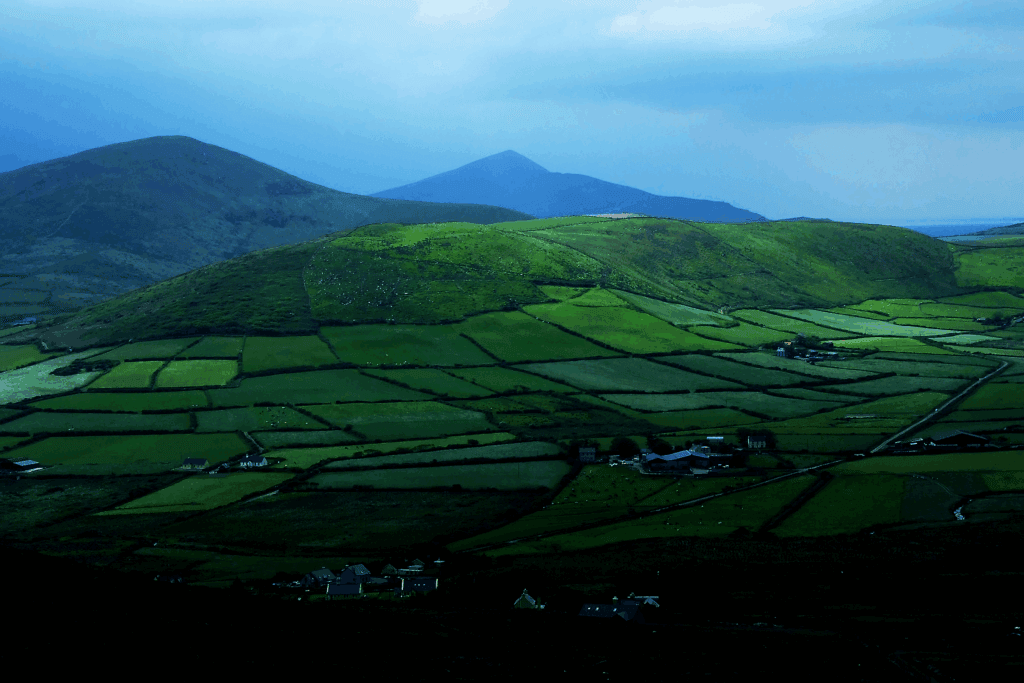
Slea Head Drive follows the western coastline of the Dingle Peninsula through some of the most dramatic scenery in County Kerry.
The route combines:
- Atlantic coastline
- Beaches
- Blasket Island views
- Working farms
- Irish-speaking communities
- Early medieval archaeology
- Historic churches
- Small villages
- Narrow coastal roads
The important thing is not to think of it simply as a scenic road.
People have lived, farmed, worshipped and travelled through this landscape for centuries. Understanding those layers makes the drive considerably more interesting.
Is Slea Head Drive the Same as the Dingle Peninsula?
No.
Slea Head Drive is one part of the Dingle Peninsula.
It covers the western loop from Dingle through Ventry, Fahan, Slea Head, Dún Chaoin and Ballyferriter before returning towards Dingle.
The wider Dingle Peninsula also includes places such as:
- Conor Pass
- Brandon
- Cloghane
- Castlegregory
- Inch Beach
- Minard Castle
- Annascaul
If you have several days in Dingle, do not try to force all of these into the same drive. Give Slea Head the time it deserves.
Which Direction Should You Drive Slea Head?
Clockwise.
From Dingle, follow the R559 towards Ventry / Ceann Trá.
Local visitor guidance asks drivers to travel clockwise because this helps manage traffic on roads that become extremely narrow in places. Tour coaches and most visitor traffic follow the same direction.
However, this does not mean the road itself is completely one-way. Local residents, farmers and other traffic may still approach from the opposite direction.
Always expect another vehicle around a bend.
Important: Follow the Road Signs, Not Sat-Nav Shortcuts
This is one of the most important pieces of advice for driving Slea Head.
Once you leave Dingle, follow the signs for Slea Head Drive / Slí Cheann Sléibhe and the Wild Atlantic Way.
Do not allow Google Maps or another navigation app to reroute you onto narrow local roads simply because it believes they are faster. Some roads are intended primarily for local access and are unsuitable for large volumes of visitor traffic.
In particular, avoid treating An Clasach between Ard a’Bhóthair and Dún Chaoin as a visitor shortcut.
Stay on the signed route. It may add a few minutes, but it can save considerably more frustration.
Slea Head Drive: Stop-by-Stop Route
The following order assumes you are travelling clockwise from Dingle.
You do not need to stop at every location. Think of this as a menu rather than a checklist.
1. Dingle
Start in Dingle town.
Before leaving, make sure you have:
- Enough fuel
- Water
- Suitable clothing
- Any attraction bookings
- Enough time to avoid rushing back before dark
If you need fuel, use Dingle rather than assuming you will find another convenient station around the western loop.
From town, take the R559 towards Ventry / Ceann Trá.
2. Ventry / Ceann Trá
Ventry is the first main village west of Dingle.
Its Irish name is Ceann Trá, and the area provides a gentle introduction to the western peninsula before the road becomes narrower and more exposed.
The large sandy Ventry Beach is the main reason many visitors stop.
If you are travelling with children or want time beside the sea rather than a full day of archaeological sites, Ventry is a good place to slow the itinerary down.
You do not need to spend long here if your priority is Slea Head itself.
3. Fahan
Beyond Ventry you enter the Fahan area beneath Mount Eagle.
This is one of the most archaeologically interesting parts of the route.
Dry-stone clocháns, commonly called beehive huts, survive in the surrounding landscape, providing evidence of early medieval settlement.
There are several visitor sites in this area, so do not assume every cluster of stone structures represents the same monument or period.
If archaeology interests you, choose a site and give it enough time to understand what you are seeing.
Fahan is also home to Dingle Sheepdogs, where seasonal demonstrations show working sheepdogs gathering sheep using commands in Irish.
For families, this can be one of the most engaging stops on the entire route.
4. Dún Beag Promontory Fort
A short distance farther west is Dún Beag Promontory Fort, an important fortified site occupying a defensive position above the Atlantic.
This is a very different type of site from the Fahan clocháns.
Rather than viewing everything along Slea Head as generically “ancient”, notice the differences between:
- Defended settlement
- Domestic structures
- Religious sites
- Later farming landscapes
Dún Beag is worthwhile if you have a strong interest in archaeology, but if you only have three hours for the entire loop, choose your historic stops carefully.
5. The Road Towards Slea Head
From Fahan, the road begins to reveal increasingly open Atlantic views.
This is also where driving demands more attention. The road narrows and visibility around bends becomes limited.
Cyclists, walkers, farm traffic and animals may all be using the same space.
Take your time. There is no prize for completing Slea Head quickly.
6. Slea Head
At Slea Head, the western peninsula opens towards the Atlantic and the Blasket Islands.
On a clear day, this is one of the strongest sections of the drive.
The important thing here is not to stop wherever you happen to see a good photograph. Use proper pull-ins and parking areas.
Do not block the road or create a dangerous situation on a blind bend because the view suddenly appears.
If the weather is clear, spend a few minutes looking west and orientating yourself towards the islands. You will understand them much better when you reach Dún Chaoin later in the route.
7. Coumeenoole Beach
Coumeenoole Beach is one of the most worthwhile scenic stops on Slea Head.
The beach lies beneath steep cliffs with views towards the Blasket Islands and the Atlantic.
It is particularly useful because you can get out of the car and experience the coastline at sea level rather than viewing everything through a windscreen.
Allow at least a short walk.
Treat the water with caution. This is an exposed Atlantic beach, and conditions can change rapidly.
Do not assume that a beautiful beach is automatically a safe swimming beach.
8. Dún Chaoin / Dunquin
Continue towards Dún Chaoin, usually referred to in English as Dunquin.
This is one of the most culturally important parts of Slea Head.
Dún Chaoin lies within the Corca Dhuibhne Gaeltacht, and Irish remains part of the community’s linguistic landscape.
It is also the mainland place most closely associated with the Blasket Islands.
Dunquin Pier
The famous winding road towards Dunquin Pier is one of the most photographed views on the peninsula.
Remember that it is a working pier and access point rather than simply a photo location.
Parking and road space are limited. Do not drive where access is restricted or obstruct local operations.
The best experience often comes from understanding the landscape rather than trying to recreate a photograph you have already seen online.
9. The Blasket Centre
If you have enough time, the Blasket Centre at Dún Chaoin is one of the strongest cultural stops on the entire route.
It tells the story of the Irish-speaking communities who lived on the Blasket Islands and produced an extraordinary body of autobiographical literature.
The Centre deserves around 90 minutes if you want to explore it properly. That means it should not be treated as a five-minute stop in an already overloaded itinerary.
If you visit, reduce the number of archaeological stops elsewhere.
The Blasket Centre is particularly worthwhile if you want to understand the people behind the landscape rather than simply photograph the islands. You can also learn more about the history and culture of the Blasket Islands before your visit.
10. Ballyferriter / Baile an Fheirtéaraigh
From Dún Chaoin, continue towards Ballyferriter, or Baile an Fheirtéaraigh.
This is one of the principal villages of the Corca Dhuibhne Gaeltacht.
It is also a sensible place to pause for food or a break, depending on opening times and season.
By this stage you have passed the most exposed western section of Slea Head. The route now gradually changes character as you travel along the northern side of the western peninsula.
11. Clogher
The landscape around Clogher opens again towards the Atlantic.
Nearby Clogher Strand offers a very different coastline from Coumeenoole, while Clogher Head provides another perspective on this exposed northern shore.
This area is also home to Louis Mulcahy Pottery, where pottery has been made on the peninsula since the 1970s.
If Irish craft interests you, it can be an excellent cultural stop.
If your day is already running late, continue.
One of the biggest mistakes on Slea Head is assuming you must visit every worthwhile place simply because it exists.
12. Gallarus Oratory
Gallarus Oratory is one of the best-known historic structures on the Dingle Peninsula.
Its distinctive dry-stone construction has made it one of the peninsula’s most recognisable buildings.
If you are interested in early Christian history, it is worth stopping.
But again, think about your priorities. If you have already spent substantial time at Dún Beag, Fahan and the Blasket Centre, you may prefer to leave Gallarus for another day rather than turning the afternoon into a race.
13. Kilmalkedar
For visitors with a serious interest in history, I often prefer Kilmalkedar Church as one of the final major heritage stops.
The site includes the remains of a medieval church within a much broader religious landscape associated with pilgrimage and earlier Christian activity.
It rewards visitors who take time to examine the site rather than simply photograph one structure.
If your interest is history rather than collecting famous landmarks, Kilmalkedar is one of the strongest places to finish the cultural side of the loop.
14. Return to Dingle
From the northern side of the western peninsula, continue back towards Dingle.
By this stage, the landscape gradually becomes more settled and the road less dramatic.
Do not add another major attraction simply because you return earlier than expected.
Use the remaining time in Dingle. Walk the harbour. Have dinner. Listen to traditional music.
Slea Head works much better as part of a full Dingle experience than as an isolated driving achievement.
How Long Does Slea Head Drive Take?
There is no single answer. It depends entirely on how you travel.
Quick Scenic Loop: 3–4 Hours
This is suitable if you primarily want:
- Scenery
- Short photo stops
- Coumeenoole Beach
- Dún Chaoin
- One historic site
You will need to be selective.
Proper First Visit: 4–6 Hours
This is what I recommend for most first-time visitors.
It allows time for:
- Coastal viewpoints
- Coumeenoole Beach
- Dún Chaoin
- Lunch or coffee
- Two or three historic or cultural stops
That is enough to experience the route without turning the day into a race.
Full Exploration: 6–8 Hours
Allow most of the day if you want to include:
- The Blasket Centre
- Several archaeological sites
- Lunch
- Craft or farm experiences
- Longer walks or photography stops
This is much closer to how I would explore Slea Head if you genuinely want to understand the western peninsula.
Best Slea Head Stops If You Only Have Three Hours
If time is genuinely limited, prioritise the landscape.
I would choose:
- Slea Head viewpoints
- Coumeenoole Beach
- Dún Chaoin and the Blasket views
- One historical or cultural stop
Do not try to include Dún Beag, the Fahan clocháns, sheepdogs, the Blasket Centre, Gallarus and Kilmalkedar inside three hours.
You will spend more time parking and watching the clock than experiencing the peninsula.
Best Slea Head Stops for History Lovers
If history is your main interest, give the day more time.
A strong sequence is:
- Fahan Clocháns
- Dún Beag
- Blasket Centre
- Gallarus Oratory
- Kilmalkedar
These sites represent different aspects and periods of human activity.
That distinction matters. Slea Head is not simply covered in “ancient ruins”.
It preserves evidence of settlement, defence, religion, farming and community across many centuries. The wider history of the Dingle Peninsula provides useful context for these different layers.
Best Slea Head Stops for Families
For families, reduce the number of ruins.
A good combination might be:
- Ventry Beach
- Dingle Sheepdogs
- One archaeological site
- Coumeenoole Beach
- Dún Chaoin
- Plenty of time for food and breaks
Depending on the children’s ages and interests, the Blasket Centre can also work very well.
The best family itinerary is rarely the one with the highest number of stops.
Driving Slea Head Safely
Slea Head is completely manageable for confident drivers, but it demands more attention than an ordinary main road.
Drive on the Left
Visitors from countries where traffic drives on the right need to pay particular attention after stops and at junctions.
Travel Clockwise
Follow the visitor flow from Dingle through Ventry.
Expect Oncoming Traffic
Clockwise visitor guidance does not make the road physically one-way. Residents and local traffic may approach from either direction.
Slow Down Before Bends
Do not wait until you can see an approaching vehicle. Assume something may be around the corner.
Use Lay-bys Properly
If traffic is building behind you and a safe lay-by appears, allow faster or local traffic to pass.
Give Cyclists and Walkers Space
The route is shared. Do not squeeze past because another vehicle is approaching. Wait until it is safe.
Expect Animals
Sheep and cattle may be on or beside the road. Horses, farm vehicles and working agricultural traffic are also part of everyday life here.
Do Not Stop in the Carriageway for Photographs
Even for thirty seconds. Find a proper pull-in. The view will still be there.
Roads and Shortcuts to Avoid
Do not treat every road visible on Google Maps as a suitable visitor route.
Some are narrow local-access roads serving farms and houses.
The most important rule is:
Stay on the signed Slea Head route.
In particular, do not use An Clasach as a shortcut between Ard a’Bhóthair and Dún Chaoin.
Follow local signs rather than sat-nav optimisation. This is better for you and considerably better for the people who live here.
Can You Drive Slea Head in a Campervan?
Yes, but the experience requires more planning.
The narrowest sections are significantly more challenging in a wide or long vehicle.
If travelling in a campervan or motorhome:
- Drive clockwise
- Do not travel in a convoy
- Use lay-bys
- Give local traffic room
- Expect summer bottlenecks
- Avoid navigation shortcuts
- Understand the dimensions of your vehicle
If you are uncomfortable manoeuvring on narrow roads with stone walls or steep drops nearby, Slea Head may not be the ideal place to learn.
A smaller vehicle or guided experience will be more relaxing.
Parking on Slea Head Drive
Parking varies significantly from one stop to another.
Some attractions have formal car parks. Others rely on small designated roadside areas.
Do not assume that a wide-looking section of road is public parking.
Particularly around popular photo locations:
- Keep gateways clear
- Do not block farm access
- Do not park on bends
- Do not leave the vehicle obstructing traffic
- Respect private property
During July and August, allow extra time for parking at the busiest stops.
Food, Toilets and Breaks
Do not start Slea Head expecting cafés and toilets at every viewpoint.
Dingle is the safest place to:
- Fuel the car
- Use facilities
- Buy water
- Organise food
Around the loop, facilities are available at selected villages and visitor attractions, including places such as Dún Chaoin and Ballyferriter, depending on season and opening times.
If travelling outside summer, check ahead. Seasonal businesses may operate reduced hours.
What Is the Best Time of Day to Drive Slea Head?
If you want quieter roads, I recommend leaving Dingle earlier in the morning.
This gives you:
- More time
- Less pressure at stops
- Easier parking
- Greater flexibility if the weather changes
Late afternoon can produce attractive light, but remember that attractions close and daylight becomes a factor outside summer.
For most first-time visitors, good visibility and enough time matter more than chasing perfect photography light.
What If the Weather Is Poor?
The Dingle Peninsula can change very quickly.
Light showers are not a reason to cancel Slea Head. Heavy rain and low cloud are more important because they can obscure the Blasket Islands and long coastal views.
If you are staying in Dingle for several days, save Slea Head for the clearest forecast.
Use poorer-weather periods for:
- Dingle town
- Dingle Oceanworld Aquarium
- The Blasket Centre
- Cafés
- Indoor attractions
A wet morning can also clear dramatically later in the day. Stay flexible.
Should You Combine Slea Head and Conor Pass?
You can, but if you have more than one day in Dingle, I generally would not.
Slea Head easily deserves half a day or longer.
Conor Pass opens a completely different part of the peninsula towards Brandon Bay and the northern coastline.
Treating them separately gives you more time to stop and understand both landscapes.
Trying to combine everything into a single day often creates a lot of driving and very little actual visiting.
Self-Drive or Guided Slea Head Tour?
Both can work well.
The better choice depends on what you want from the day.
Self-drive makes sense if:
- You are comfortable driving narrow Irish roads
- You want complete independence
- You enjoy planning your own stops
- You have plenty of time
A guided tour makes sense if:
- You would prefer not to drive
- You want somebody else to handle parking and navigation
- You are particularly interested in local history and stories
- You have limited time and want a more structured route
If you choose a guided experience, look for one that allows time to get out of the vehicle and explore.
Slea Head should never feel like scenery viewed entirely through glass.
Steve’s Peninsula Tours offers a guided Slea Head Drive tour for visitors who want to experience the route without managing its narrow roads, navigation and parking themselves.
What Makes Slea Head Worth Driving?
The scenery is the obvious answer, but it is not the complete one.
Along a relatively short section of the Dingle Peninsula you move through:
- Working farmland
- Early medieval settlement
- Fortified sites
- Historic churches
- Irish-speaking communities
- The landscape of the Blasket Islanders
- Beaches
- Mountains
- Atlantic coastline
That concentration is what makes the route special.
The cliffs and islands attract attention first. The human landscape is what gives the drive depth.
Continue Exploring the Dingle Peninsula
- Compare the route with other highlights in this guide to the best things to do in Dingle.
- Plan a longer visit with this three-day Dingle Peninsula itinerary.
- Discover more scenic locations in the guide to Dingle Peninsula viewpoints.
- Decide when to travel with the guide to the best time to visit Dingle.
- Learn what can realistically fit into a perfect day in Dingle.
Frequently Asked Questions About Slea Head Drive
Where does Slea Head Drive start?
Most visitors start in Dingle and follow the R559 west towards Ventry / Ceann Trá.
Which direction should you drive Slea Head?
Visitors should travel clockwise from Dingle through Ventry and follow the signed Slea Head route.
Is Slea Head Drive one-way?
Not completely. Visitors are asked to follow a clockwise traffic system, but local residents and other traffic may still approach from the opposite direction.
Should I follow Google Maps on Slea Head?
Use navigation to orient yourself, but follow local Slea Head and Wild Atlantic Way road signs rather than accepting shortcuts onto narrow local roads.
How long does Slea Head Drive take?
Allow around three to four hours for a quick scenic loop, four to six hours for a proper first visit and up to a full day if including the Blasket Centre, lunch and several heritage sites.
What are the best stops on Slea Head Drive?
For a first visit, prioritise Slea Head itself, Coumeenoole Beach, Dún Chaoin and the Blasket views. Add historical sites according to your interests and available time.
Can you drive Slea Head in a campervan?
Yes, but the narrow roads require confidence and patience. Travel clockwise, use lay-bys and avoid sat-nav shortcuts.
Is Slea Head difficult to drive?
For drivers accustomed to narrow rural roads, it is manageable. Visitors unfamiliar with Irish roads may find some sections stressful, particularly during busy summer periods.
Is Slea Head Drive suitable for children?
Yes. Families often do best by combining beaches, sheepdogs and a small number of historical stops rather than attempting every attraction.
Is the Blasket Centre on Slea Head Drive?
Yes. The Blasket Centre is at Dún Chaoin and fits naturally into the route, but allow around 90 minutes if you want to visit it properly.
Is Gallarus Oratory on Slea Head Drive?
Gallarus lies on the northern side of the western peninsula and can be included naturally before returning towards Dingle.
Is Kilmalkedar worth adding?
Yes, particularly for visitors interested in history and archaeology. It is one of the strongest heritage stops towards the end of the clockwise loop.
Should I drive Slea Head if it is raining?
Light rain is normal and does not necessarily spoil the route. Low cloud and heavy rain can significantly reduce visibility, so use a clearer day if you have flexibility.
Can I drive Slea Head and Conor Pass on the same day?
Yes, but if you have several days in Dingle, I recommend treating them separately. Each route deserves enough time for stops, walks and changes in weather without turning the day into a rushed driving exercise.