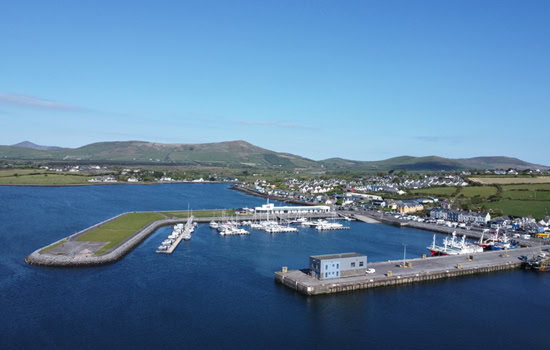
Dingle is much more than a colourful harbour town on Ireland’s west coast. It is the main base for exploring the Dingle Peninsula, where Atlantic scenery, early Christian sites, Irish-speaking communities, beaches, mountain roads, traditional music and a strong local food culture all sit within a relatively compact area.
The difficulty is rarely finding things to do in Dingle. It is deciding what to leave out. Visitors often underestimate the peninsula and try to combine Dingle Town, Slea Head Drive, Conor Pass, Inch Beach and several historical sites in a single rushed day. A more rewarding approach is to choose a manageable route, leave time for unplanned stops and remember that Dingle’s evenings are part of the experience too.
This guide covers the strongest things to do in Dingle Town and across the surrounding peninsula, including scenic drives, historical sites, beaches, cultural experiences, family activities and practical suggestions for planning your time.
Explore Dingle Town
Begin by spending some time in Dingle Town itself. The harbour, marina, waterfront and compact network of streets can all be explored on foot, making this one of the easiest parts of the peninsula to enjoy without a car.
Dingle remains a working harbour town rather than a purpose-built resort. Fishing boats, tour boats and visiting vessels share the harbour, while the streets behind the waterfront contain independent shops, cafés, restaurants, galleries and traditional pubs.
A relaxed walk through town helps you understand its layout before planning anything more ambitious. Follow the waterfront, explore Green Street and Main Street, and take time to look beyond the busiest visitor-facing businesses. Dingle’s character is found as much in its smaller shops, conversations and harbour activity as in its named attractions.
If the weather changes, the town is also one of the easiest places to adapt your plans. Cafés, shops, food experiences and indoor attractions can replace an exposed viewpoint until visibility improves.
Drive Slea Head
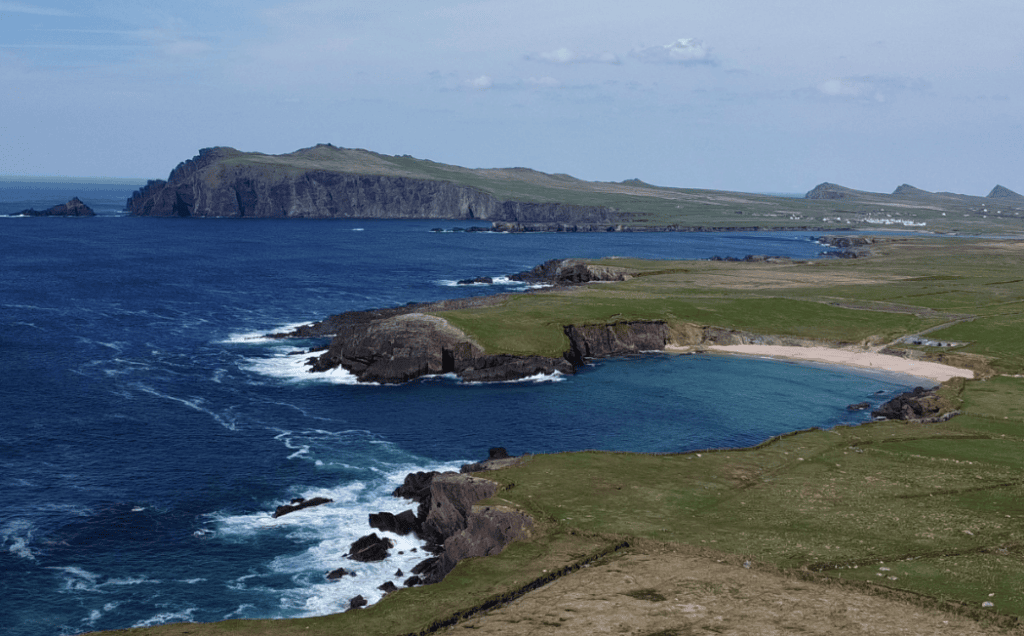
Slea Head Drive is the peninsula’s best-known touring route and one of the principal reasons visitors stay in Dingle. The circular journey follows the western coastline through Ventry, Fahan, Dún Chaoin and Ballyferriter before returning towards Dingle.
What makes Slea Head worthwhile is not one single viewpoint. It is the way the route connects Atlantic scenery with archaeology, farming, Irish-language culture and the history of communities that lived between the mountains and the sea.
The road is narrow in places, and progress is naturally slower than its distance might suggest. Allow space for cyclists, walkers, local residents, tour vehicles and agricultural traffic. Driving slowly is not an inconvenience here; it is part of experiencing the route properly.
Whenever I bring visitors around Slea Head, I find that the day works best when we select the stops that genuinely suit their interests. Trying to stop at every viewpoint and attraction can turn an extraordinary landscape into a checklist.
Stop at Ventry Beach
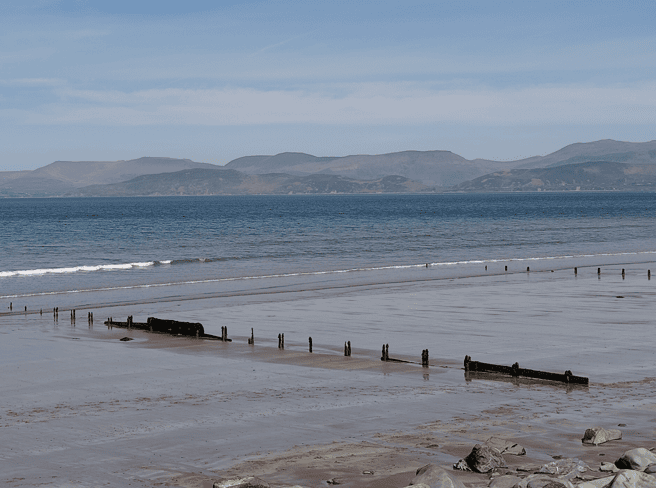
Ventry Beach lies west of Dingle and makes a natural first stop on the way towards Slea Head. Its long, sheltered sweep of sand feels very different from the exposed cliffs and compact coves found further around the peninsula.
The beach works well for a short walk, particularly before spending more time in the car. It also helps visitors understand the geography of Dingle Bay and the changing character of the coastline as the route continues west.
Conditions can vary with the tide and weather. Treat it as a natural coastal environment, supervise children appropriately and avoid assuming that a calm appearance means every water activity is suitable.
Discover the Fahan Archaeological Landscape
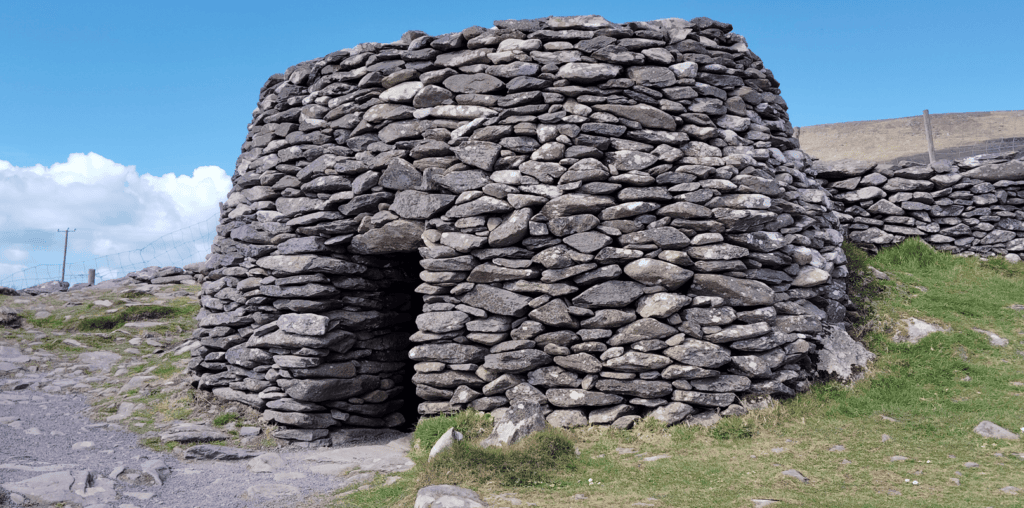
The Fahan area contains some of the peninsula’s most recognisable archaeological remains. This section of the Slea Head route was once densely settled, and its stone structures provide evidence of how generations adapted to a demanding coastal landscape.
The Fahan Beehive Huts are among the best-known examples. These drystone structures are often described by their distinctive corbelled form, created by gradually bringing courses of stone inwards until the roof could be closed.
Nearby Dún Beag Promontory Fort occupies a dramatic coastal position. Continued erosion has affected the site, and access conditions must be respected. Visitors should follow current signs and remain within designated areas rather than approaching unsafe cliff edges.
These sites are more valuable when understood as parts of a wider inhabited landscape rather than isolated stone monuments. Fields, defensive positions, domestic structures and access to the sea all contributed to how people lived here.
Walk at Coumeenoole Beach
Coumeenoole Beach sits beneath steep coastal slopes near Slea Head. The view from above is one of the most recognisable on the peninsula, with the beach enclosed by dark headlands and the Atlantic stretching beyond it.
If conditions and access allow, the walk down gives a very different perspective from the roadside viewpoint. The return climb is more demanding than the descent initially suggests, so allow enough time and wear suitable footwear.
The sea at Coumeenoole can be powerful. It is a place for appreciating the coast rather than assuming it is suitable for swimming. Tides, waves and Atlantic conditions must always be treated seriously.
Visit Dún Chaoin and Dunquin Pier
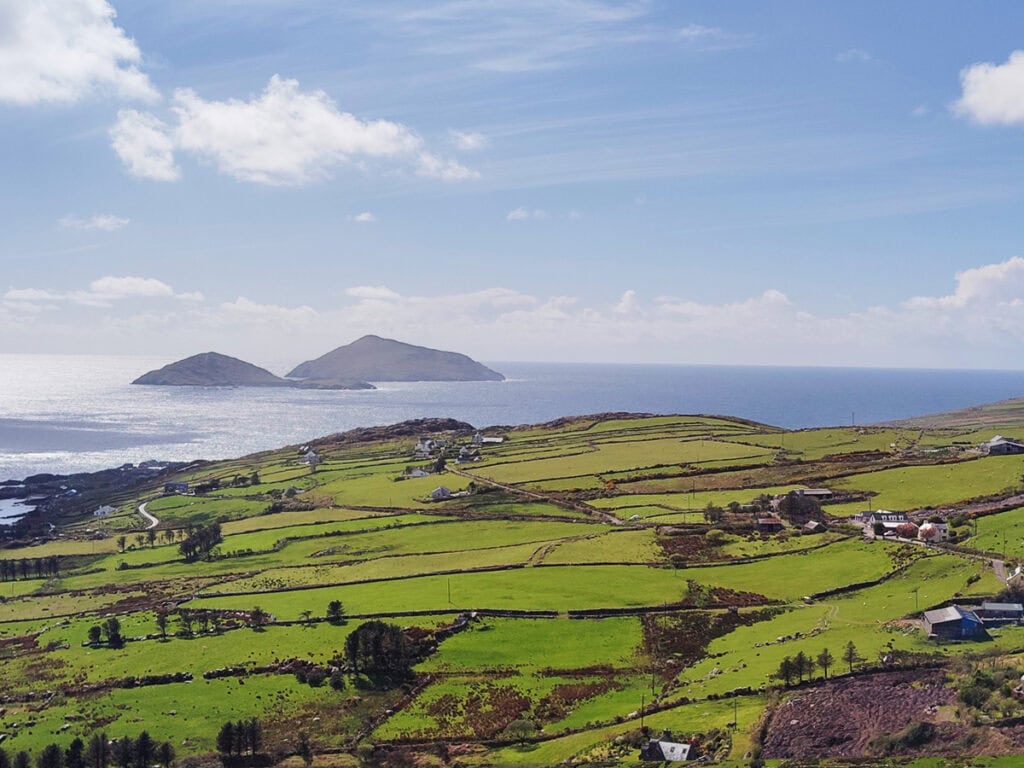
Dún Chaoin is one of the most culturally important parts of the western peninsula. The parish lies within the Corca Dhuibhne Gaeltacht and faces the Blasket Islands across the Atlantic.
Dunquin Pier is reached by a steep, winding pedestrian path descending towards the water. The view has become one of the peninsula’s most photographed scenes, but the pier is more than a photographic location. It represents the longstanding connection between the mainland and the islands offshore.
Visitors should not drive down the pedestrian path. Parking is limited in the area, and particular care is needed not to obstruct the road, entrances or local access.
The climb back from the pier can be tiring, especially in warm, wet or windy conditions. Visitors with limited mobility may prefer to appreciate the wider landscape from the upper area without descending.
Learn About the Blasket Islands
The Blasket Centre in Dún Chaoin tells the story of the Irish-speaking community that lived on Great Blasket Island until the permanent evacuation of 1953.
The islanders developed an exceptional literary tradition. Writers including Tomás Ó Criomhthain, Peig Sayers and Muiris Ó Súilleabháin recorded island life from within the community, preserving details of language, work, family life, fishing, emigration and Atlantic isolation.
The centre gives meaning to the islands visible outside. Rather than seeing anonymous landforms offshore, visitors begin to recognise a cultural landscape connected with real families and a remarkable body of Irish-language literature.
Great Blasket can also be visited seasonally by boat when sea and weather conditions allow. Crossings should never be treated as guaranteed, and current schedules must be checked with the relevant operator. Even without landing, the history and culture of the Blasket Islands can be explored through the centre and mainland viewpoints.
Visit Gallarus Oratory
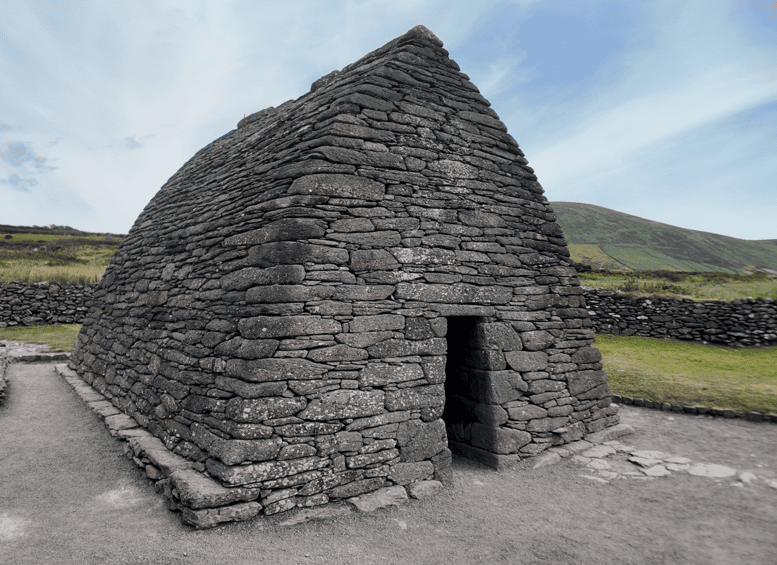
Gallarus Oratory is one of the peninsula’s most distinctive stone buildings. Its carefully constructed drystone form has often been compared to an upturned boat, and its simple interior creates a strong impression despite the building’s modest size.
The monument is usually associated with the early Christian heritage of the peninsula, although its precise date continues to be discussed. It is better to acknowledge that uncertainty than to attach a confident but unsupported construction date to the building.
Gallarus is not merely a quick photograph stop. Walk around the exterior, look at the stonework and spend a moment inside if access allows. Its construction becomes much easier to appreciate when seen at close range.
Explore Kilmalkedar Church
Kilmalkedar Church provides a broader historical landscape than Gallarus. The site includes a Romanesque church and a collection of features connected with centuries of religious activity.
Among the details visitors may encounter are carved stonework, an alphabet stone, an ogham stone and other monuments associated with worship, pilgrimage and burial. The site also has traditional connections with St Brendan.
Allow time to move around the grounds rather than concentrating exclusively on the church building. Kilmalkedar makes most sense when its different features are read together.
See Riasc Monastic Settlement
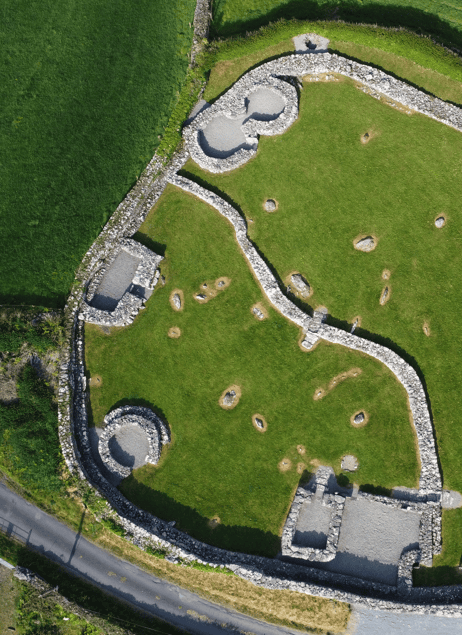
Riasc Monastic Settlement is another important site for visitors interested in early Christianity and archaeology. Its remains help illustrate the type of small religious community that once existed on the western peninsula.
The site is generally quieter and less immediately recognisable than Gallarus, but it rewards visitors who understand what they are seeing. Remains associated with the settlement and its carved stones provide evidence of a community embedded within the surrounding agricultural landscape.
Riasc, Gallarus and Kilmalkedar can be combined, but visiting all three only works when enough time is allowed. If your interest is casual, choose one or two. If archaeology is a priority, the three sites reveal different aspects of the peninsula’s religious history.
Drive Conor Pass
Conor Pass crosses the mountains between Dingle and the northern side of the peninsula. The road climbs from the town through a high valley before reaching views across lakes, mountains and the coast towards Brandon Bay.
This is a mountain road rather than an ordinary scenic viewpoint. Sections are narrow, and vehicle restrictions apply on parts of the route. Drivers should check current signs, weather and road conditions before committing to the crossing.
Low cloud can remove the distant view almost completely, while strong winds and rain can make stopping less comfortable. In clear conditions, however, the pass provides one of the best geographical overviews of the peninsula.
Walk on Inch Beach
Inch Beach lies on the eastern side of the peninsula and is a natural stop when travelling between Dingle and Killarney.
The long strand extends into Dingle Bay with mountain views on both sides. It is particularly useful as a walking stop after a longer drive and provides a more open, expansive coastal experience than the smaller beaches around Slea Head.
Inch does not need to be combined with the western peninsula on every visit. If you have limited time, it may fit better on your arrival or departure day rather than being added to an already full Slea Head circuit.
Take a Boat Trip from Dingle
Dingle Harbour is the departure point for several types of boat experience, including coastal trips and wildlife-focused journeys. Some seasonal services also connect visitors with the Blasket Islands.
A boat trip provides a different understanding of the peninsula. From the water, cliffs, headlands and harbour entrances appear very different from the familiar roadside viewpoints.
All marine experiences are affected by weather and sea conditions. Operators may alter or cancel sailings for safety reasons, and wildlife sightings should never be regarded as guaranteed.
Visitors interested in a more energetic experience can explore options such as kayaking, surfing, cycling and other outdoor activities in Dingle. Book through reputable providers and follow their guidance on equipment, experience levels and weather.
Visit Dingle Oceanworld Aquarium
Dingle Oceanworld Aquarium is a useful family attraction and one of the town’s principal indoor visitor experiences.
It works particularly well for families, visitors with an interest in marine life and anyone looking for an alternative when heavy rain or poor visibility makes outdoor touring less appealing.
Opening times, admission prices and individual exhibits can change, so check current information before travelling. During busy periods, allow for the possibility that the attraction may be busier than expected.
Tour Dingle Distillery
Dingle Distillery operates from a converted former sawmill in Milltown, just outside the centre of Dingle. The working distillery produces Irish whiskey, gin and vodka.
Guided experiences explain the production process and generally include a tasting. This is an adults-only activity, and current accessibility limitations, tour formats and booking conditions should be checked directly before visiting.
The distillery can be a particularly useful indoor experience, but it should not be squeezed carelessly into a full Slea Head day. A fixed booking of more than an hour can significantly shape the rest of your itinerary.
Discover Dingle’s Food Scene
Food has become an important part of the visitor experience in Dingle. The town’s working harbour provides an obvious connection with seafood, while local farms and independent producers contribute meat, dairy products and other ingredients.
The Dingle food guide provides a useful introduction to what to look for, from fresh fish and seafood to locally produced cheese, ice cream and spirits.
Allow time for food rather than treating lunch as an interruption to sightseeing. A relaxed meal can be one of the best parts of the day, especially when the weather changes or you need a break from driving.
Visitors interested in independent producers can call into The Little Cheese Shop or seek out locally made crafts and products around town and the wider peninsula.
Listen to Traditional Music
Dingle’s evenings are one of the strongest reasons to stay overnight rather than visit only as a day trip.
Traditional music can be heard in several pubs, although sessions and musicians vary by night and season. Ask locally what is happening rather than relying entirely on a timetable found weeks in advance.
The guide to the best pubs in Dingle for live music explains some of the town’s better-known options. O’Flaherty’s, on Bridge Street, is particularly closely associated with music, the Irish language and local community history.
A traditional session is not necessarily a staged concert. Musicians play within the life of the pub while conversation and movement continue around them. Listening attentively and allowing the session to develop naturally is part of the experience.
Shop for Locally Made Craft
The peninsula supports a strong community of craftspeople, artists, designers and independent producers.
Workshops such as Holden Leathergoods provide an opportunity to see another side of contemporary Dingle. These businesses show that the peninsula is not simply a collection of ancient sites and scenic viewpoints; it remains a place where people live, design, make and build businesses.
Opening arrangements at small independent workshops can vary. Check directly before making a special journey, particularly outside the main visitor season.
Walk to Eask Tower
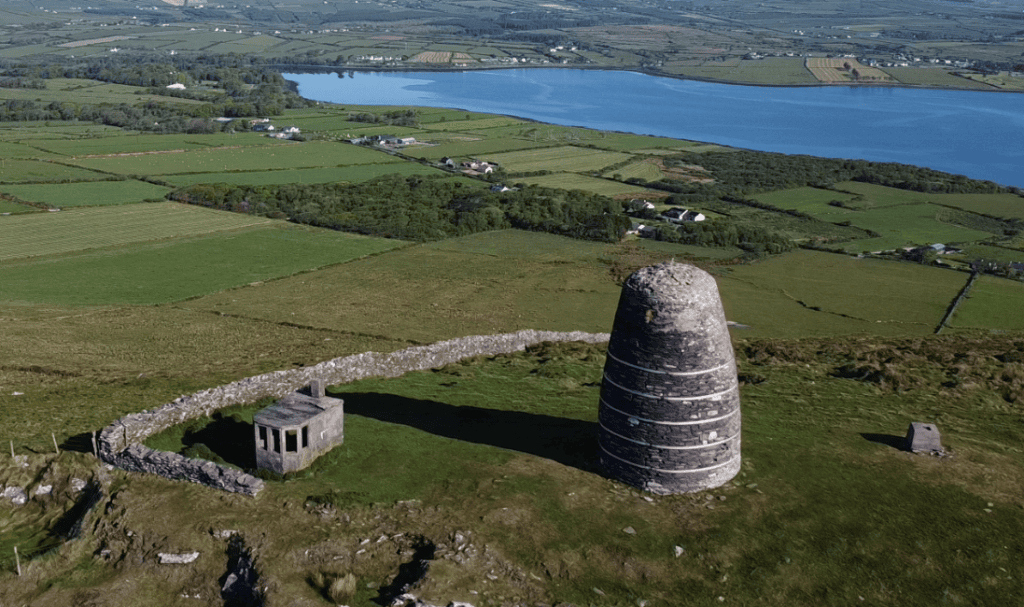
Eask Tower stands on Carhoo Hill overlooking Dingle Harbour. The walk provides a different perspective on the town, harbour entrance and surrounding landscape.
This is an outdoor hill walk across working farmland rather than a paved urban attraction. Ground conditions, gradients and weather should be considered before setting out. Suitable footwear is important, especially after rain.
The elevated view helps explain why Dingle developed where it did and how the sheltered harbour relates to the open waters beyond its entrance.
How Long Should You Spend in Dingle?
One day is enough for an introduction, but not enough to experience everything properly.
With one full day, concentrate on Dingle Town and a carefully selected Slea Head circuit. With two days, add Conor Pass, Inch Beach, a boat trip, a longer walk or additional time in town. Three days provides greater flexibility for weather and lets you explore without constantly watching the clock.
The guide to how long to spend in Dingle compares these options in more detail.
The most common planning mistake is trying to include Slea Head, Conor Pass, Inch Beach, several archaeological sites, a boat trip and a fixed indoor attraction in one day. The peninsula is geographically compact, but the roads, stops and experiences all require time.
Things to Do in Dingle Without a Car
Dingle Town is easy to explore on foot, but the wider peninsula is rural and its attractions are dispersed.
Without a car, visitors can still enjoy the harbour, shops, aquarium, restaurants, pubs and several town-based experiences. Reaching Slea Head, the western archaeological sites and more remote beaches requires additional planning.
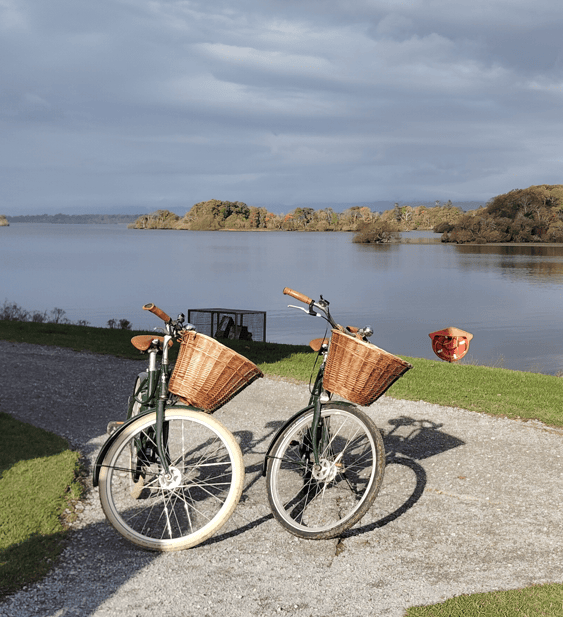
Public transport, seasonal services, bicycle hire and guided tours may provide options, depending on your route and the time of year. The guide to visiting Dingle without a car explains the practical considerations.
What to Do in Dingle When It Rains
Rain does not have to prevent you from enjoying Dingle, but it may change the order of your plans.
Consider Dingle Oceanworld Aquarium, the Blasket Centre, Dingle Distillery, cafés, restaurants and independent shops when visibility is poor. Historical sites can also remain interesting in light rain if you have appropriate clothing, although exposed cliff and mountain locations may be less comfortable.
Kerry weather often changes during the day. A wet morning does not necessarily mean the entire day will be lost, so retain some flexibility and use clearer periods for the most exposed viewpoints.
Explore Dingle with a Local Guide
A guided experience should provide more than transport between photographs. The real value lies in understanding how the peninsula’s geography, archaeology, Irish language, farming traditions and island history connect.
Steve’s Peninsula Tours offers a private full-day Dingle Peninsula tour in which the route can be adjusted around the group’s interests, walking ability, weather and available time.
That flexibility is particularly useful on a peninsula where conditions can change quickly and where the best day is rarely created by forcing every possible stop into a fixed schedule.
Continue Exploring the Dingle Peninsula
Dingle Town is the natural starting point, but much of the peninsula’s story lies beyond the harbour.
Travel west through Ventry and Fahan before reaching the Atlantic coast around Slea Head. Continue towards Dún Chaoin and the Blasket Islands, then return through the Gaeltacht landscape around Ballyferriter and the early Christian sites at Gallarus, Riasc and Kilmalkedar.
On another day, explore Conor Pass and the northern peninsula or visit Inch Beach on the road towards Killarney. The guide to planning a perfect day in Dingle can help you choose a realistic route when your time is limited.
The best approach is not to count how many attractions you have visited. Choose the places that interest you, understand what you are looking at and leave enough time to enjoy Dingle Town when you return.
Frequently Asked Questions About Things to Do in Dingle
What are the best things to do in Dingle?
The strongest experiences include exploring Dingle Town, driving Slea Head, visiting Dún Chaoin and the Blasket Centre, seeing Gallarus Oratory and Kilmalkedar Church, walking on Ventry or Inch Beach, enjoying local food and listening to traditional music.
Is one day enough for Dingle?
One day is enough for Dingle Town and selected stops around Slea Head. Two or three days provide a more relaxed experience and allow time for Conor Pass, beaches, walks and changing weather.
What can families do in Dingle?
Family options include Dingle Oceanworld Aquarium, beaches, suitable coastal walks, boat trips and selected historical sites. Age restrictions, sea conditions and individual accessibility requirements should always be checked in advance.
What can I do in Dingle when it rains?
Indoor options include Dingle Oceanworld Aquarium, the Blasket Centre, Dingle Distillery for adults, cafés, restaurants and independent shops. Flexible planning allows you to reserve exposed viewpoints for clearer periods.
Can I visit Dingle without a car?
Yes. Dingle Town is compact and walkable, but reaching the wider peninsula requires planning. Public transport, seasonal services, cycling and guided tours may help, depending on your intended route.
Is Slea Head Drive difficult to drive?
The route is narrow in places and requires patience, particularly during busy periods. Drive slowly, allow room for local traffic and avoid rushing between stops.
What should I book in advance?
Boat trips, Great Blasket crossings, distillery tours, guided tours and certain seasonal experiences are best checked and booked in advance. Weather-dependent activities may still be changed or cancelled for safety reasons.