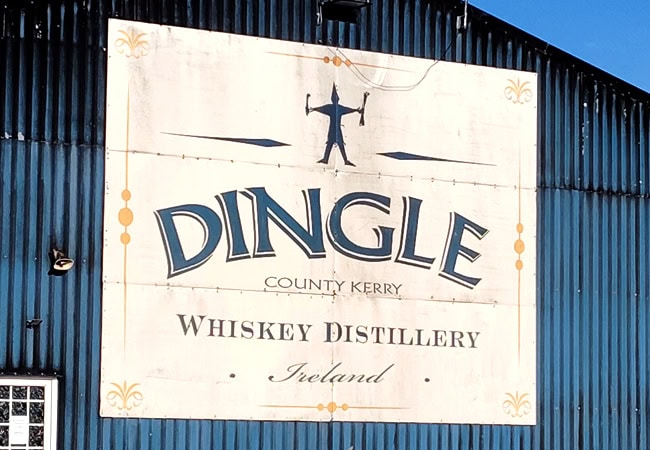
Dingle Distillery is a working distillery on the outskirts of Dingle Town, producing Irish whiskey, gin and vodka from a converted former sawmill in Milltown. Established in 2012, it became part of the wider revival of independent Irish distilling and today offers guided tours through the production facility.
For visitors, the attraction is not simply the tasting at the end. The real interest lies in seeing how the spirits are made, understanding the different stages of production and learning how a relatively young distillery established its identity in one of Ireland’s best-known coastal towns.
What Is Dingle Distillery?
Dingle Distillery was founded in 2012 by Oliver Hughes, Liam LaHart and Peter Mosley.
The distillery was established in a converted sawmill in Milltown, just outside the centre of Dingle, and began producing whiskey, gin and vodka on site.
Its arrival came during a period of renewed interest in independent Irish distilling, when a number of smaller producers began establishing new distilleries around the country.
That makes Dingle particularly interesting from a visitor perspective.
This is not a centuries-old distillery preserved as a heritage attraction. It is a modern production site that has built its reputation within the contemporary Irish whiskey industry.
What Is Made at Dingle Distillery?
Dingle Distillery produces Irish whiskey, gin and vodka.
Its whiskey range includes both single malt and single pot still expressions, while Dingle Gin and Dingle Vodka form the other principal parts of the distillery’s spirits range.
For anyone unfamiliar with Irish whiskey terminology, the differences between these styles can seem complicated at first.
A single malt whiskey is made from malted barley and distilled at one distillery.
Single pot still whiskey, by contrast, traditionally combines malted and unmalted barley and is closely associated with Irish whiskey production.
Visitors do not need any previous knowledge before taking a tour. One of the useful aspects of the experience is having these terms and production stages explained while standing inside the distillery itself.
How the Distilling Process Works
The distillery tour follows the main stages involved in producing spirits.
The process begins with ingredients being prepared for fermentation. During fermentation, yeast converts sugars into alcohol, producing a liquid that can then be distilled.
Distillation concentrates and refines the alcohol.
For whiskey, the spirit must then mature in wooden casks before it can be sold as Irish whiskey. Cask type, time and maturation conditions all influence the character of the finished spirit.
Gin and vodka follow different production paths and do not require the same extended cask maturation.
Understanding this basic sequence makes the working equipment inside the distillery much more interesting. Stills, fermentation vessels and casks stop being pieces of industrial equipment and start to make sense as stages within one continuous process.
What Happens on a Dingle Distillery Tour?
The standard Dingle Distillery tour takes visitors through the history of the business and the production process before finishing with a guided tasting.
Tours generally cover mashing, fermentation, distillation and maturation, with guides explaining how the different Dingle spirits are produced.
The standard visitor experience currently lasts approximately 75 minutes.
The tasting normally includes examples from the distillery’s whiskey, gin and vodka range.
Because this is a working production facility, it is worth understanding that active production may not be taking place during every tour. Production schedules vary, so visitors should not assume that stills or other equipment will necessarily be operating during their visit.
That does not prevent the tour from explaining the process, but it is useful to know in advance.
Standard Tour and Whiskey-Focused Experiences
Dingle Distillery currently offers more than one visitor experience.
The standard distillery tour provides the broadest introduction to the site, covering the history, production process and several of the spirits produced there.
A separate Distillers’ Selection experience is aimed more specifically at visitors with a stronger interest in whiskey and typically focuses more closely on different Dingle whiskey expressions.
Tour formats, times and prices can change, so visitors should always check the distillery’s official booking information before planning their day around a particular experience.
Is Dingle Distillery Worth Visiting?
For the right visitor, yes.
The distillery is particularly well suited to people interested in Irish whiskey, spirits production, contemporary Irish food-and-drink culture or simply understanding how something is made. Visitors interested in the wider local food scene can also explore the Dingle food guide.
It can also be a very useful indoor activity when Atlantic weather makes outdoor sightseeing less appealing.
The experience will be less suitable for some visitors.
Tours are restricted to adults aged 18 and over, including the production areas and tastings, so this is not an option for families travelling with children or teenagers under 18.
Visitors with limited mobility should also check the current access information carefully before booking, as the tour includes prolonged standing and stairs and is not currently wheelchair accessible.
Those practical limitations are important when deciding whether the experience fits your itinerary.
What to Know Before Booking
Advance booking is sensible, particularly during busier periods.
The standard experience takes around 75 minutes, so allow additional time for arriving, parking and checking in rather than building the visit too tightly into a larger driving itinerary.
The tour is entirely indoors, making it one of the more weather-resistant visitor experiences in Dingle.
Free visitor parking is currently available at the distillery.
Visitors should bring appropriate identification if required for age verification.
Most importantly, check the current tour timetable, prices and visitor conditions directly with Dingle Distillery before travelling, as these details can change.
Can Children Visit Dingle Distillery?
No.
Current visitor rules state that distillery tours are restricted to people aged 18 and over.
That includes infants and young children, so parents should not assume that children can accompany adults without participating in the tasting.
This is an important distinction compared with many other things to do in Dingle and should be considered before booking.
Accessibility at Dingle Distillery
The current distillery tour is not wheelchair accessible.
The experience involves standing for extended periods and includes stairs within the production facility.
Anyone with mobility concerns should contact the distillery directly before booking so they can determine whether the current tour format is suitable.
It is better to establish this beforehand than to arrive expecting the type of step-free visitor experience available at some modern attractions.
Can You Buy Whiskey at the Distillery?
Alcohol is not currently sold directly at the distillery visitor site.
This sometimes surprises visitors after completing a tasting.
Staff can advise where Dingle spirits can be purchased locally, while products and stockist information are also available through the distillery’s official channels.
Merchandise may be available through the visitor experience, but current product ranges and availability should be checked directly.
Where Is Dingle Distillery?
Dingle Distillery is located in Milltown on the western side of Dingle Town.
It is close enough to the centre to combine easily with time in Dingle itself but should not be thought of as an attraction directly on Slea Head Drive.
That distinction is useful when planning your day.
The distillery works particularly well as an experience before or after exploring Dingle Town, or as a booked stop incorporated around a longer Dingle Peninsula itinerary.
Because the tour runs to a fixed schedule and takes more than an hour, it requires more planning than a quick roadside stop.
Combining Dingle Distillery with a Day in Dingle
The distillery can fit particularly well into a day centred on Dingle Town.
Visitors might spend part of the day exploring the harbour, shops and food scene before attending a pre-booked distillery tour. Independent local businesses such as The Little Cheese Shop, Holden Leathergoods and Bean in Dingle reveal other parts of the town and peninsula’s contemporary business community.
It can also be combined with Slea Head or other parts of the peninsula, but timing becomes more important.
Slea Head is best explored slowly, and adding a fixed 75-minute distillery booking can significantly shape the day.
If your priority is archaeology, coastal scenery and the western peninsula, allow enough time so that the distillery does not force the rest of the itinerary into a rush.
If food, drink and local production are among your main interests, the opposite may be true: the distillery can become one of the day’s principal experiences rather than an optional extra.
A Good Option When the Weather Changes
Dingle’s weather is part of travelling on the Atlantic coast.
Clear mornings can quickly give way to rain, mist or low cloud, sometimes reducing visibility around Slea Head and the higher parts of the peninsula.
Because the Dingle Distillery tour takes place indoors, it can be particularly useful on days when conditions make outdoor viewpoints less rewarding.
That does not mean it should only be treated as a rainy-day backup.
For visitors interested in whiskey or production, it deserves consideration in its own right.
But having a substantial indoor visitor experience close to Dingle Town is useful when planning a flexible itinerary.
Dingle Distillery and Modern Dingle
Historical monuments and Atlantic scenery tend to dominate the way visitors think about the Dingle Peninsula.
They are only part of the story.
Dingle is also a working town with fishermen, restaurants, independent producers, craftspeople and modern businesses creating products here today.
Dingle Distillery belongs to that contemporary side of the peninsula.
Its story began in 2012 rather than in medieval Ireland, yet it has become part of the modern food-and-drink identity of the town.
That is what makes it interesting beyond the whiskey itself.
A visit provides an opportunity to see something being produced in Dingle today and to understand how a relatively young local business fits into the much wider resurgence of Irish distilling.
Food, Pubs and Evenings in Dingle
A distillery visit can lead naturally into an evening in Dingle, where restaurants, independent food businesses and traditional pubs are concentrated within the compact town centre.
Visitors interested in local music can use the guide to the best pubs in Dingle for live music as a starting point. Sessions and musicians can vary, so it is still worth asking locally what is happening on the evening of your visit.
Several pubs also have their own distinctive histories and characters. O’Flaherty’s Pub, for example, is closely associated with traditional music and the Irish-language culture of Corca Dhuibhne.
Continue Exploring Dingle Beyond the Distillery
Dingle Distillery is best considered as one part of a much wider visitor experience.
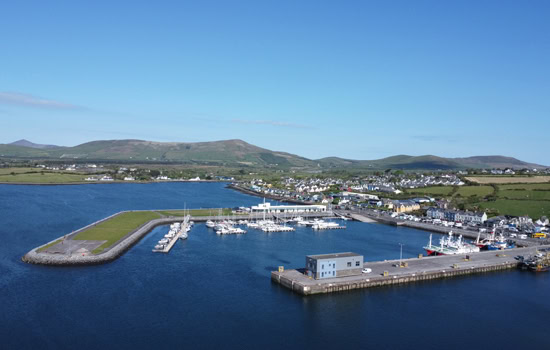
Dingle Town provides food, traditional music, harbour life and independent shops within easy walking distance of one another.
Beyond town, the Dingle Peninsula opens towards Slea Head, Dún Chaoin, the Blasket Islands, Ballyferriter and some of the most important historical sites in Corca Dhuibhne. Visitors can explore the story of the former island community through the Blasket Centre, while sites such as Gallarus Oratory reveal much older layers of settlement and religious history.
For visitors travelling with Steve’s Peninsula Tours, a distillery visit can sometimes be incorporated into a private full-day Dingle Peninsula tour when booked in advance and when timing allows.
The important point is not to squeeze it into an already crowded sightseeing day.
Like many of the best experiences in Dingle, it is better when there is enough time to understand what you are seeing rather than simply ticking another stop off the list.
Frequently Asked Questions About Dingle Distillery
How long does a Dingle Distillery tour take?
The standard visitor experience currently lasts approximately 75 minutes. Allow additional time for arriving, parking and checking in.
Do I need to book Dingle Distillery in advance?
Advance booking is sensible, particularly during busy visitor periods. Check the current schedule and available experiences directly with the distillery.
Can children enter Dingle Distillery?
Current visitor rules restrict tours to adults aged 18 and over, including infants, children and teenagers who would not participate in the tasting.
Is Dingle Distillery wheelchair accessible?
The current tour is not wheelchair accessible and includes stairs and prolonged standing. Anyone with mobility concerns should contact the distillery before booking.
Is there parking at Dingle Distillery?
Free visitor parking is currently available at the distillery, but visitors should confirm current arrangements if parking is important to their plans.
Can I visit Dingle Distillery and Slea Head on the same day?
Yes, but the fixed tour time needs to be planned carefully. Slea Head is best explored slowly, so leave enough time to avoid rushing the peninsula’s viewpoints and historical sites.