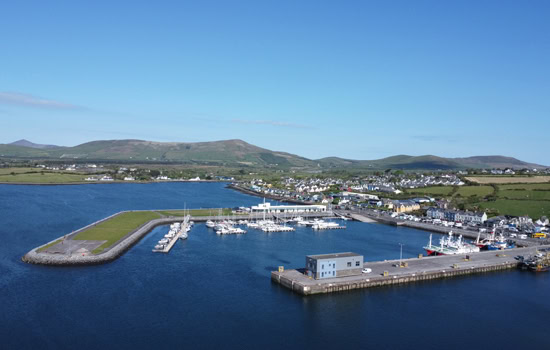
Dingle is one of the most rewarding places to slow down while travelling Ireland’s Wild Atlantic Way. The town sits at the heart of the Dingle Peninsula, giving visitors easy access to Slea Head, the Blasket Islands, Dún Chaoin, Ballyferriter, Inch Beach and the mountain landscapes around Conor Pass.
Rather than treating Dingle as a quick stop on a longer coastal drive, it is worth using the town as a base and giving the peninsula time. Much of what makes this part of County Kerry memorable lies beyond the town itself, in the smaller villages, historic sites, Gaeltacht communities and Atlantic viewpoints spread across the peninsula.
Where Dingle Fits on the Wild Atlantic Way
The Wild Atlantic Way follows Ireland’s western seaboard, connecting coastal landscapes, towns, villages and historic sites from the northwest to the southwest.
Dingle forms part of the County Kerry section of that route and is one of the main bases for exploring the western Dingle Peninsula.
For many visitors, the most important part of the journey begins once they leave the faster roads behind and start exploring the smaller routes around the peninsula. This is where the landscape changes repeatedly between mountains, beaches, cliffs, farmland and open Atlantic coast.
Dingle works particularly well as a base because the town gives you access to several different parts of the peninsula without needing to change accommodation every night.
Why the Dingle Peninsula Deserves More Than a Drive-Through
It is possible to pass through the peninsula quickly, but doing so misses much of what makes it distinctive.
The area combines archaeology, early Christian heritage, Irish-language culture, fishing traditions, mountain scenery and a coastline shaped by the Atlantic. Understanding the history of the Dingle Peninsula helps explain how these different elements developed and why they remain visible in the landscape today.
A better approach is to allow enough time to stop regularly.
Some places deserve only a short visit. Others make more sense when you slow down, walk a little and understand what you are looking at.
That is particularly true around Slea Head, where the landscape is closely connected with the history and culture of Corca Dhuibhne.
Dingle Town as Your Base
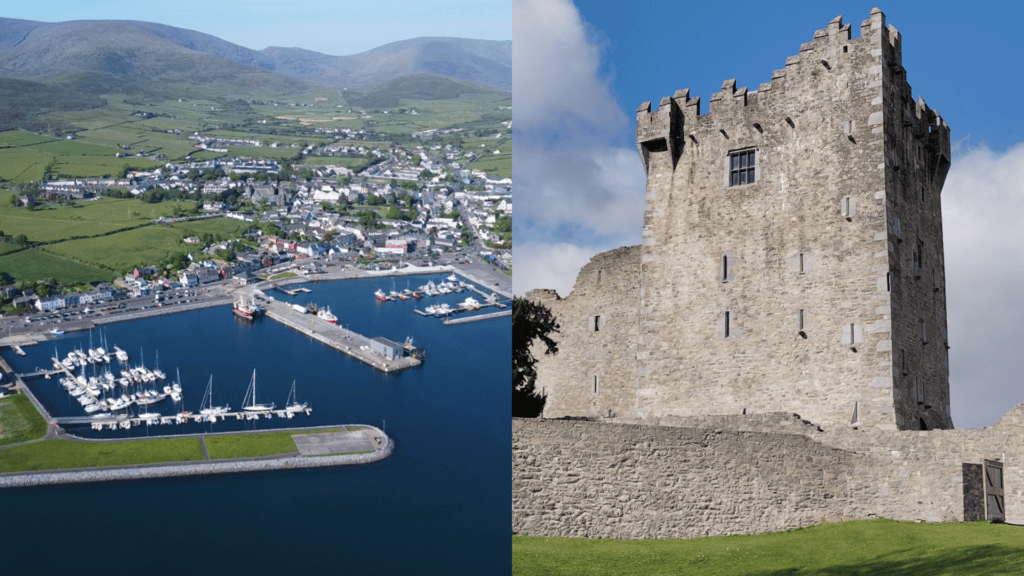
Dingle is a working harbour town as well as a major visitor destination.
Its compact centre is easy to explore on foot, with restaurants, pubs, independent shops and the waterfront all close together. The harbour remains central to the character of the town, while the streets behind it provide a mix of older buildings and modern local businesses.
Dingle is also a practical place to return to after a day exploring the peninsula.
Visitors can spend the day on Slea Head, in Dún Chaoin or around the northern side of the peninsula before returning to town for dinner and traditional music.
That combination of active days and walkable evenings is one reason Dingle works so well as a base on the Wild Atlantic Way.
Exploring Slea Head Drive
Slea Head Drive is one of the most important sections of the Dingle Peninsula and deserves considerably more time than a simple scenic loop.
The route follows the western side of the peninsula through a landscape of Atlantic cliffs, small beaches, archaeological sites and Gaeltacht communities.
Along the way, visitors can explore places connected with early settlement and Christianity, look across towards the Blasket Islands and pass through villages such as Dún Chaoin and Ballyferriter.
The attraction of Slea Head is not one single viewpoint.
It is the way the landscape, history and local culture connect.
Driving the route slowly allows you to understand why people settled here, how communities lived between mountain and sea, and why this part of the peninsula has retained such a strong sense of place. If you are planning to drive independently, the detailed Slea Head Drive route guide provides further practical context for the journey.
Dún Chaoin and the Blasket Islands
Dún Chaoin is one of the most important places for understanding the western Dingle Peninsula.
The village lies opposite the Blasket Islands, whose former community became famous for its Irish-language literary tradition.
From the mainland, Great Blasket Island sits across the Atlantic, close enough to see clearly in good conditions yet separated by the stretch of water that shaped island life for generations.
The Blasket Centre in Dún Chaoin helps explain that story through the history, language and literature of the island community.
Even visitors who never travel to Great Blasket can gain a much deeper understanding of the islands by combining the centre with the surrounding viewpoints. Nearby Dunquin Pier also provides a striking view of the relationship between the mainland, the islands and the Atlantic crossing.
Ballyferriter and the Gaeltacht
Continuing around the peninsula brings visitors through Ballyferriter and the wider Irish-speaking area of Corca Dhuibhne.
Irish is not simply part of the area’s history. It remains part of the living culture of the peninsula.
Place names, local institutions and everyday speech all reflect that connection.
This is one reason the western peninsula should not be understood purely as a scenic drive. The landscape is important, but so are the communities that have lived within it for generations.
Gallarus Oratory and Early Christian Heritage
The Dingle Peninsula contains several important early Christian and medieval sites, including Gallarus Oratory.
Gallarus lies on the western peninsula rather than in Dingle town itself and is usually visited as part of a wider journey around Slea Head and Ballyferriter.
Its dry-stone construction and simple form make it one of the most distinctive historic buildings on the peninsula.
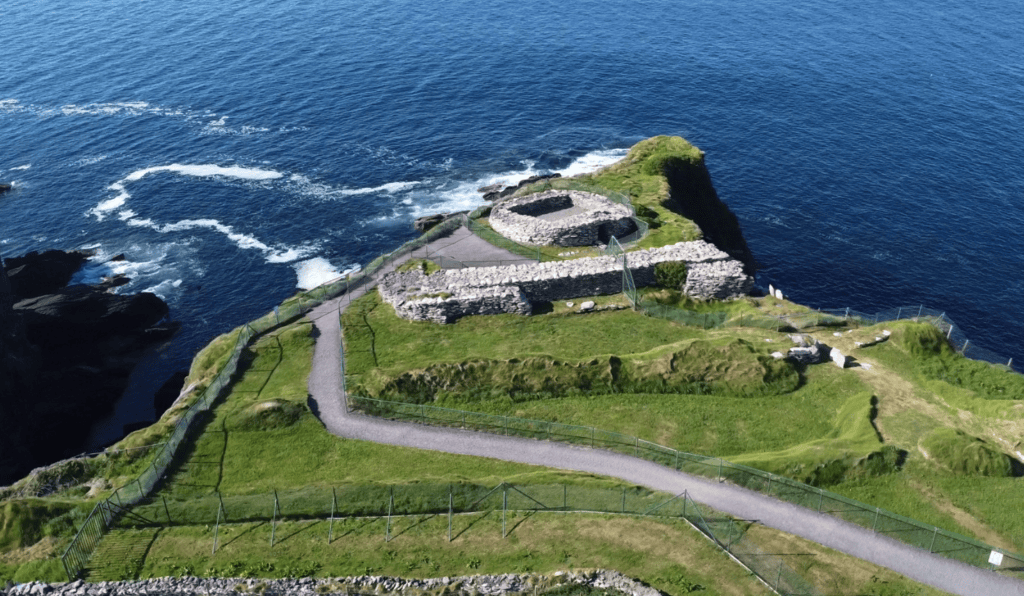
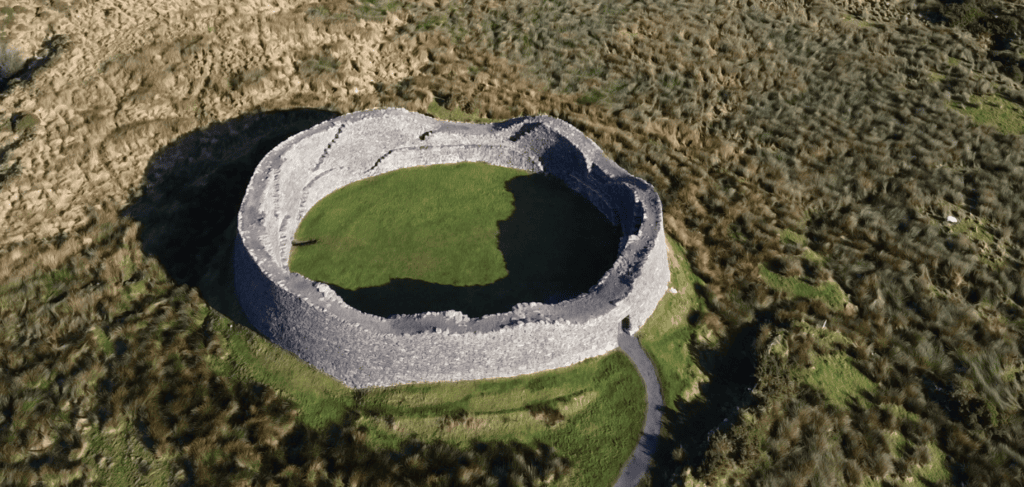
Nearby sites such as Kilmalkedar Church add further context to the religious and settlement history of this part of Kerry. The remains at Riasc Monastic Settlement provide another important connection with early Christian life on the western peninsula.
Rather than trying to visit every historic site in one day, it is better to choose a few and spend enough time to understand them properly. Visitors with a particular interest in archaeology can explore the wider collection of historical sites in Kerry.
Conor Pass and the Northern Peninsula
Conor Pass provides a very different view of the Dingle Peninsula.
The road climbs through the mountains north of Dingle, opening onto views across valleys, lakes and the surrounding coastline.
For visitors approaching Dingle from the northern side of the peninsula, the pass can be one of the most memorable sections of the journey.
Conditions and traffic should always be considered carefully on mountain roads, particularly in poor weather.
The northern side of the peninsula also reveals a quieter landscape that many visitors miss when they concentrate entirely on Slea Head.
Inch Beach and the Eastern Approach
Inch Beach is one of the major landmarks on the eastern side of the peninsula and is a natural stop for visitors travelling between Killarney and Dingle.
The long sandy beach extends into Dingle Bay with mountain views on either side.
It works well as a walking stop, particularly after a longer drive, and provides a very different coastal experience from the cliffs and smaller coves further west.
Rather than treating Inch as a separate attraction, it is useful to think of it as part of the wider transition into the Dingle Peninsula. Visitors interested in spending more time beside the coast can also explore the guide to the beaches of the Dingle Peninsula.
How Long Should You Spend in Dingle?
There is no single correct answer, but the peninsula rewards time.
If you only have one day, concentrate on Dingle town and one carefully planned circuit of Slea Head rather than trying to visit every possible attraction.
With two days, the experience becomes much more relaxed. One day can be devoted to Slea Head and the western peninsula, while the second allows time for Dingle town, Conor Pass, Inch Beach or other parts of the peninsula.
Visitors interested in walking, archaeology, photography, Irish culture or slower travel could easily spend longer. The guide to how long to spend in Dingle looks at the available options in greater detail.
The most common mistake is not spending too much time in Dingle.
It is trying to see too much of the peninsula in too little time.
One Day on the Dingle Peninsula
With one full day, a sensible route is to focus on the western peninsula.
Start in Dingle before continuing towards Slea Head.
Allow time for several selected stops rather than stopping everywhere.
Dún Chaoin and the Blasket views deserve particular attention, and one or two historic sites can be added depending on your interests.
Return towards Dingle through Ballyferriter and the northern side of the western peninsula.
The exact route should always depend on weather, daylight and how much time you actually want to spend at each stop. The perfect day in Dingle itinerary can help you choose a realistic combination of places.
Two Days in Dingle
Two days gives you much more freedom.
The first day can concentrate on Slea Head and the western peninsula.
The second can be used for Dingle town, Conor Pass, Inch Beach or a more relaxed exploration of places you passed too quickly the day before.
This approach also gives you flexibility with Kerry weather.
If visibility is poor one day, you may be able to move the more scenic parts of your itinerary to the next. Visitors staying longer can use the three-day Dingle Peninsula itinerary to explore at a more comfortable pace.
Driving the Dingle Peninsula
Driving gives visitors the greatest freedom to explore the peninsula, but some roads are narrow and require patience.
Slea Head in particular should be treated as a journey rather than something to rush.
Allow space for local traffic, cyclists, walkers and agricultural vehicles.
Weather can also affect the experience quickly, particularly on exposed coastal and mountain sections.
If you are uncomfortable with narrow roads or simply want to concentrate on the landscape rather than navigation, a guided tour can make the day considerably more relaxed.
Visiting Dingle Without a Car
Dingle town itself is compact and easy to explore on foot.
Reaching the wider peninsula is more complicated without independent transport because many of the historic sites, beaches and viewpoints are spread across rural areas.
Visitors travelling without a car should plan transport carefully before arriving rather than assuming every part of the peninsula is easily accessible. The guide to visiting Dingle without a car explains the practical options in more detail.
If your priority is seeing Slea Head and the western peninsula, a guided tour can be a practical way of experiencing the area without hiring a vehicle.
Weather on the Dingle Peninsula
Atlantic weather is part of travelling here.
Conditions can change quickly, and the experience of the peninsula can be very different depending on visibility.
On clear days, views towards the Blasket Islands and surrounding mountains can extend for considerable distances.
In mist or low cloud, those same landscapes may be partly hidden.
Rather than allowing poor weather to ruin the day, adjust the plan where possible.
Historic sites, Dingle town and cultural attractions can often be prioritised when visibility is poor, leaving exposed viewpoints for clearer periods.
Food and Traditional Music in Dingle
Dingle’s working harbour has long connected the town with fishing and seafood.
Today, the food scene includes everything from casual cafés and takeaway fish to restaurants that make use of local produce. The Dingle food guide provides a useful introduction to the local dishes and ingredients visitors may encounter.
Evenings are also an important part of the Dingle experience.
Traditional music can be heard in several pubs around town, although sessions, musicians and schedules can vary. The guide to the best pubs in Dingle for live music can help you understand the different venues, but it is still sensible to check locally on the day.
It is usually better to ask locally what is happening that evening than to assume a particular venue will have music every night.
What to See Before or After Dingle
Dingle fits naturally into a wider County Kerry itinerary.
Travelling east or south can connect the peninsula with Inch, Killarney and the Ring of Kerry.
Travelling north brings you towards Tralee and the coastline of North Kerry.
This makes Dingle a useful stopping point within a longer Wild Atlantic Way journey, but it should not be treated simply as somewhere between two larger destinations.
The peninsula is one of the places where allowing an extra day can significantly improve the experience.
Exploring the Dingle Peninsula with a Local Guide
A guided day around the peninsula should offer more than transport between viewpoints.
The value lies in understanding what connects the places you are seeing: why settlements developed where they did, how Irish-language culture shaped the western peninsula, what the early Christian sites tell us and how generations of people adapted to life beside the Atlantic.
Steve’s Peninsula Tours explores this part of Kerry through a private Slea Head Drive tour, with the route adjusted around weather, interests and the pace of each group.
The aim is not to fit the largest possible number of stops into one day.
It is to understand the places you do visit.
Continue Your Wild Atlantic Way Journey
Dingle is best understood as both a destination and a starting point.
The town introduces the peninsula, but much of the story lies beyond it.
Follow Slea Head towards Dún Chaoin and the Blasket Islands. Explore the Gaeltacht around Ballyferriter. Look at the early Christian sites that survive across the landscape. Take the mountain route towards Conor Pass or continue east towards Inch.
Each part of the peninsula reveals something different.
That is why Dingle deserves more than a quick stop on the Wild Atlantic Way.
Frequently Asked Questions About Dingle and the Wild Atlantic Way
Is Dingle on the Wild Atlantic Way?
Yes. Dingle and the surrounding peninsula form an important part of the County Kerry section of the Wild Atlantic Way.
How many days should I spend in Dingle?
One full day allows you to explore Dingle Town and selected stops along Slea Head. Two or three days provide a more relaxed experience and give you time for Conor Pass, Inch Beach, historical sites and changing weather.
Can I explore the Dingle Peninsula in one day?
Yes, but it is best to concentrate on a carefully planned Slea Head circuit rather than attempting to visit every attraction. Choosing fewer stops generally produces a better experience.
Is Dingle suitable as a base without a car?
Dingle Town is compact and walkable, but attractions around the wider peninsula are dispersed. Visitors without a car should arrange tours or transport in advance.
What are the main places to see near Dingle?
Popular places include Slea Head, Dún Chaoin, the Blasket Centre, Dunquin Pier, Gallarus Oratory, Kilmalkedar Church, Conor Pass and Inch Beach.
Does bad weather make the Dingle Peninsula unsuitable to visit?
No, but it may change the best order of your day. Cultural attractions, historical sites and Dingle Town can work well during poor visibility, while exposed viewpoints are best kept for clearer periods where possible.