Portmagee
Discover Portmagee
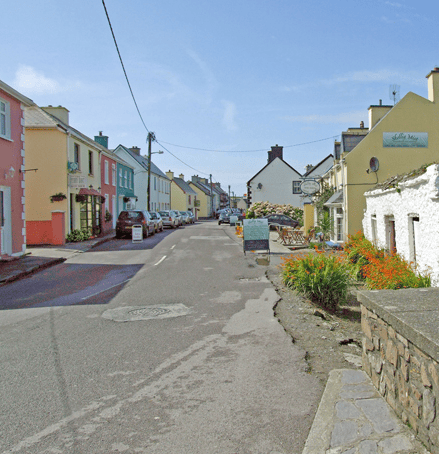
Portmagee is a small fishing village on the western edge of the Iveragh Peninsula, facing Valentia Island across the narrow Portmagee Channel. Its official Irish name, An Caladh, means a harbour, landing place or ferry — an appropriate name for a settlement whose story has always been closely connected with the water.
Despite having a population of just 116, Portmagee plays an important role on this part of the Kerry coast. It remains a working fishing harbour, while also serving as one of the principal mainland departure points for seasonal boat trips to Sceilg Mhichíl. The Maurice O’Neill Memorial Bridge crosses directly from the village to Valentia Island, making Portmagee a natural link between the island, the Skellig Ring and the wider Iveragh Peninsula.
The setting is a major part of the experience. Portmagee sits between the sheltered waters of the channel and the steeper Atlantic landscape leading towards Kerry Cliffs, Coomanaspig, The Glen and St Finian’s Bay. It is also within the Kerry International Dark Sky Reserve, adding another dimension to a village already strongly defined by fishing, island connections and the sea.
About Portmagee
Portmagee’s character comes from its position beside the narrow channel separating the Iveragh mainland from Valentia Island. Long before the present village developed, this coastal landscape was already occupied. Immediately offshore lies Illaunloughan, a tiny island containing the remains of an early-medieval ecclesiastical settlement dating from the seventh century onwards. Archaeological excavation revealed an enclosure, oratory, hut, shrine, well, midden and burials, although the island itself is a protected National Monument and public access is not permitted.
By the nineteenth century, Portmagee was firmly established as a functioning maritime settlement. Samuel Lewis recorded a coastguard station here in 1837, together with petty sessions, a Roman Catholic chapel and a local economy in which fishing and the collection of seaweed for manure were important. A ferry operated across the channel to Valentia Island, reinforcing the village’s role as a landing place and crossing point.
That relationship changed around 1970–71 with the construction of the road bridge linking Portmagee directly with Valentia. Today the Maurice O’Neill Memorial Bridge is one of the village’s most recognisable features, carrying the R565 across the channel and making Portmagee the road gateway to southern Valentia Island. The harbour has continued to function alongside this road connection, and fishing remains part of the village’s working identity.
Portmagee is now also closely associated with Sceilg Mhichíl and the Skellig Ring. Licensed seasonal boats depart from the harbour for the UNESCO World Heritage island almost 12 km offshore, while Kerry Cliffs, Valentia Island and the coastal road through The Glen and St Finian’s Bay are all nearby. Tourism is important, particularly during the Skellig season, but Portmagee remains first and foremost a small resident community and working harbour rather than simply a visitor resort.
Top Experiences in Portmagee
Portmagee is small enough to explore easily, but its position places several of western Iveragh’s most distinctive experiences close at hand. Spend time around the working harbour, cross the bridge to Valentia Island, discover the story of the Skelligs, visit nearby Kerry Cliffs or continue south along the narrower roads of the Skellig Ring. In suitable conditions, the village is also a departure point for seasonal boat trips towards Sceilg Mhichíl and the offshore Skellig islands.
MARITIME HERITAGE
Portmagee Harbour
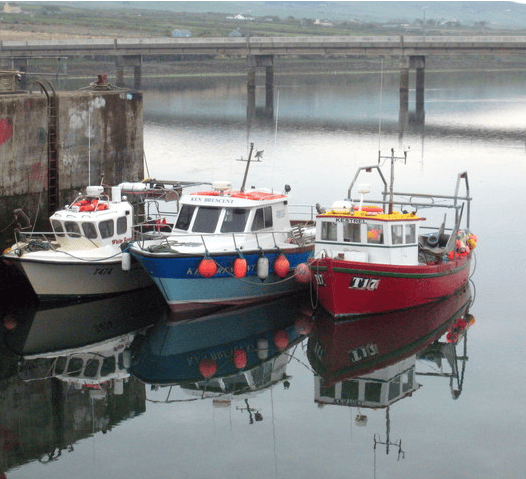
The harbour is the natural focal point of Portmagee and the best place to understand why the village developed here. Fishing boats, piers and marine activity reflect a working waterfront whose importance extends beyond tourism, while the narrow channel opposite separates the Iveragh mainland from Valentia Island.
During the visitor season, the harbour also becomes one of the principal embarkation points for permitted boat services towards Sceilg Mhichíl. The World Heritage island lies almost 12 km offshore, and all crossings and landings remain dependent on licensed operation, official access arrangements, sea conditions and weather.
From Ancient Channel to Skellig Gateway
The story of Portmagee begins with the channel. The official Irish name An Caladh refers to a harbour, landing place or ferry, reflecting a function that has shaped the settlement for generations. The channel itself is known in Irish as Góilín Dairbhre, and historical records preserve older names for this sheltered waterway, demonstrating a maritime history that predates the modern English village name.
The earliest securely documented settlement in the immediate landscape is not the present village but Illaunloughan, the tiny island lying in Portmagee Channel. Archaeological excavations during the 1990s uncovered evidence of an early-medieval ecclesiastical community dating from the seventh century onwards, including an enclosure, oratory, hut, shrine, well and burials. The island later continued to be used as a burial place. It is now a National Monument in State guardianship, with no public access.
The English name Portmagee is traditionally associated with Captain Theobald Magee, remembered in local accounts as an eighteenth-century smuggler involved in maritime trade between Ireland and continental Europe. The naming tradition is longstanding, although many of the more colourful details attached to Magee’s life are less securely documented and are better understood as part of local tradition rather than established biography.
By 1837, Portmagee had become a recognised maritime and administrative settlement. Samuel Lewis recorded a coastguard station, petty sessions, a Roman Catholic chapel and an economy in which fishing played an important role. A ferry connected the mainland with Valentia Island until the construction of the road bridge around 1970–71 transformed the old crossing.
The modern village continues many of these historic functions in new forms. It remains a fishing harbour and gateway to Valentia Island, while seasonal Skellig boat services have made it one of the principal mainland departure points for Sceilg Mhichíl. The island’s inscription on the UNESCO World Heritage List in 1996 strengthened Portmagee’s place within the wider Skellig Coast visitor landscape, but its identity remains rooted in the harbour, fishing and the narrow channel around which the village developed.

EARLY CHRISTIAN LANDSCAPE
Illaunloughan in Portmagee Channel supported an early-medieval ecclesiastical community. Excavations revealed an enclosure, oratory, hut, shrine, well, midden and burials, providing important evidence of religious and everyday life in the immediate coastal landscape.

MARITIME TRADITION
Local tradition associates the English name Portmagee with Captain Theobald Magee, remembered as an eighteenth-century smuggler. The naming connection is well established in local tradition, although many details of Magee’s biography remain less securely documented.

FISHING & FERRY VILLAGE
Samuel Lewis recorded Portmagee as a functioning maritime settlement with a coastguard station, petty sessions and a Roman Catholic chapel. Fishing was an important part of the local economy, while a ferry provided the crossing to nearby Valentia Island.

BRIDGE TO VALENTIA
Construction of the road bridge transformed the historic ferry crossing between Portmagee and Valentia Island. Now known as the Maurice O’Neill Memorial Bridge, it established a permanent road connection while the village retained its harbour and fishing functions.

SKELLIG GATEWAY
Sceilg Mhichíl was inscribed on the UNESCO World Heritage List in 1996. Portmagee has become one of the principal mainland embarkation villages for permitted seasonal boat services, adding an important visitor role to its longstanding maritime identity.
Things to Do
From breathtaking coastal walks and boat trips to historic landmarks and family attractions, discover some of the best experiences and activities waiting to be explored.

Casey Skellig Islands Tours
Skellig Michael Tours
Portmagee Whiskey Experience
Kerry Cliffs
Skellig Experience Visitor Centre
History & Heritage
Explore the rich history through ancient monuments, medieval ruins, historic buildings and places that tell the story of generations who shaped this remarkable corner of County Kerry.

Telegraph Field Valentia Island
Shopping
Browse independent shops, local craft stores, galleries and speciality retailers offering everything from handmade gifts and artisan food to everyday essentials and unique souvenirs.

Where to Eat & Drink
Enjoy the flavours of Kerry with traditional pubs, cosy cafés, award-winning restaurants, artisan bakeries and local producers. Whether you’re looking for a quick coffee or an unforgettable meal, there’s something for every taste.

The Moorings Restaurant
Fisherman’s Bar and Seafood Restaurant
Where to Stay
Discover carefully selected hotels, guesthouses, B&Bs, self-catering cottages and unique places to stay. Whether you’re planning a short break or a longer holiday, you’ll find accommodation to suit every style and budget.

The Moorings Guesthouse
Seagull Cottage B&B
Discover More Towns & Villages
Explore more of County Kerry’s towns and villages, from colourful coastal communities and historic market towns to welcoming bases for discovering the county’s landscapes, culture and heritage.
Harbour Village & Skellig Gateway
RIVERSIDE TOWN & RING OF KERRY