Star Wars in Dingle: Exploring the Real Landscapes of Ahch-To
Star Wars in Dingle is a story that reaches beyond a single filming location. It connects the remote Atlantic landscape of the Dingle Peninsula with Skellig Michael, the ancient monastic island chosen to represent Luke Skywalker’s refuge on the planet Ahch-To.
The principal Dingle Peninsula location was Ceann Sibéal, or Sybil Head, near Ballyferriter. For Star Wars: The Last Jedi, the production recreated part of the stone settlement seen on Skellig Michael on this privately owned headland. The temporary set included distinctive beehive-shaped structures inspired by the island’s early Christian monastic buildings.
Dingle town itself was not used as an on-screen location, but it became an important base for members of the cast and crew. The production was felt throughout West Kerry, particularly around Ballyferriter and the surrounding Gaeltacht. Today, the physical set is gone, but the headland, Atlantic coastline and island views remain. For visitors, the most rewarding way to explore the connection is not to search for surviving props, but to understand why this landscape was able to stand in for one of the most isolated places in the Star Wars universe.
Where Was Star Wars Filmed on the Dingle Peninsula?
Filming on the Dingle Peninsula centred on Ceann Sibéal, the prominent headland rising above the Atlantic near Ballyferriter. It lies on the western side of the peninsula, beyond Dingle town and close to the coastal landscapes explored along the Slea Head Drive.
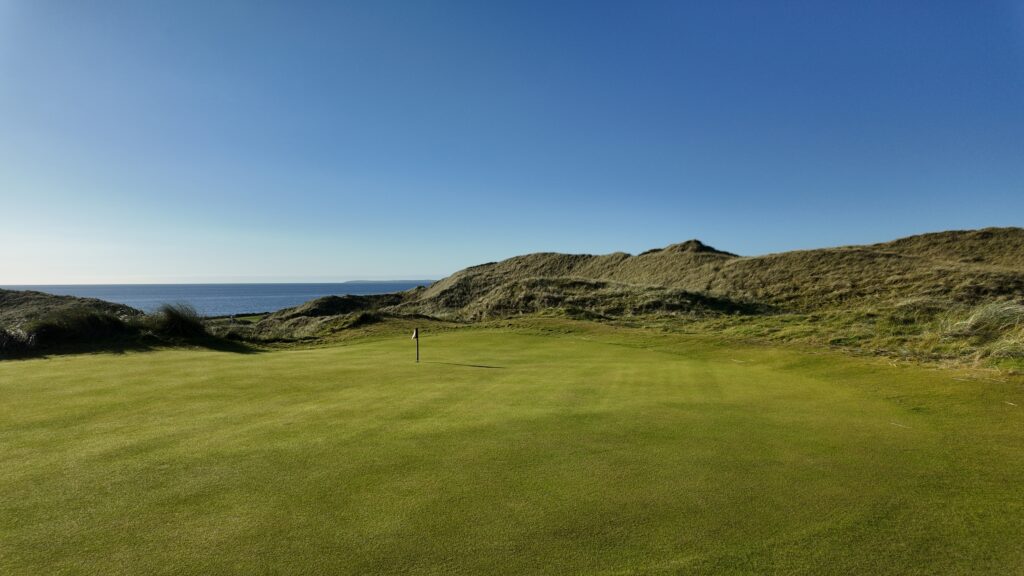
Ceann Sibéal is sometimes called Sybil Head in English. Its broad summit, steep sea cliffs and exposed position made it a convincing continuation of the Ahch-To landscape first introduced through scenes filmed on Skellig Michael. The headland faces a part of the Atlantic where the Blasket Islands, the Three Sisters and other offshore features define the horizon.
The filming site should not be confused with Dingle town or with Skellig Michael itself. Skellig Michael lies off the Iveragh Peninsula in South Kerry, while Ceann Sibéal is on the Dingle Peninsula in West Kerry. The two locations are separated geographically, but editing and production design allowed them to appear as parts of the same fictional island.
From Skellig Michael to Ceann Sibéal
Skellig Michael appeared at the end of Star Wars: The Force Awakens, when Rey finally reached Luke Skywalker’s island refuge. Its steep stone steps, Atlantic isolation and early Christian monastery required very little visual invention. The island already possessed the sense of remoteness and age that the filmmakers wanted for Ahch-To.
However, Skellig Michael is not an ordinary film location. It is a UNESCO World Heritage Site containing an exceptionally important early medieval monastic settlement. It is also a sensitive seabird habitat, and reaching it requires a significant sea crossing followed by a demanding climb.
When a larger section of the Ahch-To story was required for The Last Jedi, the production used mainland locations around Ireland to complement footage from Skellig Michael. At Ceann Sibéal, replicas of the island’s corbelled stone huts were constructed for scenes connected with the settlement occupied by the Caretakers.
This was a practical solution that also reduced the need for extensive activity on the protected island. The Dingle headland offered comparable cliffs, grassland, stone walls and open Atlantic weather while being more accessible to a large film production.
The Temporary Village Built Above the Atlantic
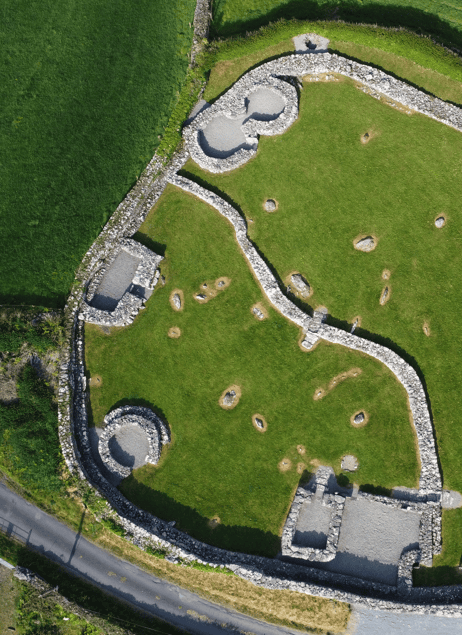
The Ceann Sibéal set was designed to resemble a continuation of the ancient settlement seen on Skellig Michael. Its rounded structures drew directly from the form of Irish clocháin, commonly described as beehive huts because of their shape.
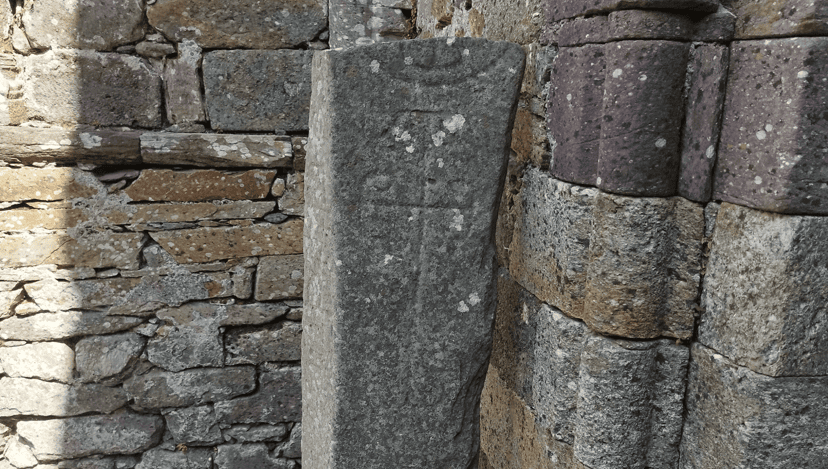
Traditional corbelled huts were built by placing successive courses of stone slightly inward until the walls could be closed at the top. Examples survive at several locations in West Kerry, as well as within the monastic enclosure on Skellig Michael. Their precise dates and original uses vary, so it is best not to assume that every surviving clochán was built by a monk or belongs to the same period.
The structures at Ceann Sibéal were film-set replicas rather than archaeological monuments. Once production finished, they were removed and the site was restored. Visitors should therefore not expect to find a preserved Star Wars village, a permanent studio attraction or a collection of abandoned props on the headland.
That absence is part of what makes the location interesting. The real attraction is the landscape that persuaded the filmmakers that two distant parts of Kerry could convincingly become one fictional world.
Can You Visit the Ceann Sibéal Film Set?
There is no surviving film set to enter. Ceann Sibéal and the surrounding land include private farmland, and visitors should not climb gates, cross fields or attempt to reach the former production area without permission.
The headland can be appreciated from public roads and established viewpoints around Ballyferriter, Clogher and the north-western section of the peninsula. Beál Bán Beach can also provide a broad view towards Ceann Sibéal, depending on weather and visibility.
From a touring point of view, this is a far better way to experience the location. The headland’s scale is much easier to understand from a little distance, where its cliffs and sloping summit can be seen in relation to the Atlantic, the Three Sisters and the surrounding farmland.
If you stop along the road, use only safe, recognised parking areas and avoid obstructing entrances, narrow lanes or agricultural traffic. Roads in this part of West Kerry can be confined, with limited sightlines and working farms on both sides.
Ballyferriter and the Local Star Wars Story
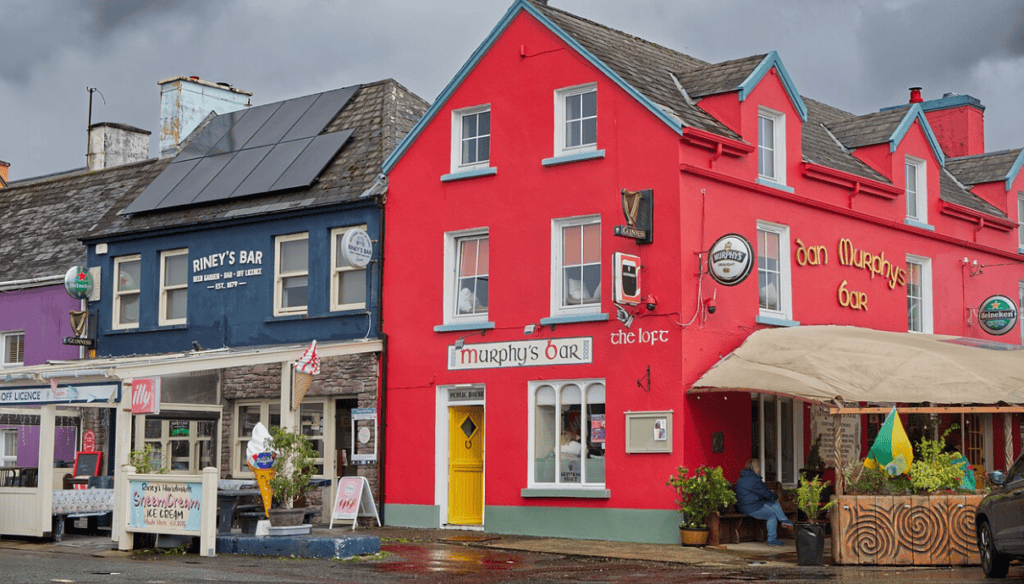
Ballyferriter, known in Irish as Baile an Fheirtéaraigh, was at the centre of local activity during filming. It is a small Gaeltacht village west of Dingle, and Irish remains a living community language throughout this part of Corca Dhuibhne.
Cast and crew members stayed, worked and socialised in the area, giving the production a local presence that extended far beyond the closed set. For a period, a quiet West Kerry village became connected with one of the largest film franchises in the world.
That connection worked partly because the production arrived in a place with a long cultural identity of its own. Ballyferriter was not created by the film, and it should not be treated merely as a Star Wars stop. The surrounding district contains archaeological remains, early Christian sites, traditional field systems, Irish-language culture and views across a coastline shaped by farming and fishing.
Visitors interested in the deeper history behind Kerry’s film landscapes can browse the wider collection of historical sites in Kerry. Understanding the real stone-building traditions of the region gives the fictional architecture of Ahch-To much more meaning.
The Beehive Huts and the Architecture of Ahch-To
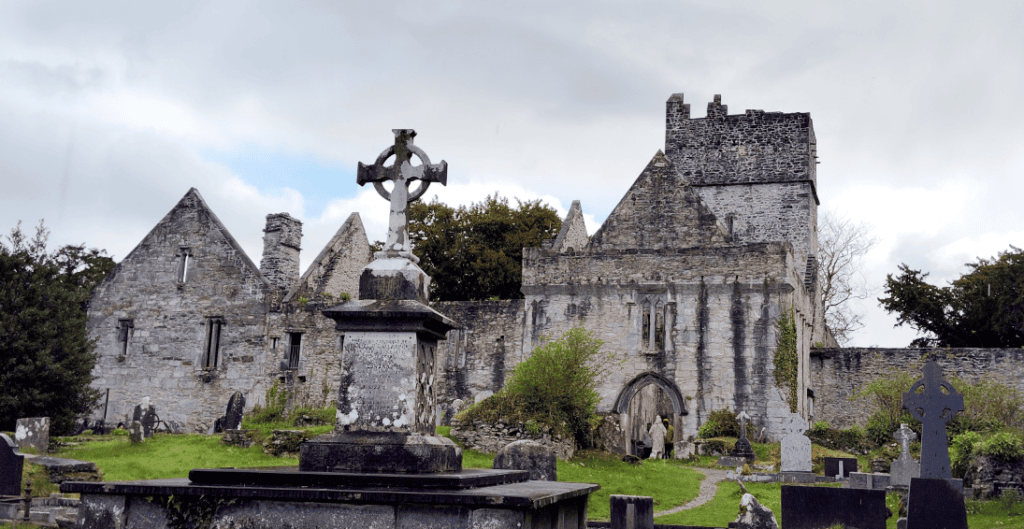
One of the clearest visual connections between West Kerry and Star Wars is the use of corbelled stone huts. These buildings are constructed without a conventional timber roof, using carefully laid stone to form thick walls and a gradually narrowing interior.
Several genuine clocháin can be visited along the Slea Head route, particularly around Fahan. They are not remains of the Star Wars set, and visitors should be careful not to confuse authentic archaeological structures with the temporary replicas made for filming.
The real huts are far more important than props. They belong to a much older vernacular building tradition and help explain why the architecture used for Ahch-To feels convincing. The filmmakers were drawing upon forms that already belonged to the western Irish landscape.
Admission and access arrangements at privately managed heritage sites may change, so check locally before visiting. Paths can be uneven or steep, and many outdoor sites on the peninsula are exposed to wind and rain.
Clogher Head and Views Towards Ceann Sibéal
Clogher Head is one of the most useful places from which to understand the geography of the Star Wars location. From the wider Clogher area, visitors can look towards Ceann Sibéal and see how the headland rises beyond the surrounding fields and Atlantic shoreline.
This coast has a strong film history beyond Star Wars. Parts of Ryan’s Daughter and Far and Away were created around the western Dingle Peninsula, using beaches, headlands and purpose-built sets to represent different places and periods.
Whenever I bring visitors through this part of West Kerry, I find that the Star Wars story becomes more interesting when placed within that longer filmmaking history. Directors have repeatedly chosen the peninsula because the landscape can appear intimate from one direction and immense from another. A short change in weather can alter the colour, visibility and character of an entire scene.
What You Will Actually See Today
A modern visit is primarily a landscape experience. You can see Ceann Sibéal from selected public viewpoints, explore the countryside around Ballyferriter and travel through the same coastal environment that surrounded the production.
You will not find a permanent recreation of Luke Skywalker’s home, a marked studio entrance or a public trail leading through the former set. The temporary buildings have been removed, and the land has returned to its normal use.
What remains is arguably more valuable: the real Atlantic terrain behind the screen image. Stone walls divide fields running towards the coast. Headlands overlap along the horizon. Offshore islands appear and disappear beneath passing showers, while the changing light can make the same view look completely different within minutes.
This is also why the area appeals to visitors who have little interest in the films. The Star Wars connection provides a starting point, but the geography, archaeology and living culture of West Kerry give the journey its substance.
Planning a Star Wars Journey from Dingle
Dingle is the natural base for exploring the peninsula’s filming connections. From the town, the usual route leads west towards Ventry and continues around the Slea Head coast before reaching Dunquin, Ballyferriter and Clogher.
The full circular drive should not be treated as a quick return trip to one film location. Narrow roads, frequent viewpoints, walkers, cyclists and agricultural traffic all affect journey times. The peninsula is best explored at a steady pace, with enough time to stop safely and understand how the different landscapes fit together.
For a broader overview of natural attractions, scenic stops and route ideas, use the Places to See in Kerry guide. The main Explore Kerry section also helps connect West Kerry with the Skellig coast and other parts of the county.
How Long Should You Allow?
If your only aim is to see Ceann Sibéal from the surrounding area, allow roughly 30 to 60 minutes for a viewpoint stop and time around Ballyferriter. This assumes reasonable weather and no extended walk.
For a proper Star Wars-themed journey from Dingle, I would allow at least half a day. That gives you time to follow the Slea Head route, see authentic stone structures, stop around Dunquin and Ballyferriter, view Ceann Sibéal and understand the relationship between the landscape and the films.
A full day is more appropriate if you also want to explore the Blasket story, archaeological sites, beaches and the cultural landscape of the Gaeltacht. Trying to fit the western peninsula into a rushed schedule usually means spending more time watching the road than appreciating the places.
Weather, Visibility and Photography
Ceann Sibéal is an exposed Atlantic headland, and visibility can change quickly. Low cloud may hide the upper slopes, while sea mist can soften or completely remove the distant horizon. On a clear day, the separation between headlands, islands and open ocean becomes much easier to appreciate.
Overcast conditions are not necessarily disappointing for photography. Broken cloud can produce strong contrasts across the grass and cliffs, while softer light often reveals more texture in stone walls and fields. Wind is usually a greater practical difficulty, particularly when holding a phone or changing camera lenses near an exposed viewpoint.
Bring a waterproof outer layer even if Dingle town appears dry. Keep a safe distance from cliff edges, never cross barriers for a photograph and avoid standing on the road at bends. No photograph is worth entering private land or placing yourself in the path of local traffic.
Is the Star Wars Experience Suitable for Families?
The driving route and public viewpoints can work well for families because much of the landscape can be enjoyed without a demanding walk. Children who know the films may enjoy identifying the shapes and textures that helped create Ahch-To.
However, this is not a themed attraction with rides, characters or a preserved film set. Parents should explain in advance that the experience is about seeing real locations and learning how they were transformed for the screen.
Close supervision is essential near cliffs, roads and exposed coastal areas. Conditions can be windy, ground may be wet, and some archaeological sites have steep or uneven paths.
Star Wars and the Wider Kerry Film Landscape
The Dingle Peninsula’s connection with Star Wars forms part of a much larger Kerry film story. David Lean’s Ryan’s Daughter used several locations around the peninsula, while Far and Away also drew upon the western coastline.
Skellig Michael remains the most recognisable Kerry location from the sequel trilogy. Its importance, however, begins centuries before cinema. Early Christian monks established a remote settlement on the rock, constructing stone cells, oratories, terraces and steps in an environment that remains difficult to reach today.
The Dingle replica set helped reproduce the appearance of that settlement without turning the protected island into a conventional film studio. This relationship between genuine heritage and temporary production design is central to understanding Star Wars in Kerry.
A Local Guide’s Perspective
The best Star Wars visit is one that separates the real geography from the screen geography. Ceann Sibéal, Skellig Michael and the other Irish locations used for Ahch-To are not physically beside one another. Film editing makes them feel like a single continuous island.
Once you understand that, the route becomes more engaging. You begin to notice why certain slopes, stone walls and Atlantic horizons could be combined so successfully. The production did not simply choose a scenic backdrop; it selected landscapes with enough visual consistency to support an entire fictional setting.
If you want to explore these places without concentrating on narrow roads or trying to identify viewpoints while driving, the Star Wars landscape can be incorporated naturally into my private full-day Dingle Peninsula tour. The day can also include the archaeology, Gaeltacht culture and coastal history that gave the film location its distinctive character.
Continue Exploring the Dingle Peninsula
After viewing Ceann Sibéal, continue through the Ballyferriter and Clogher area rather than immediately returning to Dingle. This quieter northern side of the peninsula provides a different perspective from the sea-cliff scenery around Slea Head and Dunquin.
The wider journey can include early Christian remains, traditional stone buildings and coastal viewpoints overlooking the Blasket Islands. These places explain why the landscape feels ancient on screen without requiring an invented history.
Visitors travelling independently can also use the Slea Head GPS Audio Tour to hear stories and local context as they follow the peninsula. Further destination features and route-planning articles are available through Steve’s Peninsula Blog.
Frequently Asked Questions About Star Wars in Dingle
Was Star Wars filmed in Dingle town?
No filming took place in Dingle town itself. The town was used as a base by members of the cast and crew, while filming on the peninsula centred on Ceann Sibéal near Ballyferriter.
Which Star Wars film used the Dingle Peninsula?
Ceann Sibéal was used during the production of Star Wars: The Last Jedi. A temporary settlement inspired by the stone huts of Skellig Michael was constructed on the headland.
Are the Star Wars huts still at Ceann Sibéal?
No. The buildings were temporary film-set structures and were removed after production. Visitors should not expect to find a surviving Star Wars village on the headland.
Can I walk to the former filming site?
The former set was located on private land. Do not cross fields, gates or fences in an attempt to reach it. Ceann Sibéal is best viewed from public roads, beaches and recognised viewpoints in the surrounding area.
Where can I get a good view of Ceann Sibéal?
Views are available from parts of the Ballyferriter and Clogher area, with Beál Bán Beach offering another perspective in suitable conditions. Visibility depends heavily on Atlantic weather and low cloud.
Is Skellig Michael part of the Dingle Peninsula?
No. Skellig Michael lies off the Iveragh Peninsula in South Kerry. It was used as the principal real-world setting for Ahch-To, while Ceann Sibéal and other Irish locations helped extend that fictional landscape in The Last Jedi.
How much time should I allow for a Star Wars tour from Dingle?
Allow at least half a day to follow the coastal route and understand the main Dingle Peninsula connections. A full day gives you more time for Ballyferriter, archaeological sites, the Blasket landscape and additional viewpoints without rushing.