Killarney National Park is one of the places I would give proper time to on any first visit to County Kerry. Sitting immediately beside Killarney, the park brings together lakes, mountains, native woodland, waterfalls, historic estates and centuries of human history within one remarkably varied landscape.
What to See and Do in Killarney National Park
What makes Killarney National Park particularly useful for visitors is its variety. You can stand beside a fifteenth-century castle in the morning, walk through woodland to a medieval friary, visit a nineteenth-century country house, follow lakeside paths and finish the day looking across the mountains and lakes from one of Kerry’s best-known viewpoints.
It is also very different from the Atlantic landscapes of the Dingle Peninsula. Killarney is shaped by water, woodland and mountains. The three Lakes of Killarney sit within a basin surrounded by some of Ireland’s highest ground, while historic buildings and old estates show how people have lived within and interpreted this landscape for centuries.
From a touring point of view, I would not think of the park as one attraction. It is an entire area containing a collection of experiences, and trying to rush through every famous stop in a couple of hours usually means missing what makes it worthwhile.
Where Is Killarney National Park?
Killarney National Park lies beside Killarney town on the eastern side of the Iveragh Peninsula in County Kerry. That position makes Killarney town one of the easiest bases in Kerry for combining outdoor scenery with restaurants, accommodation and evening entertainment.
Parts of the park can be reached directly from the town, while other well-known areas extend south towards Muckross, Torc, the Upper Lake and the mountain road towards Ladies View and Moll’s Gap.
The wider geography is worth understanding because Killarney National Park also forms an important part of journeys around the Ring of Kerry. Visitors travelling between Killarney and Kenmare pass through some of the park’s most recognisable mountain and lake scenery.
Ireland’s First National Park
Killarney National Park traces its origins to 1932, when the Muckross Estate was presented to the Irish State. It became Ireland’s first national park and has subsequently expanded far beyond that original estate.
Today the protected landscape covers more than 10,000 hectares and contains lakes, mountains, peatlands and extensive woodland. Of particular importance are the park’s native woodlands, including old oak woods and internationally important yew woodland.
This natural importance is sometimes overshadowed by the better-known visitor attractions. People understandably arrive wanting to see Ross Castle, Muckross House and Torc Waterfall, but the woodland, lakes and habitats surrounding those landmarks are fundamental to why the area is protected.
The Lakes of Killarney
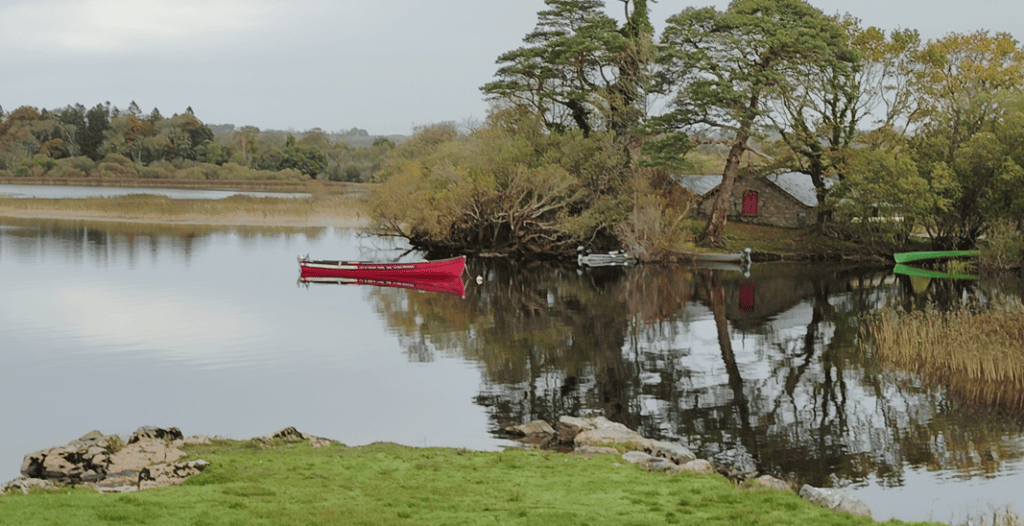
The three main lakes are Lough Leane, Muckross Lake and the Upper Lake. Together they form the geographical heart of Killarney National Park.
Lough Leane is the largest and lies closest to Killarney town. Ross Castle stands on its shore, while Innisfallen Island lies out in the lake.
South of Lough Leane is Muckross Lake, surrounded by woodland and the landscape of the former Muckross Estate. Further south and west, the Upper Lake reaches deeper into the mountains and feels increasingly removed from Killarney town.
The lakes can be appreciated in several ways. Some visitors are satisfied with roadside and lakeshore viewpoints, others walk or cycle beside them, and boat trips provide a completely different understanding of how the waterways connect.
One thing I always tell visitors is that Killarney’s famous viewpoints make more sense once you understand the relationship between the three lakes. You are not simply looking at attractive water and mountains; you are looking into a glacially shaped landscape that determines the entire geography of this part of Kerry.
Ross Castle and Lough Leane
Ross Castle is one of the best places to begin exploring the history of Killarney National Park.
The fifteenth-century tower house stands beside Lough Leane and is traditionally associated with the O’Donoghue Mór chieftains. Its position was practical as well as impressive. The lake formed part of the castle’s defensive and communications landscape, while the surrounding mountains gave the site the setting visitors recognise today.
Ross Castle later played a role during the Cromwellian campaigns in Ireland and has remained closely connected with local folklore, particularly stories of O’Donoghue and the lake.
Even if you do not tour the castle interior, the lakeshore and surrounding parkland are worth experiencing. Boats also depart from the Ross Castle area, and walking trails continue onto Ross Island.
For visitors interested in Kerry’s medieval history, Ross Castle also fits naturally into the wider collection of historical sites around County Kerry.
Ross Island and a Much Older Story
Ross Island takes the history of this landscape considerably further back than the medieval castle.
Archaeological evidence shows prehistoric copper mining in the area, demonstrating that people were working this landscape thousands of years before Killarney became a visitor destination.
That is one of the things I find particularly interesting about Killarney National Park. The landscape contains evidence from very different periods almost on top of one another: prehistoric industry, early Christian monasteries, Gaelic castles, Franciscan history, landed estates and modern conservation.
Walking around Ross Island therefore adds another layer to a visit. It is not simply an extension of the castle grounds; it represents one of the oldest known chapters in Killarney’s human history.
Innisfallen Island and Early Christianity
Out on Lough Leane, Innisfallen Island preserves the ruins of an important monastic settlement.
A monastery was established on the island during the early medieval period, and the community became associated with the Annals of Inisfallen, an important historical chronicle preserving records relating to Ireland over many centuries.
The island’s setting helps explain why it was attractive to a religious community. Although geographically close to today’s Killarney, being surrounded by the lake created separation from everyday life on the mainland.
Innisfallen is generally reached by boat rather than as a casual roadside stop, so visitors specifically hoping to go ashore should check current local boat arrangements.
Muckross House
Moving south through the park brings you into the Muckross landscape, where Muckross House introduces an entirely different chapter of Killarney’s history.
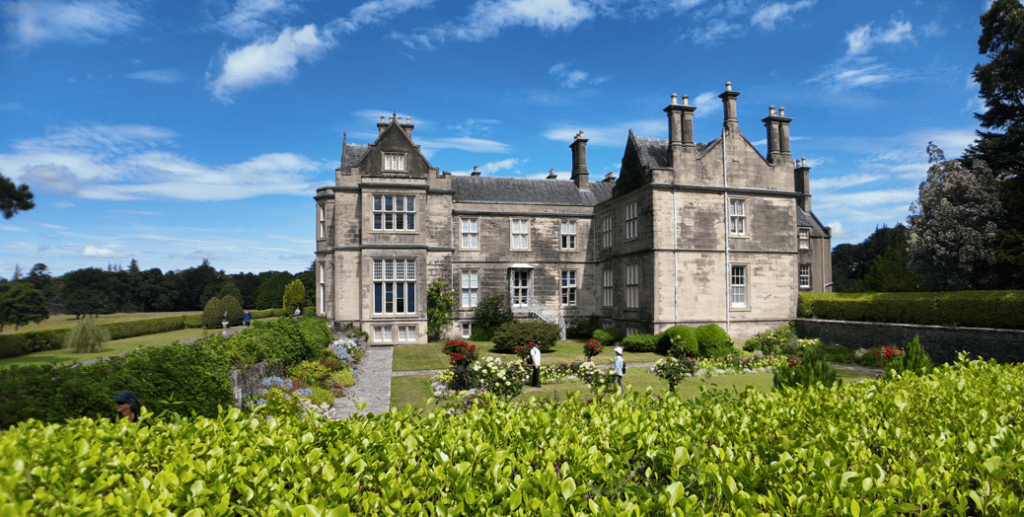
The nineteenth-century country house stands beside Muckross Lake within landscaped grounds. Its architecture, gardens and estate history tell the story of a very different social world from the Gaelic lordship represented by Ross Castle.
The house is also closely connected with the creation of the national park. The Muckross Estate formed the original core of the land transferred to the State in 1932, meaning the landscape around the house is central to the history of Killarney National Park itself.
Visitors can enjoy the gardens and surrounding estate even if they do not choose to tour the interior. If you enjoy historic houses, gardens and photography, I would allow enough time here rather than treating Muckross as a short parking stop on the way to Torc Waterfall.
Muckross Abbey
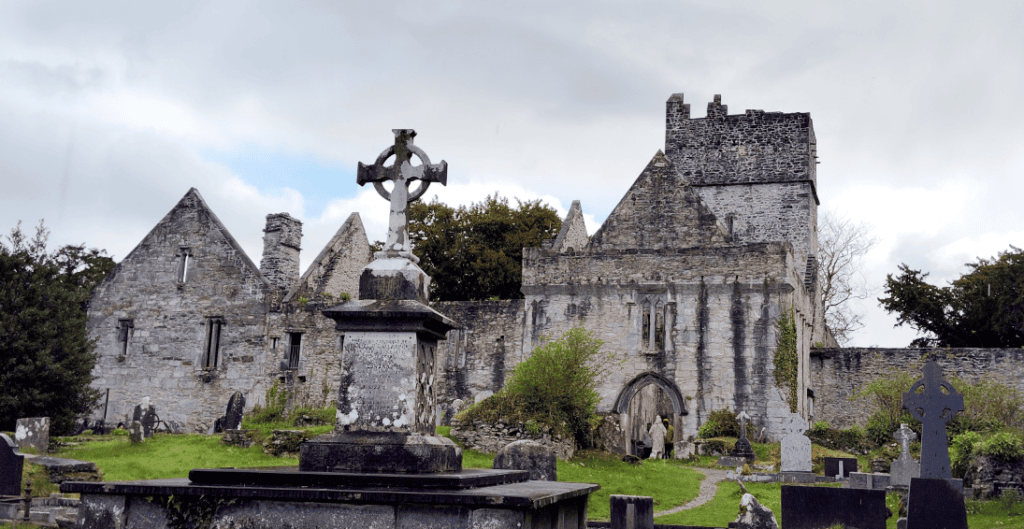
Within the wider Muckross landscape stands Muckross Abbey, although historically the building is more accurately described as a Franciscan friary.
The surviving church, cloister and domestic ranges make it one of the most atmospheric medieval sites around Killarney. The ancient yew tree growing within the central cloister is particularly memorable and has been remarked upon by visitors for centuries.
The friary’s history reflects periods of religious change, conflict and suppression, and the surrounding graveyard remained important long after the Franciscan community ceased to occupy the buildings in the way originally intended.
I would allow enough time to walk around the building slowly. Muckross Abbey is one of those places where details matter: windows, arches, stairs, chambers and the relationship between the church and cloister all help explain how the community once functioned.
Torc Waterfall
Torc Waterfall is one of the most visited natural attractions in Killarney National Park. Water descends through woodland at the foot of Torc Mountain, creating a particularly impressive flow after periods of rain.
The main waterfall is reached by a relatively short woodland walk, although the surrounding trail network allows visitors to continue considerably further if they want a longer walk.
This is one Kerry attraction where rain is not necessarily bad news. Wet weather can make the waterfall considerably more powerful, although paths and steps can naturally become wetter and more slippery.
During busy visitor periods, parking close to Torc can fill quickly. From a touring point of view, I prefer avoiding the busiest middle part of the day where possible rather than losing time waiting for a parking space.
Walking in Killarney National Park
Walking is one of the best ways to understand the park because so much of its character is lost when every stop is approached by car.
There are routes suitable for relatively easy woodland and lakeside walking as well as much longer and more demanding walks.
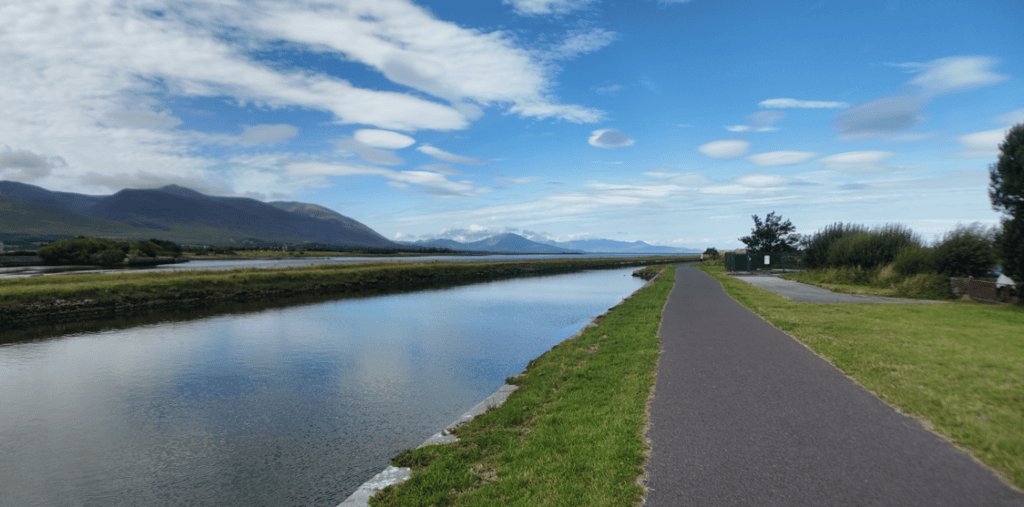
Around Muckross, trails connect the house, lake, woodland, Torc and the Dinis area. Ross Island also contains relatively accessible walking routes close to Killarney town.
More serious walkers can continue into upland country, including sections associated with the Kerry Way and the Old Kenmare Road.
Always match your walk to your fitness, available daylight and weather. A walk through sheltered woodland is a very different proposition from travelling into exposed mountain terrain in poor visibility.
Dinis Cottage, Old Weir Bridge and the Meeting of the Waters
One of the quieter parts of the Muckross landscape lies around Dinis Cottage on the western side of Muckross Lake.
The cottage has been associated with visitors to the Lakes of Killarney for generations and sits close to the Meeting of the Waters, where the waterways connecting the lakes come together.
Nearby Old Weir Bridge is one of the historic features of this landscape. Reaching this area generally requires more effort than pulling into a roadside viewpoint, which is part of its appeal. Walking or cycling gives you time to experience the woodland and lake rather than simply seeing another attraction.
If you have already visited the main Muckross sights and want somewhere quieter, this is one of the areas I would consider.
Ladies View
Ladies View is one of Killarney National Park’s best-known viewpoints and provides a broad elevated view across the lakes, woodland and surrounding mountains.
The name is associated with Queen Victoria’s visit to Killarney in 1861 and the admiration of her ladies-in-waiting for the landscape.
Whatever you think of the Victorian story behind the name, the viewpoint remains useful because it helps visitors understand the scale of the national park. From higher ground, the individual lakes and wooded valleys begin to form one connected landscape.
Visibility naturally determines the experience. On a clear day, the view extends across a considerable distance. In low cloud and heavy rain, much of the mountain landscape may disappear completely.
If conditions are poor, I would not build the entire day around waiting at Ladies View. Killarney National Park has enough woodland, historic sites and lower-level attractions to provide alternatives until visibility improves.
Moll’s Gap and the Road to Kenmare
Continue beyond Ladies View and the N71 climbs towards Moll’s Gap before descending towards Kenmare.
The character of the landscape changes as you gain height. Lakes and dense woodland give way to more open mountain scenery, demonstrating how varied this relatively short section of Kerry can be.
Moll’s Gap also forms an important connection between Killarney National Park and the wider Ring of Kerry. If you are exploring the county over several days, this route makes it easy to connect Killarney with Kenmare and the southern Iveragh Peninsula.
Visitors trying to decide how the landscapes compare may also find my guide to the Ring of Kerry versus the Dingle Peninsula useful when planning the rest of their stay.
The Gap of Dunloe
The Gap of Dunloe lies to the west of the main Killarney lake landscape between the MacGillycuddy’s Reeks and Purple Mountain.
This narrow mountain pass contains a series of glacial lakes and a road that has long been part of the visitor experience around Killarney. It can be explored on foot, by bicycle or through traditional jaunting-car experiences.
The Gap deserves proper time. I would not regard it as something to quickly add between Muckross House and Ross Castle simply because the locations look close together on a map.
Visitors choosing a classic combined experience may travel through the Gap and continue by boat through the Lakes of Killarney, but current boat and jaunting-car arrangements should always be confirmed with the relevant operators rather than assumed.
Native Woodland and Wildlife
Killarney National Park is not simply protected because it is scenic. Its natural habitats are of major conservation importance.
The park contains extensive semi-natural woodland, including old sessile oak woodland, yew woodland and wet woodland habitats. Some of these woodland communities are among the most important surviving examples in Ireland.
Killarney is also strongly associated with native red deer. The herd has particular conservation significance and forms part of the natural identity of the area.
Wildlife should be enjoyed without approaching or disturbing animals. Seeing deer in the park is memorable, but they are wild animals rather than part of a managed visitor display.
Dogs are welcome in designated parts of the national park but should be kept on leads in accordance with park rules, particularly because of wildlife and conservation requirements.
Killarney National Park in Rain
Rain does not automatically ruin a day in Killarney National Park.
In fact, this is one of the easiest parts of Kerry to adapt around unsettled weather. Torc Waterfall can become more impressive after rain, woodland provides some shelter and places such as Muckross House, Ross Castle and the historic sites give you alternatives to exposed mountain viewpoints.
The main issue is visibility. Low cloud can completely hide higher mountain scenery and reduce the value of places such as Ladies View.
My approach would be simple: use clear spells for viewpoints and exposed scenery, and use wetter periods for woodland, heritage and lower-level locations.
There is little benefit in forcing a viewpoint into the itinerary when all you can see is cloud.
Killarney National Park in One Day
If you have one full day, I would be selective.
A realistic first visit could combine Ross Castle, the Muckross area, Muckross Abbey and Torc Waterfall before continuing towards Ladies View if the weather is clear.
That already creates a substantial day once walking, photographs, lunch and time actually exploring the sites are included.
Trying to add the Gap of Dunloe, a lengthy boat trip, a major hike and the entire Ring of Kerry to the same day will normally reduce the quality of everything else.
Killarney works best when you treat the park itself as the day’s destination rather than something to tick off before starting another major route.
How Long Should You Spend in Killarney National Park?
For a straightforward introduction to the principal sights, allow at least half a day. A full day is considerably better if you want to include several historical sites, walking and the higher viewpoints.
Visitors who enjoy hiking, cycling, photography or history could easily devote several days to the wider Killarney area.
The amount of time you need also depends on whether you are using Killarney as a base for the Ring of Kerry. The park and the Ring overlap geographically, but they should not be treated as exactly the same experience.
If you are staying several nights in County Kerry, I would normally give Killarney National Park its own proper day and use another day for the larger Ring of Kerry circuit.
Killarney National Park or the Ring of Kerry?
This is a useful distinction for first-time visitors.
Killarney National Park concentrates on lakes, woodland, mountains, walking and important historical sites around Killarney.
The Ring of Kerry is a much larger touring circuit around the Iveragh Peninsula, connecting towns, villages, Atlantic coastline and mountain landscapes over a full day.
The two fit together naturally, but one does not replace the other.
If you want a broad journey through the Iveragh Peninsula, my Ring of Kerry private tour follows that larger landscape. If your priority is the lakes, woodlands, historic sites and mountain views around Killarney, concentrate on the national park.
Killarney National Park or the Dingle Peninsula?
They offer very different Kerry experiences.
Killarney National Park is strongest for lakes, native woodland, mountain scenery, historic estates and accessible walking.
The Dingle area is stronger for Atlantic coastline, archaeology, the Blasket Islands and living Gaeltacht culture.
I would not describe one as better than the other. If your itinerary allows it, experiencing both gives you a much more complete understanding of County Kerry.
Killarney shows you Kerry’s lake and mountain landscape. Dingle shows you its Atlantic and cultural landscape.
Driving Through Killarney National Park
Much of the park can be explored without driving continuously, and I think that is worth remembering.
Visitors sometimes approach Killarney in the same way they approach a long scenic road: drive to a viewpoint, take a photograph and move on.
The national park rewards a different pace.
Park the car. Walk through the woodland. Spend time beside the lake. Explore the grounds around Muckross. Look inside the ruins of the abbey. Allow yourself to experience a place rather than just photograph it.
The N71 towards Ladies View and Moll’s Gap is scenic but can be narrow and busy. Use proper parking and stopping areas rather than pulling over on bends or obstructing the road for photographs.
Cycling Around Killarney National Park
Cycling is another popular way of experiencing parts of the park because it allows you to cover more ground than walking without becoming separated from the landscape in the way you can inside a car.
The Muckross area is particularly suited to combining cycling with stops at historical and scenic locations.
You still need to allow time. A cycling day becomes much longer once you stop at Muckross Abbey, explore the house and gardens, walk to the waterfall and spend time around the lakes.
Do not calculate your day purely from cycling distance.
Photography in Killarney National Park
Photographers have an enormous range of subjects here.
Ross Castle provides architecture against lake and mountain scenery. Muckross offers formal gardens and historic buildings. The woodland changes with season and weather. Ladies View provides the broad landscape, while Torc gives you moving water beneath a tree canopy.
Early and later light can be particularly attractive around the lakes, but the best conditions are not always clear blue skies. Broken cloud across the mountains can produce much more interesting photographs than completely flat light.
Rain can also bring out the colour in woodland and stonework.
If photography is one of your main reasons for visiting, I would give the park more than a rushed half-day.
Who Does Killarney National Park Suit?
The park works well for an unusually broad range of visitors because the experience can be adjusted considerably.
You do not have to undertake a mountain hike to enjoy the landscape. Ross Castle, Muckross House, gardens, lakeside areas and established viewpoints allow visitors to experience a great deal without strenuous walking.
At the same time, walkers and cyclists can easily build much more active days around the trail network.
History enthusiasts have several important sites within a relatively small area, while photographers can move between architecture, woodland, water and mountains.
Visitors with mobility requirements should check the individual locations they want to visit rather than assume the entire park has the same level of accessibility. Historic buildings, woodland trails and uneven ruins can present very different conditions.
Explore Killarney with a Private Local Guide
For visitors who would rather leave the driving and route planning behind, my private Killarney National Park tour is designed around the principal landscapes and places of the Killarney area.
The benefit of touring privately is flexibility. Weather matters here, particularly at higher viewpoints. If cloud is sitting over the mountains, there is little value in rigidly following a timetable that insists we visit a viewpoint at a particular minute.
I can adapt the day around conditions and around the things that interest you most, whether that is history, photography, gardens, lakes or simply enjoying the scenery without worrying about the road.
My tours are designed for small private groups, so the day can remain relaxed rather than becoming a race from one attraction to another.
Continue Exploring County Kerry
Killarney National Park is an ideal gateway into the wider county. From here, the road through Ladies View and Moll’s Gap connects naturally with Kenmare and the southern side of the Iveragh Peninsula.
Continue around the peninsula and the landscape changes again through villages including Sneem and Waterville, before the western side of the Ring of Kerry opens towards the Atlantic.
If you are planning several days in the county, use the wider Explore Kerry travel guide to connect Killarney with the Ring of Kerry, Dingle Peninsula, historic sites, beaches and Kerry’s towns and villages.
Killarney National Park deserves to be understood as more than a collection of famous stops. Its real strength is the relationship between lakes, woodland, mountains and human history. Ross Castle, Muckross Abbey and Muckross House each tell a different story, but the landscape surrounding them is what connects everything together.
Frequently Asked Questions About Killarney National Park
Is Killarney National Park worth visiting?
Yes. For most first-time visitors to County Kerry, I would regard it as one of the strongest places to prioritise. The combination of lakes, woodland, mountains, waterfalls and major historic sites gives you several very different experiences within one area.
How long do you need in Killarney National Park?
Allow at least half a day for a basic introduction. A full day is much better if you want to explore Ross Castle, Muckross, Torc Waterfall and the main viewpoints without constantly rushing.
Is Killarney National Park free to visit?
Access to the national park landscape itself is generally free, although individual attractions, guided interiors, tours or commercial activities can have separate charges. Check current arrangements for any specific attraction you intend to enter.
Can you walk into Killarney National Park from Killarney town?
Yes. Parts of the national park can be reached directly from Killarney, which is one reason the town works so well as a base. Other attractions such as Muckross and Torc lie further from the town centre and require more time to reach.
Can you see Ross Castle and Muckross House in the same day?
Yes. Ross Castle, Muckross House, Muckross Abbey and Torc Waterfall can all form part of a well-planned national park day. Allowing enough time at each is more important than simply fitting the names onto an itinerary.
Is Torc Waterfall a long walk?
The main waterfall can be reached by a relatively short woodland walk from the nearby parking area, although there are longer walking routes around Torc for visitors who want a more substantial outing.
Is Killarney National Park suitable in rainy weather?
Yes. Rain can strengthen Torc Waterfall and make the woodland particularly atmospheric. The main disadvantage is reduced visibility at elevated viewpoints such as Ladies View, so it makes sense to adapt the order of your day around conditions.
Can you explore Killarney National Park without a car?
Yes. Walking, cycling and local transport options make it possible to experience substantial parts of the park without driving. Some locations are easier to combine than others, so plan according to the area you most want to explore.
Should I visit Killarney National Park or the Ring of Kerry?
If you have enough time, do both on separate days. The national park concentrates on lakes, woodland, mountains and historic sites around Killarney, while the Ring of Kerry is a much larger journey around the Iveragh Peninsula.
What are the main things to see in Killarney National Park?
For a first visit I would prioritise Ross Castle, the Lakes of Killarney, Muckross House and Gardens, Muckross Abbey, Torc Waterfall and, when visibility is good, Ladies View. Visitors with additional time can explore Ross Island, Dinis, the Meeting of the Waters, Innisfallen and the wider walking network.