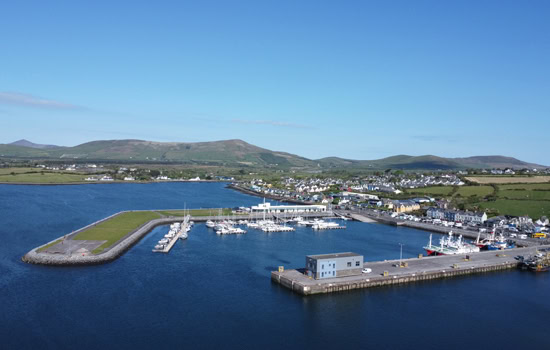
Dingle is the principal town of the western Dingle Peninsula, built around a sheltered natural harbour between the mountains of Corca Dhuibhne and the Atlantic coast. It is a working fishing town, a centre for the surrounding rural communities and one of the best bases for exploring West Kerry.
For visitors, much of Dingle’s appeal comes from how easily different parts of the peninsula’s character come together here. Fishing boats share the harbour with wildlife and tour boats. Traditional music continues in pubs a few streets from contemporary restaurants and independent shops. Irish is still part of the cultural landscape, while Slea Head, the Blasket Islands and Conor Pass are all within easy reach.
Dingle is worth more than a quick stop on the way around the peninsula. Spend some time in the town itself and it begins to explain the wider place around it.
Dingle Town or the Dingle Peninsula: What’s the Difference?
This causes more confusion than you might expect.
Dingle is the town.
The Dingle Peninsula is the much larger region stretching west from the Tralee area towards Slea Head and the Blasket Islands.
Dingle sits towards the western end of the peninsula and acts as its main commercial and visitor centre. Local tourism sources describe it as the hub of the peninsula, serving both the town itself and a much larger rural hinterland.
When someone says they are “staying in Dingle”, they will usually mean the town.
When they talk about “driving Dingle”, they often mean exploring the wider peninsula.
Understanding that distinction makes planning accommodation, driving routes and sightseeing considerably easier.
Why Did Dingle Develop Here?
The harbour explains a great deal.
Dingle grew beside a large natural inlet that offered ships protection from the Atlantic. That sheltered position made the settlement useful for fishing and maritime trade while the surrounding roads connected it with communities across the peninsula.
The town gradually developed uphill from the waterfront, and that relationship between harbour and settlement remains visible today.
Stand near the marina and look back towards the town.
The streets rise away from the water, with the mountains forming the backdrop to the north.
That geography shaped Dingle long before tourism became part of its economy.
A Short History of Dingle
Dingle has been associated with maritime trade for more than 800 years.
Records from 1257 show merchants using the port and paying customs duties, demonstrating that Dingle was already functioning as an established trading centre during the medieval period.
Over the following centuries the harbour developed strong commercial links with Britain and continental Europe. Goods exported from the region included hides, wool, fish, butter and salted meat, while imported products included wine, salt, coal and clothing.
By the sixteenth century, Dingle had become one of the important trading ports of Munster.
Its relationship with Spain was particularly significant. Wine and merchant vessels travelled between the peninsula and continental ports, while Dingle was also associated with pilgrims travelling towards Santiago de Compostela.
The prosperity did not continue uninterrupted.
The political and military upheavals surrounding the Desmond conflicts during the later sixteenth century badly affected Dingle and the surrounding region. Trade patterns changed, but the harbour continued to shape the town’s economy through fishing and later commercial activity.
By the eighteenth century, linen production had also become part of Dingle’s economy.
The modern town developed from all these layers: harbour, agriculture, trade, fishing and eventually tourism. The wider history of the Dingle Peninsula provides further context for the events, communities and cultural traditions that shaped West Kerry.
Dingle, An Daingean or Daingean Uí Chúis?
Visitors sometimes encounter several Irish names for Dingle and understandably wonder which one is correct.
Today, the Irish form most commonly used locally is Daingean Uí Chúis.
The naming story became particularly significant in the early twenty-first century.
Under official placename legislation, An Daingean became the official Irish form in 2004. This prompted considerable local opposition, and a local plebiscite in 2006 strongly favoured the use of Dingle / Daingean Uí Chúis.
Subsequent legislation restored Dingle as the English form while recognising Daingean Uí Chúis in Irish.
The debate was about more than road signs.
It touched on language, local identity and the relationship between official placenames and the names communities use for themselves.
For visitors today, Dingle and Daingean Uí Chúis are the forms worth recognising.
Dingle and the Irish Language
Dingle belongs to the cultural landscape of Corca Dhuibhne, the Irish name for the Dingle Peninsula.
The peninsula contains an important Gaeltacht—an officially recognised area where Irish remains a community language.
You will encounter Irish on road signs, public buildings and place names throughout the region, but its significance extends well beyond signage.
Travelling west from Dingle towards Ballyferriter and Dún Chaoin brings you into communities where Irish continues to be spoken in homes, schools and everyday life.
Dingle itself sits at an interesting meeting point between those Irish-speaking communities and the large number of international visitors who arrive each year.
If you are unfamiliar with Irish, there is no need to feel self-conscious about it.
Notice the names.
Listen.
Learn a word or two if you would like.
Most importantly, remember that Irish here is not simply part of a historical display. It belongs to a living community.
Dingle Harbour
Dingle Harbour deserves more than a quick photograph.
It is one of the keys to understanding the town.
The natural inlet that allowed medieval merchants to trade with Europe continues to support fishing boats today, alongside the marina, wildlife excursions and other visitor services.
A walk along the waterfront gives you one of the easiest introductions to Dingle.
Fishing vessels may be tied alongside leisure boats. The town rises behind you while the harbour opens towards Dingle Bay in the opposite direction.
This was also the landscape associated with Dingle’s most famous modern resident.
For approximately 37 years, a wild bottlenose dolphin known as Fungie lived around the entrance to Dingle Harbour. From his arrival in 1983 until his disappearance in October 2020, Fungie became closely associated with Dingle and helped shape the town’s modern tourism story.
His bronze sculpture remains on the waterfront today.
Understanding the harbour therefore connects several very different periods of Dingle’s history: medieval trade, fishing, tourism and the extraordinary story of one wild dolphin.
Best Things to Do in Dingle Town
You do not need a car to enjoy the town itself.
Dingle is compact and best explored on foot, leaving you free to wander between the harbour, streets, shops, cafés and pubs without worrying about creating a strict itinerary.
Walk Dingle Harbour
Start at the waterfront.
Walk past the marina and fishing harbour, look back towards the town and take time to understand the geography before heading into the streets.
The harbour is especially useful if this is your first visit because so much of Dingle’s story begins here.
Explore the Streets
Dingle rewards wandering.
Rather than concentrating only on the waterfront, walk uphill into streets such as Green Street, Main Street and the smaller streets connecting the centre.
The layout preserves something of the older town, while individual buildings, carved stones and surviving architectural details hint at its long commercial history.
This is also where you encounter Dingle as a working town rather than simply a collection of attractions.
Visit Dingle Oceanworld Aquarium
For families, marine-life enthusiasts or anyone looking for an indoor attraction, Dingle Oceanworld Aquarium is beside the marina.
Current exhibits include sharks, penguins, otters, jellyfish and an immersive experience exploring marine life around Ireland’s Atlantic coast.
It is particularly useful on a wet day when mountain views and outdoor sightseeing are limited.
Discover the Story of Fungie
If you notice the dolphin sculpture near the harbour, take a few minutes to understand why it is there.
Fungie’s relationship with Dingle lasted almost four decades and became part of the town’s modern identity.
His story is much more interesting once you understand that he was a wild bottlenose dolphin rather than a trained attraction.
Explore Local Shops and Makers
Dingle has built a strong reputation for independent craft, food and locally produced goods.
Rather than treating shopping as simply buying souvenirs, look for businesses connected with the peninsula itself.
West Kerry has attracted and supported potters, weavers, leatherworkers, artists, photographers and food producers for decades.
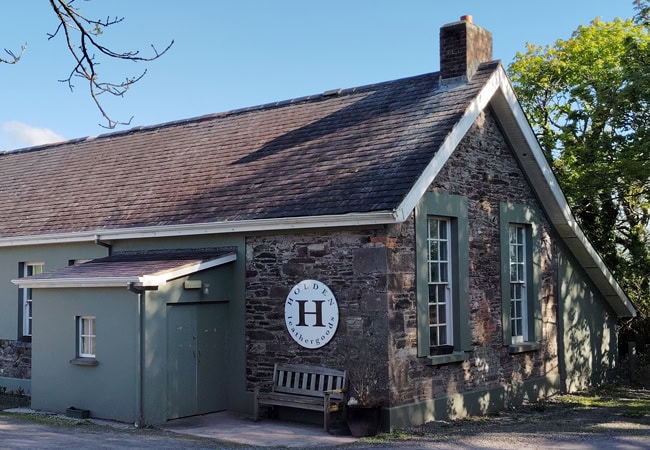
Holden Leathergoods produces handmade leather bags and accessories from its workshop between Dingle and Ventry, while Louis Mulcahy Pottery has been making pottery at Clogher since 1975.
Some businesses have grown well beyond the peninsula while maintaining their connection with Dingle.
This is another part of the modern town worth exploring.
Visit Dingle Distillery
Dingle Distillery opened in 2012 and has become another recognisable part of the town’s modern production story.
Its whiskey, gin and vodka are produced in Dingle, and organised visits provide an opportunity to understand the distilling process and the development of the business.
If you want to visit, check current tour times rather than simply arriving and assuming a tour will be available.
Food and Drink in Dingle
Dingle has developed a disproportionately strong food scene for a town of its size.
The harbour naturally contributes to the prominence of seafood, while independent cafés, pubs, restaurants and food producers add considerable variety.
Out of the Blue, beside the harbour, is particularly distinctive because it serves seafood and only seafood, with the menu changing according to availability.
Murphys Ice Cream began in Dingle in 2000 and built its identity around Irish ingredients and flavours including Brown Bread and Dingle Sea Salt.
Those are only two examples.
The better approach is not to arrive with a rigid list of restaurants you have seen online.
Think about what you actually want to eat, check current opening days, book important dinners in advance during busy periods and leave room to discover somewhere yourself.
The Dingle food guide provides a broader introduction to the town’s seafood, local produce and independent food businesses.
Traditional Music in Dingle
Music is one of the strongest reasons to spend at least one evening in Dingle rather than driving away after completing Slea Head.
Traditional music can be heard regularly around the town, although different pubs offer different types of evenings.
Some specialise in traditional sessions. Others host scheduled musicians, set dancing or broader live music.
Places worth checking include O’Sullivan’s Courthouse, O’Flaherty’s, Nelligan’s, Foxy John’s and Dick Mack’s, depending on the night.
Do not assume that the same pub will provide the strongest session every evening.
Check current listings, ask locally and walk around town.
Dingle is compact enough that following the sound of music from one pub to another is often more useful than relying on an old timetable online. The guide to the best pubs in Dingle for live music explains the principal venues and how traditional sessions work.
Dingle With Children
Dingle works particularly well for families because the town itself is manageable on foot and several activities can be adapted around the weather.
Oceanworld Aquarium is the obvious substantial indoor attraction.
The harbour is easy to explore, Murphys provides a simple food stop, and beaches and shorter scenic experiences are accessible once you travel beyond town.
Families do not need to spend every day visiting archaeological sites.
Mix history with beaches, animals, food and time outdoors.
That usually produces a much better family experience. The wider guide to things to do in Dingle can help families choose a suitable mix of indoor and outdoor activities.
Dingle as a Base for Exploring the Peninsula
One of Dingle’s greatest advantages is its location.
Stay in town and several very different landscapes can be reached without changing accommodation every night.
Slea Head Drive
For most first-time visitors, Slea Head Drive should be the priority.
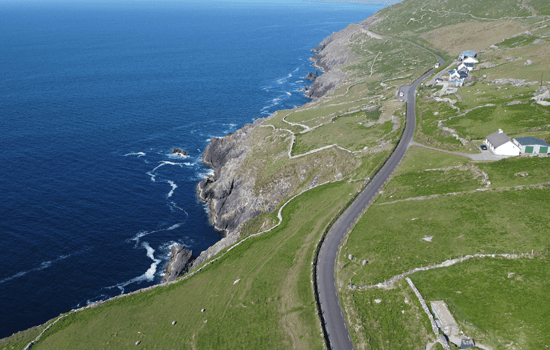
The route travels west from Dingle through Ventry and around the Atlantic coastline towards Dún Chaoin, Ballyferriter and the historical sites of the western peninsula.
Allow most of a day if you want to stop properly.
Slea Head is far more rewarding when it is treated as a landscape to explore rather than a road to complete.
The Blasket Centre
At Dún Chaoin, the Blasket Centre tells the story of the Irish-speaking community who lived on the Blasket Islands and produced an extraordinary body of autobiographical literature.
It is one of the strongest cultural attractions on the peninsula and deserves considerably more time than a quick roadside stop.
Conor Pass
Conor Pass climbs north from Dingle across the mountains towards Brandon Bay.
On a clear day, it provides a completely different perspective from Slea Head.
The northern section of the road is extremely narrow, so visitors should understand the road and vehicle restrictions before attempting the full crossing.
If you are uncomfortable with narrow mountain roads, you can drive from Dingle to the summit viewpoint and return the same way.
Gallarus and Kilmalkedar
For history and archaeology, Gallarus Oratory and Kilmalkedar Church are among the most rewarding sites to explore.
Don’t simply photograph them.
Together they reveal something of the density and longevity of Christian settlement and pilgrimage on the western peninsula.
Great Blasket Island
Weather and season permitting, boat trips provide access to Great Blasket Island.
An island visit is a substantially different experience from visiting the Blasket Centre and should be treated as a major part of a day rather than another quick attraction.
The guide to the history and culture of the Blasket Islands provides useful background before travelling.
How Long Should You Stay in Dingle?
If you can, stay for at least two nights.
A few hours is enough to walk around the centre and harbour, but it does not allow you to experience the town in the evening or explore the peninsula properly.
A Few Hours
Explore the harbour and town centre.
One Night
Add dinner and traditional music.
Two Nights
Give one full day to Slea Head.
Three Nights
You can add the Blasket story, Conor Pass, a boat trip or another part of the peninsula without constantly rushing.
For a first visit, I think two to three nights provides the best balance.
If Dingle is only one stop in a longer Irish trip, two nights is workable.
If you genuinely want to understand the peninsula, three gives you far more freedom. The guide to how long to spend in Dingle compares these options in greater detail.
Getting to Dingle
Dingle sits on the western end of County Kerry, approximately 50 kilometres from Tralee.
Most independent visitors arrive by car, but the town itself can also be reached using public transport.
If travelling from farther afield, common arrival points include:
- Kerry Airport
- Killarney
- Tralee
- Shannon Airport
- Cork
- Dublin
The best route depends on the rest of your Irish itinerary.
A car is not essential for walking around Dingle Town, but it gives considerably more flexibility when exploring the wider peninsula independently.
Visitors who prefer not to drive can combine available public transport with taxis, organised excursions or a private guide.
Getting Around Dingle
Once you are in town, walk.
Most of the centre, harbour, restaurants, pubs and shops are close enough that repeatedly moving the car makes little sense.
The situation changes when you leave Dingle.
Slea Head, the Blasket viewpoints, Gallarus, Kilmalkedar, Conor Pass and the peninsula’s beaches are spread across a much larger rural area.
For those places, plan transport before you set out. The guide to visiting Dingle without a car explains the practical options for reaching the wider peninsula.
Parking in Dingle
Parking is available around Dingle, but the experience changes substantially with the season.
During quieter months it is generally easier.
During busy summer periods, allow additional time rather than assuming you will find a space directly beside wherever you want to go.
If you are staying in town, ask your accommodation about parking and then explore on foot whenever practical.
That usually removes unnecessary driving from the visit.
When Is the Best Time to Visit Dingle?
There is no single best month.
Spring brings increasing daylight and generally fewer visitors than high summer.
Summer offers the longest evenings and widest range of visitor services, but it is also the busiest period.
Autumn becomes quieter while still offering plenty of opportunities to explore.
Winter reveals a much quieter Dingle, although some seasonal attractions, boat services and businesses reduce their hours or close.
Weather matters more than many visitors expect.
A clear spring day can provide a considerably better Slea Head experience than a foggy summer afternoon.
If you are staying several days, keep the itinerary flexible and save the clearest conditions for the peninsula’s major viewpoints. The complete guide to the best time to visit Dingle examines the advantages and limitations of each month.
Is Dingle Worth Visiting?
Yes—but I think Dingle becomes much more rewarding when you avoid treating it purely as the starting point for Slea Head Drive.
The town has its own story.
Its harbour explains centuries of trade and fishing. Its streets reveal the shape of an old commercial town. Irish-language culture connects it with the communities farther west. Restaurants and craft businesses represent a newer creative economy. Traditional music remains part of evening life.
Then, outside the town, the rest of the peninsula begins almost immediately.
That combination is what makes Dingle such a useful place to stay.
You can spend the day among Atlantic cliffs, archaeological sites or mountain roads and still return in the evening to somewhere that feels like a town rather than a resort built solely for tourism.
Continue Exploring from Dingle
Dingle can support anything from a short harbour visit to a longer stay exploring Corca Dhuibhne.
If you have three days, the three-day Dingle Peninsula itinerary divides the region into realistic daily routes and leaves room for changing weather.
Steve’s Peninsula Tours’ private full-day Dingle Peninsula tour can explore Slea Head and the western peninsula with the route adjusted around visibility, walking ability and the interests of the group.
Frequently Asked Questions About Dingle
Is Dingle worth visiting?
Yes. Dingle combines a walkable harbour town with food, traditional music and easy access to Slea Head, the Blaskets and the wider peninsula.
Is Dingle the same as the Dingle Peninsula?
No. Dingle is the main town. The Dingle Peninsula is the much larger region surrounding it and extending west towards Slea Head and the Blasket Islands.
What is the Irish name for Dingle?
The Irish form commonly used today is Daingean Uí Chúis. Visitors may also encounter An Daingean because of the town’s modern placename history.
Is Dingle in the Gaeltacht?
Dingle is closely connected with the Corca Dhuibhne Gaeltacht, and the wider western peninsula contains communities where Irish remains a living community language.
How many days do you need in Dingle?
I recommend at least two nights for a first visit. Three nights gives you much more freedom to explore the peninsula without rushing.
Is Dingle walkable?
Yes. The town centre, harbour, pubs, restaurants and shops are easy to explore on foot.
Do you need a car in Dingle?
Not for the town itself. A car is much more useful if you want to explore Slea Head, Conor Pass and other parts of the peninsula independently.
Is Dingle good for families?
Yes. Oceanworld Aquarium, the harbour, nearby beaches, food stops and shorter sightseeing experiences make Dingle easy to adapt for families.
Is Dingle a good base for exploring the Dingle Peninsula?
Yes. For most visitors it is the most convenient base because you can explore different parts of the peninsula during the day and return to restaurants, pubs and accommodation in the evening.
My Advice for Visiting Dingle
Don’t make the mistake of arriving in Dingle, immediately driving around Slea Head and leaving again.
Give the town some time.
Walk the harbour.
Explore the streets.
Have dinner somewhere local.
Listen to music.
Then use Dingle as the starting point for discovering the wider peninsula.
The town and peninsula explain each other.
Once you understand that relationship, Dingle becomes much more than somewhere you happened to stay while travelling around County Kerry.