
HISTORY COLLECTION
Minard Castle is a ruined tower house standing above Kilmurry Bay on the southern side of the Dingle Peninsula.
Late Medieval / Early Modern
Kilmurry Bay, Dingle Peninsula
Tower House
Private / permission-controlled
View from a safe distance
The surviving ruins of Minard Castle preserve evidence of a substantial sixteenth-century tower house built in a commanding coastal setting. Its heavily damaged masonry, lower vaulted fabric and position above Kilmurry Bay help explain both its original character as a fortified residence and the violent events that brought its occupation to an end. The surrounding landscape is equally important, placing the castle within a much older archaeological setting on the southern Dingle Peninsula.
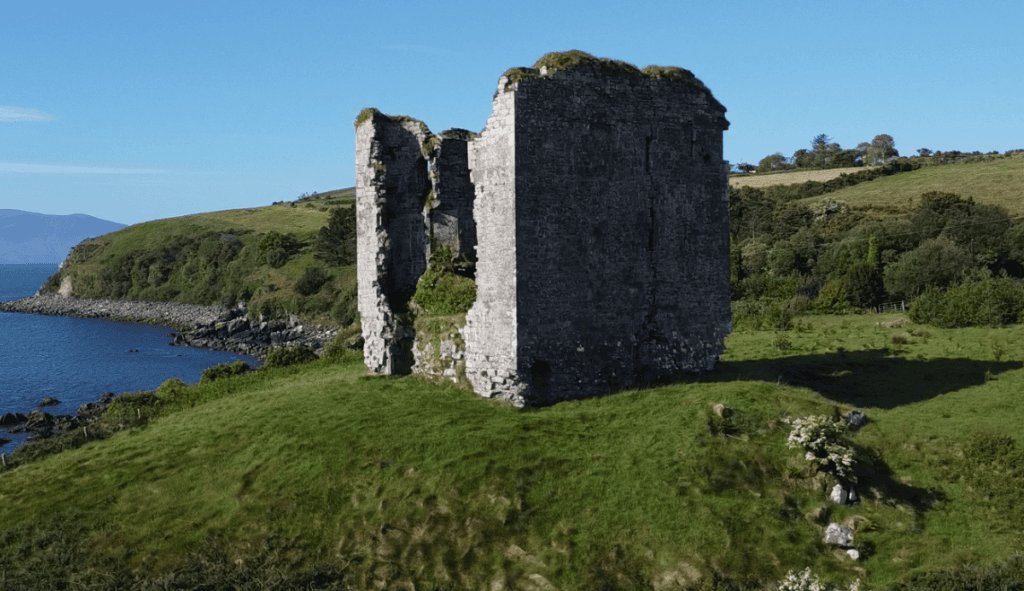
The surviving masonry represents part of a substantial rectangular tower house probably constructed during the sixteenth century.
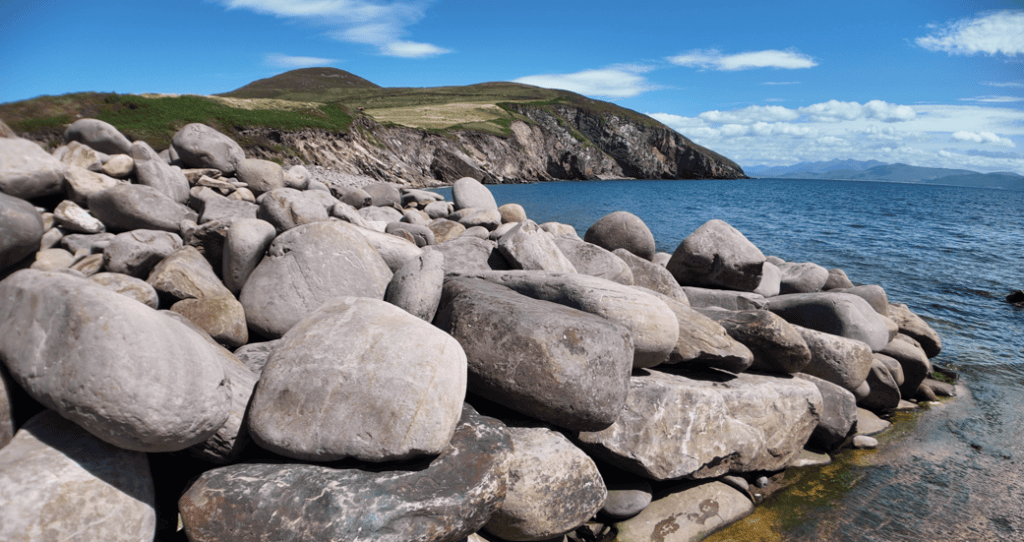
Kilmurry Bay formed the coastal setting of a fortified residence connected with the FitzGerald lordship of Corca Dhuibhne.
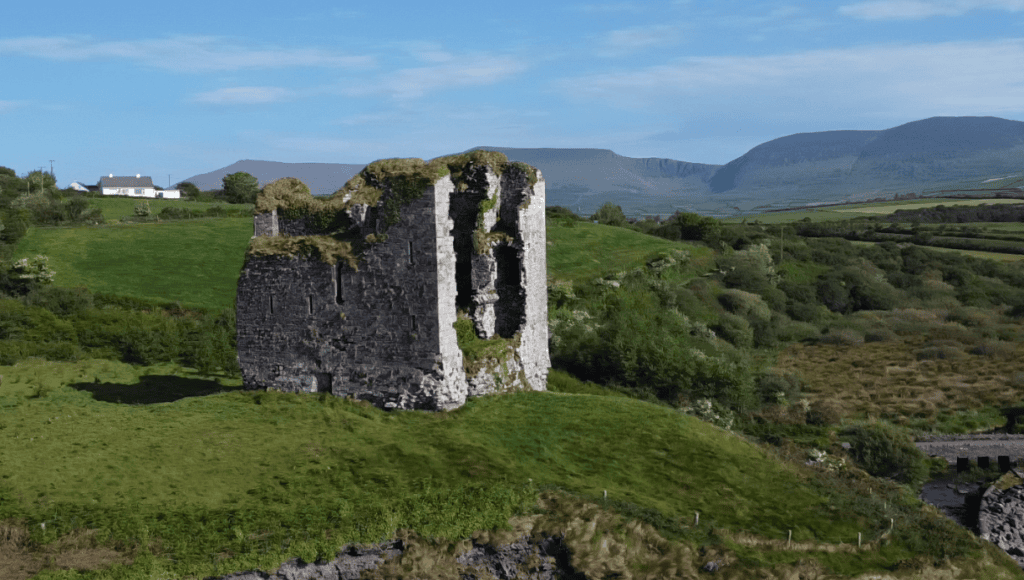
Lower-level stone vaulting survives within the ruin, despite the catastrophic destruction associated with the seventeenth-century attack.
Every historic site has a unique story shaped by its landscape, history and surviving remains. This section provides the key facts you need to understand the monument, including its location, historical importance and defining features, offering a solid foundation before exploring the site in greater depth.
Irish name
Caisleán na Mine Airde
County
Kerry
Monument Type
Tower House
National Monument Number
KE054-032002
Historical Period
Late Medieval / Early Modern
Ownership
Private ownership
Date
1560
Condition
Roofless, heavily ruined
Townland
Kilmurry / Cill Mhuire
Archaeological Investigation
No published modern excavation identified
Civil Parish
Minard / An Mhin Aird
Public Access
Permission-controlled
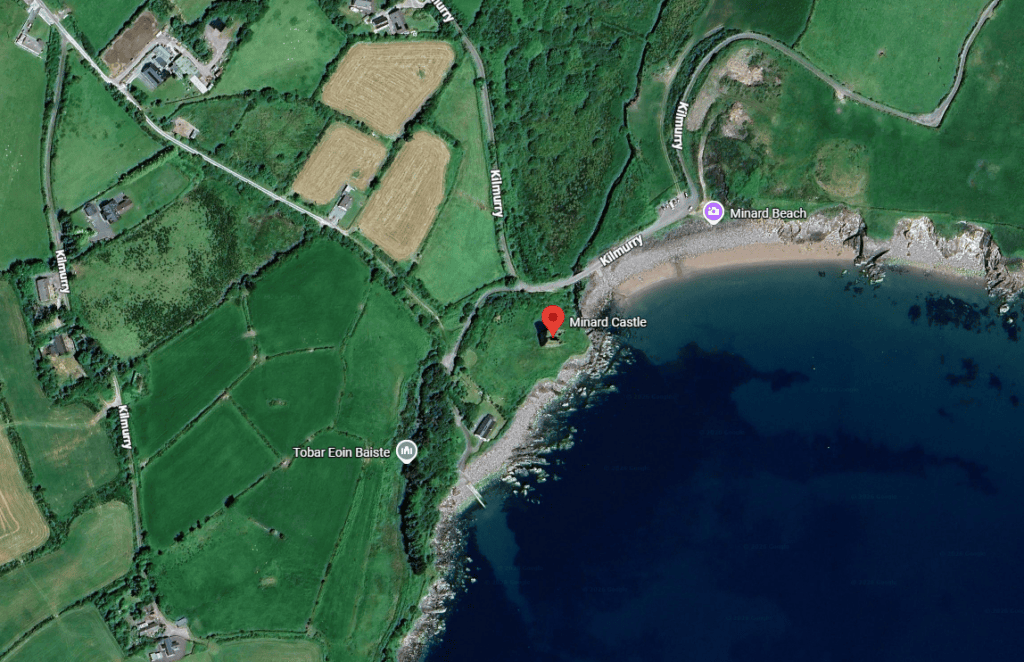
Latitude
52.126552
Longitude
-10.107557
Address
Minard, Co. Kerry
Nearest Town
Lispole
Road access
N86
Minard Castle belongs to the tower-house tradition that became widespread among Ireland’s Gaelic and Anglo-Irish elite during the later Middle Ages. These compact, multi-storey stone residences combined domestic accommodation with defence, storage, estate administration and the visible expression of status.
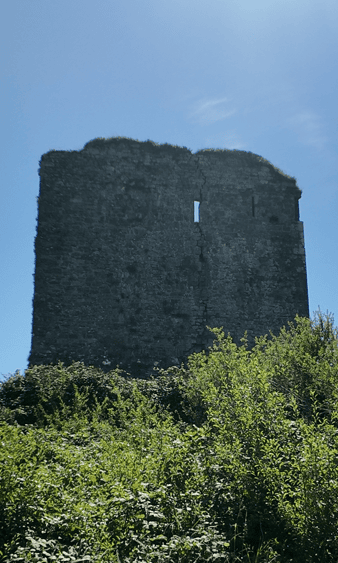
Minard Castle Masonry Close Up
The castle is closely associated with the FitzGeralds and the hereditary Knights of Kerry, whose estates extended across the Dingle Peninsula. Their principal seat was at Rahinnane, while castles at Minard, Gallarus and elsewhere formed part of a wider landscape of lordship and territorial authority. A professional archaeological assessment gives 1560 as the year Minard Castle was established by the Knight of Kerry. As no contemporary foundation record or scientific dating has confirmed this exact year, c.1560 or the mid-sixteenth century is the most appropriate dating.
As a tower house, Minard was primarily a fortified residence rather than a large military fortress. Its substantial stone construction provided protection for an elite household while also serving as a centre within the surrounding agricultural estate.
The castle’s occupation came to a violent end during the upheavals of the seventeenth century. Later historical accounts describe Walter Hussey and his followers retreating to Minard during the Parliamentarian campaign in Kerry. Forces associated with Colonels Le Hunt and Sadler then attacked the castle. Cannon fire reportedly made limited impression on its heavy masonry, after which gunpowder was used beneath or within the lower vaulted part of the building.
The broad account of a Parliamentarian attack and explosive destruction around 1650 is well supported by historical tradition and is consistent with the castle’s catastrophic structural damage. However, details such as the exact year, number of defenders and precise sequence of the siege remain uncertain. The destruction effectively ended Minard’s occupation as a high-status fortified residence.
By the nineteenth century, Minard was already recognised as a prominent historic ruin. Samuel Lewis recorded the castle and the story of its destruction in 1837, helping preserve an account subsequently repeated by Kerry antiquarians. In the twentieth century, another layer was added to its cultural history when Minard was used as a location during the filming of David Lean’s Ryan’s Daughter, released in 1970.
The destruction of Minard Castle is often attributed directly to Oliver Cromwell, but there is no evidence that Cromwell personally attacked the castle. The surviving historical accounts instead associate the operation with subordinate Parliamentarian forces during the wider conquest of Kerry around 1650.
Minard Castle was constructed as a rectangular tower house with substantial load-bearing masonry walls. Although much of the original building has been lost, the surviving structure indicates that it once rose through at least three principal levels. An additional upper or parapet level is possible, but the castle’s original full height has not been securely established.
The walls were built principally from sandstone, using rubble or roughly coursed masonry bonded with lime mortar. More carefully dressed stone was probably concentrated around structurally important features such as corners, doorways and window openings. Timber scaffolding would have been required during construction, while the wall cores were packed with smaller stones and mortar between the outer masonry faces.
One of the castle’s important surviving architectural features is its lower-level stone vaulting. During construction, a temporary timber framework known as centring would have supported the masonry until the completed vault could carry its own weight. Such vaults strengthened tower houses and created a substantial division between lower service or storage areas and the residential accommodation above.
The surviving walls also contain narrow openings characteristic of Irish tower houses. These could provide light and ventilation while limiting vulnerable openings through the defensive masonry. The precise arrangement of Minard’s original windows, doorways and internal stairs has not been securely established.
Upper floors probably contained the principal domestic rooms, supported by timber floors or masonry carried on wall ledges and corbels. Features commonly found in comparable tower houses cannot automatically be attributed to Minard, however, because so much of its original fabric has disappeared.
The castle’s defensive strength depended on its thick walls, height, restricted openings and controlled entrance. These characteristics could provide substantial protection against small arms and relatively short attacks, but tower houses were not designed to withstand sustained artillery or explosive attack. Minard’s surviving ruin demonstrates the limitations of this form of fortified residence during the changing warfare of the seventeenth century.
Minard Castle’s irregular appearance is the result of catastrophic structural loss rather than its original architectural design. The surviving walls represent only part of what was once a more complete, vertically organised tower house.
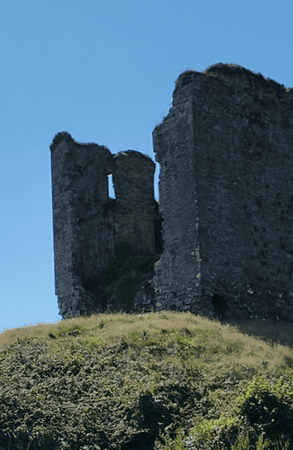
Minard Castle Ruined Walls
Minard Castle is archaeologically classified as a tower house: a compact, vertically organised fortified residence characterised by substantial masonry walls and relatively restricted openings at lower level. The surviving remains include significant sections of the external walls, internal wall faces and lower vaulted masonry, while much of the upper structure has been lost.
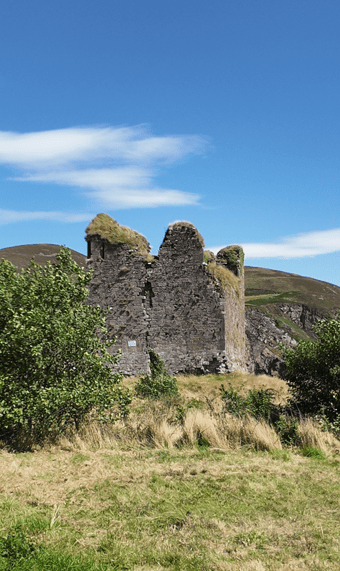
Minard Castle Exterior Ruins
No published modern archaeological excavation specifically examining Minard Castle has been identified. This means that important questions about its construction, occupation and destruction remain unresolved. In particular, there is no excavated construction layer or scientific dating evidence confirming the traditionally cited construction date of around 1560.
Much of the present understanding of the castle therefore comes from its surviving architectural fabric, official archaeological classification, documentary sources and comparison with other Irish tower houses. Archaeological investigation could potentially identify original floor levels, internal divisions and different phases of construction or repair.
The ground surrounding the tower may also preserve important buried evidence. Possible remains include foundations, occupation deposits, collapsed masonry and material associated with the seventeenth-century attack. These possibilities represent archaeological potential rather than confirmed discoveries, as they have not been demonstrated through excavation.
The same caution applies to suggestions that Minard once possessed a bawn, or defended courtyard surrounding the tower house. Such enclosures commonly accompanied Irish tower houses and could contain service buildings, livestock areas and other estate facilities. However, no complete bawn associated with Minard has been securely identified, and nearby earthworks cannot be assumed to belong to the castle without archaeological investigation.
Archaeology could also help test the historical account of Minard’s destruction. Excavation of undisturbed demolition deposits might establish how the building collapsed and potentially reveal evidence connected with the attack. Until such investigation takes place, the precise location and mechanism of the reported gunpowder explosion remain interpretations rather than established archaeological fact.
Minard Castle has considerable archaeological potential precisely because so little intrusive investigation has taken place. Buried deposits around the ruin could preserve evidence capable of refining its construction date, occupation history and the circumstances of its destruction around 1650.
Minard Castle was more than a defensive structure. Tower houses of this period functioned as fortified residences within agricultural estates, providing accommodation while also supporting storage, administration and the management of surrounding land. At Minard, the castle was associated with the FitzGerald and Knight of Kerry lordship that exercised considerable influence across Corca Dhuibhne.
The building’s vertical arrangement would have separated different activities across several levels. The surviving lower vault indicates a substantial division between the lower part of the tower and the accommodation above. In tower houses generally, lower spaces could serve storage and service functions, while upper levels contained the principal residential rooms. At Minard, however, the exact arrangement of individual rooms has not been established.
Life at the castle would also have been closely connected with the surrounding estate. The sheltered lowlands around Minard provided pasture and cultivable ground, while nearby uplands offered additional grazing and fuel resources. This agricultural landscape helped support the household and the wider economic functions associated with an elite residence.
The surviving archaeology cannot yet tell us how many people normally occupied Minard, how individual rooms were used or what possessions belonged to its residents. No excavated assemblage of pottery, food remains, tools or personal objects has been identified from the castle. Any detailed reconstruction of everyday domestic life must therefore remain cautious.
What can be established is that Minard belonged to a landscape in which residence, agriculture, political authority and defence were closely connected. Its substantial stone tower was both a home and a visible expression of the position held by the elite families associated with the estate.
No excavated collection of everyday objects has yet been identified from Minard Castle. Our understanding of life within the tower therefore depends principally on its surviving architecture, historical context and comparison with the wider Irish tower-house tradition.
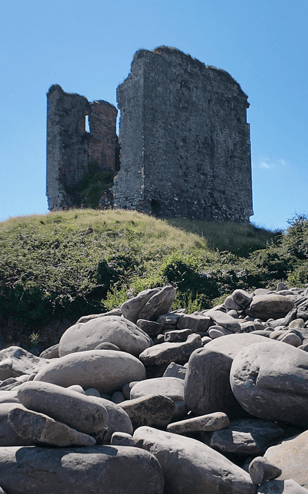
Minard Castle Above Kilmurry Bay
Minard Castle occupies elevated ground overlooking Kilmurry Bay on the southern side of the Dingle Peninsula. From this position, the castle commands extensive views across Dingle Bay towards the Iveragh Peninsula. Its visibility would have reinforced the status of the residence while also providing awareness of movement through the surrounding landscape. There is, however, no direct evidence that Minard operated as a formal harbour fortress, signalling station or customs post.
Kilmurry Bay Coastal Landscape
The surrounding countryside was equally important. Tower houses functioned within productive estates rather than as isolated military buildings. The sheltered lowlands around Minard provided pasture and cultivable ground, while the uplands offered additional grazing and fuel resources. The castle probably formed the elite centre of this agricultural landscape.
Minard was also connected to a wider network of settlements and routes linking Dingle, Lispole, Annascaul and the eastern peninsula. Maritime activity within Dingle Bay would have been visible from the area, although the precise routes used during the medieval and early modern periods have not been established.
The landscape was already ancient when the castle was constructed. Recorded enclosures, ecclesiastical remains, burial grounds and inscribed stones demonstrate occupation of the wider Minard district long before the sixteenth century. Nearby Aglish graveyard forms part of this older ecclesiastical landscape, while tower houses such as Rahinnane and Gallarus Castle place Minard within a wider network of fortified elite residences.
Immediately below the castle, Kilmurry Bay contains an exceptional natural storm beach formed from large rounded sandstone boulders. Powerful waves have moved and shaped these stones over time. They are a geological feature of the coastline and should not be mistaken for masonry thrown from the castle during its destruction.
The enormous rounded boulders below Minard Castle are not debris from its destruction. They form a natural sandstone storm beach created by high-energy wave action along the exposed coast.
Follow the story of Minard Castle from the growth of FitzGerald influence on the Dingle Peninsula through the castle’s construction, its destruction during the Cromwellian conquest and the survival of its dramatic ruins overlooking Kilmurry Bay.
FitzGerald influence developed across the region, establishing the political landscape from which the later Knight of Kerry estates emerged.
Professional archaeological assessment attributes the establishment of Minard Castle to the Knight of Kerry around the mid-sixteenth century.
Parliamentarian forces attacked Minard Castle during the conquest of Kerry. Historical accounts associate its catastrophic destruction with gunpowder used beneath the vaulted structure.
Samuel Lewis published an influential account describing the cannon attack and subsequent mining beneath the castle’s vaults.
Minard Castle was used as a location during filming of David Lean’s Ryan’s Daughter, released in 1970.
Everything you need to know before visiting Minard Castle, including its location, parking, access conditions and practical information for exploring the ruins and surrounding coastal setting.
Kilmurry Bay, near Lispole on the southern Dingle Peninsula
Free parking is available by the beach.
Private / permission-controlled; respect landowner directions
Private
Avoid periods of poor weather, high tides and storms
Aglish Graveyard, Rahinnane Castle and Gallarus Castle
Explore more historic places, monuments and archaeological sites across County Kerry.
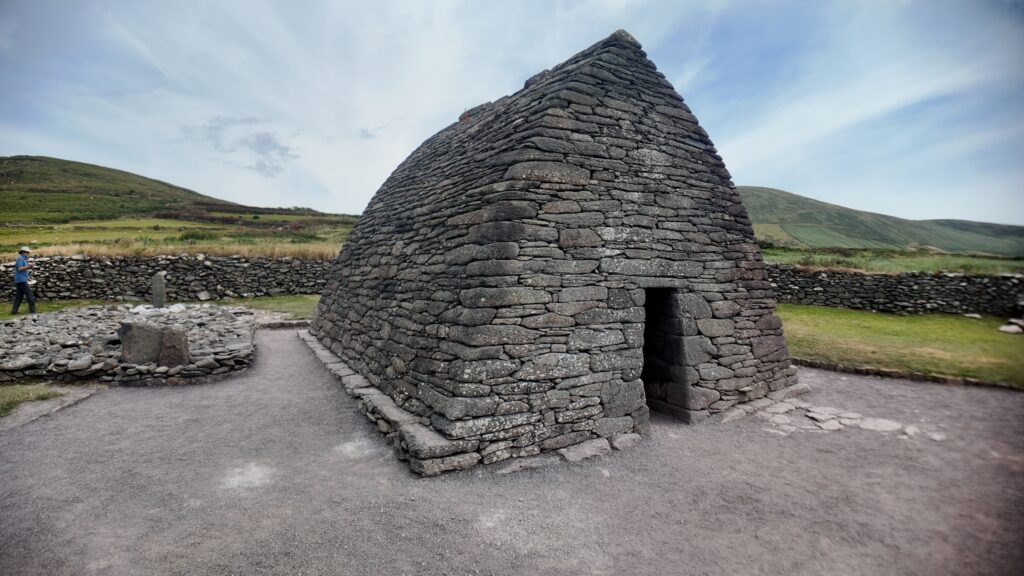
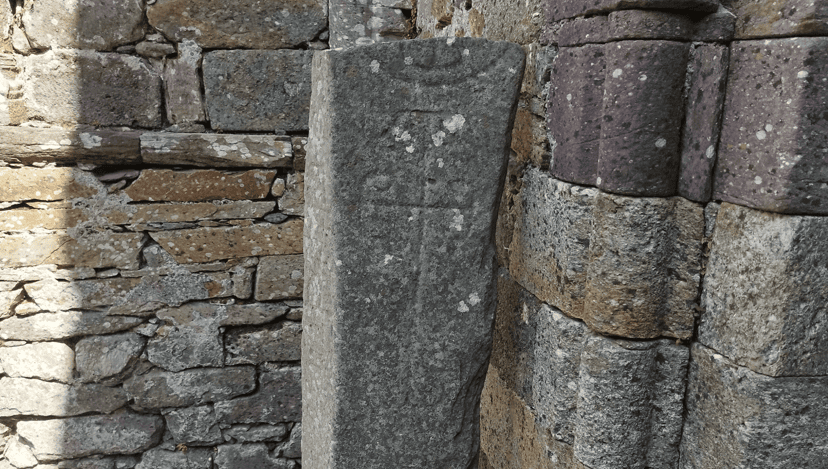
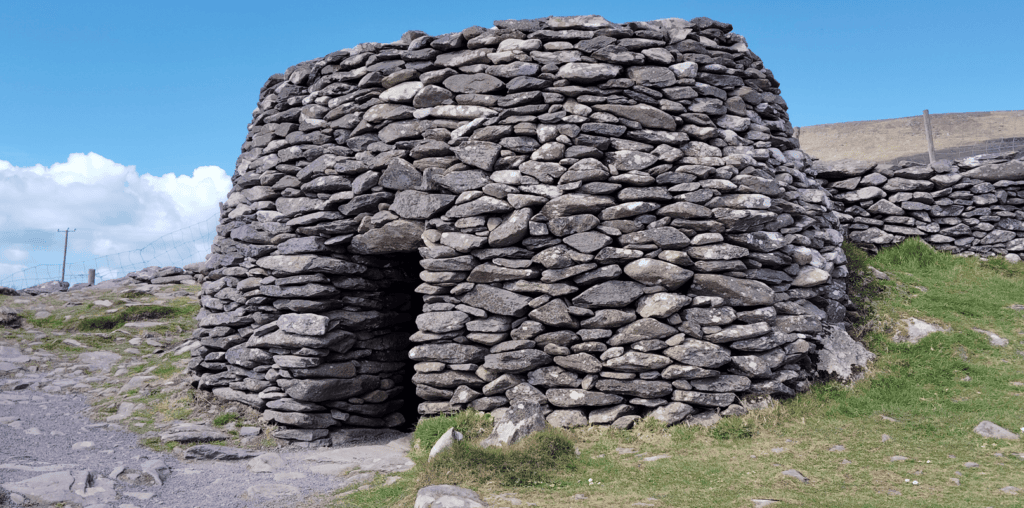
Minard Castle is best understood as part of the wider historic landscape of the Dingle Peninsula. From its position above Kilmurry Bay, the ruined tower house reveals how sixteenth-century lordship, agriculture, defence and the surrounding coastal landscape were closely connected.
Although the unstable ruin should be viewed from a safe distance, its surviving walls and dramatic setting provide a valuable opportunity to consider the FitzGerald presence in Corca Dhuibhne and the conflicts that transformed the region around 1650. Continue exploring Kerry’s history through the castles, early settlements and historic landscapes found across the peninsula.
If you would rather leave the driving behind, I offer private tours across the Dingle Peninsula and County Kerry. Each experience is designed for small private groups, with a relaxed pace, local knowledge and the flexibility to spend more time at the places that interest you most.
A relaxed three-hour private tour around Slea Head and the spectacular western coastline of the Dingle Peninsula.
Explore Slea Head, ancient heritage sites, coastal viewpoints and the landscapes of West Kerry on a private half-day experience.
Discover more of the Dingle Peninsula with a full day to explore its scenery, history, villages and lesser-known places.
Journey around the Iveragh Peninsula, combining the Ring of Kerry with the dramatic landscapes and Atlantic coastline of the Skellig Ring.
Explore Killarney National Park, its lakes, mountain viewpoints, waterfalls and some of the most beautiful landscapes in County Kerry.
Travel north from Kerry for a private day tour through the Burren to the spectacular Cliffs of Moher on Ireland’s Atlantic coast.
Create a private Kerry itinerary around the places, landscapes and experiences that matter most to you.
The information presented on this page is based on archaeological research, official heritage records and published academic studies. Where archaeological evidence is incomplete, uncertainty has been stated rather than resolved through assumption. This approach reflects the editorial standards used throughout the Steve’s Peninsula Tours History Collection.
National Monuments Service, Historic Environment Viewer — official archaeological record and monument identification for Minard Castle, including reference KE054-032002-.
Placenames Database of Ireland / Logainm.ie — official Irish and English placenames and administrative geography.
LDA, Archaeological Impact Assessment: Proposed Dredging Dingle Harbour and Dumpsite, Dingle Bay — professional archaeological assessment providing regional historical context and the attribution of Minard Castle to the Knight of Kerry in 1560.
Samuel Lewis, A Topographical Dictionary of Ireland (1837) — an important nineteenth-century published account of Minard and the tradition surrounding the castle’s attack and destruction.
Mary Agnes Hickson, Selections from Old Kerry Records — historical and genealogical material relating to Kerry, including traditions associated with the Hussey family.
Samuel Murray Hussey, The Reminiscences of an Irish Land Agent (1904) — later family tradition concerning Walter Hussey and Minard.
Judith Cuppage, Archaeological Survey of the Dingle Peninsula (1986) — archaeological reference work for the wider peninsula.
Geological Survey Ireland — geological evidence for the Dingle Peninsula and the broader setting of Minard.
Kerry County Council, Archaeological Survey: Aglish Graveyard, Minard (2020) — archaeological information concerning the nearby ecclesiastical landscape.
Fáilte Ireland / Discover Ireland — visitor information and description of the natural storm beach at Minard.
Deep Mapping Kerry, Corca Dhuibhne Film Locations Project — evidence for Minard Castle’s association with the filming of Ryan’s Daughter.
Loading availability…