Sacred Heart University has maintained a study-abroad presence in Dingle since 2004, giving students the unusual opportunity to live and study within a small town on Ireland’s Atlantic coast rather than on a conventional city-based overseas campus.
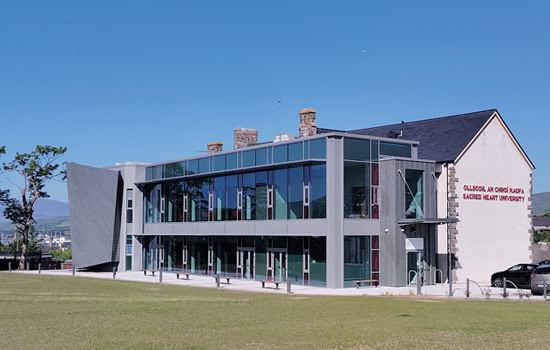
Today, SHU Dingle—also known locally as Ollscoil An Chroí Naofa—welcomes students from Sacred Heart University and other American colleges through semester and shorter study programmes. Its expanded Dingle campus officially opened in March 2025, marking more than two decades of the university’s connection with the town.
For students coming to West Kerry, however, the campus is only one part of the experience.
Dingle itself becomes part of everyday life.
You can walk into town for groceries or coffee, hear traditional music in the evening, look across the harbour on the way home and, within a relatively short journey, reach archaeological sites, beaches, mountains and communities where the Irish language remains part of daily life.
This guide is about that side of SHU in Dingle: what it is actually like to live here, what to explore while you are here and what visiting family and friends should know.
What Is SHU in Dingle?
SHU Dingle is Sacred Heart University’s campus in Dingle, County Kerry.
The university offers both semester-long and short-term programmes, allowing students to study in Dingle for anything from an intensive winter or summer experience to a full academic term. Current semester courses combine core and major requirements with subjects connected directly to Ireland, including coastal ecology, traditional music, culture, folklore, media and Celtic religious traditions. Course offerings vary by term.
What makes the programme particularly interesting is the emphasis on experiential learning.
Classes can extend beyond the classroom through field visits, community-based work and direct engagement with the history, culture and natural environment of West Kerry.
That is where Dingle begins to function as more than the location of the campus.
It becomes part of the subject.
What Makes Studying in Dingle Different?
Dingle is small enough that students can quickly understand its geography.
The harbour, town centre, shops, cafés, pubs and everyday services are concentrated within a relatively compact area. For semester students, SHU’s current accommodation at Glór na hAbhann is approximately a ten-minute walk from the campus and close to shops, restaurants and other amenities.
That creates a very different study-abroad experience from living within a large European city.
You are much more likely to recognise the same streets, businesses and people from one week to the next.
At the same time, the wider Dingle Peninsula is anything but small.
Beyond the town are mountains, Atlantic beaches, archaeological sites, fishing communities, islands and the Irish-speaking areas of Corca Dhuibhne.
The contrast between a walkable town and a large rural peninsula is one of the first things worth understanding.
Semester and Short-Term Study
SHU currently runs both semester and shorter winter and summer programmes in Dingle.
For semester students, the experience naturally becomes more embedded in everyday Dingle life. You are here long enough to see the town change with the season, establish routines and explore beyond the places most short-stay visitors reach.
Short-term students have a more concentrated experience, with academic work and organised activities taking place over a much shorter period.
Programme dates, courses, fees and eligibility change, so those details should always be checked directly with Sacred Heart University and SHU Dingle rather than relying on travel guides.
Where Do SHU Students Live?
Semester students are currently housed at Glór na hAbhann, also known as Riverside, in furnished townhouse-style accommodation approximately ten minutes’ walk from the SHU campus.
Short-term students may be accommodated there or in Dingle Harbour Cottages, which are also within walking distance of the town and campus.
The important point from a local perspective is location.
Students are not living on an isolated residential campus outside Dingle.
Everyday life involves walking through the town, using local shops and services and gradually becoming familiar with the same places residents and visitors use throughout the year.
That makes Dingle itself part of the experience.
What Is It Like Living in Dingle?
Dingle is a working harbour town as well as one of Ireland’s best-known visitor destinations.
The balance between those two identities changes throughout the year.
Summer brings long evenings, busy streets, visitors from around the world and a much livelier tourism season.
Winter is very different.
The streets are quieter, some seasonal businesses reduce their hours or close, daylight is shorter and Atlantic weather becomes much more noticeable.
Spring gradually brings longer evenings and increasing activity, while autumn often provides a quieter transition after the main visitor season.
Semester students therefore experience a version of Dingle that many tourists never see.
You begin to notice that the town is not simply a base for Slea Head Drive.
It is a community shaped by fishing, farming, tourism, music, language, food, education and its relationship with the surrounding peninsula.
Dingle Weather: What Students Should Expect
West Kerry weather is changeable.
You can leave home under blue sky and encounter rain twenty minutes later. Wind can be just as important as rainfall, particularly around exposed coastal areas.
A good waterproof jacket is far more useful than an umbrella on a windy day.
Layers also make sense because conditions can change quickly.
Students staying through autumn or winter should also be prepared for shorter daylight hours than they may be accustomed to. During spring, the opposite gradually happens and longer evenings make it much easier to explore after classes.
One useful habit is to stop thinking of weather as either “good” or “bad”.
A wet morning may clear into an excellent afternoon.
If the mountains suddenly appear from the cloud, use the opportunity.
The guide to the best time to visit Dingle explains how weather, daylight and visitor activity change throughout the year.
Getting Around Dingle Without a Car
For everyday life, central Dingle is very walkable.
Students can reach shops, restaurants, cafés, pubs and much of the waterfront on foot from the main SHU accommodation.
Exploring the wider peninsula is different.
Places such as Slea Head, Dún Chaoin, Gallarus Oratory, Kilmalkedar, Conor Pass and Inch Beach are spread across a rural landscape where public transport is more limited than visitors from larger cities may expect.
Depending on where you want to go, options can include:
- local bus services
- taxis
- programme excursions
- organised tours
- walking and cycling where the route and conditions are appropriate
The important thing is to plan ahead.
A place that looks close on a map can be surprisingly difficult to reach without your own transport. The guide to exploring Dingle without a car provides further practical advice.
Dingle and the Irish Language
One of the most interesting things about studying in Dingle is the opportunity to experience the Irish language within its cultural landscape.
Dingle sits at the eastern edge of Corca Dhuibhne, a peninsula that includes one of Ireland’s important Gaeltacht areas.
A Gaeltacht is an area officially recognised for the continuing use of Irish as a community language.
Travelling west from Dingle towards places such as Ballyferriter and Dún Chaoin, you will encounter Irish-language place names, signs and communities where Irish continues to be spoken.
You do not need to speak Irish to explore the peninsula.
But understanding that the language is not simply something preserved in textbooks changes how you see the place.
Listen to the names.
Notice the signs.
Learn a few words.
And remember that you are visiting a living linguistic community rather than a cultural exhibit.
Traditional Music and Evening Life
Dingle has a strong live-music tradition, and students do not need to wait for an organised cultural event to experience it.
Traditional music can be heard regularly in pubs around town, although schedules change by night and season.
Places such as O’Sullivan’s Courthouse, O’Flaherty’s, Nelligan’s, Foxy John’s and Dick Mack’s offer different kinds of evenings, from organised performances to informal sessions and broader live music.
If you have never attended an Irish traditional session before, listen first.
A session is not necessarily a concert. Musicians may gather informally, choose tunes among themselves and play without a conventional stage or fixed set list.
Understanding that difference makes the experience much more interesting. The guide to the best pubs in Dingle for live music explains the town’s principal venues and traditional-session etiquette.
What Should SHU Students Explore Around Dingle?
If you are living here for several weeks or months, don’t try to experience the entire peninsula during your first weekend.
You have time.
Use it.
Dingle Town and Harbour
Start locally.
Walk the harbour, explore the streets, learn where everyday services are and get comfortable moving around town.
The harbour is central to understanding Dingle’s identity, from fishing and tourism to the story of Fungie the Dolphin, who lived around its entrance for approximately 37 years.
Slea Head Drive
At some point, explore Slea Head Drive properly.
This is much more than a scenic road.
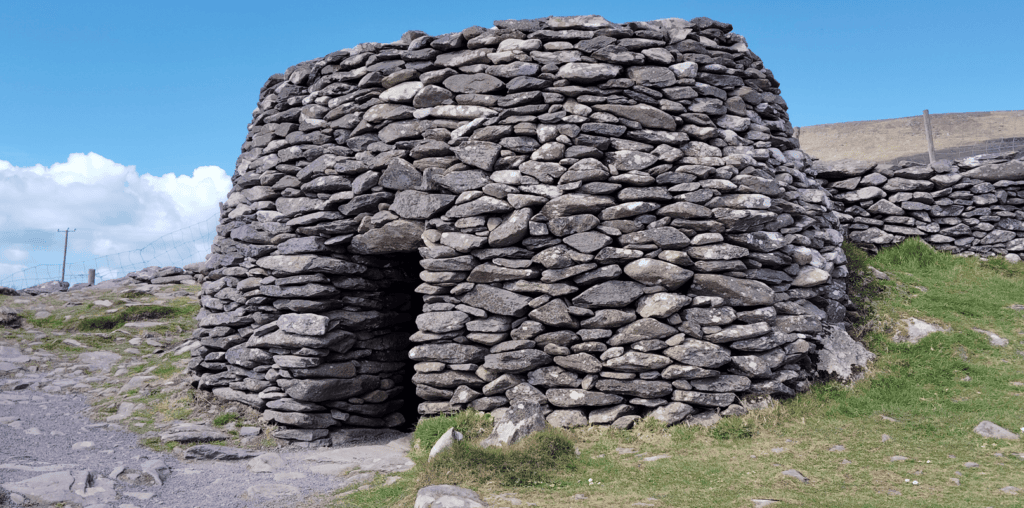
The route connects archaeological sites, beaches, Irish-speaking communities, the Blasket landscape and some of the peninsula’s most dramatic Atlantic coastline.
Don’t rush around it simply to say you completed the loop.
Gallarus Oratory and Kilmalkedar
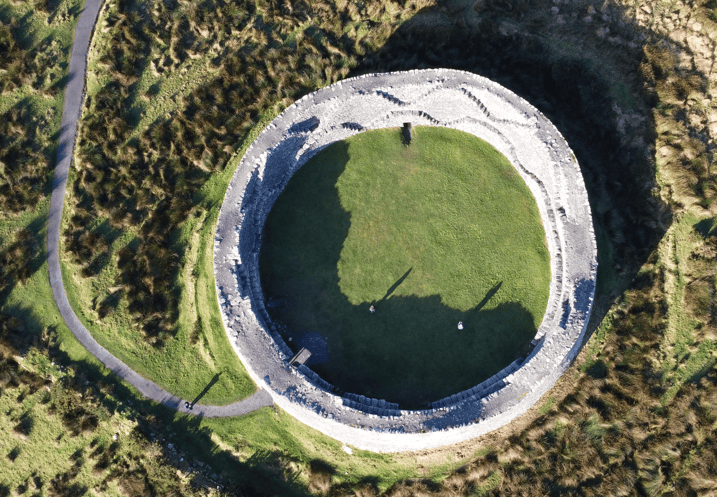
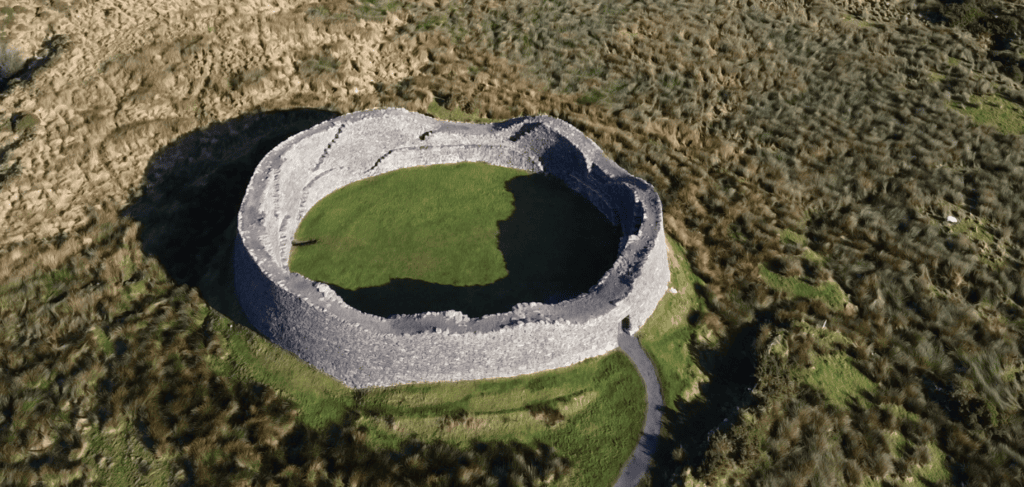
If your interests include history, archaeology or Irish culture, spend time at Gallarus Oratory and Kilmalkedar Church.
Together they begin to explain the depth of early Christian activity on the peninsula.
Dún Chaoin and the Blasket Story
Dún Chaoin introduces another major part of West Kerry’s cultural history.
The Blasket Centre explains the lives, language and literature of the island communities who lived off this coast, while Great Blasket remains visible just offshore.
The guide to the history and culture of the Blasket Islands provides further context for the island community and its writers.
Conor Pass
On a clear day, Conor Pass is one of the best places to understand the geography of the peninsula.
From the mountain road, you can see how Dingle is separated from the northern coastline around Brandon Bay by a substantial mountain barrier.
Inch Beach
Inch Beach provides a completely different coastal landscape from Slea Head.
The long sandy strand extends into Dingle Bay and is worth visiting when you have enough time for a proper walk rather than simply stopping for a photograph.
Food and Local Businesses
Living in Dingle also gives students the opportunity to explore its food culture slowly.
There is no need to try every well-known business during the first few days.
Over time you can discover the cafés, pubs, restaurants and food producers that suit you.
Some have become particularly associated with Dingle.
Murphys Ice Cream began here in 2000 and still makes its ice cream in Dingle.
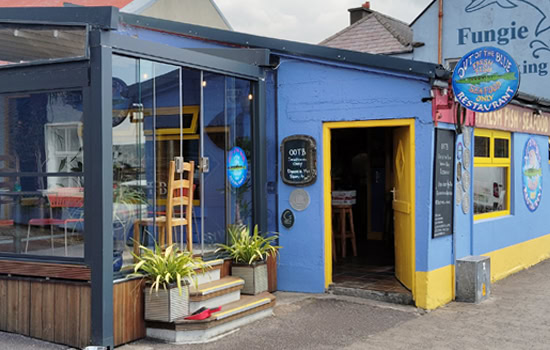
Out of the Blue has served seafood beside the harbour since 2001.
Dingle Distillery developed another internationally recognised product from the town.
But some of the best discoveries will simply be the places that become part of your own routine.
That is one of the advantages of living somewhere rather than visiting for a weekend. The wider Dingle food guide provides a useful introduction to the town’s seafood, local produce and independent businesses.
Respecting the Community You Are Living In
Dingle welcomes large numbers of visitors every year, but it remains a relatively small community.
Students staying for a semester have an opportunity to experience the town differently from short-term tourists.
A few things make that easier.
- Learn people’s names.
- Support local businesses.
- Treat archaeological sites and farmland with respect.
- Remember that many scenic places are surrounded by working farms and private property.
- Be considerate around traditional music sessions.
- Approach the Irish language and local traditions with curiosity rather than treating them as entertainment.
You do not need to become “a local”.
You simply need to be a considerate temporary member of the community.
Visiting a Student at SHU Dingle
Family and friends are welcome to visit students studying at SHU Dingle, although SHU currently states that visitors cannot stay overnight in student housing.
The university recommends that family visits take place after students have had time to settle into their programme, and it can also advise visitors on travel and accommodation.
If you are travelling to Dingle to visit a son, daughter, relative or friend, I would allow at least two or three nights if possible.
That gives you time to experience Dingle without spending most of the visit travelling.
How I Would Spend Two or Three Days Visiting a Student
For a first visit, keep it simple.
Day 1: Dingle
Let the student show you their version of the town.
Walk the harbour, see the campus area, have lunch or dinner together and let them introduce you to the places that have become part of their daily routine.
That will probably tell you more about their experience than immediately driving away from Dingle.
Day 2: The Dingle Peninsula
Use one full day for Slea Head and the western peninsula.
Visit a small number of places properly rather than trying to see everything.
Dún Chaoin, the Blasket viewpoints, one or two historical sites and time around the coast are enough to create a very good day.
If you are uncomfortable driving unfamiliar narrow roads, this is one occasion when a private guided tour can make sense.
Day 3: Choose What Interests You
Depending on weather and interests, consider:
- Conor Pass and the northern peninsula
- Minard Castle, Inch and the eastern peninsula
- another relaxed day in Dingle
There is no need to turn a family visit into a tour of the entire county.
The three-day Dingle Peninsula itinerary provides a fuller route for families who want to explore more extensively.
Extending a Family Visit Beyond Dingle
If you have longer, Dingle also works well as the starting point for exploring more of County Kerry.
Killarney, the Ring of Kerry, the Skellig Coast and other parts of the county can all be added to a longer itinerary.
But I would explore Dingle first.
If the reason you have travelled to West Kerry is to visit someone studying here, understanding the place they have been living should be part of the visit.
Exploring Dingle with a Local Guide
A private guide can be particularly useful when parents or visiting relatives have only one full day available and want to understand the peninsula without concentrating on navigation and narrow roads.
Steve’s Peninsula Tours’ private full-day Dingle Peninsula tour can be adjusted around weather, walking ability and the interests of the student and visiting family.
The aim should not be to visit the largest possible number of attractions. It should be to show visiting family the landscape, communities and history that surround the student’s temporary home.
Where to Find Official SHU Information
Steve’s Peninsula Tours is a local visitor resource, not an academic or admissions authority for Sacred Heart University.
For current information about:
- courses
- programme dates
- application deadlines
- eligibility
- fees
- financial aid
- housing
- student support
- health and safety
- academic requirements
Always use Sacred Heart University or SHU Dingle directly.
Programme information can change from one semester to another, and the university should be your authoritative source for decisions affecting your studies.
Frequently Asked Questions About SHU in Dingle
What is SHU in Dingle?
SHU Dingle is Sacred Heart University’s study-abroad campus in Dingle, County Kerry. Sacred Heart has maintained a study-abroad presence in the town since 2004, and its expanded campus opened in 2025.
Is SHU Dingle only for full-semester study?
No. Sacred Heart currently offers both semester programmes and shorter winter and summer programmes in Dingle.
Can students from other universities study at SHU Dingle?
Yes. Sacred Heart University states that its Dingle programme is open to visiting students from other institutions as well as SHU students.
Where do SHU Dingle students live?
Semester students are currently housed at Glór na hAbhann, approximately a ten-minute walk from the SHU campus. Short-term students may stay there or at Dingle Harbour Cottages.
Do SHU students need a car in Dingle?
Not for everyday life in the town centre. Much of Dingle is walkable. Exploring the wider peninsula independently is more difficult without transport, so students need to plan individual trips accordingly.
Is Dingle in the Gaeltacht?
The Dingle Peninsula includes the Corca Dhuibhne Gaeltacht, where Irish remains a community language. Dingle provides a useful gateway to these Irish-speaking areas farther west on the peninsula.
Can parents and friends visit SHU students in Dingle?
Yes. SHU currently welcomes visits from family and friends, although guests may not stay overnight in student accommodation.
How many days should family spend in Dingle?
For a first visit, I would recommend at least two or three nights. That provides enough time to experience Dingle Town and spend one full day exploring the peninsula without rushing.
Where should students check current programme information?
Always use Sacred Heart University’s official SHU Dingle resources for current courses, deadlines, fees, eligibility, housing and programme requirements.