Fairy Fort Dingle combines ancient archaeology, Irish folklore and a relaxed, family-friendly animal experience in one memorable stop. Located approximately 10 kilometres west of Dingle Town, it sits beside the R559 on the western section of the Slea Head Drive.
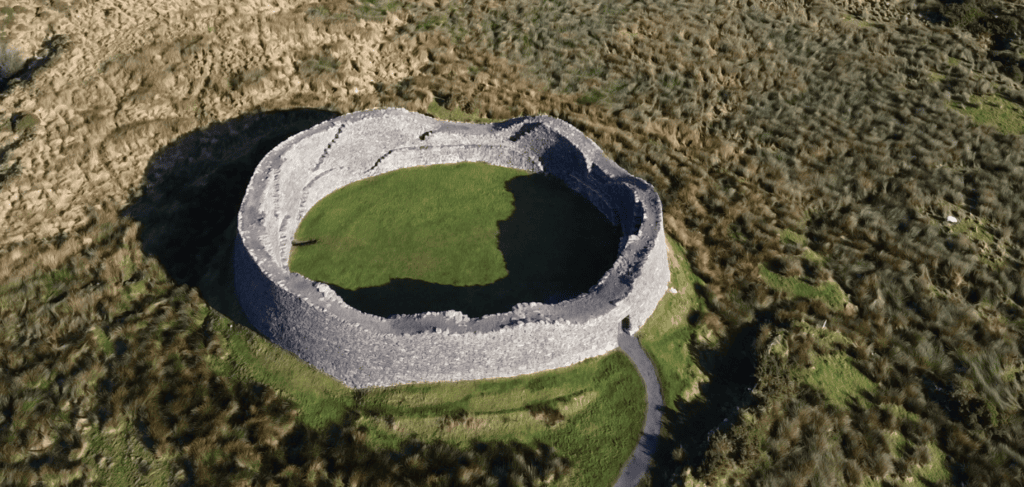
The attraction centres on a remarkably well-preserved earthen ringfort overlooking the rolling countryside of the western Dingle Peninsula. Visitors can walk through the original entrance, examine the earthworks and gain a sense of how an early medieval farming settlement may once have been arranged.
Alongside the archaeological site is a family-run pet farm where children and adults can meet and feed a variety of friendly animals. This combination makes Fairy Fort Dingle particularly useful for families who want to introduce younger visitors to local history without making the experience feel like a formal museum visit.
What Is Fairy Fort Dingle?
At the heart of the attraction lies a well-preserved ringfort, commonly described in Irish as a ráth or lios. These terms are particularly appropriate for an enclosure formed primarily from earth, while the word caiseal is more often used for a stone-built ringfort.
Ringforts were enclosed farmsteads found throughout Ireland, with many dating from the Early Medieval period. They were not castles in the later medieval sense. Instead, they were places where farming households lived, worked, stored food and managed valuable livestock.
The circular enclosure helped define and protect the household area. Depending on the status and resources of the occupants, the interior could contain timber or stone buildings, storage spaces, workshops and routes leading to fields and grazing land outside the fort.
Fairy Fort Dingle occupies a slight east-facing slope and commands wide views across the surrounding countryside. Its surviving archaeological features include:
- A substantial circular earthen bank
- A surrounding ditch, also known as a fosse
- A clearly defined causewayed entrance facing east
- Traces of several former structures within the enclosure
- An underground passage or souterrain
Walking through the entrance allows visitors to experience the scale and layout of the enclosure in a way that can be difficult to appreciate from photographs. The raised bank is particularly impressive when viewed from the lower level of the surrounding ditch.
Understanding Ringforts on the Dingle Peninsula
Ringforts are among the most characteristic archaeological remains in the Irish countryside. Many appear today as circular banks, raised fields, rings of trees or stone walls, but during their occupation they would have been active family settlements surrounded by cultivated land and grazing animals.
The Dingle Peninsula contains an unusually rich concentration of early settlement sites. Some are earthen enclosures like Fairy Fort Dingle, while others were constructed from stone. The nearby Fahan Beehive Huts, for example, preserve examples of the corbelled stone-building tradition associated with the peninsula.
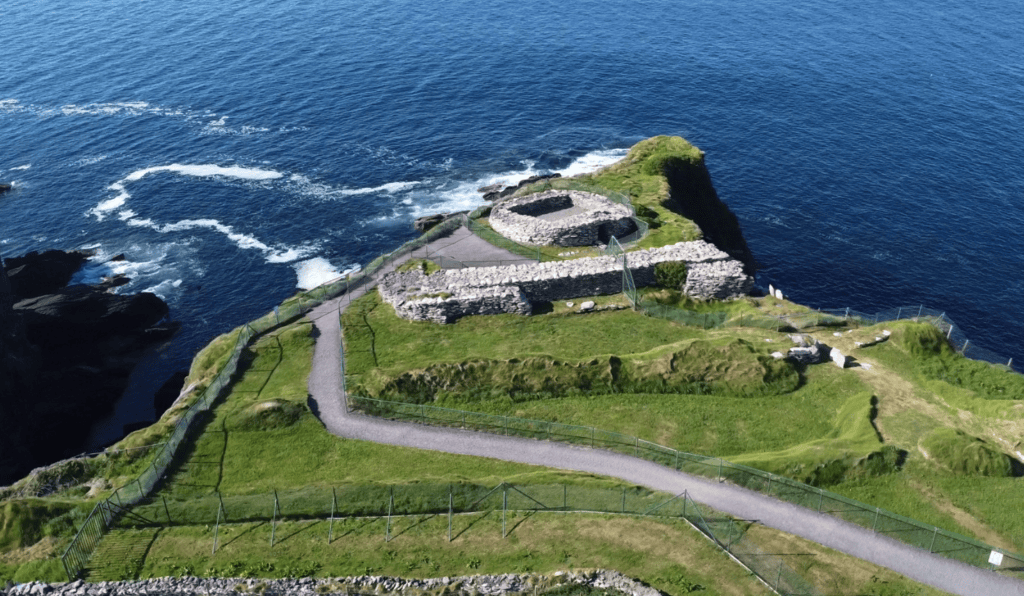
Farther along the route, Dún Beag Promontory Fort occupies a dramatically different position on the Atlantic cliffs. Comparing these sites helps reveal how people adapted settlements and defensive enclosures to different parts of the landscape.
A souterrain, such as the one recorded within Fairy Fort Dingle, was an underground passage or chamber. Archaeologists generally interpret souterrains as places used for storage, concealment or short-term refuge, although their precise function could vary. Visitors should not attempt to enter confined underground features unless access is clearly permitted and safe.
The Story Behind the Fairy Fort
Although archaeologists interpret ringforts primarily as enclosed settlements and farmsteads, Irish folklore gave many of these places another identity. Over time, abandoned ringforts became widely known as fairy forts and were associated with the Aos Sí, the supernatural people of Irish tradition.
Local tradition often held that these sites belonged to another world and should not be disturbed. Stories warned against levelling their banks, removing earth or interfering with the trees growing around them. A solitary whitethorn was treated with particular caution when it stood beside an ancient enclosure.
These beliefs should be understood as folklore rather than archaeological explanations for the construction of ringforts. Nevertheless, the traditions played an important role in how the monuments were treated by generations of landowners and farming families.
In many parts of Ireland, practical respect and inherited belief existed side by side. A farmer might understand that an enclosure was ancient while also being unwilling to damage a place associated with the fairies. That reluctance may have contributed to the survival of some monuments long after their original buildings had disappeared.
Fairy Fort Dingle therefore represents more than one period of Irish history. The earthworks belong to an early settlement landscape, while the stories attached to them reveal how later communities interpreted and protected the remains they inherited.
Meet the Friendly Farm Animals
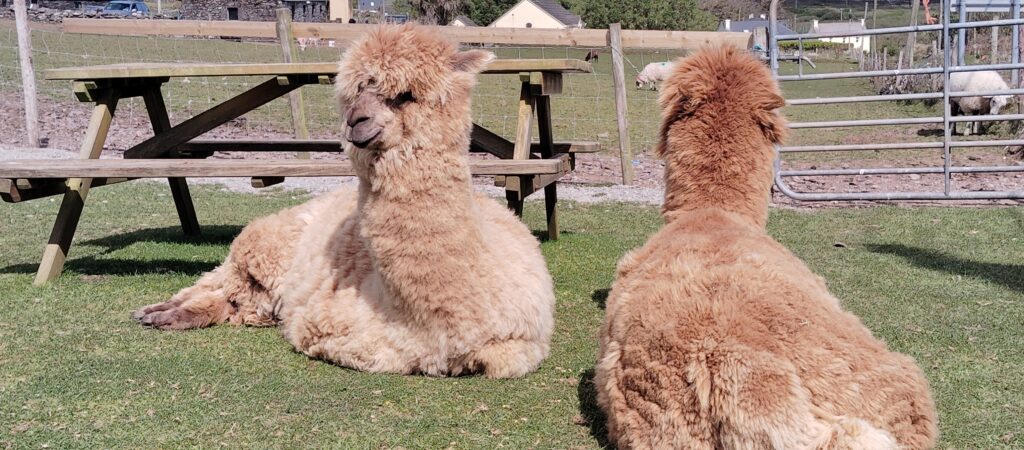
Alongside the historic ringfort, Fairy Fort Dingle operates as a small pet farm. The animals are a large part of the attraction, particularly for families travelling with younger children.
Depending on the animals present at the time of your visit, you may encounter:
- Sheep and lambs
- Goats
- Donkeys
- Horses or ponies
- Rabbits
- Poultry and other farm animals
Animal feed is normally available on site, allowing visitors to interact with the animals rather than simply viewing them from a distance. Arrangements and the animals present can change, so it is sensible to treat any particular encounter as part of the day’s experience rather than something guaranteed.
The combination of animals, open countryside and archaeology makes this a particularly engaging stop for children. It also gives families a natural break from the longer coastal viewpoints and historical monuments encountered around the peninsula.
What Will You Experience?
The visit is informal and generally easy to understand. After arriving, you can spend time with the animals before walking into the ringfort and examining the surviving bank, ditch and entrance.
The surrounding landscape is an important part of the experience. This was agricultural country when the ringfort was occupied, and farming remains central to the area today. Standing inside the enclosure makes it easier to understand why a household would have chosen a slightly elevated position with visibility across the neighbouring land.
It is worth walking slowly around the site rather than treating it only as a quick animal stop. Look at the difference in height between the interior, the earthen bank and the base of the external ditch. These changes in ground level reveal far more about the construction of the fort than a single view from its centre.
If archaeology is a particular interest, the wider collection of historical sites around Kerry provides useful comparisons between ringforts, early Christian settlements, castles and later medieval buildings.
Why Visit Fairy Fort Dingle?
Fairy Fort Dingle offers something different from many other stops around the peninsula. It combines an ancient monument, living farming traditions and Irish folklore within a setting that remains approachable for visitors of different ages.
It is particularly well suited to:
- Families with young children
- Visitors interested in Irish folklore
- Travellers learning about early Irish settlement
- Photographers interested in rural landscapes and animals
- Anyone looking for a relaxed break during the Slea Head Drive
The attraction can also work well on a wet or changeable day because the visit does not require a long hike. However, much of the experience is outdoors, so waterproof clothing remains useful.
Planning Your Visit
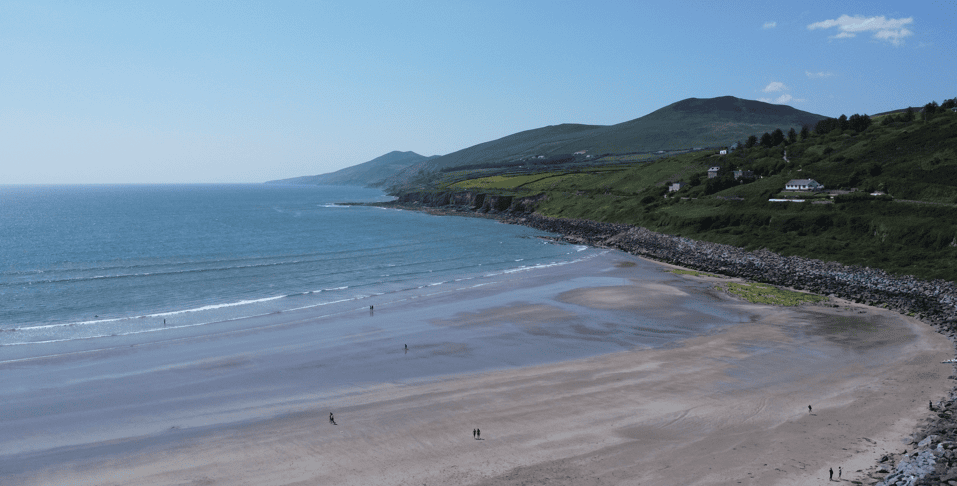
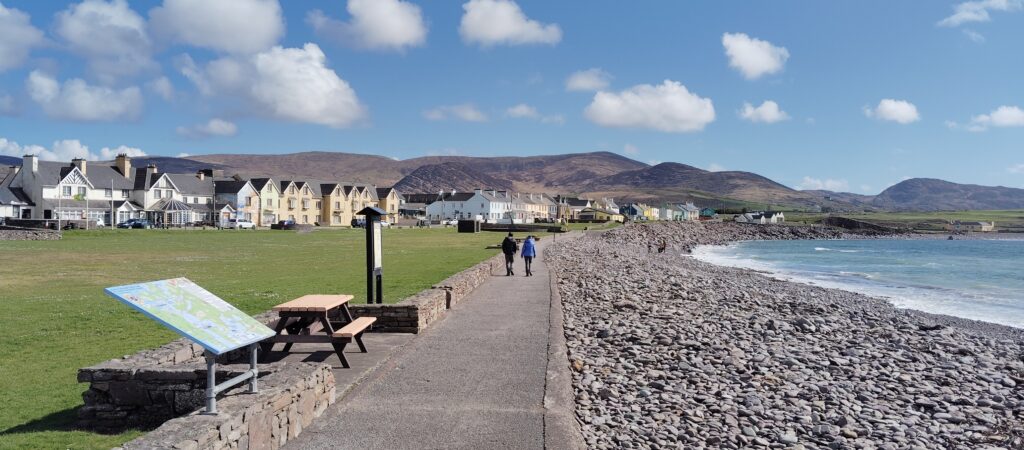
Fairy Fort Dingle is located beside the R559 between Dingle and the western peninsula. Visitors travelling the usual clockwise route will reach it after passing through the area around Ventry Beach and before continuing towards the archaeological sites and Atlantic scenery around Fahan.
Because opening arrangements and admission charges may change, check the official Fairy Fort Dingle website before making a special journey. Carrying some cash can also be useful at smaller, independently operated attractions around the peninsula.
For the visit itself, consider bringing:
- Comfortable footwear suitable for grass and uneven ground
- A waterproof jacket
- A camera or phone
- Hand-cleaning supplies for after feeding the animals
- Extra time if travelling with young children
The ground may become wet or soft following rain. Visitors with reduced mobility should be aware that an ancient earthen enclosure and working farm environment may include grass, slopes and uneven surfaces.
How Long Should You Allow?
Most visitors should allow approximately 30 to 60 minutes. A shorter visit may be sufficient if you only want to see the ringfort and meet a few animals, while families can easily spend longer feeding the animals and exploring at a slower pace.
From a touring point of view, I would avoid trying to rush every stop on the Slea Head Drive. The route contains many worthwhile places within a relatively short distance, but the experience is far better when you select the stops that genuinely interest you and give each one enough time.
If you are planning the full circuit independently, my Slea Head Drive route guide explains how the main locations fit together and helps avoid spending too much time at the beginning of the journey.
Weather and Seasonal Conditions
Conditions on the western Dingle Peninsula can change quickly. A calm morning may be followed by Atlantic showers, while low cloud can move across the surrounding hills even when the coast remains clear.
Fairy Fort Dingle can still be enjoyable in mixed weather, but the grass and earthen banks may be slippery following rain. Wear suitable shoes and avoid climbing on archaeological features, both for your own safety and to help protect the site.
During the busiest summer periods, an earlier visit often provides a quieter atmosphere. Outside the main visitor season, confirm that the attraction is open before travelling specifically to see it.
Places to Visit Nearby
Fairy Fort Dingle sits among several of the peninsula’s most important archaeological and coastal locations. Continuing west brings you towards the Fahan Beehive Huts and Dún Beag Promontory Fort, where the Atlantic setting is very different from the sheltered farmland surrounding the fairy fort.
Farther around the coast, Coumeenoole Beach provides a close view of the Atlantic shoreline, while Dunquin Pier reveals the historic departure point associated with the Blasket Islands. The nearby Blasket Centre helps explain the island community, its writers and the importance of the Irish language in this part of West Kerry.
On the northern side of the route, Gallarus Oratory and Kilmalkedar Church introduce a different layer of the peninsula’s past through early Christian architecture, pilgrimage traditions and carved stone.
My Local Tip
If you are travelling during the busiest summer months, visit Fairy Fort Dingle earlier in the day. You will often have more space to explore the ringfort, spend time with the animals and appreciate the surrounding countryside before the road becomes busier.
I also recommend looking beyond the animals once you enter the enclosure. The relationship between the bank, ditch, entrance and surrounding farmland is what turns the stop from a pet-farm visit into a meaningful encounter with an early Irish settlement.
Visitors who would prefer to explore the route with local context can include this part of the peninsula during a private Slea Head Drive tour, with the day adjusted around the interests and pace of the group.
Continue Exploring the Dingle Peninsula
Fairy Fort Dingle fits naturally into a journey through the archaeology, folklore and coastal landscapes of West Kerry. Continue west towards the forts and huts around Fahan before following the road to Coumeenoole and Dunquin. From there, the route turns north towards Ballyferriter, Gallarus and Kilmalkedar before returning to Dingle.
If you have more time, the wider Explore Kerry guide connects these individual places with beaches, towns, historical sites and scenic routes throughout the county. Visitors planning a day around the peninsula may also find my guide to the perfect day in Dingle useful when deciding which stops to prioritise.
Frequently Asked Questions About Fairy Fort Dingle
What is Fairy Fort Dingle?
Fairy Fort Dingle is a visitor attraction on the Slea Head Drive containing a well-preserved earthen ringfort and a family-friendly pet farm. It combines archaeology, Irish folklore, rural scenery and interaction with farm animals.
Where is Fairy Fort Dingle?
It is located beside the R559 approximately 10 kilometres west of Dingle Town. It is reached early in the usual clockwise journey around the Slea Head Drive.
Is Fairy Fort Dingle suitable for children?
Yes. The opportunity to meet and feed animals makes it one of the more engaging historical stops for families. Children should still be supervised around animals and on uneven ground.
How long should I allow for a visit?
Allow approximately 30 to 60 minutes. Families with young children or visitors who want to examine the ringfort carefully may wish to stay longer.
Is Fairy Fort Dingle an actual archaeological site?
Yes. The central feature is a surviving earthen ringfort with a bank, external ditch, entrance, traces of former structures and a souterrain. The association with fairies comes from later Irish folklore rather than the archaeological purpose of the enclosure.
Do I need to check opening times?
Yes. Fairy Fort Dingle is an independently operated attraction, and opening arrangements or admission charges can change. Check the official website before making a journey specifically to visit.
What else can I see nearby?
Nearby places include the Fahan Beehive Huts, Dún Beag Promontory Fort, Coumeenoole Beach, Dunquin Pier, the Blasket Centre, Gallarus Oratory and Kilmalkedar Church.