If you are driving Slea Head Drive for the first time, the answer is straightforward:
Drive clockwise from Dingle through Ventry / Ceann Trá.
This is not simply a local preference.
Visitors are specifically asked to follow the clockwise route because some sections of Slea Head Drive are extremely narrow. Keeping visitor traffic moving in the same general direction helps reduce congestion and difficult encounters between cars, campervans and tour coaches.
The important detail is that Slea Head is not physically one-way.
Local residents, farmers and other traffic may still approach from the opposite direction.
Follow the clockwise visitor system, but always drive as though another vehicle could appear around the next bend.
Why Visitors Are Asked to Drive Slea Head Clockwise
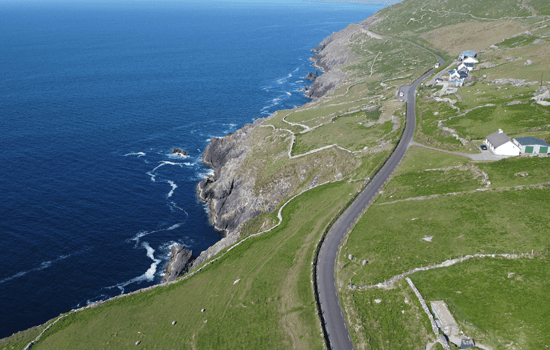
Slea Head Drive follows narrow rural roads around the western Dingle Peninsula.
In several places, two larger vehicles cannot comfortably pass without one stopping or reversing towards a wider section of road.
That becomes particularly difficult during the busiest visitor months.
For this reason, local tourism guidance asks sightseeing traffic to leave Dingle towards Ventry / Ceann Trá and continue around the peninsula clockwise.
Tour coaches also generally follow this direction.
The aim is simple:
Reduce the amount of opposing visitor traffic meeting at the narrowest sections of the route.
It does not remove every difficult encounter, but it helps keep traffic moving more predictably.
Is Slea Head Drive Actually One-Way?
This causes understandable confusion.
For visitors, there is effectively a clockwise traffic system.
However, the road itself remains available to local traffic in both directions.
You may still meet:
- Residents
- Farmers
- Delivery vehicles
- Tractors
- Livestock traffic
- Cyclists
- Walkers
- Other local road users
Never assume that because you are following the recommended direction the road ahead will be clear.
Slow down before blind bends and be prepared to use passing places.
Which Way Do You Leave Dingle?
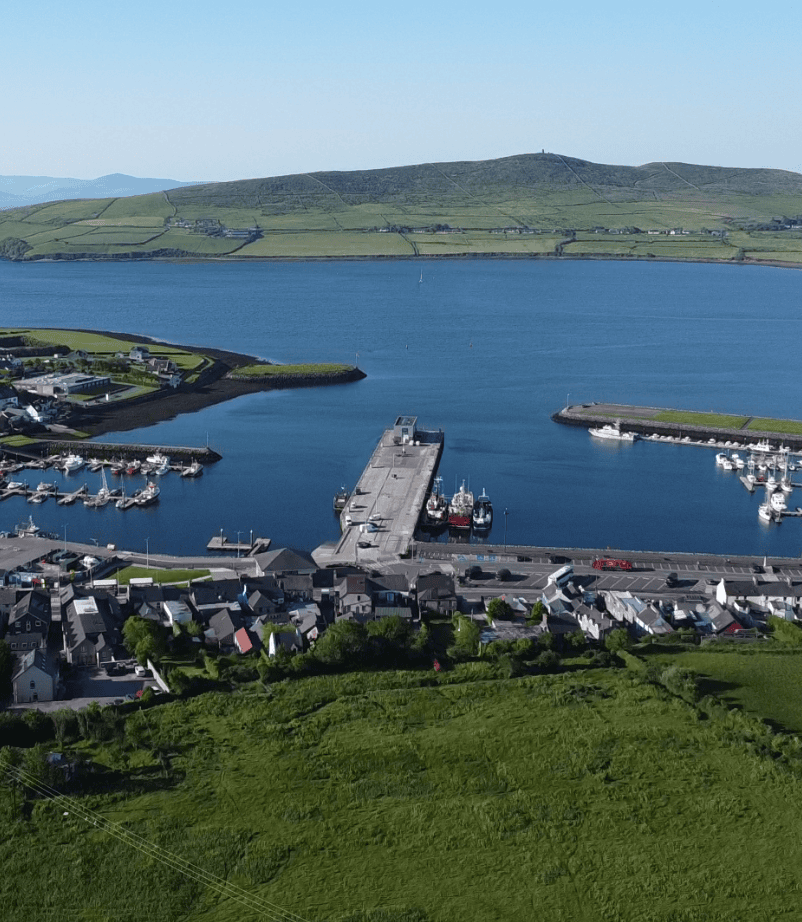
From Dingle, follow the R559 towards Ventry / Ceann Trá.
From there, continue following signs for:
- Slea Head Drive
- Slí Cheann Sléibhe
- The Wild Atlantic Way
The clockwise sequence broadly takes you through:
Dingle → Ventry → Fahan → Slea Head → Dún Chaoin → Ballyferriter → back towards Dingle.
That is the visitor flow to follow.
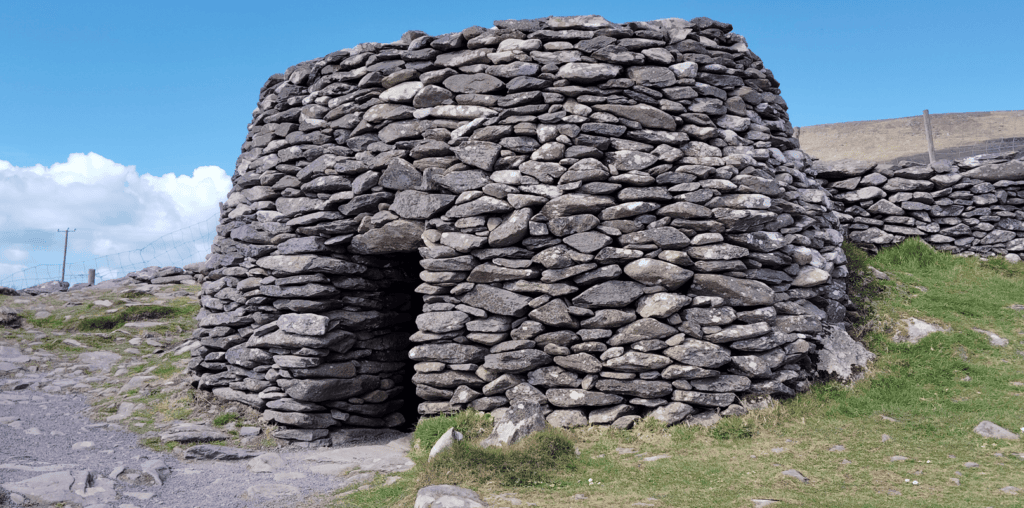
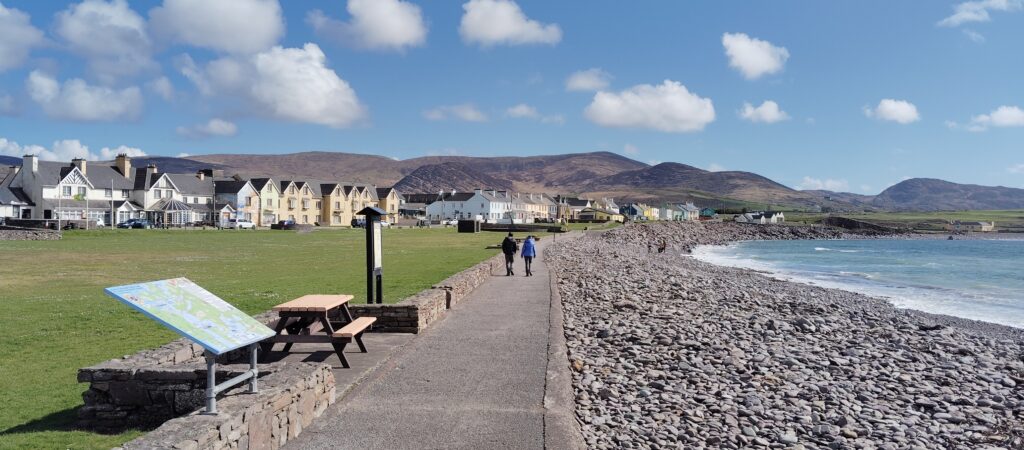
Ventry Beach is one of the first principal stops after leaving Dingle. From there, the road continues through Fahan and past the peninsula’s early medieval beehive huts before reaching the exposed western coastline.
Follow the Road Signs, Not Google Maps Shortcuts
This is probably the most important practical advice after driving clockwise.
Navigation apps are extremely useful for finding places.
They are not always good at understanding which rural roads are appropriate for large volumes of visitor traffic.
A sat-nav may identify a narrow local road as a faster route and attempt to save a few minutes.
Do not blindly follow it.
Once you are on Slea Head, use the local route signs. They have been designed around the roads visitors should actually use.
A route that looks marginally shorter on your phone may be much narrower, serve homes and farms or take you against the intended visitor flow.
Do Not Use An Clasach as a Visitor Shortcut
One road worth knowing about specifically is An Clasach, between Ard a’Bhóthair and Dún Chaoin.
Local driving guidance identifies this as local access only.
Do not use it as a shortcut because Google Maps suggests it will save time.
Stay on the signed Slea Head route.
This is a good general rule throughout the peninsula:
If the official road signs and your navigation app disagree about the Slea Head visitor route, follow the signs.
What Happens If You Meet Oncoming Traffic?
Meeting another vehicle is normal.
The important thing is not to panic or automatically continue forward until both vehicles have nowhere to go.
Look ahead.
If you see an oncoming vehicle approaching a narrow section and you are beside a wider area or passing place, wait there.
Sometimes you may need to reverse a short distance. That is part of driving rural roads in West Kerry.
Take your time and communicate clearly with the other driver. A small wave is often enough to establish who is going first.
Use Lay-bys Properly
Passing places and lay-bys are essential on narrow roads.
Use them for their intended purpose.
If several cars have accumulated behind you and you reach a safe lay-by, allow them to pass.
This is particularly important if you are driving slowly because you are unfamiliar with the road.
There is nothing wrong with taking Slea Head carefully. The considerate approach is simply to avoid holding local traffic behind you for long distances when a safe opportunity to pull in appears.
Do not use passing places as long-term parking if doing so prevents other vehicles from using them.
Give Local Traffic Priority When Practical
Remember that while you may be sightseeing, people also live and work along this road.
Someone approaching behind you may be:
- Going to work
- Collecting children
- Moving livestock
- Making a delivery
- Travelling between farms
- Returning home
If you are travelling slowly and can safely allow a local vehicle to pass, do so.
That small piece of road etiquette makes an enormous difference during busy periods.
What About Tour Coaches?
Large coaches are one of the main reasons the clockwise visitor flow matters.
A coach requires considerably more road width and turning space than a car.
When visitors travel anti-clockwise, they increase the likelihood of meeting coaches head-on at narrow sections where passing can be difficult.
Following the same clockwise flow as organised visitor traffic reduces those conflicts.
If you meet a large vehicle coming towards you, do not try to squeeze past unless there is clearly enough room.
The professional driver will normally know the road and may indicate where they need you to stop or reverse.
Can Campervans Drive Slea Head Clockwise?
Yes, campervans and motorhomes do use Slea Head.
However, a larger vehicle magnifies every challenge of the road.
If you are driving one:
- Follow the clockwise route
- Stay on signed roads
- Do not use local shortcuts
- Use passing places
- Do not travel closely behind other campervans
- Allow local traffic to pass
- Understand the width and length of your vehicle before setting out
If narrow roads, stone walls and close passing make you uncomfortable, a large campervan is not the easiest way to experience Slea Head.
What If You Are Staying in Dún Chaoin or Ballyferriter?
This is one situation where visitors sometimes become confused.
You may already be staying west of Dingle and think:
Surely it makes more sense to drive whichever direction is shortest from my accommodation?
For ordinary local journeys, your accommodation provider can advise on the appropriate route.
However, if you are setting out specifically to sightsee around the full Slea Head loop, the local visitor guidance still favours following the clockwise traffic flow.
Avoid deliberately driving the main sightseeing circuit against the direction being used by most visitor traffic.
If in doubt, ask your accommodation provider how best to join the route.
Should Visitors Ever Drive Slea Head Anti-Clockwise?
For a normal sightseeing drive, I would not recommend it.
The scenery does not become better simply because you reverse the route.
What changes is the traffic situation.
You are more likely to meet coaches, campervans and other sightseeing vehicles travelling towards you rather than moving with them.
The official visitor guidance exists for a practical reason. Follow it.
Does Clockwise Mean You Will Never Need to Reverse?
No.
Even when everyone follows the recommended visitor flow, you can still meet local traffic.
You may still need to:
- Stop
- Pull into a passing place
- Wait
- Reverse a short distance
The clockwise system reduces unnecessary opposing visitor traffic.
It does not transform a narrow rural road into a modern one-way highway.
Is Clockwise Better for the Views?
The main reason for driving clockwise is traffic management, not photography.
You will see the same coastline, islands and mountains whichever direction you travel.
Some individual pull-ins may feel easier from one direction than another, but that should not be the basis for deciding how to drive the route.
Follow the local traffic system first. The views will take care of themselves.
Important scenic stops encountered on the clockwise route include Coumeenoole Beach, Dunquin Pier, Clogher Head and Clogher Strand.
Is Clockwise Safer?
I would phrase this carefully.
Driving clockwise does not guarantee safety.
Safe driving still depends on:
- Appropriate speed
- Attention
- Road conditions
- Visibility
- Giving space to cyclists and walkers
- Correct use of passing places
- Respecting other vehicles
What clockwise travel does is reduce conflicting visitor traffic on roads where passing can be difficult.
That is why it is the correct direction for visitors.
Clockwise Slea Head Route at a Glance
For most visitors, think of the route like this:
- Dingle
- Ventry / Ceann Trá
- Fahan
- Slea Head
- Coumeenoole
- Dún Chaoin
- Ballyferriter
- Gallarus and Kilmalkedar area
- Dingle
The exact stops are up to you.
The direction is not.
Planning the Full Slea Head Drive
Knowing which way to travel is only the first part of planning the route.
You also need to decide:
- How long to allow
- Which historical sites to visit
- Where to stop for scenery
- Whether to include the Blasket Centre
- Where to eat
- How much time to leave for Dún Chaoin
- Whether you are comfortable self-driving the narrowest sections
For the complete stop-by-stop journey, use the Slea Head Drive Route Guide, which follows the clockwise route from Dingle and explains the main stops in driving order.
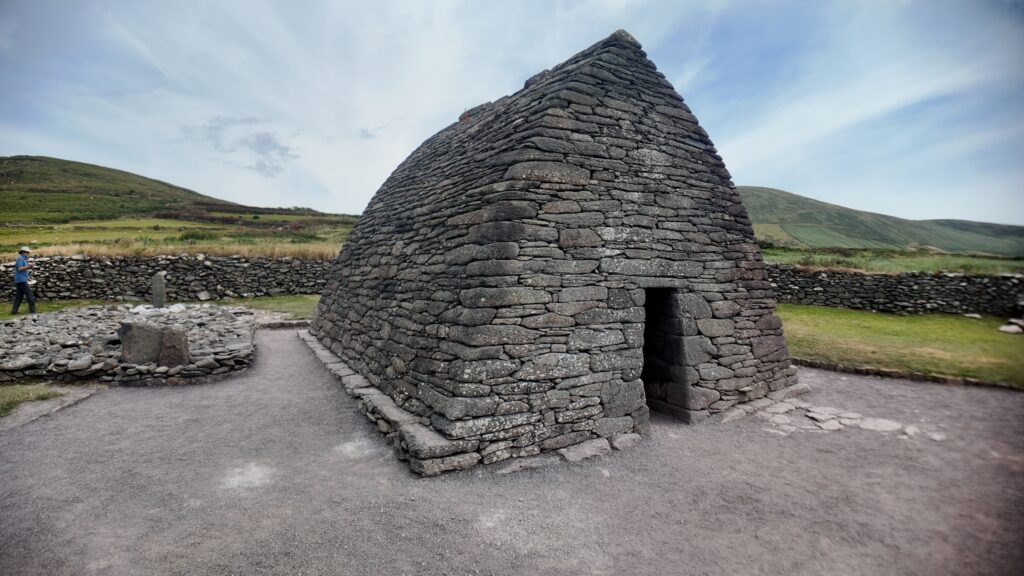
Allow additional time if you want to visit cultural and historical attractions such as the Blasket Centre, Dún Beag Promontory Fort, Gallarus Oratory or Kilmalkedar Church.
Self-Drive or Guided?
Most confident drivers can self-drive Slea Head successfully if they follow the local traffic system and take their time.
A guided tour may suit you better if you:
- Dislike narrow rural roads
- Do not want to manage parking
- Are unfamiliar with driving on the left
- Have limited time
- Want historical and cultural interpretation as you travel
Neither option is automatically better.
The important thing is choosing the experience that allows you to enjoy the peninsula rather than spending the entire drive worrying about the next bend.
Steve’s Peninsula Tours offers a private Slea Head Drive tour for visitors who would prefer a local driver-guide to manage the route, traffic and parking while explaining the landscape and its history.
Continue Exploring the Dingle Peninsula
- Plan the wider journey with the complete Slea Head Drive Route Guide.
- Compare the route’s best views in the guide to Dingle Peninsula viewpoints.
- Decide how much time you need with the guide to how long to spend in Dingle.
- Plan a longer stay with this three-day Dingle Peninsula itinerary.
- Discover the area’s archaeology and communities through the history of the Dingle Peninsula.
Frequently Asked Questions About Driving Slea Head
Should you drive Slea Head clockwise or anti-clockwise?
Visitors should drive Slea Head clockwise from Dingle through Ventry / Ceann Trá.
Why is Slea Head driven clockwise?
The clockwise visitor system helps reduce opposing tourism traffic on narrow sections of road, particularly where large coaches and campervans can create bottlenecks.
Is Slea Head Drive a one-way road?
Not completely. Visitors are asked to follow a clockwise system, but local traffic may continue to use the roads in both directions.
Can I follow Google Maps around Slea Head?
Use it for orientation, but follow the local Slea Head and Wild Atlantic Way signs rather than accepting shortcuts onto narrow local roads.
What is An Clasach?
An Clasach is a local-access road in the Dún Chaoin area. Visitors should not use it as a shortcut around the signed Slea Head route.
Will I meet cars coming towards me if I drive clockwise?
Yes. Local residents and working traffic may travel in the opposite direction, so always expect oncoming vehicles.
Can campervans drive Slea Head?
Yes, but larger vehicles require more care. Stay clockwise, use signed roads, make use of lay-bys and give local traffic room to pass.
What should I do if traffic builds behind me?
Use a safe lay-by or wider section of road to allow faster or local traffic to pass.
Is anti-clockwise better early in the morning?
No. Visitors should still follow the clockwise sightseeing route rather than deliberately travelling against the established visitor flow.
Where should I start Slea Head Drive?
Start in Dingle and take the R559 towards Ventry / Ceann Trá.