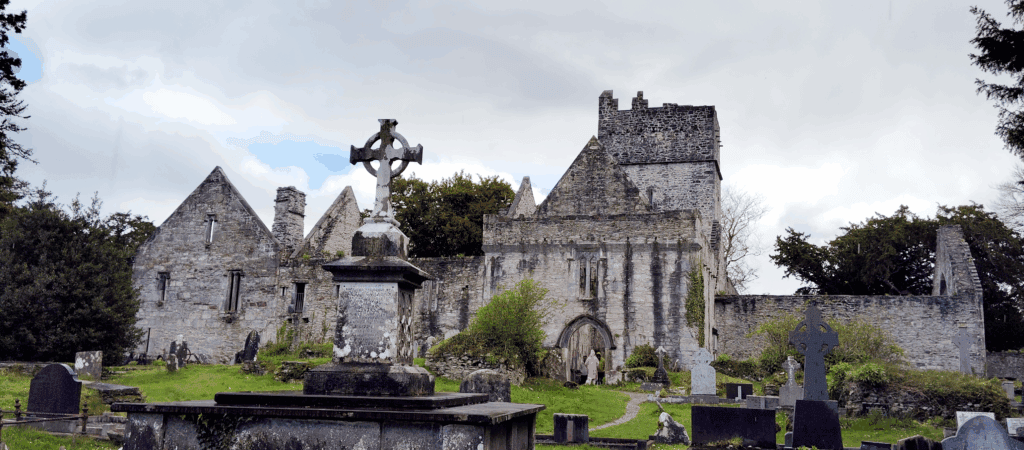
Muckross Abbey is one of the most complete surviving medieval religious ruins in Killarney National Park.
Despite its familiar name, it was not technically an abbey. It was a Franciscan friary, founded in 1448 for the Observant Franciscans by Donal MacCarthy Mór. The church, tower, cloister and adjoining friary buildings survive remarkably well, while an ancient yew tree still grows from the centre of the cloister courtyard.
The surrounding graveyard remains in use today and contains the graves of several important Gaelic poets, including Piaras Feiritéar, Aodhagán Ó Rathaille and Eoghan Rua Ó Súilleabháin.
That combination of Franciscan history, surviving architecture, folklore, literature and continued burial use makes Muckross much more than a picturesque ruin.
What Is Muckross Abbey?
Muckross Abbey is the popular name given to the remains of a fifteenth-century Franciscan friary in Killarney National Park.
The site was founded in 1448 by Donal MacCarthy Mór for members of the Observant Franciscan movement and was dedicated to the Holy Trinity.
Construction continued over several decades, eventually producing a substantial religious complex containing a church, transept, central tower, domestic ranges and cloister.
Much of that structure remains standing.
Visitors today can walk through the roofless church, enter the cloister, climb surviving stairs and explore rooms once used by the Franciscan community.
Why Is Muckross Abbey Actually a Friary?
The word abbey has become so firmly attached to Muckross that few visitors question it.
Historically, however, the site was a friary.
This distinction relates to the type of religious community that lived here.
Franciscans were friars rather than monks living within a traditional Benedictine-style abbey. Their religious life placed greater emphasis on preaching, ministry and engagement with communities outside their own buildings.
The name Muckross Abbey nevertheless became established over time and remains the name almost everyone uses today.
Knowing the distinction does not change the experience of visiting the ruins, but it helps explain the type of community the buildings were created to support.
The Foundation of Muckross Friary
The friary was founded during the fifteenth century under the patronage of Donal MacCarthy Mór, a member of one of the major Gaelic dynasties of southwest Ireland.
The MacCarthy Mór lords controlled substantial territory in Kerry, and religious patronage formed part of the political and cultural landscape of Gaelic Ireland.
Muckross therefore belonged to a much broader world than the peaceful parkland visitors see today.
The friars lived within a society shaped by Gaelic lordships, changing political alliances and an increasingly complicated relationship between English and Irish power.
Those pressures would eventually affect the community directly.
Suppression During the Reformation
Muckross Friary was formally suppressed in 1541 during the religious changes associated with the English Reformation.
But suppression on paper did not mean the immediate disappearance of the Franciscan community.
The friars remained connected with Muckross for decades.
They appear to have continued there until around 1589, when English forces raided the friary and two friars were killed.
Even that did not permanently end the Franciscan presence.
The Franciscans Return
One of the most interesting parts of Muckross history is the persistence of the community.
Franciscans returned to the area around 1600 and again during the early seventeenth century.
Records indicate renewed occupation around 1612, and friars were again present by 1639.
This repeated return tells us something important.
The friary was not simply abandoned after the Reformation and forgotten.
For generations, the Franciscans continued attempting to maintain their religious presence despite political pressure and periods of expulsion.
That story finally reached another major turning point during the Cromwellian conquest.
Expulsion in 1652
In 1652, Cromwellian forces expelled the Franciscans from Muckross.
The medieval friary never returned permanently to its original role after this period.
The Franciscan tradition in Killarney itself continued in later centuries, but the buildings at Muckross gradually became the ruins visitors explore today.
The roof disappeared.
Domestic buildings fell out of use.
Yet the main structure survived with unusual completeness.
What Survives at Muckross Abbey?
A surprising amount.
The surviving complex includes:
- the church
- transept chapel
- central tower
- cloister
- domestic friary ranges
- stone stairways
- upper rooms
- graveyard
Because so much of the layout remains legible, visitors can understand the friary as a working complex rather than simply as a collection of walls.
This is one of the site’s greatest strengths.
The Church
The church formed the spiritual centre of the community.
Today it is roofless, but much of the stone structure remains.
Walk slowly through it and pay attention to how the space connects with the central tower, transept and adjoining friary.
The building has changed dramatically through ruin, yet its basic organisation remains understandable.
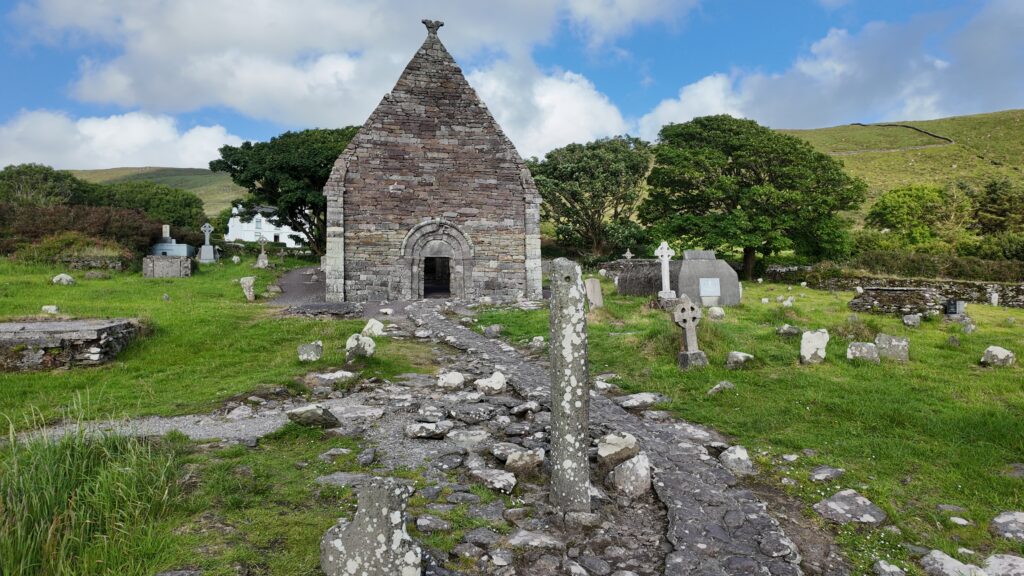
Graves and memorials now occupy parts of the church and surrounding burial ground, creating another layer of history within the medieval structure.
The Tower
A square tower rises prominently above the church.
It is one of the features that makes Muckross Abbey immediately recognisable from a distance.
The tower belongs to the later medieval development of the complex and creates the strong vertical element visible above the surrounding woodland.
From inside, the surviving stairways and upper levels help demonstrate how extensive the original friary buildings once were.
The Cloister
The cloister is probably the most distinctive surviving part of Muckross Abbey.
A vaulted arcade surrounds a square central courtyard.
This space would once have provided sheltered circulation between different parts of the friary while also creating a quiet internal area for the religious community.
Today, the cloister is especially memorable because of the large yew tree growing from its centre.
The combination of medieval stone and living tree has become the visual symbol of Muckross Abbey.
The Ancient Yew Tree
The yew at the centre of the cloister is traditionally regarded as extremely old and is sometimes described as being as old as the friary itself.
Heritage sources regard it as potentially one of Ireland’s oldest surviving yew trees.
Its exact age is difficult to establish with certainty, so claims that it was specifically planted by the fifteenth-century friars should be treated as tradition rather than proven fact.
What can be said with certainty is that the tree has become inseparable from the character of the cloister.
Its branches rise through the open courtyard while stone arches surround the trunk.
It is one of the details worth pausing to appreciate rather than simply photographing and moving on.
Why Were Yew Trees Associated With Religious Sites?
Yew trees have long associations with churchyards and religious landscapes in Ireland and Britain.
Their longevity and evergreen foliage helped give them symbolic connections with endurance and eternal life.
That does not prove why the Muckross yew was planted.
But it helps explain why the tree feels so naturally connected with the religious architecture surrounding it.
At Muckross, the symbolism is particularly striking because the friary itself fell into ruin while the tree continued growing.
The Graveyard at Muckross Abbey
The burial ground surrounding Muckross Abbey remains active.
That is important for visitors to remember.
This is not simply an archaeological attraction.
Families continue to bury relatives here, and many graves are considerably more recent than the medieval friary around them.
Walk respectfully, avoid stepping unnecessarily across graves and remember that some visitors may be there for personal reasons rather than sightseeing.
The graveyard also contains the burial places of several important figures in Gaelic literary history.
Piaras Feiritéar
One of the most significant people buried at Muckross is Piaras Feiritéar, the seventeenth-century Gaelic poet, chieftain and soldier associated particularly strongly with the Dingle Peninsula.
Feiritéar came from the West Kerry Gaelic aristocracy and wrote poetry in Irish during one of the most politically turbulent periods in Irish history.
He became involved in the conflicts of the seventeenth century and was eventually executed at Killarney in 1653, shortly after the Cromwellian expulsion of the Franciscans from Muckross.
His burial here creates an important historical connection between West Kerry and Killarney.
For visitors familiar with the Dingle Peninsula, his grave adds another dimension to the site.
Aodhagán Ó Rathaille
Another major Gaelic poet buried at Muckross is Aodhagán Ó Rathaille.
Ó Rathaille lived during the late seventeenth and early eighteenth centuries, a period in which the old Gaelic social order was undergoing profound change.
His poetry frequently reflects political upheaval, loss of patronage and the decline of the Gaelic aristocratic world.
He is generally regarded as one of the most important poets of the later Gaelic tradition.
His burial at Muckross makes the graveyard an important literary site as well as a religious one.
Eoghan Rua Ó Súilleabháin
Eoghan Rua Ó Súilleabháin is also buried here.
Born in County Kerry during the eighteenth century, Ó Súilleabháin became known for Irish-language poetry and song.
Like Ó Rathaille, his work belongs to a cultural tradition in which poetry remained deeply connected with oral performance, language and local identity.
Visitors walking through the graveyard are therefore standing among the burial places of figures whose work forms an important part of Kerry’s Gaelic literary heritage.
A Living Cemetery Beside a Medieval Friary
The presence of these poets is important, but they represent only one layer of the burial ground.
Generations of local families are also buried here.
That continuity changes the character of Muckross Abbey.
Many historical monuments became isolated archaeological sites after their original purpose disappeared.
Muckross continued as a place of burial.
The medieval friary therefore sits inside a landscape where memory, family and religious tradition remained active long after the Franciscan community itself had gone.
What Should You Notice When Visiting?
Muckross Abbey rewards visitors who look beyond the yew tree.
Take time to notice:
The Cloister Arches
Look at the rhythm of the stone arcade around the courtyard and how the friary buildings connect to it.
The Surviving Stairs
Unlike many ruined religious sites, Muckross still allows visitors to understand parts of the upper-storey arrangement.
Narrow Doorways and Passages
These reveal how compactly the friary was organised.
The Tower
Look at how it connects the different sections of the church.
Grave Inscriptions
Without intruding on private memorials, older stones can reveal names, dates and connections extending far beyond the medieval period.
The Relationship With the Landscape
The friary sits among woodland rather than isolated on an exposed hill.
That setting changes the experience significantly.
Exploring the Upper Levels
One of the unusual features of Muckross Abbey is the amount of internal exploration still possible.
Stone stairways lead into surviving upper sections of the friary.
These areas help visitors imagine the building as a multi-storey religious community rather than a single church.
The upper floors require care.
Steps can be narrow, stone surfaces uneven and lighting variable.
Take your time and do not assume that because entry is informal the monument has the accessibility of a modern visitor attraction.
Is Muckross Abbey Free to Visit?
Yes.
Muckross Abbey is an unguided National Monument and can currently be visited without an admission charge.
There is no formal guided-tour requirement.
Visitors explore the ruins and graveyard independently.
Because access arrangements can change, check current National Parks or Heritage Ireland information if you are travelling specifically to see the site.
How Long Should You Allow?
For most visitors, 30–45 minutes is enough for a general exploration.
If you are particularly interested in:
- architecture
- photography
- the graveyard
- Gaelic literary history
- the upper rooms
Allow closer to an hour.
The greater time commitment usually comes from combining the Abbey with Muckross House, gardens or surrounding walks rather than from the friary alone.
How Do You Get to Muckross Abbey?
Muckross Abbey lies within Killarney National Park, close to Muckross House.
It can be reached on foot through the park, and many visitors combine the two sites.
There is also access from parking areas associated with the Muckross area.
If you are visiting Muckross House first, continuing on foot towards the Abbey creates one of the most natural heritage combinations in the park.
You move from a nineteenth-century country estate into a religious site founded almost four centuries earlier.
That historical contrast is one of the reasons the pairing works so well.
Is the Walk Difficult?
The approach through the park is generally straightforward for many visitors, but the Abbey itself is a medieval ruin.
Once inside you will encounter:
- uneven stone
- steps
- narrow staircases
- changing floor levels
- historic surfaces
Visitors with reduced mobility may therefore find parts of the friary difficult or impossible to explore fully.
Even if you choose not to climb the stairs, the church, graveyard and cloister still provide plenty to see at ground level.
Muckross Abbey and Muckross House
These two sites should be understood together, but not confused.
Muckross Abbey belongs primarily to the religious and Gaelic world of the fifteenth to seventeenth centuries.
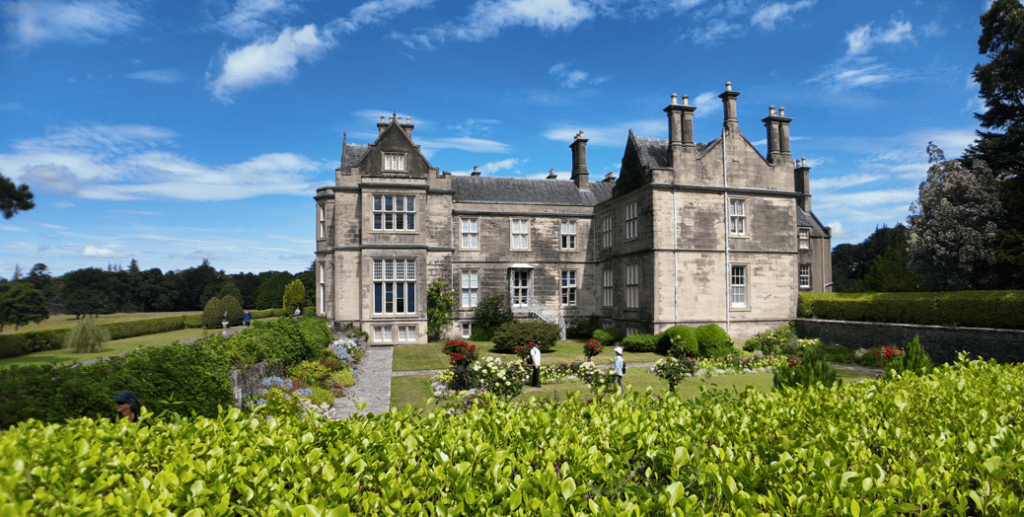
Muckross House belongs to the nineteenth-century landed-estate world of the Herbert family and later the Bourn Vincent family.
The House eventually became central to the creation of Ireland’s first National Park.
The Abbey takes visitors much farther back.
Visiting both therefore creates a remarkably broad historical sequence within a relatively small area. The detailed Muckross House and Gardens guide can help you plan the other half of this combined visit.
Muckross Abbey and Ross Castle
Ross Castle offers another useful historical comparison.
Ross Castle represents the fortified residence of a Gaelic lordly family.
Muckross represents a Franciscan religious community supported by Gaelic patrons.
Both developed within the wider political landscape of late-medieval Kerry.
Later, both were affected by the profound political upheavals of the seventeenth century.
For visitors interested in history, seeing both sites provides a much stronger introduction to medieval and early-modern Killarney than visiting either in isolation.
What Else Is Nearby?
Muckross Abbey sits within one of the richest areas of Killarney National Park for visitors.
Muckross House and Gardens
The obvious companion visit.
The House introduces nineteenth-century estate life, Queen Victoria’s 1861 visit and the origins of Ireland’s first National Park.
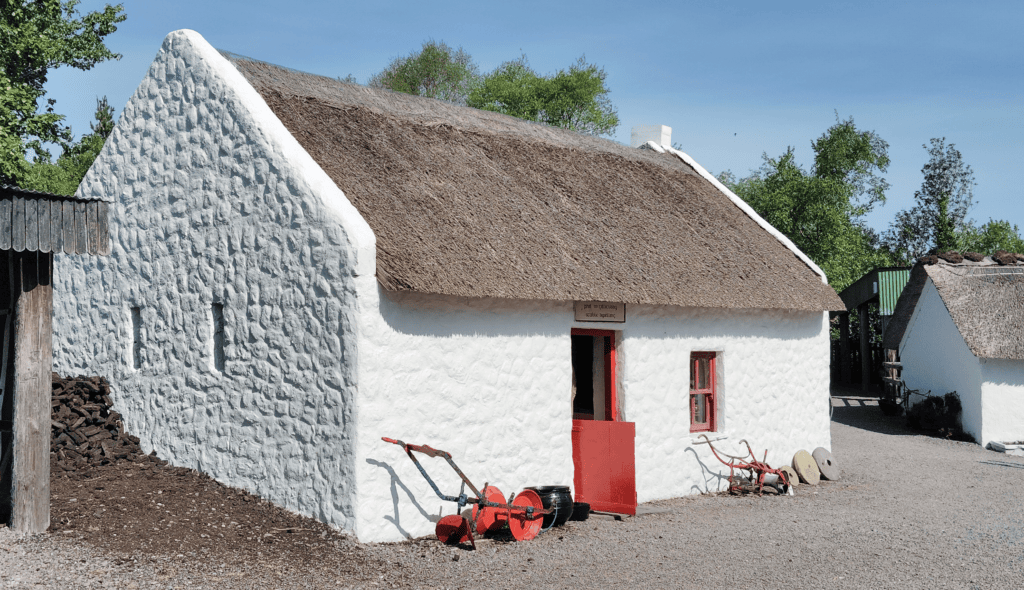
Muckross Traditional Farms
A separate visitor attraction interpreting rural Irish life in the 1930s and 1940s.
Torc Waterfall
One of the park’s most popular natural attractions and easy to combine with a wider day around Muckross.
Muckross Lake
Walking routes around the Muckross area provide access to woodland and lakeshore scenery.
Ross Castle
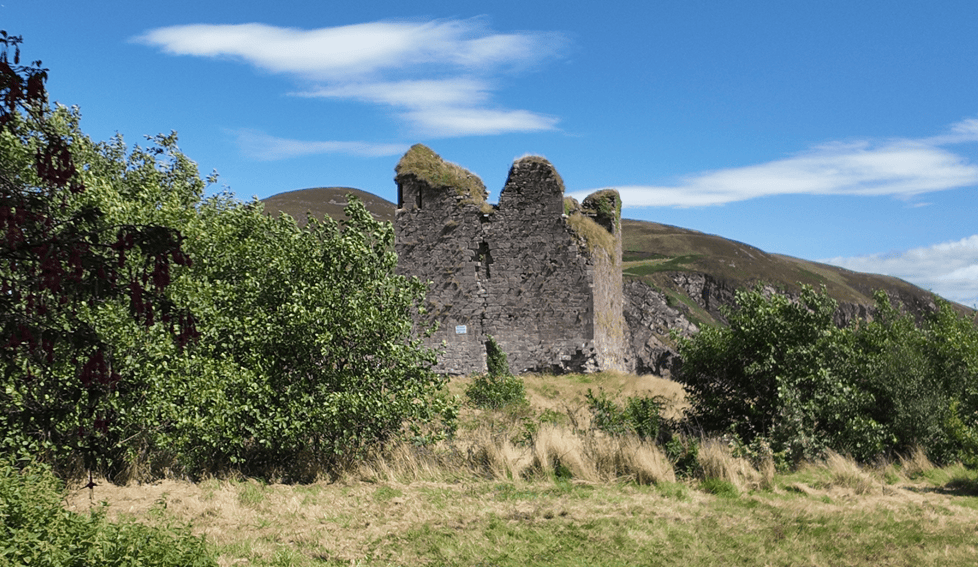
A fifteenth-century tower house on Lough Leane, strongly associated with the O’Donoghue Mór family.
Together these sites reveal why Killarney National Park should be understood as a cultural landscape as well as a natural one.
Is Muckross Abbey Worth Visiting?
Yes—particularly if you are already visiting Muckross House or spending time in Killarney National Park.
There is no admission charge, the surviving architecture is extensive, and the cloister is unlike anything else in the immediate Killarney area.
But the strongest reason to visit is not simply the yew tree.
Muckross brings together several layers of Kerry’s past in one place.
It began as a fifteenth-century Franciscan friary supported by Gaelic patrons.
Its friars survived suppression and repeatedly returned.
It was finally abandoned as a functioning friary after seventeenth-century conflict.
Its graveyard remained active.
And some of Kerry’s most important Gaelic poets were eventually buried beside its walls.
That is a much richer story than the ruins initially suggest.
Continue Exploring Killarney National Park
Muckross Abbey works naturally as part of a history-focused day in and around Killarney.
A practical route can combine Muckross Abbey with Muckross House and Gardens before continuing towards Torc Waterfall. Ross Castle can be added separately if you have enough time to explore its interior or lakeside setting properly.
The broader Killarney National Park visitor guide explains how these places fit into the park’s landscape.
Visitors continuing through Moll’s Gap can connect the park with the Ring of Kerry. The guide to the top sites on the Ring of Kerry can help identify the strongest onward stops.
If you are dividing a longer stay between West Kerry and Killarney, the comparison of Dingle and Killarney explains how the two destinations differ.
Steve’s Peninsula Tours’ private Killarney National Park tour can combine Muckross Abbey with selected historical and landscape stops, with the route adjusted around available time and walking ability.
Frequently Asked Questions About Muckross Abbey
When was Muckross Abbey founded?
Muckross Friary was founded in 1448 by Donal MacCarthy Mór for the Observant Franciscans.
Is Muckross Abbey really an abbey?
Technically, no. It was a Franciscan friary, although the name Muckross Abbey became established and remains universally used.
Is Muckross Abbey free?
Yes. There is currently no admission charge to explore the friary ruins and graveyard.
Can you go inside Muckross Abbey?
Yes. Visitors can walk through much of the surviving structure, including the church, cloister and parts of the upper levels.
How long should you spend at Muckross Abbey?
Allow around 30–45 minutes for a general visit and closer to an hour if you are particularly interested in history, architecture or photography.
How old is the yew tree at Muckross Abbey?
Its exact age is uncertain. It is traditionally regarded as extremely old and is sometimes described as being as old as the fifteenth-century friary. Heritage sources regard it as potentially one of Ireland’s oldest yews.
Who is buried at Muckross Abbey?
The graveyard contains generations of local burials as well as important Gaelic poets including Piaras Feiritéar, Aodhagán Ó Rathaille and Eoghan Rua Ó Súilleabháin.
Is the graveyard still used?
Yes. The cemetery remains an active burial place.
Can you walk from Muckross House to Muckross Abbey?
Yes. The sites can be combined easily on foot through the Muckross area of Killarney National Park.
Is Muckross Abbey accessible?
The approach is manageable for many visitors, but the medieval ruins contain uneven surfaces, stairs and narrow passages. Some areas will not be suitable for visitors with limited mobility.
What happened to the Franciscans?
The friary was legally suppressed in 1541, but Franciscans continued to return during later decades. They were eventually expelled again by Cromwellian forces in 1652.
What should I visit with Muckross Abbey?
Muckross House is the strongest companion site. Torc Waterfall, Muckross Lake and Ross Castle also fit naturally into a wider Killarney National Park itinerary.