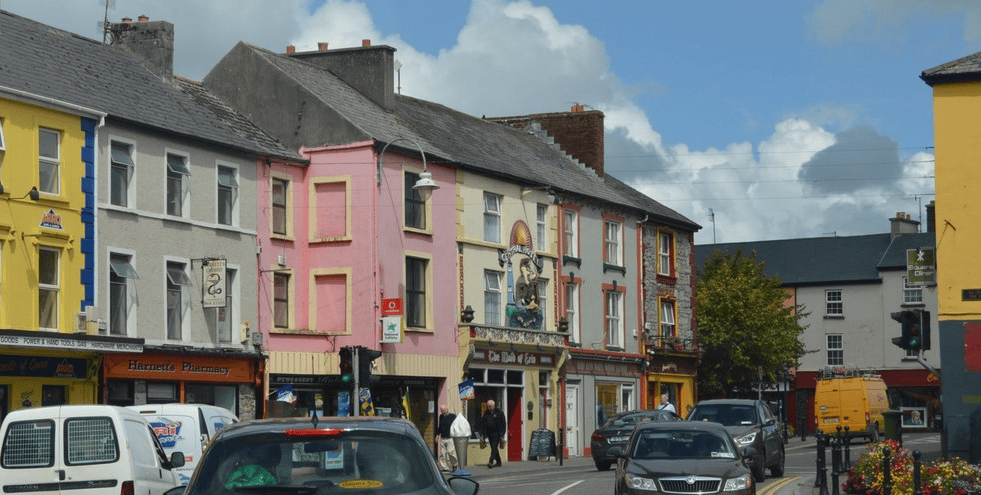
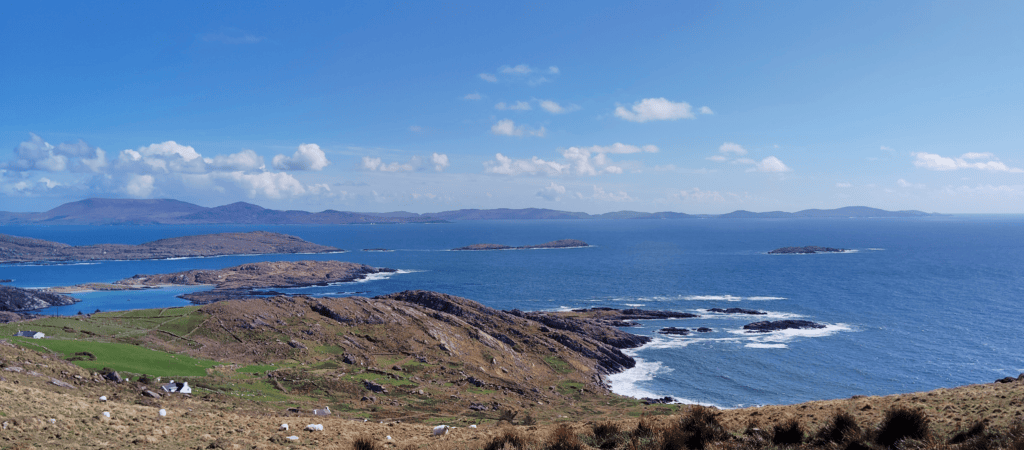
The Ring of Kerry is one of Ireland’s most celebrated scenic drives, winding for approximately 179 kilometres through some of the country’s most spectacular landscapes. Following the Iveragh Peninsula, the route passes mountain passes, Atlantic coastline, colourful villages, historic monuments and countless viewpoints that have attracted visitors for generations.
With so much to see, knowing where to stop can be difficult. Some visitors try to rush the entire route in a day, while others discover that slowing down and spending time at a handful of carefully chosen locations creates a far more rewarding experience.
Whether you’re driving the route yourself or exploring with a local guide, these are some of the Ring of Kerry’s most memorable places to visit. If you are still deciding between Kerry’s two great scenic touring regions, my comparison of the Ring of Kerry and Dingle Peninsula explains how the experiences differ.
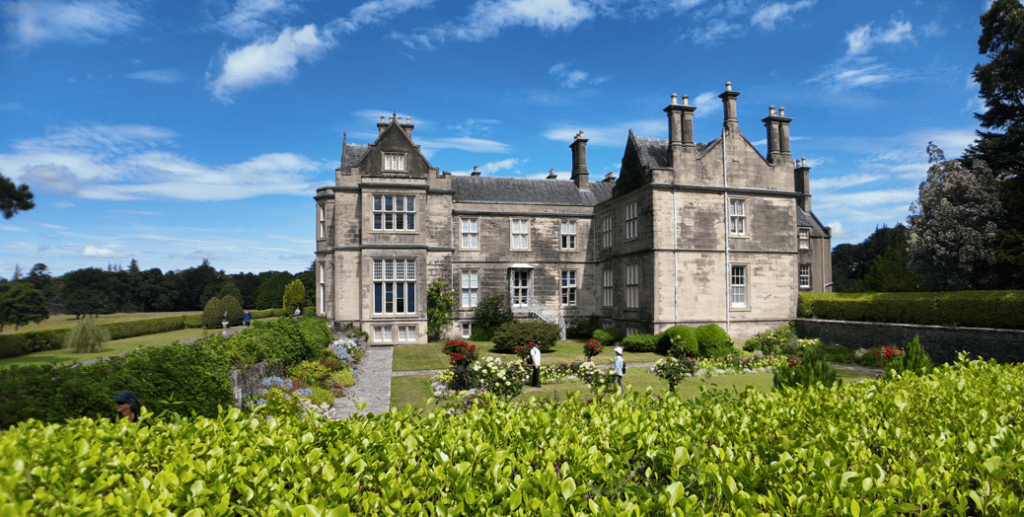
Killarney National Park
For many visitors, the journey begins around Killarney and Killarney National Park, one of Ireland’s most treasured natural landscapes.
The park combines ancient woodland, mountains, lakes and waterfalls with some of Kerry’s most important historic sites.
Highlights include:
- Muckross House and Gardens
- Torc Waterfall
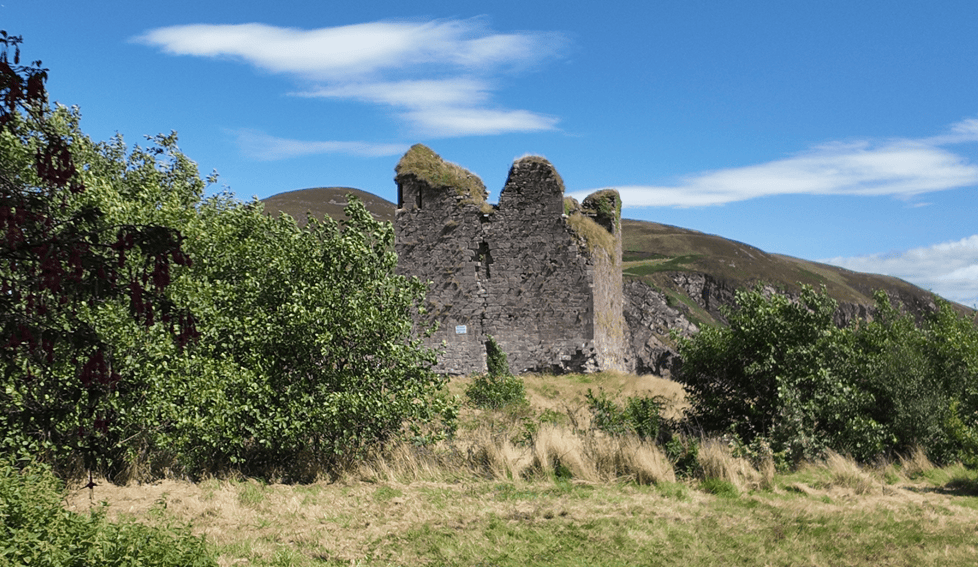
- Ross Castle
- The Lakes of Killarney
- Native red deer
- Scenic walking trails
- Muckross Abbey
Allow several hours if you plan to explore beyond the roadside viewpoints. Killarney National Park contains enough history and landscape to justify a separate day, so visitors completing the full Ring of Kerry should be selective rather than trying to explore every attraction before leaving Killarney.
Ladies View
Few viewpoints are more closely associated with the Ring of Kerry than Ladies View.
Named after Queen Victoria’s ladies-in-waiting during the royal visit of 1861, the viewpoint overlooks the Upper Lake and surrounding mountain landscape of Killarney National Park.
On a clear day the landscape stretches for miles, making this one of the route’s classic photography stops.
Early morning or late afternoon often provides softer light, although visibility matters more than any particular time of day. Kerry weather can change quickly around the mountains.
Moll’s Gap
A short drive beyond Ladies View brings you to Moll’s Gap, a mountain pass surrounded by rugged peaks and exposed rock.
The views constantly change with the weather, from bright sunshine illuminating distant mountains to mist drifting across the valleys.
It’s an excellent place to pause, stretch your legs and appreciate the scale of Kerry’s landscape before the route continues towards Kenmare.
This mountain section provides an important contrast with the Atlantic coastline encountered later in the day. One of the strengths of the Ring of Kerry is how quickly the scenery changes as you travel around the Iveragh Peninsula.
Kenmare
Known for its colourful streets and welcoming atmosphere, Kenmare is one of the Ring of Kerry’s favourite stopping points.
The town offers:
- Independent shops
- Excellent cafés
- Traditional pubs
- Artisan food producers
- Historic streets
- Easy woodland and waterside walks
Many visitors choose Kenmare as their lunch or coffee stop before continuing around the southern Iveragh Peninsula.
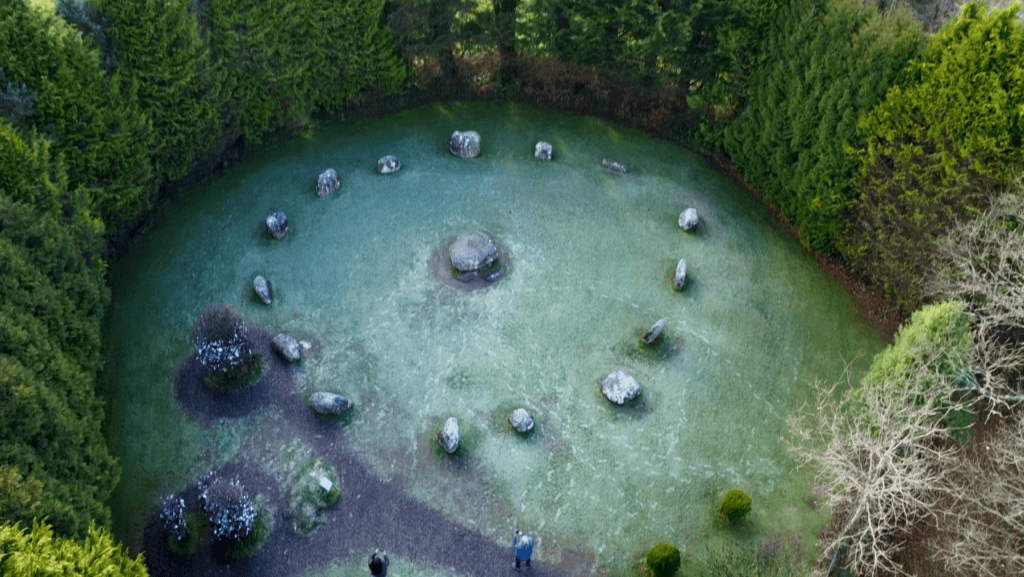
Nearby attractions include Kenmare Stone Circle, while the road west towards Sneem begins opening into the quieter mountain and coastal landscapes of South Kerry.
Kenmare is also worth considering as a base rather than simply a Ring of Kerry stop. Its position gives visitors excellent access to both the Iveragh Peninsula and the Beara Peninsula.
Sneem
Sneem sits beside the Sneem River and provides a relaxed break from the road.
Its brightly painted buildings, two compact village squares, public art and slower pace make it a favourite stop for visitors exploring the peninsula.
Take time to wander through the village, cross the river, enjoy a coffee or simply watch daily life unfold before continuing west.
Sneem works particularly well because it is not dominated by one major attraction. The pleasure comes from getting out of the car and spending a little time in the village itself.
Staigue Fort
History enthusiasts should seriously consider making the inland detour to Staigue Fort.
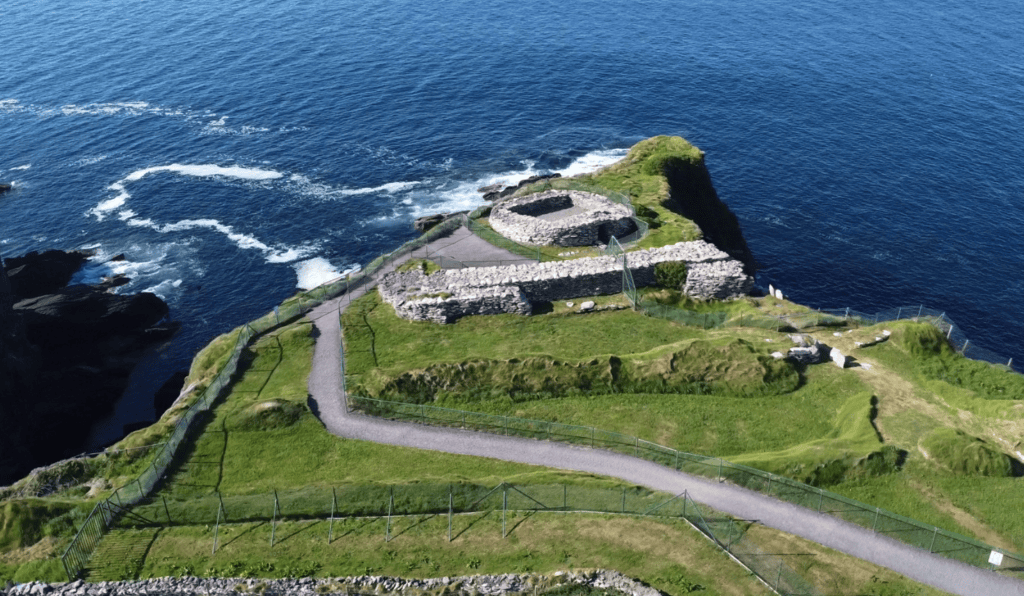
This monumental dry-stone cashel stands within a mountain valley on the southern Iveragh Peninsula and is one of Ireland’s most impressive surviving stone forts.
The enormous walls, narrow entrance, internal chambers and stone stairways demonstrate an exceptional level of dry-stone construction.
Staigue’s exact chronology remains debated, which makes it particularly important not to reduce the site to one convenient but uncertain date. What survives is an extraordinary fortified enclosure whose scale suggests the presence of an important community within the surrounding landscape.
The fort requires a diversion from the main Ring of Kerry road, so allow time for both the rural approach and the visit itself.
Derrynane House and Beach
One of the Ring of Kerry’s most rewarding stops combines history with spectacular scenery.
Derrynane House, once home to Daniel O’Connell, sits within a beautiful landscape close to one of Kerry’s finest beaches.
Visitors can explore:
- The historic house
- Woodland walks
- Coastal viewpoints
- Derrynane Beach
- Abbey Island when access and tidal conditions are appropriate
This is an excellent location for visitors who enjoy combining history with the outdoors.
Derrynane can easily become a substantial stop, so if the house, beach and wider landscape are priorities, I would build the day around them rather than trying to squeeze everything into a few hurried minutes.
Waterville
The coastal village of Waterville has welcomed visitors for generations.
Set between Ballinskelligs Bay and Lough Currane, it is known for:
- Charlie Chaplin’s holiday connection
- Its Atlantic promenade
- Nearby beaches
- Golf
- Coastal scenery
The seafront provides an ideal place for a short walk before continuing around the peninsula.
Waterville also acts as an important geographical connection between the traditional Ring of Kerry and the quieter Skellig Ring, making it a useful point at which to decide how ambitious the remainder of your day should be.
Portmagee and the Skellig Coast
If time allows, I strongly recommend extending the journey towards Portmagee and the Skellig Coast.
Portmagee is a small working harbour village facing Valentia Island across a narrow channel. It is also one of the principal mainland departure points for seasonal licensed boat trips towards Sceilg Mhichíl.
The village gives this section of the route a strong maritime character and provides a natural stopping point for food, coffee or a walk along the waterfront.
It also serves as the gateway towards Kerry Cliffs and some of the most dramatic Atlantic landscapes on the western Iveragh Peninsula.
Kerry Cliffs
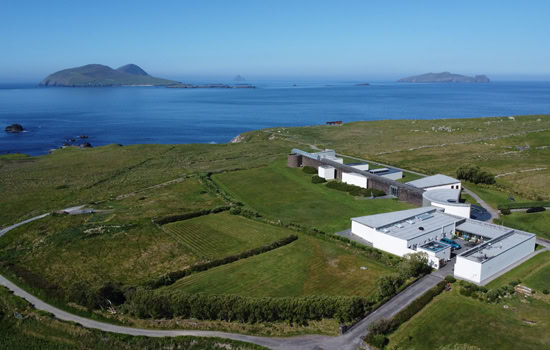
Located close to Portmagee, Kerry Cliffs offer some of the most dramatic Atlantic views along the journey.
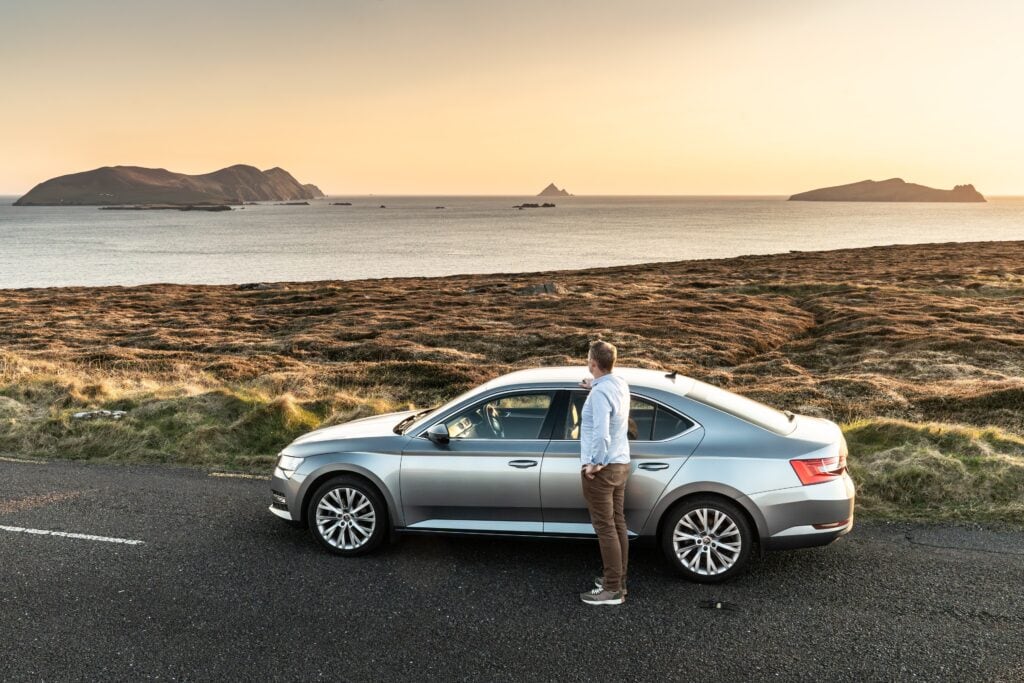
The cliff-top walking route provides extensive coastal views, with the Skellig Islands visible offshore when conditions are clear.
This is a substantial sightseeing stop rather than a quick roadside viewpoint. Allow for parking, walking and time to appreciate the landscape.
Weather makes a significant difference here. Visibility can be exceptional on a clear day, while mist and Atlantic rain can partially or completely obscure the offshore islands.
If you want a deeper look at this stop specifically, my guide to Kerry Cliffs on the Ring of Kerry explains how the cliffs fit into a wider Iveragh itinerary.
The Skellig Ring
Although technically an extension of the traditional Ring of Kerry, the Skellig Ring is well worth including if time allows.
This quieter coastal route passes through some of western Iveragh’s most exposed Atlantic scenery, connecting Portmagee with St Finian’s Bay, Ballinskelligs and the wider Waterville area.
Highlights in the wider Skellig landscape include:
- Portmagee
- Valentia Island
- Kerry Cliffs
- Views towards the Skellig Islands
- St Finian’s Bay
- Quiet Atlantic viewpoints
- Historic fishing communities
Many visitors consider this section one of the highlights of their entire trip to Kerry.
The roads are narrower in places than the main Ring, so the additional distance should not be judged purely by kilometres. Give the Skellig Ring enough time rather than adding it late in the day simply because it looks like a small loop on a map.
Valentia Island
Valentia Island is connected directly with Portmagee by road bridge and can add another substantial layer to a western Iveragh day.
The island has an extraordinary mixture of geological, maritime, communications and industrial history, alongside dramatic coastal scenery.
Visitors commonly explore locations associated with the island’s lighthouse heritage, slate quarrying and ancient geology.
However, Valentia deserves more than a hurried drive around the island. If it is one of your priorities, reduce the number of other stops rather than trying to complete the entire island, Kerry Cliffs and every Ring of Kerry attraction in one day.
Cahersiveen
Cahersiveen is one of the principal historic towns on the western Iveragh Peninsula and is often overlooked by visitors concentrating entirely on coastal scenery.
The town makes a useful gateway to the archaeological landscape of western Iveragh, with major stone forts and historic sites nearby.
It also provides services, food and a natural break in the journey between the northern Ring and the Portmagee and Valentia area.
If history matters to you, Cahersiveen and its surrounding sites can easily justify considerably more time than a standard one-day circuit allows.
Glenbeigh
On the northern side of the Ring, Glenbeigh sits between mountain scenery and the coast of Dingle Bay.
The village is closely connected with nearby Rossbeigh and makes a natural stop as the route moves between Killorglin and the western Iveragh Peninsula.
For visitors who prefer beaches and coastal walking to formal attractions, this area can easily become one of the most enjoyable parts of the Ring.
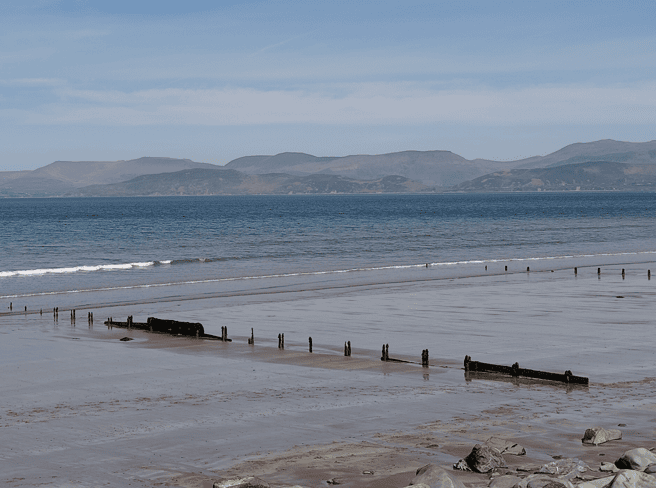
Rossbeigh Strand
Rossbeigh Strand offers one of the finest long beach landscapes on the northern side of the Iveragh Peninsula.
The sweeping sandy strand provides expansive views across Dingle Bay towards the mountains of the Dingle Peninsula.
Its open landscape creates a striking contrast with the cliffs and narrower coastal roads encountered further west.
Rossbeigh works especially well if you want a genuine beach walk rather than another brief roadside photography stop.
Killorglin
Killorglin sits beside the River Laune and is one of the main towns encountered on the northern approach to the Ring of Kerry.
The town is particularly associated with Puck Fair and provides another useful connection between the Killarney area and the landscapes further west around Glenbeigh and Cahersiveen.
Visitors completing the Ring in a single day may only pass through, but Killorglin is worth knowing as part of the wider geography of the route rather than simply another name on the road signs.
Suggested Ring of Kerry Itinerary
If you’re driving the Ring of Kerry in one day, consider allowing time for a carefully selected combination of these key stops:
- Killarney National Park
- Ladies View
- Moll’s Gap
- Kenmare
- Sneem
- Derrynane or Staigue Fort
- Waterville
- Portmagee and Kerry Cliffs
- Part of the Skellig Ring or Valentia Island
- Glenbeigh and Rossbeigh if they fit naturally into your direction of travel
That does not mean you should try to complete every item on the list.
The Ring of Kerry is approximately 179 kilometres before you add the Skellig Ring and other diversions. While the principal circuit can be driven in a few hours without meaningful stops, allowing a full day gives you time to appreciate the scenery rather than simply passing through it.
How Many Stops Should You Make?
This is where many one-day itineraries go wrong.
Ten or twelve named attractions may look perfectly reasonable on paper, but each stop involves parking, walking, photographs and the inevitable extra few minutes spent somewhere you particularly enjoy.
I would rather choose five or six strong experiences and give them proper time.
A historical site, one or two villages, a beach, a major Atlantic viewpoint and the mountain landscapes around Killarney can create a much better day than trying to complete every attraction around Iveragh.
My Local Tip
Many visitors focus only on completing the drive, but the real enjoyment comes from slowing down.
Take time to leave the car at a few locations, walk along the beaches, explore the villages and enjoy the quieter viewpoints between the well-known attractions.
Those unplanned moments often become the highlights of the day.
The Ring of Kerry is not valuable because you can say you drove 179 kilometres around it. It is valuable because of what those kilometres connect.
Driving Yourself or Taking a Private Tour
The Ring of Kerry can be an excellent self-drive experience if you enjoy road trips and are comfortable on Irish roads.
The advantage is complete independence. You can decide exactly where to stop and how long to stay.
The trade-off is that somebody in the group has to concentrate on driving, navigation and parking for much of a long day.
If you would prefer everybody in your group to enjoy the landscape, my private Ring of Kerry and Skellig Ring tour combines the main Ring with the western Skellig Coast in a relaxed full-day journey.
The private format also allows the day to be adapted around weather, visibility and the places that genuinely interest your group rather than following a fixed list of compulsory stops.
Frequently Asked Questions
How long does it take to drive the Ring of Kerry?
Without substantial sightseeing stops, the principal circuit takes several hours to drive. Most first-time visitors should allow a full day because villages, viewpoints, lunch, beaches and historical sites quickly add considerable time to the journey.
Which are the best stops on the Ring of Kerry?
Killarney National Park, Ladies View, Moll’s Gap, Kenmare, Sneem, Derrynane, Waterville, Portmagee, Kerry Cliffs and Rossbeigh are all strong choices. History enthusiasts should also consider Staigue Fort and the archaeological sites around Cahersiveen.
Is the Skellig Ring worth the detour?
Yes. If you have enough time, the Skellig Ring adds quieter roads, dramatic Atlantic scenery, Portmagee, Kerry Cliffs and views towards the Skellig Islands. It should be treated as a meaningful extension to the day rather than a quick additional loop.
Is Valentia Island worth visiting?
Yes, particularly if you are interested in geology, maritime history and Atlantic scenery. However, the island deserves enough time to explore properly, so you may need to reduce other Ring of Kerry stops.
Can you see the Ring of Kerry in one day?
Yes. One full day is enough for an excellent introduction, provided you accept that you cannot explore every attraction properly. Prioritise the locations that best match your interests.
Is the Ring of Kerry difficult to drive?
Most of the principal route is manageable for competent drivers, although traffic, bends and narrower sections require normal care. The Skellig Ring contains narrower roads and should be driven patiently according to local conditions.
Where is the best place to start the Ring of Kerry?
Killarney is the traditional and most common starting point, particularly for visitors staying there. Kenmare is another excellent base for exploring the southern side of the Iveragh Peninsula.
Should I drive the Ring of Kerry or Dingle Peninsula?
They offer different experiences. The Ring of Kerry is larger and combines lakes, mountains, villages and Atlantic coastline, while the Dingle Peninsula is more compact and particularly strong for archaeology, Gaeltacht culture and close Atlantic scenery. If your itinerary allows it, give each route its own day.
Continue Exploring the Ring of Kerry
Every stop along the Ring of Kerry reveals a different side of County Kerry, from mountain landscapes and Atlantic cliffs to historic villages and ancient monuments.
Explore the dedicated visitor guides to Killarney, Ross Castle, Kenmare, Sneem, Waterville, Portmagee, Kerry Cliffs, Staigue Fort, Glenbeigh and Rossbeigh Strand to plan the places that best suit your day.
For a wider view of the county, the Explore Kerry collection connects the Ring of Kerry with Killarney, the Dingle Peninsula, Kerry’s historic sites, beaches, towns and scenic landscapes.
The best Ring of Kerry itinerary is not the one containing the greatest number of stops. It is the one that gives you enough time to appreciate why you stopped in the first place.