My Slea Head Drive private tour is a personal journey around the western Dingle Peninsula, designed for visitors who want to experience this remarkable part of West Kerry with their own local guide. Starting from Dingle, I take care of the driving and the route while you concentrate on the Atlantic coastline, the Blasket Islands, ancient sites and the stories behind the landscape.
Explore Slea Head and the Dingle Peninsula with Your Own Local Guide
For me, Slea Head is much more than a scenic road. Within a relatively small area you encounter archaeology, early Christian heritage, Gaeltacht communities, traditional stone-walled farmland, film locations and a coastline shaped by direct exposure to the Atlantic. Understanding how those elements connect is what turns the drive into a much more memorable experience.
My tours are private, with a maximum of four guests. There is no coach timetable and you are not being combined with another booking. If archaeology interests you, we can talk more about it. If you enjoy photography, we can give a particularly good viewpoint additional time. If the Blasket Islands, Irish language, local history or film locations catch your interest, I can shape the conversation and stops around you.
If you would like to see the actual experience, you can view my Slea Head Drive private sightseeing tour for the full tour details.
Why Choose a Private Slea Head Drive Tour?
You can certainly explore Slea Head independently. If that is how you prefer to travel, my Slea Head Drive Route Guide is designed to help you understand the circuit before setting out.
A private guided tour offers something different. Nobody in your group has to spend the journey concentrating on narrow roads, navigation, traffic and finding suitable places to stop. Everyone is free to look out of the window and experience the landscape.
More importantly, you have somebody beside you who can explain what you are seeing as you encounter it. An old stone structure becomes part of a much larger archaeological landscape. Islands on the horizon become places where families once lived. Irish names on road signs begin to reveal something about the geography and culture of Corca Dhuibhne.
If you are still deciding whether to make Slea Head a priority during your visit, my guide asking is Slea Head Drive worth it? looks at the question from the perspective of visitors with limited time in Dingle.
A Private Tour from Dingle for Up to Four Guests
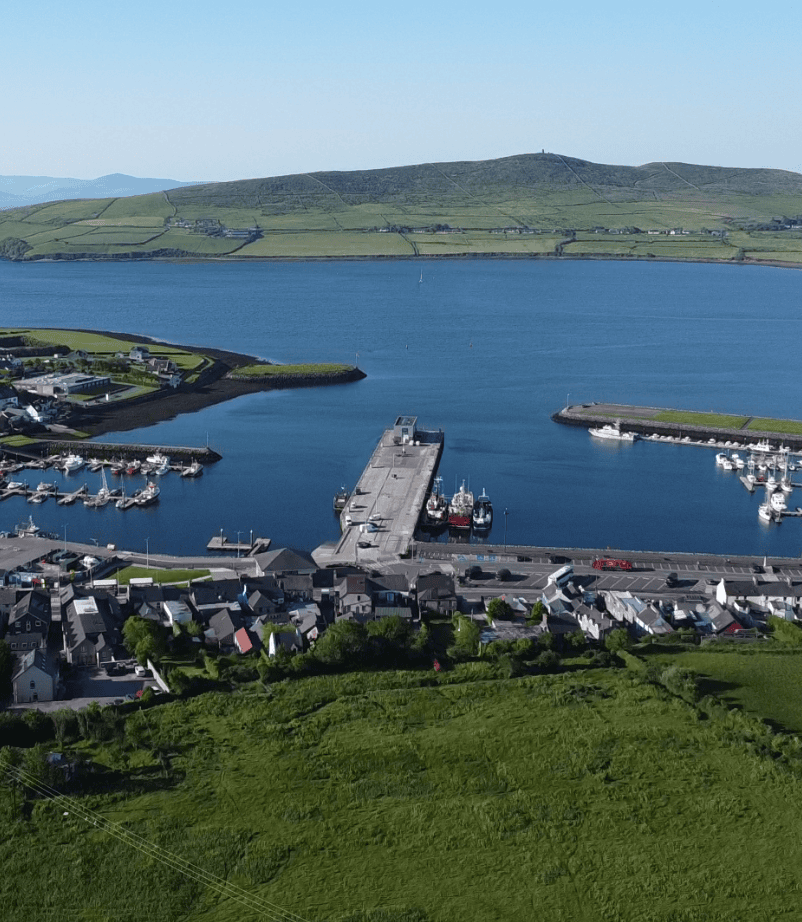
Dingle is the natural starting point for the journey. My private tours are particularly suited to couples, families and small groups of friends who want to see the western peninsula without joining a larger group excursion.
I personally drive and guide the tour, and my vehicle accommodates a maximum of four guests. Your booking is for your group alone. That small-group format makes conversation easier, gives us more flexibility at stops and allows me to adjust the experience around your interests and preferred amount of walking.
If Slea Head is only one part of your plans, the wider Explore Kerry section can help you connect your time in Dingle with other places around County Kerry.
What Will You See on a Slea Head Private Tour?
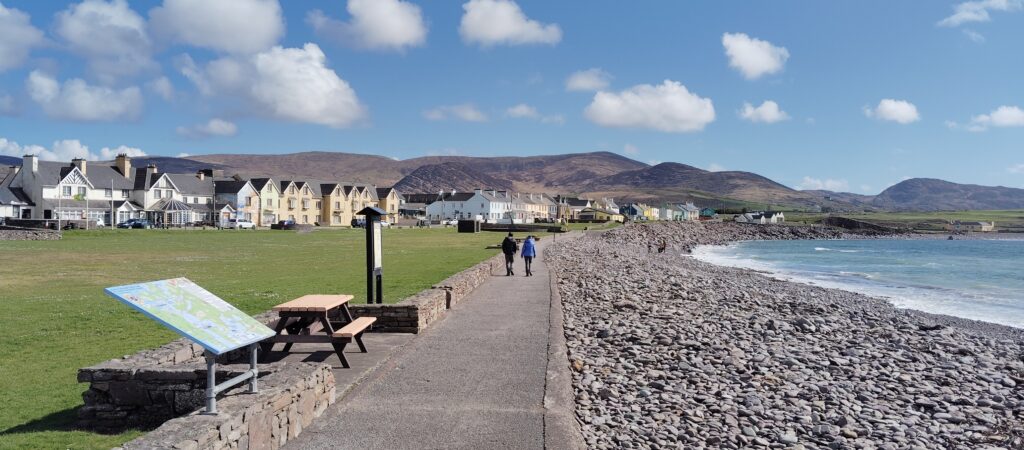
The route takes us west from Dingle towards Ventry before following the Atlantic side of the peninsula through Fahan and Slea Head towards Dún Chaoin, Ballyferriter and the northern side of West Kerry.
Rather than promising an inflexible checklist, I prefer to select stops according to the time available, weather, visibility and what interests you. A few hours disappears surprisingly quickly once you begin getting out of the vehicle, taking photographs and exploring properly.
The western peninsula contains far more than can sensibly be examined during a short tour. The objective is not to say we stopped everywhere. It is to give you a meaningful experience of Slea Head without turning your holiday into a race.
If you are planning several days in the area, my First Trip to the Dingle Peninsula guide provides a broader introduction to what is worth considering beyond the Slea Head circuit.
Leaving Dingle for the Western Peninsula
As we leave Dingle and travel towards Ventry, I normally use the first part of the journey to explain the geography of the peninsula. Understanding where Dingle sits in relation to the mountains, Ventry Harbour, the Atlantic and the Blasket Islands makes the rest of the route much easier to follow.
The landscape gradually opens as we travel west. Around Ventry, the coastline still feels relatively sheltered. Continue towards Fahan and the character changes considerably as the road approaches the exposed Atlantic side of the peninsula.
This transition is one of the pleasures of Slea Head. The scenery does not remain the same for the entire circuit. Beaches, mountain slopes, stone fields, cliffs, islands and small settlements continually alter the view.
The wider story behind this landscape is explored in my History of the Dingle Peninsula, which provides useful context for many of the places encountered during the tour.
Fahan and the Ancient Landscape
The Fahan area demonstrates why Slea Head should not be viewed purely as a coastal drive. Archaeological remains are scattered throughout a landscape that has been occupied and farmed for generations.
Clocháns, often described as beehive huts, are among the structures visitors immediately associate with this part of West Kerry. Dry-stone construction is a defining feature of the peninsula, although the history and dating of individual structures can be more complicated than simplified visitor descriptions sometimes suggest.
Promontory forts, old field systems, stone walls and other archaeological remains also remind us that these sites did not exist in isolation. They formed part of a much broader human landscape.
Another interesting stop along this section of the route is the Fairy Fort on Slea Head Drive, where archaeology, folklore and the modern visitor experience come together.
The Atlantic Coast at Slea Head
Beyond Fahan, the Atlantic increasingly dominates the journey. The road follows the slopes beneath Mount Eagle while the coastline opens towards the Blasket Islands.
This is the landscape that has made Slea Head internationally recognisable, but photographs rarely communicate how continuously the perspective changes. A headland can hide the islands completely and then another bend opens an entirely different view across the Atlantic.
If you intend to drive the road yourself, direction matters. My guide to which way to drive Slea Head explains the practical reasons I recommend following the established clockwise direction.
On a private tour, however, you do not need to think about navigation or the next turn. I take care of the road while you enjoy the landscape.
Coumeenoole and the Western Coast
Coumeenoole is one of the most memorable locations on the western peninsula. The small beach lies beneath steep cliffs with the Atlantic immediately ahead and the Blasket Islands offshore.
The area is also associated with David Lean’s Ryan’s Daughter, which used several locations around the Dingle Peninsula during filming. The film connection adds another story, but Coumeenoole needs no cinema history to make it interesting.
What I particularly like here is the geography. It gives visitors an immediate sense of how exposed this western edge of Ireland is to the Atlantic.
Sea conditions can be powerful, so any visit to the beach itself should always be approached according to conditions on the day. Excellent views are available without needing a long walk on the sand.
Dún Chaoin and the Blasket Story
Continuing around the western edge of the peninsula brings us into Dún Chaoin, one of the places most closely associated with the story of the Blasket Islands.
The famous winding route towards Dunquin Pier has become one of the most photographed coastal scenes in Ireland, but concentrating only on the photograph misses the reason the place matters.
The pier represents the physical connection between mainland Dún Chaoin and the islands offshore. Once you understand that relationship, the landscape begins to tell a human story rather than simply providing another photograph.
The nearby Blasket Centre explores the island community, its language, literature and extraordinary cultural legacy in considerably greater depth.
The Blasket Islands
The Blasket Islands are a defining feature of the western Dingle Peninsula. When visibility is good, they accompany us through several sections of the tour and appear very different depending on where we are standing.
Great Blasket was once home to a small Irish-speaking island community whose writers produced an extraordinary body of literature describing their lives. The permanent community was evacuated in 1953, but its cultural legacy remains closely connected with Dún Chaoin and the mainland.
Knowing who lived there changes the view completely. The islands stop being anonymous shapes offshore and become places where families lived, farmed, fished and maintained a community in challenging Atlantic conditions.
If that story particularly interests you, there are two useful resources to continue with: my History of the Blasket Islands and the more practical Blasket Islands Visitor Guide.
The Gaeltacht and Living Irish Culture
The western Dingle Peninsula forms part of the Corca Dhuibhne Gaeltacht, where Irish remains part of community life.
You will encounter names such as Dún Chaoin, Ceann Trá and Baile an Fheirtéaraigh as we travel. These are not historical labels placed on road signs for visitors; they belong to a living linguistic landscape.
Place names can reveal a surprising amount about geography, settlement and how earlier generations understood the landscape. Where it adds to the journey, I explain some of those connections during the tour.
For me, this is another reason Slea Head cannot properly be reduced to a scenic drive. Landscape, language, archaeology and community are closely connected here.
Clogher and the Northern Peninsula
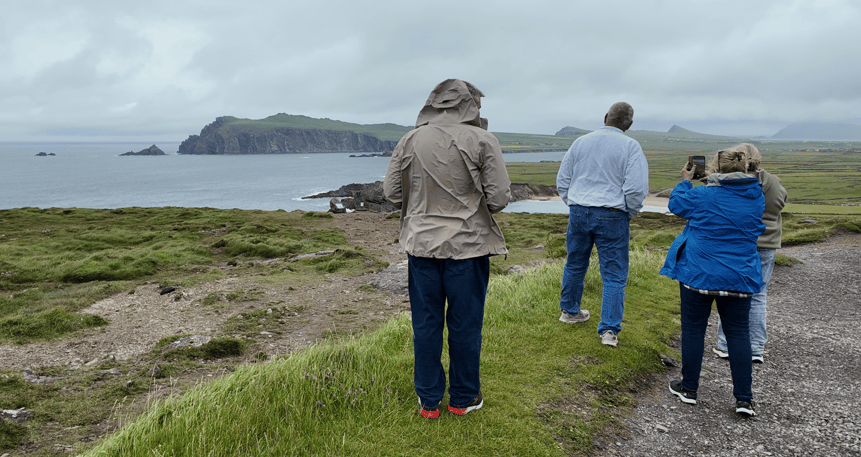
After rounding the western end of the peninsula, the scenery changes again around Ballyferriter and Clogher. Ceann Sibéal and the Three Sisters become prominent while the northern Atlantic coastline develops a different character from the southern side of Slea Head.
The area also has an unexpected modern connection. Ceann Sibéal was used during production of Star Wars: The Last Jedi, when a temporary set was constructed to reproduce the appearance required for Ahch-To.
If the film connection interests you, my Star Wars in Dingle guide explains more about the Dingle Peninsula’s role in the production.
Early Christian West Kerry
As the journey moves away from the exposed western coastline, another layer of the peninsula’s history becomes apparent.
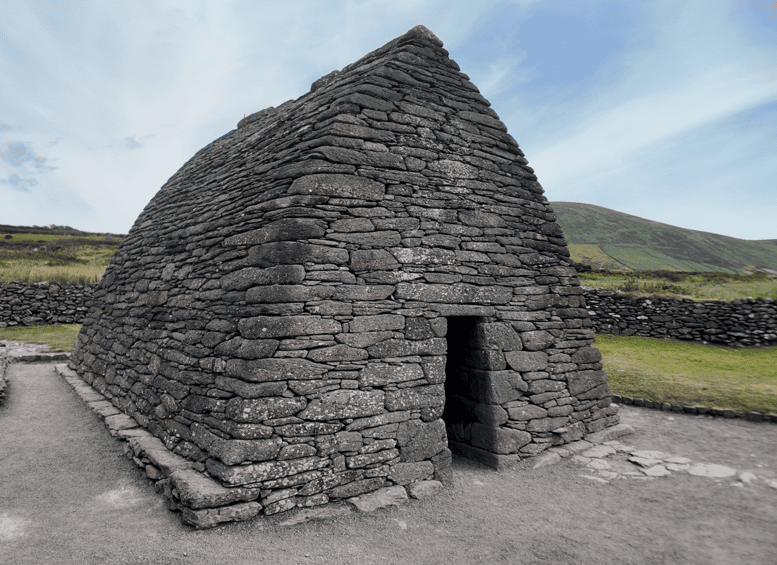
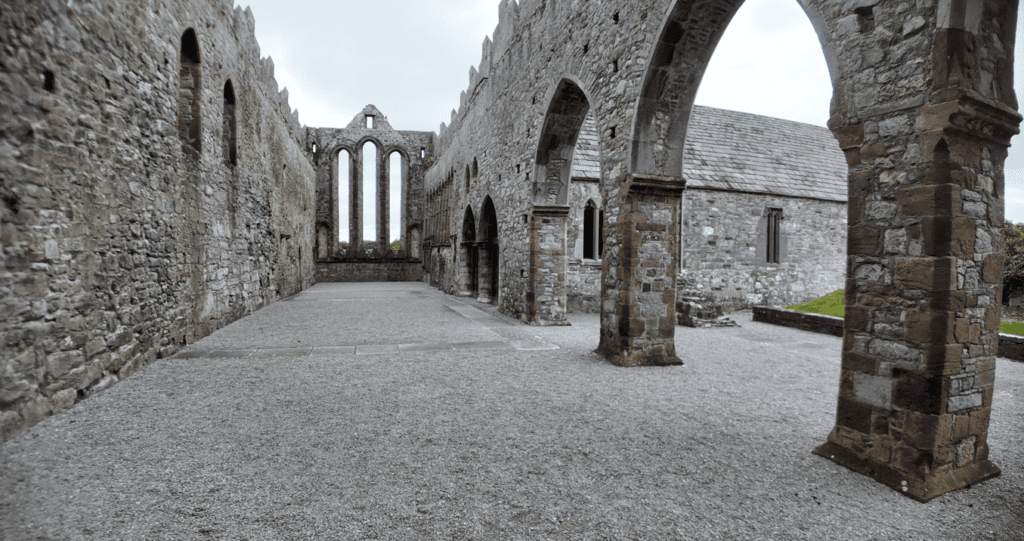
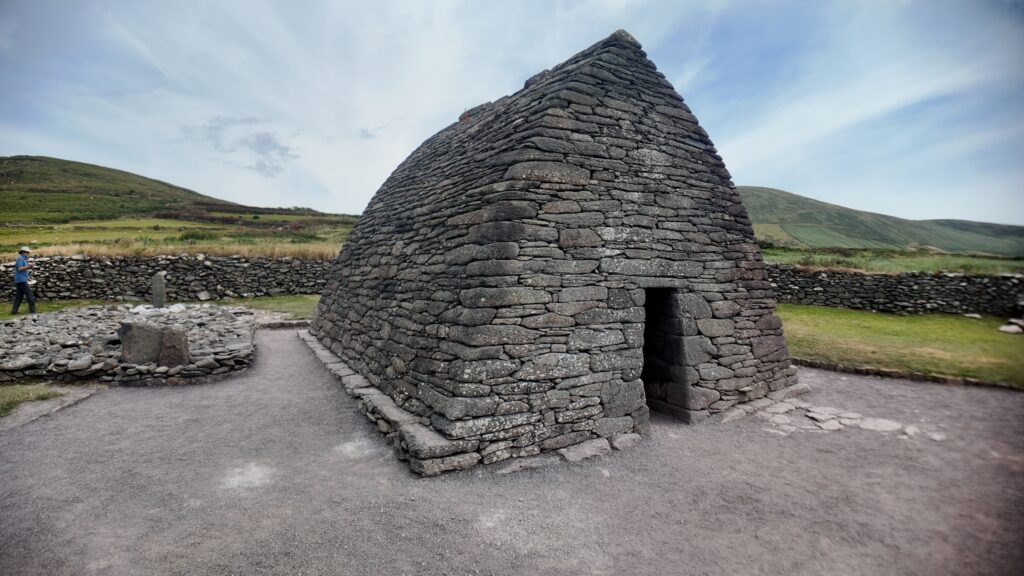
Gallarus Oratory is one of the best-known historic structures in West Kerry, while Kilmalkedar and other ecclesiastical sites reveal a much broader early Christian and medieval landscape.
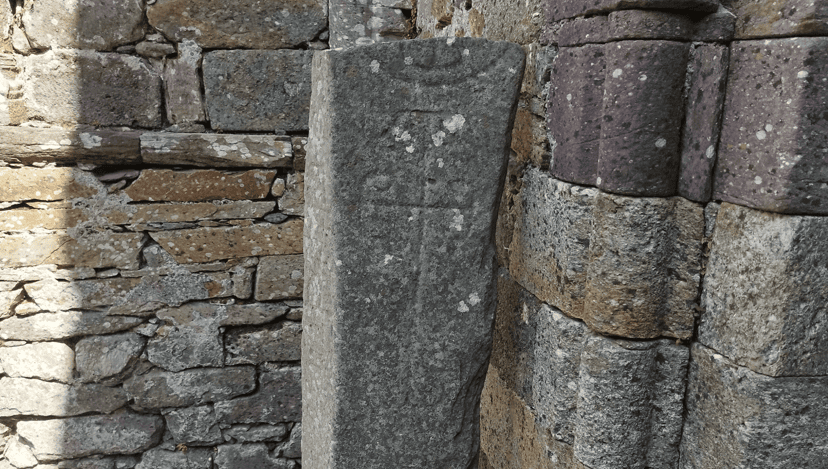
I prefer to put these places into context rather than present them as isolated monuments. Churches, carved stones, monastic remains, pilgrimage traditions and ancient routes all form part of the deeper history of the peninsula.
Visitors with a particularly strong interest in archaeology and history may want to allow more time than a focused Slea Head circuit provides. That is where a longer private Dingle Peninsula experience can make more sense.
Is a Few Hours Enough for Slea Head Drive?
A focused private tour works very well for visitors who want a strong introduction to Slea Head without committing their entire day to touring.
It gives us time to experience the Atlantic coastline, Blasket views and a selection of worthwhile scenic and historical stops while keeping the pace comfortable.
What it does not provide is enough time to explore every archaeological site, beach and visitor attraction in depth. Trying to do that would turn the journey into a race.
If you have only one day available, the One Day in Dingle guide can help you decide how Slea Head fits with the rest of your day. Visitors staying longer may find the 3-Day Dingle Itinerary useful for seeing how the peninsula can be explored at a more relaxed pace.
A Private Dingle Peninsula Tour Built Around You
One of the principal advantages of travelling privately is that your interests can influence the experience.
A couple fascinated by archaeology does not necessarily need the same tour as a family primarily interested in scenery. Photographers may want more time at selected viewpoints. Guests interested in the Blasket writers may want to spend longer discussing the islands and Dún Chaoin.
The same applies to walking. Some visitors enjoy getting out regularly, while others prefer to experience most of the peninsula from viewpoints close to the vehicle. Within the realities of access at individual locations, I can adjust the tour accordingly.
I do not believe every group visiting West Kerry should automatically receive exactly the same experience.
Photography on Slea Head Drive
Slea Head is particularly rewarding for photographers because there is no single viewpoint on which the whole experience depends.
Within a relatively short journey you can encounter beaches, cliffs, islands, mountains, stone walls, archaeological monuments, villages and constantly changing Atlantic perspectives.
The weather can help rather than hinder photography. Clear conditions provide long-distance views, while broken Atlantic cloud can create dramatic changes in light across the sea and mountains.
If photography is important to you, tell me at the beginning of the tour. When conditions and safe stopping arrangements allow, I can take that into account when deciding where our time is best spent.
What Happens if the Kerry Weather Changes?
Weather on the Dingle Peninsula can change quickly. Conditions in Dingle do not necessarily tell you exactly what will be happening around Slea Head a short time later.
I normally recommend comfortable footwear and a light waterproof layer even when the morning appears settled.
Cloud or an occasional shower does not automatically spoil the experience. Some of the most atmospheric conditions occur when cloud moves across the mountains or sunlight breaks through over the Atlantic.
If you are planning your visit well in advance, my guide to the best time to visit Dingle looks at how the seasons can change the experience of the peninsula.
Who Is a Private Slea Head Tour Best For?
This type of tour works particularly well for couples, families and small groups of friends who want a personal experience rather than a larger coach excursion.
It is also an excellent choice for visitors who would rather not drive narrow Irish roads themselves. This can be particularly useful if you are unfamiliar with driving on the left or simply want everybody in your group to enjoy the scenery.
History enthusiasts, photographers and visitors interested in Irish culture generally get a great deal from the private format because there is time to ask questions and develop the subjects that interest them.
Most importantly, the vehicle and guide are for your group. You are not sharing your experience with another booking.
Why Explore Slea Head with a Local Guide?
I have spent years travelling these roads and bringing visitors around the Dingle Peninsula. What I have learned is that people rarely remember Slea Head simply as a sequence of viewpoints.
They remember discovering who lived on the islands they had been photographing. They remember finding out why an old stone structure stood in a field, hearing the meaning behind a local place name or suddenly understanding how geography shaped life along this Atlantic coast.
That is what I want to add to the journey.
I am not trying to turn your time in West Kerry into a history lecture. There should be time for conversation, photographs, questions and simply looking at the view. My job is to provide enough local knowledge and context to make the landscape more meaningful.
If you would like to know more about who will actually be showing you around, you can read my story from chef to tour guide and how my connection with the Dingle Peninsula developed into Steve’s Peninsula Tours.
Private Slea Head Tour or Self-Drive?
If you enjoy driving and researching places independently, Slea Head can certainly be explored in your own vehicle.
A private tour offers a different experience. Nobody in your group has to concentrate on the road, you do not have to research every stop beforehand and you have somebody beside you who can explain what you are seeing as you encounter it.
It also removes much of the uncertainty around where to stop and how to use limited time. That can be particularly useful if you have only one day in Dingle.
If you prefer complete independence but would still like commentary as you travel, Steve’s GPS Slea Head Drive Audio Tour provides another way to explore the route in your own vehicle.
Make Slea Head Part of Your Kerry Visit
Slea Head fits naturally into a much larger County Kerry journey. If you are deciding how to divide your time, the Dingle or Killarney? guide compares the county’s two major visitor bases, while 7 Days in Kerry shows how Dingle can form part of a wider one-week itinerary.
For a first visit with limited time in Dingle, however, I would put Slea Head high on the list. It brings together the Atlantic landscape, archaeology, Gaeltacht culture and history of West Kerry within one exceptionally rewarding journey.
If you would like me to show you the peninsula personally, you can view the full details of my private Slea Head Drive tour from Dingle.
Frequently Asked Questions
Is the Slea Head Drive tour completely private?
Yes. Your tour is for your own group, with a maximum of four guests. You are not added to another booking or a larger tour group.
Who guides the tour?
I personally operate and guide my private tours, so you are travelling with me rather than being passed between a large pool of drivers or guides.
Where does the Slea Head private tour start?
Dingle is the natural starting point for the Slea Head circuit. Exact collection arrangements can be agreed when organising your tour.
How long should I allow for Slea Head Drive?
A focused tour can give you an excellent introduction within a few hours. If you want longer walks, more archaeology, additional historical sites or extended photography stops, a longer Dingle Peninsula tour is the better option.
Is the tour suitable if we do not want much walking?
Yes. The amount of walking can be adjusted considerably. Many important views can be experienced close to the vehicle. If anyone in your group has particular mobility requirements, let me know beforehand so the experience can be planned realistically.
Can we stop for photographs?
Absolutely. Photography is naturally part of the experience, and the private format gives us more flexibility to spend time at a particularly good viewpoint when conditions and safe stopping arrangements allow.
Can the tour be personalised?
Yes. Within the time available, I can place greater emphasis on interests such as archaeology, local history, Irish culture, the Blasket Islands, photography or film locations.
What should we bring?
Comfortable footwear and a light waterproof layer are sensible choices. Weather on the western peninsula can change quickly even when conditions in Dingle appear settled.
Is Slea Head Drive worth visiting if we only have one day in Dingle?
For most first-time visitors, yes. Slea Head concentrates many of the Dingle Peninsula’s defining features into one journey: Atlantic coastline, islands, archaeological sites, Gaeltacht communities and some of West Kerry’s most recognisable landscapes.
Why choose a private tour instead of driving Slea Head ourselves?
A private tour allows everybody in your group to enjoy the scenery while I take care of the driving and route. You also have a local guide who can explain the history, archaeology, culture and stories behind the places you encounter, turning Slea Head from a scenic drive into a much more complete experience.