The Blasket Islands lie beyond the western end of the Dingle Peninsula, separated from the mainland by a narrow but often powerful stretch of Atlantic water. For generations, an Irish-speaking community lived on Great Blasket Island, developing a remarkable literary tradition that left us some of the most important first-hand accounts of island life in Ireland.
The permanent community left Great Blasket in 1953, but its story did not disappear with its residents. The abandoned settlement, the books written by islanders and the strong cultural connections with nearby Dún Chaoin continue to make the Blaskets an important part of the story of Corca Dhuibhne and the wider Irish-speaking world.
What Are the Blasket Islands?
The Blaskets are a group of islands and rocky islets lying off the western tip of the Dingle Peninsula in County Kerry.
Great Blasket Island, known in Irish as An Blascaod Mór, is the largest and the island most closely associated with the former community and its celebrated writers.
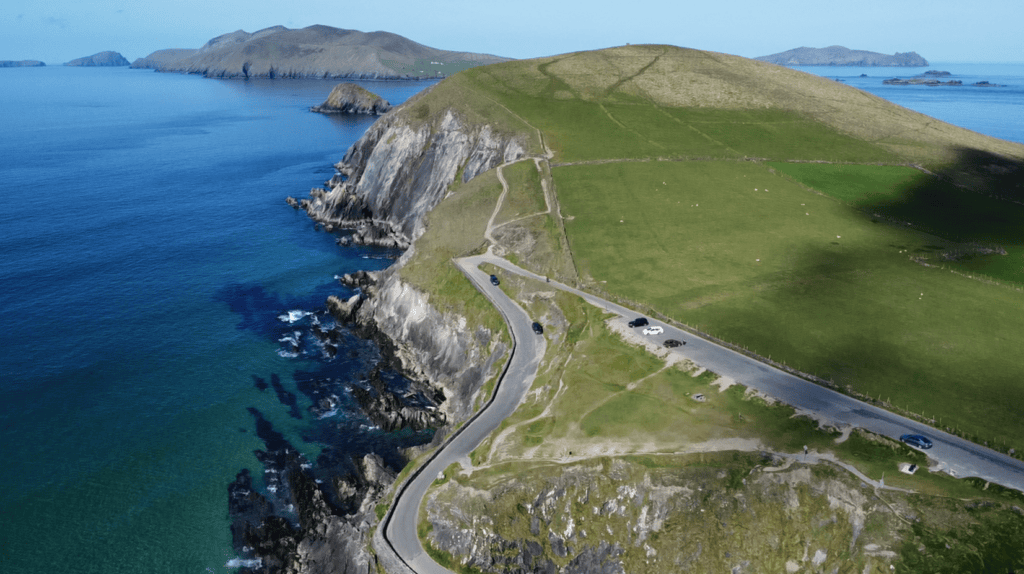
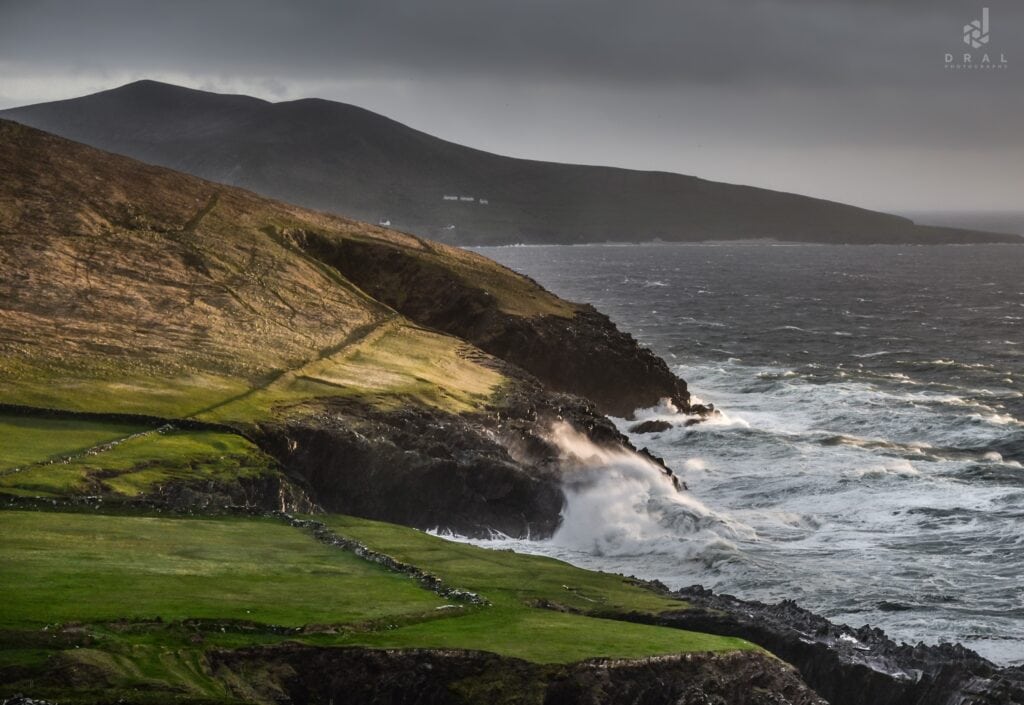
From the mainland, the islands form a distinctive part of the view along Slea Head Drive. Their proximity can be deceptive. Although Great Blasket appears close to Dún Chaoin, the water separating the island from the mainland is exposed to Atlantic weather and sea conditions.
That stretch of water shaped island life for generations. The mainland was close enough to see, but reaching it was never something that could be taken for granted.
Life on Great Blasket Island
Life on Great Blasket depended heavily on the sea, the land and cooperation within a relatively small community.
Families fished, kept livestock and worked the available ground. Everyday life required skills and knowledge suited to an exposed Atlantic island where weather could determine whether people could travel to the mainland.
Isolation was therefore both geographical and practical. Dún Chaoin and the wider Dingle Peninsula were visible across the water, but rough conditions could interrupt communication and make access considerably more difficult.
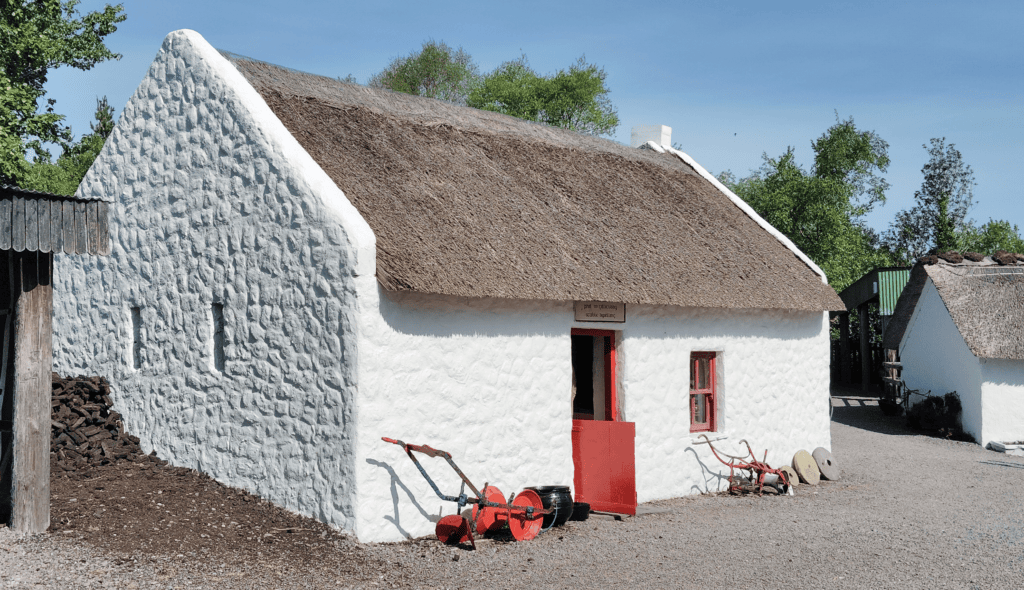
The remains of the settlement still visible today are important for precisely this reason. They are not simply picturesque ruins. They represent homes and a working community whose inhabitants experienced the island as an ordinary place in which to raise families, work, socialise and survive.
Understanding that human story changes the way you look at Great Blasket. The wider history of the Dingle Peninsula provides further context for the communities, traditions and historical forces that shaped this western edge of Kerry.
Irish Language and Island Culture
Irish was the everyday language of the Blasket community and connected the island culturally with the neighbouring Gaeltacht communities of Corca Dhuibhne.
The island became particularly important to scholars interested in Irish language, folklore and oral tradition. At a time when Irish was declining across much of the country, the Blaskets attracted visitors interested in hearing and recording the language as it was naturally spoken within the community.
But the significance of the Blaskets goes considerably further than language preservation.
The islanders themselves became writers.
Through their books, they recorded childhood, work, family relationships, fishing, celebrations, hardship, death, emigration and the countless details of ordinary life that formal historical records often overlook.
That is one reason the Blaskets occupy such an unusual place in Irish cultural history: we can encounter the former community partly through the words of people who actually lived there.
The Blasket Writers
Several writers associated with Great Blasket produced works that became important contributions to modern Irish-language literature.
Tomás Ó Criomhthain
Tomás Ó Criomhthain was born on Great Blasket and spent most of his life there.
His best-known work, An tOileánach, translated into English as The Islandman, records life within the island community from the perspective of someone who experienced its traditions and difficulties first-hand.
The importance of the book lies not simply in describing an unusual place. It preserves observations about a community and way of life undergoing considerable change.
Peig Sayers
Peig Sayers became one of the best-known figures associated with the Blasket literary tradition.
Born on the mainland in Dún Chaoin, she married into the Great Blasket community and spent much of her adult life on the island. Her recollections preserve stories of family, community, hardship and island traditions.
For generations of Irish schoolchildren, her name became closely associated with Irish-language education. Beyond that sometimes complicated reputation, her testimony remains an important record of the community in which she lived.
Muiris Ó Súilleabháin
Muiris Ó Súilleabháin provided another perspective through Fiche Bliain ag Fás, published in English as Twenty Years A-Growing.
His account of childhood and youth provides an unusually personal view of growing up within the Great Blasket community during the early twentieth century.
Read together, the works associated with the Blasket writers do something remarkable: they allow later generations to encounter island life through voices from within the community rather than solely through the observations of outsiders.
Why Was Great Blasket Island Evacuated?
The end of permanent settlement on Great Blasket was not simply the result of one event.
Over time, emigration and population decline reduced the size and resilience of the community. The practical difficulties of living on an island without dependable access to the mainland became increasingly serious, particularly when medical assistance, supplies or other essential services were required.
By the middle of the twentieth century, sustaining the community had become increasingly difficult.
In 1953, the remaining permanent residents were evacuated from Great Blasket Island to the mainland.
The evacuation marked the end of permanent community life on the island, but not the end of the Blasket story. Former islanders and their descendants maintained strong connections with the area, while their literature ensured that the experiences of the community were preserved far beyond the island itself.
What Remains on Great Blasket Today?
Walking through Great Blasket today, visitors encounter the physical remains of the former settlement against a landscape that is still dominated by the Atlantic.
Ruined houses and other traces of habitation remain visible, allowing visitors to understand where the community once lived.
But these remains make most sense when viewed as part of the surrounding landscape.
Look back towards Dún Chaoin and the mainland. Look at the ground families attempted to work. Look towards the water that provided food while simultaneously controlling access to the outside world.
The geography explains a great deal about the history.
This is one of those places where slowing down matters. Without the story, you see abandoned buildings in an impressive landscape. Once you understand who lived here and how they lived, those same buildings become considerably more meaningful.
Visiting Great Blasket Island
Great Blasket can be visited seasonally by boat, with services dependent on suitable weather and sea conditions.
That weather dependency is important when planning a visit. A crossing should never be regarded as guaranteed simply because you have allowed a particular day for it.
Visitors should check current sailing arrangements directly with the relevant boat operator before travelling.
Once on the island, expect an outdoor experience rather than a conventional visitor attraction. Walking, changing weather and exposure to Atlantic conditions are all part of visiting Great Blasket.
Wear suitable footwear and bring appropriate waterproof clothing even when the morning appears settled. Food, drinking water and anything else you may require should be considered before travelling rather than assuming normal visitor facilities will be available.
Current information about boat services, facilities and overnight accommodation should always be confirmed before setting out because these arrangements can change.
Weather and the Crossing
The short distance between Great Blasket and the mainland does not tell the whole story.
Atlantic swell, wind and local sea conditions determine whether boats can operate safely. Conditions can also change quickly.
If visiting the island is particularly important to your trip, it is sensible to retain some flexibility rather than building an entire itinerary around one fixed crossing.
A cancelled sailing does not mean the Blasket story has to disappear from your day. Some of the best places for understanding the islands are actually on the mainland.
The Blasket Centre at Dún Chaoin
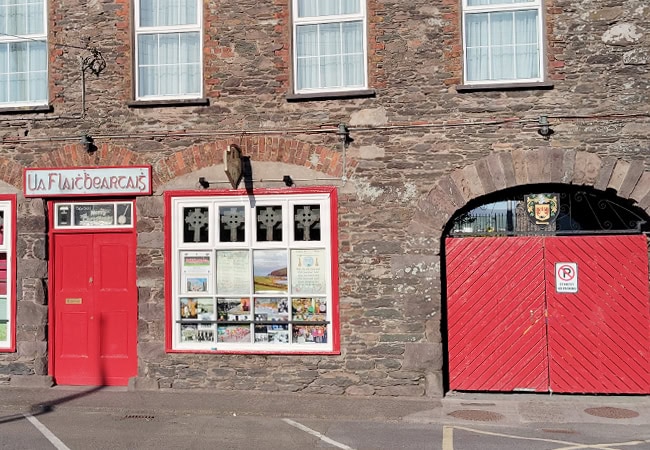
For anyone interested in the Blaskets, the Blasket Centre in Dún Chaoin is one of the most useful places to visit on the Dingle Peninsula.
The centre tells the story of the island community through historical material, photographs, interpretation and the literary heritage of the islanders.
Its location is particularly appropriate. Dún Chaoin had deep connections with Great Blasket, and from this western edge of the peninsula the islands remain physically present in the landscape.
If you have the opportunity, visiting the centre before looking across towards Great Blasket can transform what you see.
Instead of distant islands, ruined cottages and dramatic Atlantic scenery, you begin to recognise a cultural landscape shaped by real families whose stories have survived through photographs, memories and books.
Opening arrangements at the Blasket Centre are seasonal, so check current information before travelling.
Seeing the Blasket Islands from the Mainland
You do not need to land on Great Blasket to appreciate the islands.
They accompany you through much of the western section of Slea Head Drive, appearing from different angles as the road passes through the Dún Chaoin landscape.
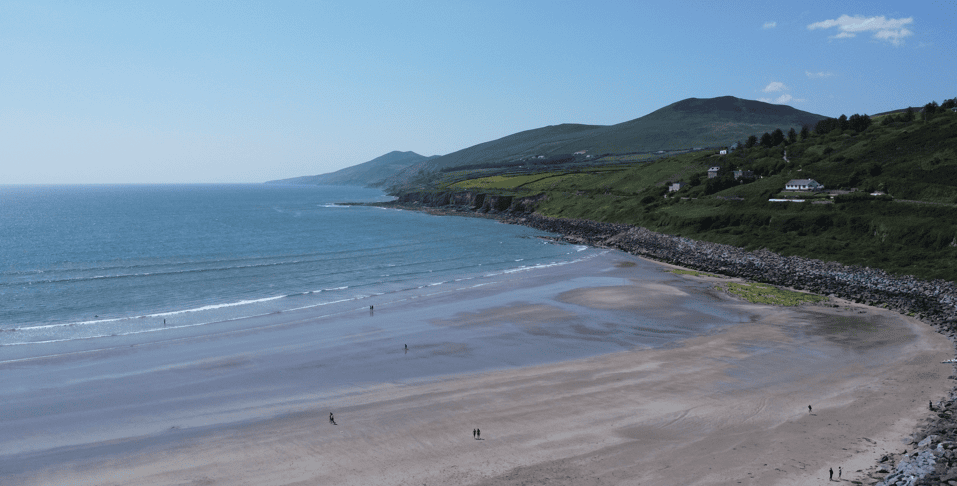
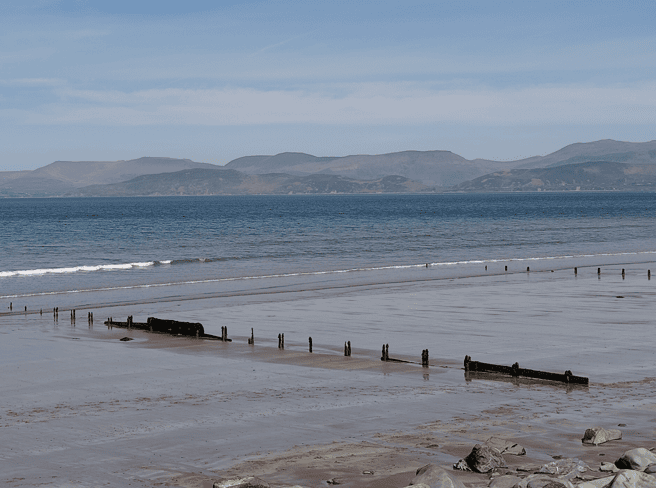
From the mainland viewpoints, it is possible to appreciate the relationship between the islands and Corca Dhuibhne particularly well. The outlook from Coumeenoole Beach and the surrounding headlands is particularly useful for understanding how the islands sit beyond the western edge of the peninsula.
Great Blasket no longer feels like an isolated attraction offshore. It becomes part of a wider cultural landscape connecting the sea, the Gaeltacht communities of the peninsula and generations of families who moved between island and mainland.
The view also changes constantly with the weather. On clear days, the shape of the islands can appear remarkably defined. At other times Atlantic mist and low cloud partially obscure them, reminding you how strongly weather has always influenced life along this coast.
Visitors interested in finding other elevated coastal perspectives can also explore this guide to the best viewpoints on the Dingle Peninsula.
If You Cannot Visit Great Blasket
If poor sea conditions prevent a crossing, there is still plenty to discover.
Start with the Blasket Centre in Dún Chaoin and spend time exploring the surrounding landscape. Dunquin Pier provides another vivid example of the relationship between the mainland, the sea and the islands lying offshore. Continue around Slea Head and look back towards the Blaskets from different viewpoints along the route.
This is not simply a substitute for landing on Great Blasket.
The mainland provides important parts of the story that the island alone cannot explain: Dún Chaoin, the wider Irish-speaking community of Corca Dhuibhne and the geographical relationship between the Blaskets and the peninsula.
For visitors with limited time, combining the Blasket Centre with the Slea Head viewpoints can provide an excellent introduction to the islands without making the crossing.
Wildlife Around the Blasket Islands
The waters and cliffs around the Blaskets form part of a rich Atlantic marine environment.
Seabirds, seals and other marine wildlife can be encountered around the islands and surrounding waters, although sightings vary considerably according to season and conditions.
Wildlife should never be treated as guaranteed. Part of the pleasure is simply watching.
If you have binoculars, bring them. They are useful both for observing wildlife and for examining the coastline and islands from the mainland.
Exploring the Blaskets as Part of Slea Head Drive
The Blasket story is inseparable from the western Dingle Peninsula.
Following Slea Head Drive through the Gaeltacht allows you to see that relationship unfold geographically. Dún Chaoin sits opposite the islands. The Blasket Centre preserves the stories of the former community. Nearby viewpoints reveal the islands themselves across the Atlantic.
Further around the peninsula, Ballyferriter adds another layer to the story of Irish language and culture in Corca Dhuibhne. Nearby historical sites such as Riasc Monastic Settlement, Gallarus Oratory and Kilmalkedar Church reveal that the human history of this western peninsula extends across many centuries.
Earlier on the route, the Fahan Beehive Huts provide another connection with the settlement and farming traditions of the peninsula. These places are separate from the Blasket story, but together they help visitors understand the depth of human occupation around Corca Dhuibhne.
This is also why the Blaskets form such an important part of Steve’s Peninsula Tours’ private Slea Head Drive tour. The islands are not simply something to point towards from a viewpoint. Their literature, language and former community help explain the wider cultural landscape through which you are travelling.
Understanding the Blasket Islands
Perhaps the most interesting thing about the Blaskets is that their story can be approached in several different ways.
They are Atlantic islands shaped by geology and weather.
They are part of the Gaeltacht landscape of Corca Dhuibhne.
They were home to families who fished, farmed, raised children and dealt with the practical realities of island life.
They produced writers whose accounts allowed that community to speak to generations who would never experience it themselves.
And today, Great Blasket remains visible from the mainland—close enough to study across the water, yet separated by the same Atlantic conditions that influenced life there for generations.
Continue Exploring the Dingle Peninsula
If you are continuing around the Dingle Peninsula, explore Dún Chaoin, the Blasket Centre and the wider Slea Head Drive next. Together, they provide the mainland chapters of a story that does not end at the water’s edge.
You can continue eastwards through the Gaeltacht towards Ballyferriter and the historical sites around Gallarus and Kilmalkedar, or return towards Dingle Town. Visitors with more time can use the three-day Dingle Peninsula itinerary to connect the Blasket landscape with the peninsula’s beaches, archaeological sites, villages and mountain roads.
If you have only one day, the guide to planning a perfect day in Dingle helps place the western peninsula within a realistic itinerary without trying to rush every stop.
Frequently Asked Questions About the Blasket Islands
Where are the Blasket Islands?
The Blasket Islands lie in the Atlantic beyond the western end of the Dingle Peninsula in County Kerry. Great Blasket is situated opposite the mainland community of Dún Chaoin.
Can you visit Great Blasket Island?
Great Blasket can be visited seasonally by boat when weather and sea conditions permit. Sailing arrangements should always be confirmed directly with a current boat operator before travelling.
When did people leave Great Blasket Island?
The remaining permanent residents were evacuated to the mainland in 1953 after years of population decline and increasing difficulty maintaining essential services and reliable connections with the mainland.
Why are the Blasket Islands culturally important?
The islands were home to an Irish-speaking community whose writers produced important first-hand accounts of island life. These works preserve details of language, work, family life, emigration, hardship and local tradition.
Can you see the Blasket Islands without taking a boat?
Yes. The islands are visible from several locations along the western section of Slea Head Drive, particularly around Dún Chaoin and Coumeenoole, although visibility depends on the weather.
What can I do if the boat crossing is cancelled?
Visit the Blasket Centre in Dún Chaoin and explore the mainland viewpoints along Slea Head Drive. These places explain the relationship between the former island community, the Gaeltacht and the wider Dingle Peninsula.
How much time should I allow for the Blasket Centre?
Allow enough time to engage with the exhibitions, photographs and literary history rather than treating the centre as a brief stop. Check current seasonal opening information before travelling.