Great Blasket Island, Wildlife, History and the Atlantic Coast of West Kerry
Rising from the Atlantic Ocean just beyond the western tip of the Dingle Peninsula, the Blasket Islands are among Ireland’s most extraordinary destinations. Renowned for their dramatic scenery, rich wildlife and remarkable cultural heritage, they offer visitors the opportunity to experience a landscape shaped by centuries of Atlantic weather, isolation and island life.
The islands are perhaps best known for Great Blasket Island, where a small Irish-speaking community lived permanently until 1953. Today, visitors can walk through the remains of the former settlement, discover the stories of the islanders and experience one of the most distinctive landscapes off Ireland’s western coast.
Whether you’re interested in history, literature, wildlife or spectacular coastal scenery, the Blasket Islands provide an unforgettable connection with Ireland’s Atlantic heritage. For a deeper introduction to the people who lived here, my guide to the history and culture of the Blasket Islands explores the island community and its literary legacy in greater detail.
Where Are the Blasket Islands?
The Blasket Islands lie just off the western coast of the Dingle Peninsula in County Kerry, beyond Dún Chaoin and Slea Head.
The archipelago consists of several principal islands together with smaller islets and sea stacks. Great Blasket Island, An Blascaod Mór, is the largest and the island most closely associated with the former permanent community.
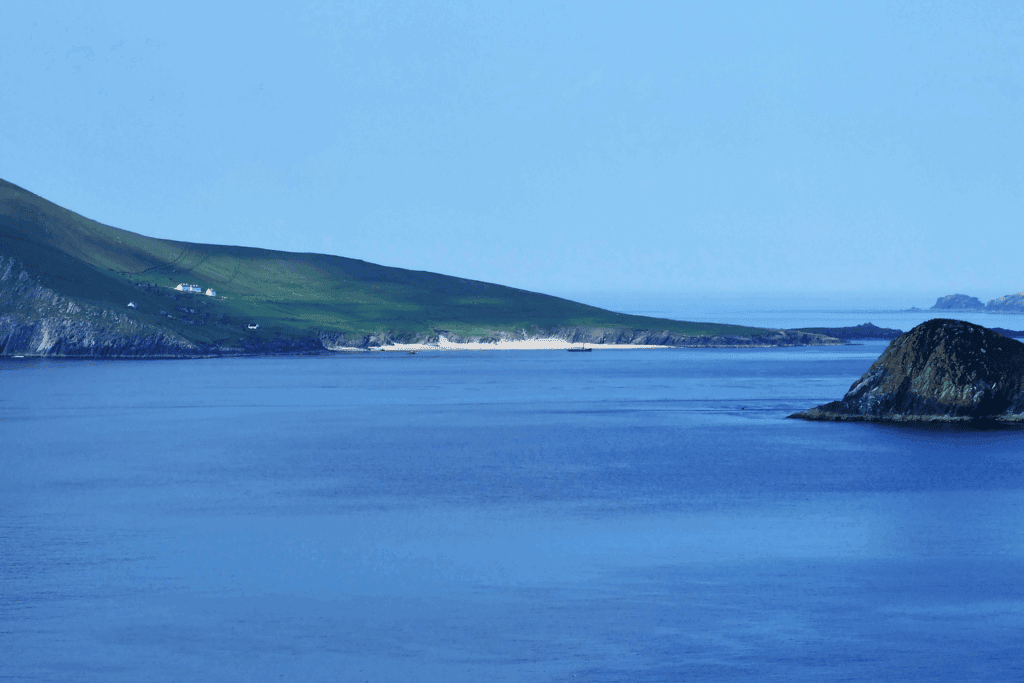
Even from the mainland, the islands dominate the horizon. As you travel around Slea Head, their position continually changes in relation to the coast, creating one of the defining seascapes of the western Dingle Peninsula.
One of the strongest mainland perspectives is around Dunquin Pier, where the steep approach towards the sea reveals just how closely the history of Dún Chaoin was connected with the islands offshore.
Why Are the Blasket Islands Famous?
The Blasket Islands are celebrated for far more than their scenery.
They are internationally recognised for:
- Their Irish-speaking island community
- An extraordinary literary tradition
- Rich maritime history
- Atlantic wildlife and seabirds
- Spectacular island and coastal landscapes
- The remains of the settlement on Great Blasket
- Their connection with the living Gaeltacht culture of Corca Dhuibhne
Few places in Ireland combine natural beauty with such an important cultural legacy.
Life on Great Blasket Island
For generations, families lived on Great Blasket within one of Ireland’s most isolated permanent island communities.
Life revolved around fishing, small-scale farming and close family and community relationships. Islanders depended heavily on the sea for food, transport and communication with the mainland, while Atlantic weather could determine whether that connection was possible at all.
Although life could be extremely demanding, the island developed a distinctive culture centred around the Irish language, storytelling, folklore and oral tradition.
The stone houses still visible on the hillside should therefore not be viewed simply as picturesque ruins. They were homes within a functioning community where people raised families, worked, celebrated, experienced hardship and developed the stories that later made the island internationally significant.
The Irish Language and the Blaskets
Irish was the everyday language of the island community and connected Great Blasket with the wider Corca Dhuibhne Gaeltacht on the mainland.
During the nineteenth and twentieth centuries, scholars interested in Irish language, folklore and traditional culture travelled to the Blaskets to learn from native speakers.
That outside interest helped draw attention to the islands, but what makes the Blaskets particularly important is that islanders themselves eventually became writers.
Their books preserved island life through voices from within the community rather than only through descriptions written by visitors.
A Remarkable Literary Legacy
The Blasket Islands became known around the world through the writings of people connected directly with the community.
Authors including Tomás Ó Criomhthain, Peig Sayers and Muiris Ó Súilleabháin recorded everyday life in works that became important contributions to Irish-language literature.
Their writing describes fishing, farming, family relationships, celebrations, loss, weather, emigration and the practical realities of living on an exposed Atlantic island.
Rather than presenting the Blaskets as a romantic world removed from ordinary life, these accounts preserve the complexity of a community experiencing enormous social change.
The nearby Blasket Centre provides the best mainland introduction to these writers and the cultural world from which their books emerged.
Tomás Ó Criomhthain
Tomás Ó Criomhthain was born on Great Blasket and spent most of his life within the island community.
His best-known work, An tOileánach, translated as The Islandman, records a lifetime of observation from within the community.
Its importance lies partly in the ordinary detail: weather, work, fishing, family and local events that might otherwise have disappeared from the historical record.
Peig Sayers
Peig Sayers was born on the mainland near Dún Chaoin before marrying into the Great Blasket community.
She became one of the best-known storytellers associated with the islands and an important voice within Ireland’s oral and literary tradition.
Her later reputation became strongly connected with generations of Irish-language education, but that association can sometimes obscure her significance as a highly accomplished traditional storyteller.
Muiris Ó Súilleabháin
Muiris Ó Súilleabháin was born on Great Blasket in the early twentieth century.
His autobiography Fiche Bliain ag Fás, translated as Twenty Years A-Growing, provides a younger perspective on island life and childhood.
Together, these different writers allow us to understand Great Blasket not as one simple historical story but through several individual experiences of the same community.
The Evacuation of Great Blasket Island
By the middle of the twentieth century, maintaining a permanent community on Great Blasket had become increasingly difficult.
Emigration reduced the population over many years, while access to medical care, essential services and supplies remained vulnerable to Atlantic weather and sea conditions.
In 1953, the remaining permanent residents left Great Blasket and resettled on the mainland.
The evacuation brought permanent community life on the island to an end, but it did not end the Blasket story. Former islanders, descendants, books, photographs and oral traditions maintained a strong connection between the islands and the communities of West Kerry.
Visiting Great Blasket Island
Seasonal privately operated boat services allow visitors to travel to Great Blasket when sea and weather conditions permit.
Once ashore, visitors can explore the former settlement, walk through the island landscape and experience views back towards the Dingle Peninsula.
Popular activities include:
- Walking through the former village
- Following trails across the island
- Wildlife watching
- Landscape photography
- Picnicking
- Exploring the Atlantic coastline
The terrain is uneven in places, with grassy paths, slopes and rough ground. A visit to Great Blasket should therefore be treated as an outdoor island experience rather than a conventional visitor attraction with extensive infrastructure.
Boat Trips to Great Blasket
Boat services are weather-dependent and should never be assumed to operate simply because the day appears reasonable on the mainland.
Wind direction, swell and conditions in Blasket Sound can all affect whether a crossing or landing is possible.
Always confirm current departure arrangements directly with your chosen licensed operator and allow flexibility in your itinerary in case conditions prevent sailing.
Boat experiences can also be available from Dingle, where operators offer seasonal journeys exploring Dingle Bay, the Blasket Islands and surrounding Atlantic waters.
Dunquin Pier and the Blasket Connection
Dunquin Pier is one of the most recognisable locations on the Dingle Peninsula, but its importance goes far beyond the famous photograph of the winding path.
The pier represents the physical relationship between Dún Chaoin and the islands offshore.
For generations, this coastline formed part of the route between islanders and the mainland. Looking towards Great Blasket from here makes the geographical relationship much easier to understand.
Use designated parking when visiting and never block the narrow local roads or access points in search of a photograph.
Visit the Blasket Centre
Before or after an island trip, allow time for the Blasket Centre in Dún Chaoin.
The Centre tells the story of the island community through objects, photographs, recordings, archive material, audiovisual displays and the literature created by the islanders.
Its location is particularly powerful. Great Blasket remains visible across the water, allowing visitors to connect the stories inside the museum directly with the physical landscape outside.
For most visitors interested in the cultural history of the peninsula, I would allow approximately 90 minutes rather than treating the Centre as a quick roadside stop.
The Blasket Centre or Great Blasket Island?
They are very different experiences and complement one another.
The Blasket Centre provides interpretation, historical context, literature, archive material and visitor facilities on the mainland.
Great Blasket allows you to physically experience the island landscape and walk through the remains of the former settlement.
If you have sufficient time and conditions allow, experiencing both gives you the strongest understanding of the Blasket story.
If you can only choose one and history, literature or Irish culture are your main interests, I would prioritise the Blasket Centre.
If the Ferry Is Cancelled
A cancelled sailing does not mean the day is lost.
Some of the best places for understanding the Blaskets are actually on the mainland.
Visit the Blasket Centre, explore Dún Chaoin and continue along Slea Head Drive, where the islands appear from different viewpoints as you travel around the coast.
This mainland perspective adds something an island landing cannot provide: it shows how Great Blasket relates geographically to Dún Chaoin, the wider Gaeltacht and the western peninsula.
Coumeenoole Beach
Coumeenoole Beach lies nearby and provides another dramatic perspective on the Blasket seascape.
The small Atlantic cove sits beneath steep cliffs along Slea Head, with views opening offshore towards the islands.
Coumeenoole is best appreciated as a scenic coastal and photography stop rather than a conventional swimming beach. Its exposed Atlantic setting produces powerful surf and strong currents.
When conditions allow, walking down towards the sand gives you a completely different perspective on the height of the surrounding cliffs and the scale of the coastline.
Slea Head and the Blasket Landscape
The Blasket Islands are inseparable from the western section of Slea Head.
As the road moves through Fahan, Slea Head, Coumeenoole and Dún Chaoin, the islands appear and disappear behind headlands before opening fully across Blasket Sound.
This changing perspective is one of the reasons I recommend experiencing the islands as part of the wider Slea Head journey rather than thinking of them only as an offshore attraction.
The landscape connects archaeology, Gaeltacht culture, modern communities and the former Blasket settlement within a relatively short stretch of coastline.
Dún Beag and the Ancient Landscape
Travelling around Slea Head also brings you close to much older layers of human history.
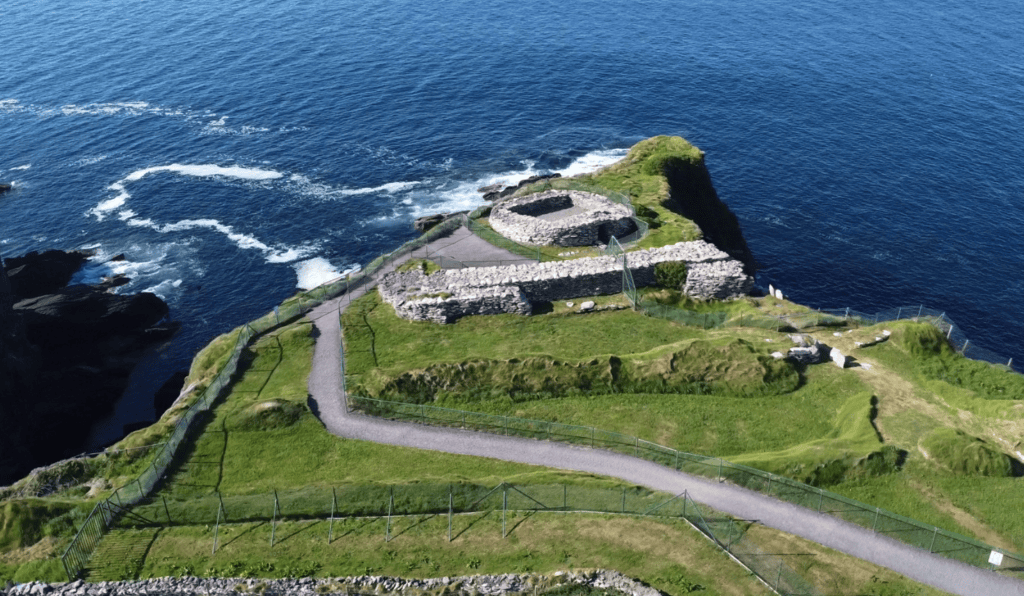
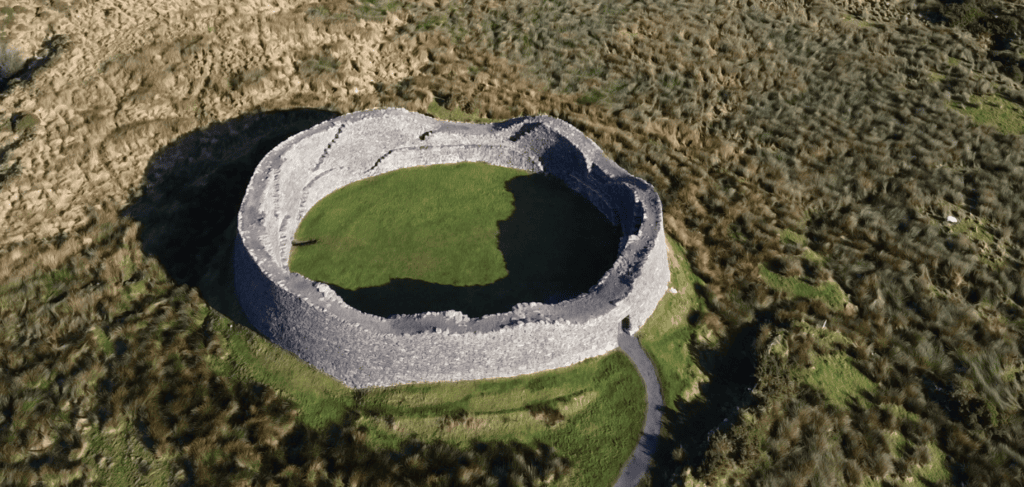
Dún Beag Promontory Fort occupies a dramatic cliff-edge position at Fahan and preserves evidence of defensive construction, occupation and rebuilding across multiple periods.
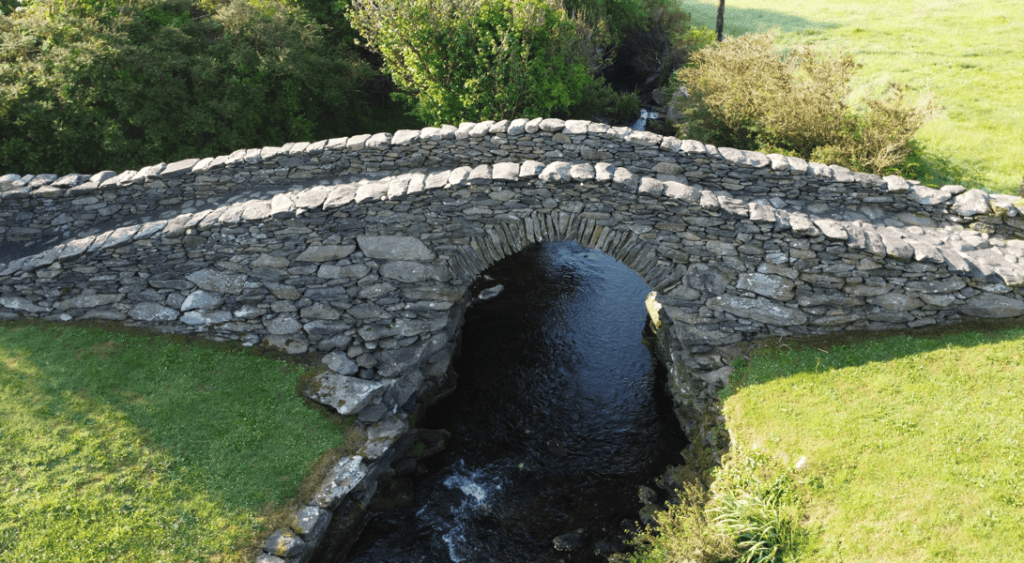
Nearby dry-stone structures and old field systems reinforce the point that the western peninsula has supported human communities for centuries before the Blasket literary period.
Experiencing these places on the same journey helps place the island community within a much longer history of life on Ireland’s Atlantic edge.
Gallarus and the Wider Historical Landscape
Further around the peninsula, Gallarus Oratory reveals another chapter of West Kerry’s history.
The exceptionally well-preserved stone church demonstrates the depth of the peninsula’s religious and architectural heritage.
Combining the Blasket story with sites such as Gallarus allows visitors to see that the cultural importance of Corca Dhuibhne extends far beyond one historical period.
Wildlife Around the Blasket Islands
The waters and cliffs surrounding the Blaskets form part of a rich Atlantic marine environment.
Depending on season and conditions, wildlife encountered around the area can include:
- Grey seals
- Dolphins
- Gannets
- Fulmars
- Shearwaters
- Other seabirds and marine wildlife
Wildlife sightings should never be treated as guaranteed. Conditions, season and simple chance all play a role.
If wildlife watching is important to you, bring binoculars. They are equally useful for examining the islands and cliffs from mainland viewpoints.
What to Bring to Great Blasket
Great Blasket remains an exposed Atlantic environment with limited visitor facilities.
Before travelling, consider bringing:
- Comfortable walking boots or sturdy shoes
- Waterproof clothing
- Layers for changing weather
- Drinking water
- Snacks or a packed lunch
- Sun protection on clear days
- A fully charged phone or camera
- Binoculars if wildlife interests you
Weather conditions can change quickly even during summer, so prepare for more than the conditions visible when leaving Dingle or Dún Chaoin.
How Long Should You Allow?
Most visitors should allow several hours for the island itself.
Once ferry arrangements, the crossing and time exploring Great Blasket are included, an island visit naturally becomes a substantial part of the day.
If you also want to visit the Blasket Centre, explore Dún Chaoin and stop along Slea Head, I would treat the Blasket experience as most of a full day rather than trying to fit it between several unrelated attractions.
A Suggested Blasket Islands Day
A rewarding day exploring this part of the Dingle Peninsula could include:
- Leave Dingle and follow Slea Head Drive clockwise
- Stop at the Atlantic viewpoints around Slea Head
- Experience Coumeenoole Beach
- Explore Dún Chaoin and Dunquin Pier
- Visit the Blasket Centre
- Take a seasonal boat trip to Great Blasket if booked and conditions permit
- Explore the former settlement and island landscape
- Continue around the western peninsula after returning to the mainland
I would not attempt to rigidly complete every item regardless of ferry timing. An island crossing should be the main experience of the day rather than another box to tick during an already crowded Slea Head itinerary.
My Local Tip
Many visitors focus entirely on reaching Great Blasket, but don’t overlook the mainland viewpoints.
The views from Dunquin Pier, the Blasket Centre, Coumeenoole and the wider Slea Head coastline reveal just how dramatic the relationship between island and mainland really is.
Even if Atlantic conditions prevent a ferry sailing, the surrounding landscape is still well worth exploring.
In fact, learning the islanders’ story on the mainland before looking across the water can sometimes make the view more meaningful than arriving on Great Blasket without knowing who once lived there.
Exploring the Blaskets with a Local Guide
The Blasket Islands form one of the most important cultural stories on my private Slea Head journeys.
The islands are not simply pointed out from a viewpoint. Their history, writers, Irish language and relationship with Dún Chaoin help explain the wider landscape through which we are travelling.
My private Slea Head Drive tour explores this western coastline in a focused three-hour experience, including the Blasket landscape and the historical context surrounding it.
Visitors with more time can explore the wider peninsula on my full-day private Dingle Peninsula tour, allowing the Slea Head and Blasket story to be connected with more of West Kerry’s archaeology, villages and landscapes.
The Blaskets and the History of the Dingle Peninsula
The islands form one chapter within a much longer story of human settlement around Corca Dhuibhne.
Prehistoric monuments, defended settlements, early Christian sites, medieval churches, maritime communities and the modern Gaeltacht all survive within the wider peninsula.
My guide to the history of the Dingle Peninsula places the Blasket community within that broader timeline and connects the islands with many of the historical places visible around West Kerry today.
Frequently Asked Questions About the Blasket Islands
Can you visit the Blasket Islands?
Yes. Seasonal privately operated ferry services travel to Great Blasket Island when weather and sea conditions permit. Always confirm current arrangements directly with the boat operator before travelling.
Where are the Blasket Islands?
The islands lie in the Atlantic off the western end of the Dingle Peninsula, opposite Dún Chaoin and the Slea Head coastline in County Kerry.
Which Blasket Island can visitors explore?
Great Blasket Island, or An Blascaod Mór, is the island most commonly associated with public visits and the remains of the former permanent settlement.
When was Great Blasket evacuated?
The remaining permanent residents left Great Blasket Island in 1953 after decades of population decline, emigration and increasing difficulties maintaining an isolated island community.
Who were the Blasket writers?
The best-known literary figures associated with the Blaskets include Tomás Ó Criomhthain, Peig Sayers and Muiris Ó Súilleabháin. Their work preserved invaluable first-hand accounts of island and community life.
How long should I allow for Great Blasket?
Allow several hours for exploring the island itself. Including ferry travel, waiting time and mainland attractions such as the Blasket Centre, the overall experience can comfortably occupy most of a day.
Are there facilities on Great Blasket Island?
Facilities are limited compared with the mainland. Visitors should arrive prepared with water, suitable footwear, weatherproof clothing and anything else they need for several hours outdoors.
Can I visit the Blasket Centre without going to the island?
Absolutely. The Blasket Centre is a complete cultural attraction in its own right and one of the best ways to understand the former island community, its literature and the Irish language.
What happens if the ferry is cancelled?
Explore the mainland Blasket landscape instead. The Blasket Centre, Dunquin Pier, Coumeenoole Beach and Slea Head provide excellent views and important cultural context even when an island crossing is impossible.
Is the Blasket Centre the ferry terminal?
No. The Blasket Centre is a mainland heritage and cultural centre. Boat services to Great Blasket are separately operated and should be booked or confirmed directly with the relevant operator.
Can you see the Blasket Islands from Slea Head Drive?
Yes. The islands form one of the defining views along the western section of Slea Head Drive and can be seen from several viewpoints around Slea Head, Coumeenoole and Dún Chaoin when visibility is good.
Are the Blasket Islands worth visiting?
Yes, particularly if you are interested in Irish culture, literature, Atlantic landscapes or island history. Even visitors who cannot make the crossing can gain a strong understanding of the islands through the Blasket Centre and the surrounding mainland landscape.
Continue Exploring West Kerry
The Blasket Islands are only one part of the remarkable landscape at the western end of the Dingle Peninsula.
Continue your journey through Slea Head Drive, Dunquin Pier, Coumeenoole Beach, Dún Beag Promontory Fort and Gallarus Oratory, or spend more time understanding the island community at the Blasket Centre.
The wider Explore Kerry collection connects these places with the rest of the Dingle Peninsula and County Kerry.
Together, these landscapes tell the story of a coastline shaped by the Atlantic, generations of human settlement, the Irish language and communities whose voices continue to define how we understand this extraordinary part of West Kerry.