The Ring of Kerry is approximately 179 kilometres, or 111 miles, around the Iveragh Peninsula in County Kerry. That figure makes the route sound straightforward, but distance is only part of the story. If you want to experience the Ring of Kerry properly rather than simply complete the circuit, I would allow a full day.
Driving Time, Stops and How Long You Really Need for the Ring of Kerry
A continuous drive around the Ring of Kerry without meaningful stops can take roughly three and a half hours in reasonable conditions. In practice, I would never recommend planning the day that way. The route passes through mountain scenery, villages, Atlantic coastline, historical sites and Killarney, with enough worthwhile places along the journey to easily fill seven, eight or nine hours.
The difference between driving the Ring and experiencing it is therefore substantial. A map sees 179 kilometres. A visitor sees viewpoints, beaches, villages, lunch stops, photographs, short walks, historic sites and places where you unexpectedly decide to remain longer.
If you are deciding whether the route belongs in your Kerry itinerary, my guide comparing the Ring of Kerry and Dingle Peninsula is useful for understanding how these two major scenic journeys differ.
Where Does the Ring of Kerry Start?
Traditionally, the Ring of Kerry is described as a circular journey beginning and ending in Killarney.
From Killarney, the route travels around the Iveragh Peninsula through or near places such as Killorglin, Glenbeigh, Cahersiveen, Waterville, Sneem and Kenmare before returning through the landscapes of Killarney National Park.
Because it is circular, you do not technically have to start in Killarney. Visitors staying elsewhere on the Iveragh Peninsula can join the route from their accommodation and complete the relevant sections from there.
Killarney remains the most common starting point because it provides extensive accommodation and sits naturally beside the lakes and mountain landscape that form one of the strongest parts of the journey.
How Long Is the Ring of Kerry in Kilometres?
The recognised Ring of Kerry driving route is approximately 179 kilometres or 111 miles.
That distance normally refers to the principal circuit around the Iveragh Peninsula. The actual distance you drive can become considerably longer once you add diversions to beaches, historic monuments, Valentia Island or the Skellig Ring.
This distinction matters when planning.
If your navigation system tells you that the Ring is a manageable driving distance, it is calculating movement between roads. It is not calculating how long you will spend walking around Staigue Fort, stopping for lunch in Sneem, looking out over the Atlantic near Waterville or exploring somewhere on the Skellig Coast.
How Long Does It Take to Drive Without Stopping?
In reasonable road and traffic conditions, allow roughly three and a half hours simply to drive the principal circuit without sightseeing stops.
I would treat that figure only as a planning reference.
It tells you something important: the Ring of Kerry is already a substantial drive before you begin sightseeing.
Once you add normal visitor stops, the duration rises quickly. A few ten-minute photographs, a 45-minute lunch, one historical site and several viewpoints can add hours to the journey without the day ever feeling slow.
This is why I would be cautious about combining the Ring of Kerry with another major touring route on the same day.
How Long Should You Actually Allow?
For most first-time visitors, I would allow approximately seven to nine hours.
That does not mean you have to spend nine hours constantly sightseeing. It means you have enough room in the day to travel comfortably, stop when somewhere deserves attention and have lunch without continually checking the time.
On my private Ring of Kerry and Skellig Ring tour, I work on a full-day basis because it allows the route to unfold naturally rather than forcing each stop into a rigid allocation.
Weather, seasonal traffic, the amount of walking you want to do and whether you include the Skellig Ring will all influence the final duration.
Can You Drive the Ring of Kerry in Half a Day?
You can physically drive a large portion of it in half a day. I would not recommend planning a first visit that way.
Four hours leaves very little time once driving is taken into account. You may manage several photographs and perhaps one meaningful stop, but you will spend most of the experience inside the vehicle.
If half a day is genuinely all you have, I would select one section rather than attempt the full circuit.
For example, the Killarney and Kenmare side gives you national park scenery, mountain roads and viewpoints, while the western Iveragh Peninsula provides more Atlantic coastline and access towards the Skellig Coast.
Choosing one area properly is usually more rewarding than rushing through the entire Ring simply to say you completed it.
Why the Ring of Kerry Takes Longer Than the Map Suggests
The Iveragh Peninsula is not a motorway journey.
Sections of the Ring follow good national roads, but there are also villages, bends, slower traffic and places where you naturally reduce speed because of the landscape or road conditions.
During the visitor season, coaches, cyclists and other touring vehicles also affect journey times.
More importantly, the Ring is designed to make you stop.
If you drive past every beach, village and viewpoint because the navigation system says you are falling behind schedule, the route loses most of its purpose.
Killorglin and the Northern Side of the Ring
Killorglin is one of the principal towns encountered on the northern side of the Ring of Kerry.
The town stands beside the River Laune and is particularly associated with Puck Fair, one of Ireland’s oldest traditional fairs.
From a route-planning perspective, Killorglin marks the transition from the Killarney area towards the western Iveragh Peninsula.
Beyond the town, the journey opens gradually towards Glenbeigh, Rossbeigh and the Atlantic side of Kerry.
Glenbeigh and Rossbeigh
The Glenbeigh area is where many visitors begin to feel that the route has moved properly towards the Atlantic.
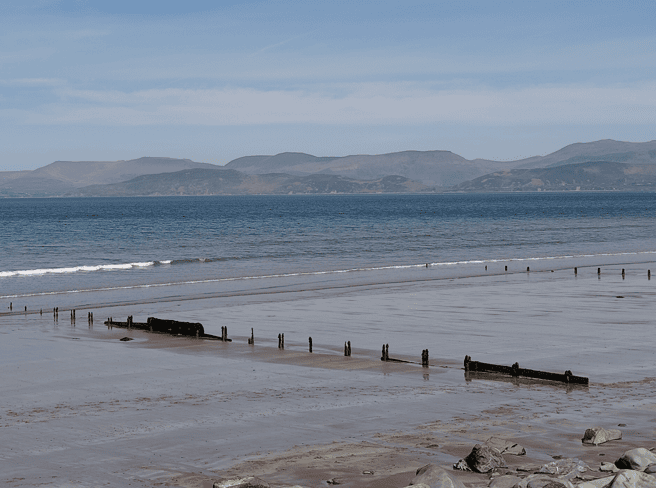
Rossbeigh Strand sits on the edge of Dingle Bay and provides long coastal views back towards the mountains of the Dingle Peninsula.
A beach stop can easily consume 20 or 30 minutes before you have done anything more than walk onto the sand and take photographs.
That is exactly why full-day planning matters. None of these individual stops seem particularly long, but together they transform a three-and-a-half-hour drive into a full experience.
Cahersiveen and the Historic Iveragh Peninsula
Continue west and the route reaches Cahersiveen, one of the principal towns on the western Iveragh Peninsula.
The wider area contains several important historical sites, including large stone forts and castle ruins.
If archaeology interests you, this section alone can justify considerably more time than a standard scenic drive would suggest.
Visitors interested in Kerry’s deeper history can browse the wider Historical Sites in Kerry collection when deciding which monuments deserve time during the journey.
Should You Add Valentia Island?
Valentia Island is not necessary in order to say you have driven the traditional Ring of Kerry, but it can add considerably to the day.
The island is connected to the mainland by bridge from Portmagee and also has a seasonal ferry connection at its eastern end.
Valentia contains geological, historical and coastal attractions that could justify several hours on their own.
That means the decision is really about priorities.
If this is your only day around Iveragh and you want to see the main Ring plus the Skellig coast, you may need to be selective on Valentia. If geology, island scenery or particular historic sites interest you, the island deserves more time.
Portmagee and the Skellig Coast
Portmagee is one of my favourite points in the journey because the character of the Ring changes noticeably here.
The harbour village lies opposite Valentia Island and provides access towards the Skellig Ring and the Atlantic landscapes around the western tip of Iveragh.
Portmagee also works naturally as a meal or coffee stop, particularly when the day has already included several hours of driving and sightseeing.
If you add Portmagee and the Skellig Ring properly, I would definitely think in terms of an eight- or nine-hour touring day rather than a quick Ring of Kerry circuit.
Does the Skellig Ring Make the Day Longer?
Yes, but for many visitors it is worth the additional time.
The Skellig Ring extends through the western Iveragh Peninsula beyond the standard Ring of Kerry route and brings you into a quieter, more exposed Atlantic landscape.
It connects the Portmagee area with Ballinskelligs and Waterville through roads and viewpoints that feel noticeably different from the busier main Ring.
The route is narrower in places and therefore needs to be driven appropriately.
I would normally include the Skellig Ring as part of a full-day private experience when conditions and timing allow because it adds another dimension to the journey.
Kerry Cliffs
The Kerry Cliffs near Portmagee are one of the major additional stops that can extend a Ring of Kerry day.
The cliffs rise high above the Atlantic and provide views towards the Skellig Islands in suitable visibility.
This is not a five-minute roadside stop. Once parking, walking and time at the viewpoints are included, the visit adds a meaningful amount to the day.
My dedicated guide to the Kerry Cliffs on the Ring of Kerry explains more about incorporating them into the wider route.
Waterville
Waterville sits between Lough Currane and Ballinskelligs Bay and is one of the best-known villages on the western side of the Ring.
The village is closely associated with Charlie Chaplin, who holidayed in the area with his family, but its location is the main reason it fits so naturally into the touring day.
Waterville provides an opportunity to stop beside the Atlantic, have food or coffee and reset before continuing towards the southern side of the peninsula.
Again, the lesson for timing is simple: an enjoyable Ring of Kerry day contains pauses. Those pauses are not delays. They are the experience.
Derrynane and Caherdaniel
The landscape around Caherdaniel and Derrynane is one of the parts of the Ring where I think rushing becomes particularly wasteful.
The area combines Atlantic coastline, sheltered bays, historical connections and some beautiful sections of the southern Iveragh Peninsula.
Derrynane is closely associated with Daniel O’Connell, while the surrounding coastline has its own attraction even for visitors who do not enter any historical site.
If you stop for a beach, Derrynane House or a substantial walk, you should expect the Ring of Kerry to become a noticeably longer day.
Staigue Fort
Staigue Fort is another example of why the route’s official distance can be misleading.
The monument lies inland from the main coastal road, so visiting requires a detour along smaller rural roads followed by time at the fort itself.
For me, that detour is worthwhile for visitors interested in archaeology. Staigue is one of Kerry’s great dry-stone forts and provides historical depth to a day that might otherwise focus mainly on scenery.
Allow roughly 30 to 45 minutes at the monument itself, plus the additional time required to leave and rejoin the main route.
Sneem
Sneem is another natural point to slow the day down.
The colourful village sits beside the River Sneem and works particularly well as a coffee, lunch or short walking stop.
If you have already spent several hours around the western side of the peninsula, Sneem can be the point where the pace changes before continuing towards Kenmare and Killarney.
It is also another reminder that the Ring of Kerry is not only about landscape. The towns and villages are an essential part of the experience.
Kenmare
Kenmare sits near the head of Kenmare Bay and is one of the principal towns on the southern side of the Ring.
If you are travelling anti-clockwise, Kenmare generally appears later in the day before the route crosses the mountains towards Killarney.
The town deserves time of its own, particularly if you enjoy shops, cafés, restaurants and heritage.
For visitors staying overnight, Kenmare can also be an excellent base from which to divide the Ring of Kerry over more than one day.
Moll’s Gap and the Mountain Return to Killarney
The road between Kenmare and Killarney is one of the most memorable sections of the entire journey.
As you climb towards Moll’s Gap, the coastal and village landscape gives way to open mountain scenery.
The road then enters the Killarney area, where lakes, woodland and mountain viewpoints become increasingly prominent.
This is why I would avoid reaching Kenmare very late in the day. The return to Killarney is not simply the road home. It contains some of the Ring’s most distinctive scenery.
Ladies View and Killarney National Park
Ladies View provides an elevated perspective over the lakes and mountains of Killarney National Park.
When visibility is good, it is an excellent final major viewpoint before descending towards the lakes.
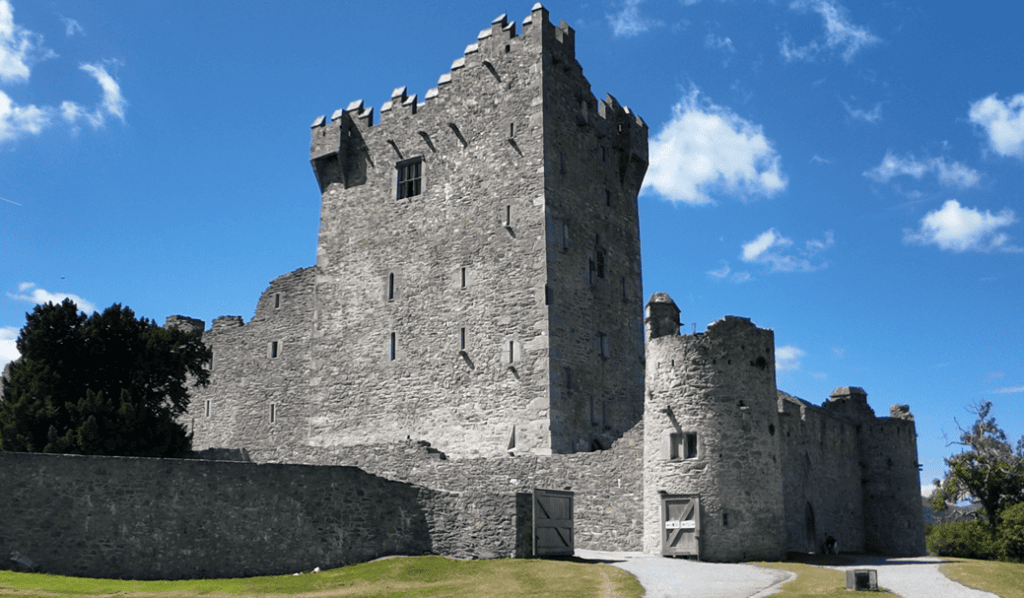
Killarney National Park itself deserves far more than a quick drive through, particularly if you are interested in Ross Castle, Muckross, Torc Waterfall, woodland or walking.
This creates an important itinerary decision.
If you try to explore Killarney National Park properly on the same day as the complete Ring and Skellig Ring, something will usually be rushed. I would rather treat the national park as a separate experience if your itinerary allows.
Can You Add Ross Castle and Muckross?
You can, but I would be selective.
Adding several substantial Killarney attractions to an already full Ring of Kerry day can easily push the experience beyond what remains enjoyable.
If you have never visited Killarney and only have one day, one carefully selected stop may work.
If you are staying in Killarney for several nights, leave the park’s major historical sites for another day. You will appreciate both experiences more.
Should You Drive Clockwise or Anti-Clockwise?
Direction is one of the most discussed Ring of Kerry questions.
Large tour coaches traditionally travel anti-clockwise around the route, generally heading first towards Killorglin.
Some independent drivers choose clockwise in an attempt to avoid travelling behind coaches. Others prefer anti-clockwise because it follows the established touring flow and reduces the chance of repeatedly meeting large vehicles head-on on narrower sections.
There is no magic direction that removes all traffic.
On my private Ring of Kerry tours, I normally travel anti-clockwise and adjust the day around traffic, weather and local conditions rather than assuming direction alone determines the experience.
What Time Should You Start?
For a full Ring of Kerry day, I favour an early start.
You do not necessarily need to leave at dawn, but beginning around 8:00 or 8:30 gives you considerably more freedom than setting out near 10:30 or 11:00.
The advantage is not simply avoiding traffic.
Starting earlier means you can spend an unexpected extra half-hour somewhere without immediately falling behind schedule. It also gives you more options for lunch and makes it easier to reach the mountain return towards Killarney while there is still useful daylight.
In winter, daylight becomes an even more important planning factor.
How Weather Changes the Driving Time
Kerry weather can affect the Ring considerably.
Heavy rain, strong winds or poor visibility naturally require slower driving. Low cloud can also reduce the value of some mountain viewpoints.
The important thing is to remain flexible.
If cloud temporarily covers the mountains, there may be clearer conditions on the coast. If Atlantic weather becomes particularly exposed around the western peninsula, inland historical or village stops may become more attractive.
This is one of the main advantages of allowing a full day rather than building the itinerary around the minimum theoretical driving time.
How Long Does the Ring of Kerry Take with Lunch?
Add a normal lunch and you should expect the day to extend by at least 45 minutes to an hour.
I would not regard that as lost touring time.
Stopping in a village, eating locally and taking a break from the vehicle makes a long touring day substantially more enjoyable.
Places such as Waterville, Sneem, Kenmare and Portmagee all provide natural opportunities to break the journey depending on the route and timing.
Can You Drive the Ring of Kerry in Winter?
Yes, but the day needs to be planned differently.
Shorter daylight hours mean you should begin earlier and be more selective with stops.
Some visitor attractions and seasonal services may also operate reduced winter schedules or close entirely, so always check anything you particularly want to visit.
The benefit is that the roads and attractions can be considerably quieter than during summer.
Winter light can also be beautiful when conditions cooperate, but there is much less room for an overly ambitious itinerary.
Is One Day Enough for the Ring of Kerry?
Yes. One full day is enough to experience the Ring of Kerry very well if you accept that you cannot see everything.
That is the crucial point.
A good one-day itinerary selects a balanced mixture of scenery, villages and perhaps one or two historical or cultural stops.
A poor one-day itinerary attempts to visit every attraction listed online and spends the entire day worrying about time.
If you have two days available, you can explore much more slowly and include Valentia, the Skellig Ring, historical sites or longer walks without feeling rushed.
Is Two Days Better?
If you have the time, absolutely.
Splitting the Iveragh Peninsula across two days gives you much more freedom to walk, explore historic sites and spend time in the smaller villages.
You could stay somewhere such as Kenmare, Waterville or the western peninsula and treat the Ring as a region rather than a circuit that has to begin and end in exactly the same place.
Two days is particularly worthwhile for photographers, walkers and visitors with a strong interest in archaeology.
Ring of Kerry or Dingle Peninsula?
If you only have one spare touring day in County Kerry, this is often the more difficult question than how long the Ring takes.
The Ring of Kerry is the longer and broader journey. It combines Killarney’s mountain and lake scenery with large stretches of the Iveragh Peninsula, towns, Atlantic coastline and the option of adding the Skellig Ring.
The Dingle Peninsula is geographically smaller and has an especially strong concentration of archaeology, Gaeltacht culture and Atlantic coastal scenery.
Neither is simply a smaller version of the other.
My detailed comparison of the Ring of Kerry versus the Dingle Peninsula can help if your itinerary forces you to choose.
Driving Yourself or Taking a Private Tour
If you enjoy driving, the Ring of Kerry can be a very rewarding self-drive experience.
The challenge is that the driver naturally sees less of the landscape than everybody else in the vehicle. They are also responsible for navigation, parking and deciding which stops are genuinely worth the available time.
On a private tour, everyone can concentrate on the scenery while I take care of the road and route.
I can also adapt the day according to the weather and your interests rather than following a rigid list of compulsory stops.
If archaeology becomes the highlight of your day, we can give somewhere such as Staigue Fort more attention. If photography is your priority and conditions are exceptional on the Skellig Coast, that may deserve additional time instead.
How Long Is My Private Ring of Kerry Tour?
My Ring of Kerry and Skellig Ring private tour is designed as a full-day journey of approximately eight to nine hours.
That duration reflects the reality of the route rather than simply the kilometres involved.
It allows enough time for selected viewpoints, towns and villages, Atlantic scenery and the Skellig Coast while maintaining a comfortable pace for a private group.
The precise route can change according to weather, traffic, seasonal access and your interests.
Continue Exploring the Ring of Kerry
The Ring of Kerry is best understood as a journey through the Iveragh Peninsula rather than a road that needs to be completed as quickly as possible.
Use the main Explore Kerry guide to learn more about the county, or browse Places to See in Kerry when deciding which natural attractions deserve your limited time.
If history interests you, Staigue Fort provides one of the strongest archaeological stops on the southern side of the Ring, while towns including Waterville, Sneem, Kenmare and Portmagee each add a different character to the day.
The 179-kilometre distance tells you how long the road is. It does not tell you how long the Ring of Kerry deserves.
For a first visit, my advice is simple: give it the full day.
Frequently Asked Questions About How Long the Ring of Kerry Takes
How long is the Ring of Kerry?
The recognised Ring of Kerry route is approximately 179 kilometres, or 111 miles, around the Iveragh Peninsula in County Kerry.
How long does it take to drive the Ring of Kerry without stopping?
Allow roughly three and a half hours of pure driving in reasonable conditions. That figure does not include sightseeing, lunch, photographs, traffic delays or diversions.
How long should I allow for the Ring of Kerry?
For a first visit, I recommend a full day of approximately seven to nine hours. That gives you enough time to enjoy selected stops rather than spending the entire day driving.
Can you do the Ring of Kerry in one day?
Yes. One full day is enough for an excellent Ring of Kerry experience provided you are selective and do not try to visit every attraction on the peninsula.
Can you drive the Ring of Kerry in half a day?
You can physically cover much of the route, but I would not recommend it for a first visit. With only half a day, choose one section and experience it properly.
Does the Ring of Kerry include the Skellig Ring?
The Skellig Ring is an additional western loop rather than part of the basic traditional Ring of Kerry circuit. Adding it increases the driving time but gives access to some of the Iveragh Peninsula’s finest Atlantic scenery.
How early should you start the Ring of Kerry?
An 8:00 to 8:30 morning departure works very well for a full touring day. An earlier start gives you more flexibility during busy summer periods and during seasons with shorter daylight.
Should I drive clockwise or anti-clockwise?
Tour coaches traditionally travel anti-clockwise, and I also normally use this direction on my private tours. Independent drivers use both directions. Whichever you choose, drive according to conditions rather than trying to beat other traffic around the route.
Is the Ring of Kerry difficult to drive?
Most of the main route is manageable for competent drivers familiar with Irish roads, but there are bends, traffic and narrower sections. Additional routes such as the Skellig Ring can be more demanding, so allow time and drive conservatively.
Is the Ring of Kerry worth a full day?
Yes. The combination of Killarney’s lakes and mountains, Atlantic coastline, villages, archaeological sites and the western Iveragh landscape easily justifies a full day. The route is much more rewarding when you stop thinking about completing 179 kilometres and start treating it as a journey through County Kerry.