
HISTORY COLLECTION
Muckross Abbey, more precisely Muckross Franciscan Friary, is a remarkably complete late-medieval religious complex within Killarney National Park.
Late Medieval
Muckross, Killarney, County Kerry
Franciscan Friary
Unguided visitor site
The surviving ruins preserve much of the layout of the medieval Franciscan friary, from its church and central tower to the enclosed cloister and surrounding domestic ranges. Together, these spaces reveal how worship, communal life and burial were organised within a religious house founded in the fifteenth century and subsequently repaired and altered.
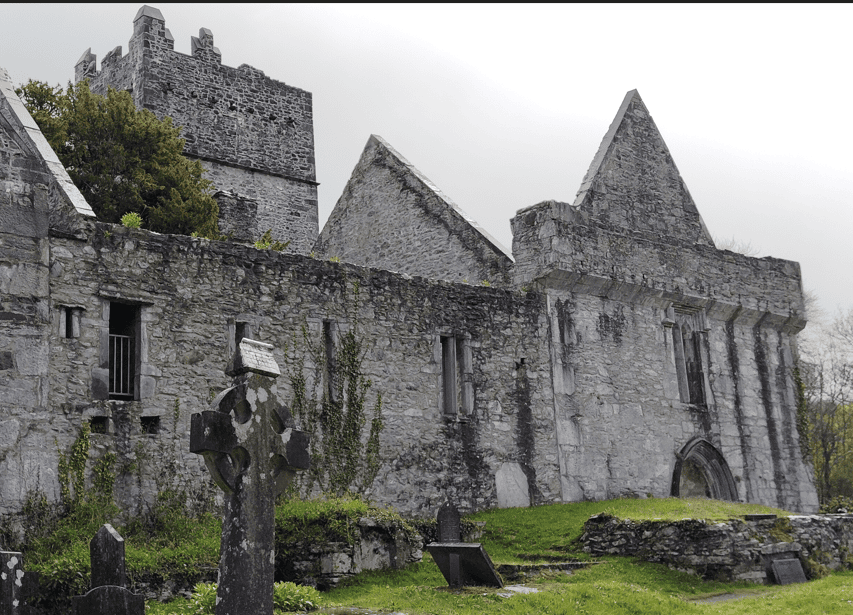
The friary’s domestic ranges contained the communal and service spaces used by the Franciscan community.
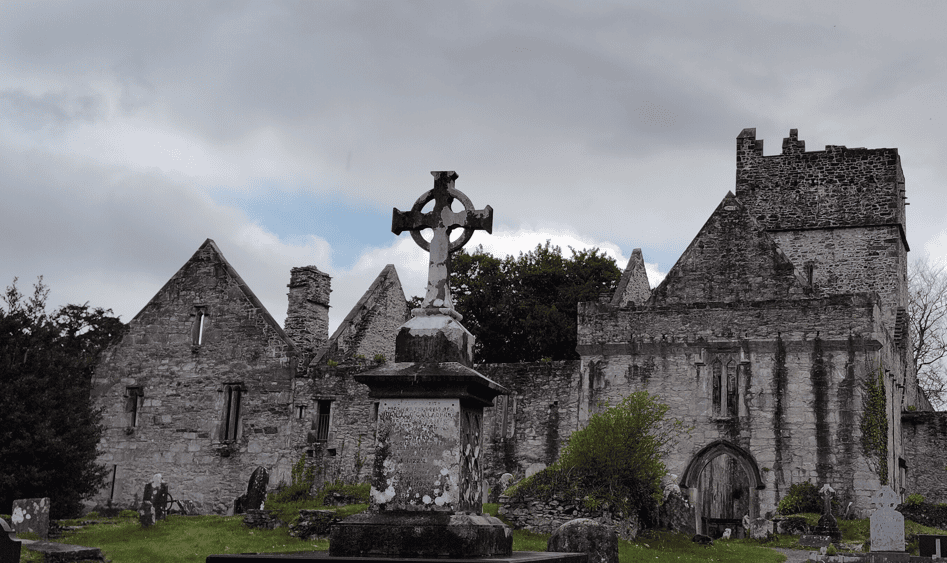
The surrounding graveyard developed into a long-lived burial place for clergy, local families and prominent regional figures.
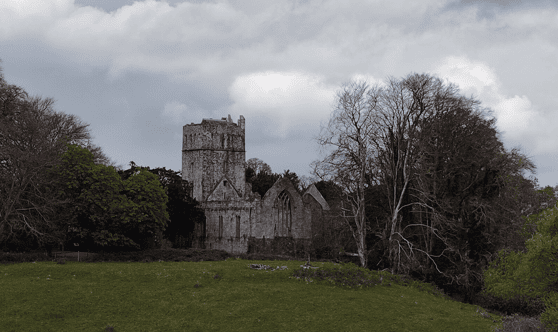
The central bell tower rises between the nave and chancel, marking the principal division within the medieval church.
Every historic site has a unique story shaped by its landscape, history and surviving remains. This section provides the key facts you need to understand the monument, including its location, historical importance and defining features, offering a solid foundation before exploring the site in greater depth.
Irish name
Mainistir Locha Léin
County
Kerry
Monument Type
Franciscan Friary
National Monument Number
311
Historical Period
Late Medieval
Ownership
State guardianship
Date
1448
Condition
Substantially standing but roofless
Townland
Mucros / Muckross
Archaeological Investigation
No comprehensive modern excavation recorded
Civil Parish
Cill Airne / Killarney
Public Access
Free, unguided access
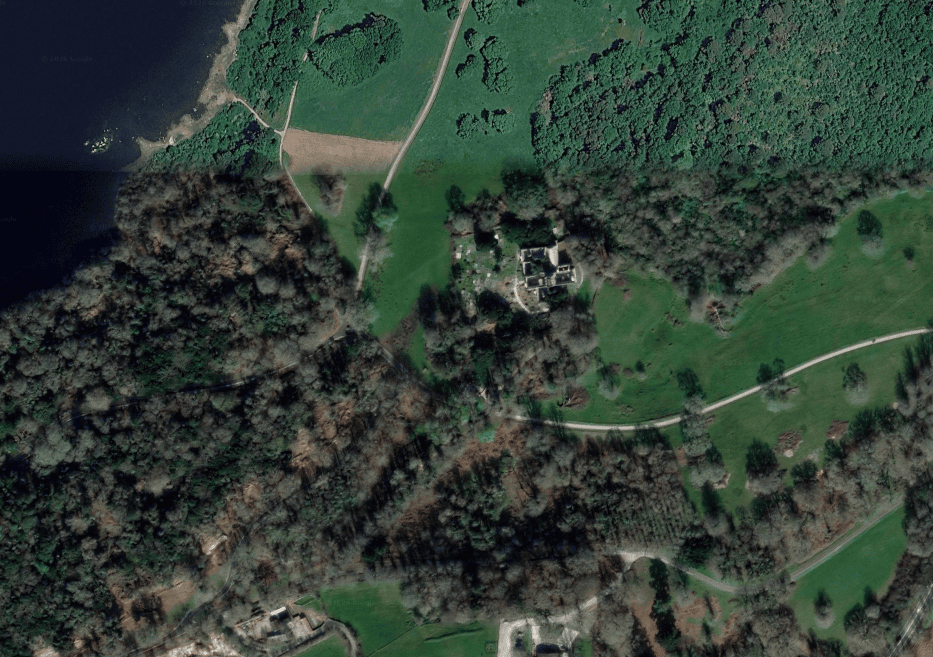
Latitude
52.026283
Longitude
-9.494364
Address
Muckross, Co. Kerry
Nearest Town
Killarney
Road access
N71
Muckross Abbey was founded in 1448 by Donal Mac Mór Mac Chartaigh, Prince of Desmond, for the Observant Franciscans. The date is derived from a papal brief issued on 23 April 1468, which records that the friars had occupied the site for twenty years. This contemporary evidence makes 1448 considerably more reliable than the traditional date of 1340 found in the Annals of the Four Masters.
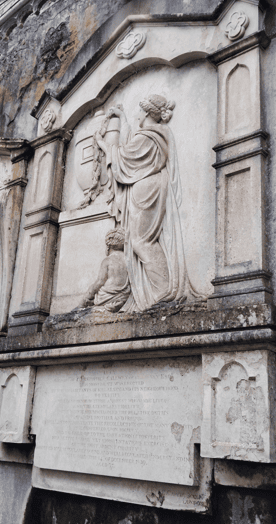
Muckross Abbey Stone Memorial
The friary belonged to the Observant reform of the Franciscan Order, a movement seeking a stricter return to the Franciscan rule. Muckross was among the early Irish houses established for the Observants from its foundation. As mendicant friars, the community combined religious worship with preaching and engagement with the surrounding lay population.
Construction was not necessarily completed in a single campaign. The 1468 papal brief records a church, tower, bell, cemetery, dormitory, refectory, gardens, orchards and other necessary buildings, but also sought contributions towards the completion, enlargement and preservation of the friary. Warfare had reduced the founder’s ability to finance the work, indicating that development continued after the initial foundation.
The late sixteenth century brought serious disruption. Crown grants transferred legal control of the property into secular hands, while two friars were killed during a raid in 1589 associated with the concealment of church valuables. Yet this did not mark the permanent end of Franciscan activity at Muckross.
The friars subsequently returned, and restoration was underway during the early seventeenth century. An inscription dated 1626 records repairs undertaken under Friar Thaddeus Hualan, while a guardian was again recorded in 1639. Viable communal occupation eventually ended during the Cromwellian period, although Franciscan guardians continued to be appointed in association with Muckross long afterwards. The ruins remained important as a Catholic burial place and later became part of the historic and picturesque landscape of Muckross.
The familiar foundation date of 1340 is not supported by the strongest surviving evidence. The 1468 papal brief records twenty years of Franciscan occupation, establishing 1448 as the best-supported foundation year for Muckross Abbey.
Muckross follows the characteristic arrangement of a late-medieval mendicant friary. Its church runs on an east–west axis and comprises a long nave and chancel divided by a central tower, with a south transept extending from the main church. To the north lies a compact cloister surrounded by the domestic ranges used by the Franciscan community.
The nave provided space for the lay congregation and the Franciscans’ preaching mission, while the chancel or choir contained the principal altar and accommodated the friars during worship. A large east window illuminated the high altar area, while surviving sedilia, or seats for officiating clergy, and piscinae, stone basins used in the ritual washing of sacred vessels, preserve evidence of the church’s liturgical organisation.
The central tower formed both an architectural division and a major structural element. Its considerable weight was carried through substantial masonry arches and piers positioned across the church. The south transept provided additional space for devotion and burial, although the precise dedication of individual medieval altars is not securely known.
One of the most distinctive surviving elements is the square cloister, where arcaded walks were covered by stone barrel vaults. The cloister connected the church with the surrounding domestic ranges and provided sheltered circulation around the central court. Spaces within these ranges have been interpreted as including the sacristy, chapter or meeting room, dormitory, kitchen and refectory, although not every surviving room can be identified with certainty.
Construction relied principally on local rubble stone and lime mortar, with dressed stone employed around doors, windows, arches, arcades and other important architectural details. Timber originally formed roofs, upper floors, doors, screens and fittings, but the major roof structures no longer survive.
The visible complex should not be regarded as entirely the product of 1448. Documentary evidence shows that construction and enlargement continued after the foundation, while substantial restoration took place during the early seventeenth century. The precise architectural sequence of individual walls and features remains unresolved.
Muckross was not completed in a single medieval building campaign. The 1468 papal brief sought assistance for its completion and enlargement, while a surviving 1626 inscription records a major Franciscan restoration, confirming that the structure visible today developed through more than one phase.
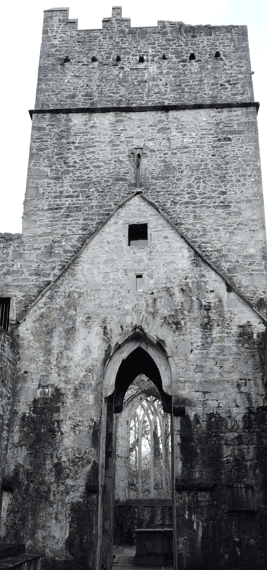
Muckross Abbey Gothic Doorway
No comprehensive modern archaeological excavation of Muckross Abbey has been identified. Our understanding of the friary therefore comes principally from its surviving buildings, burial ground, documentary records and historic descriptions rather than from large-scale archaeological excavation.
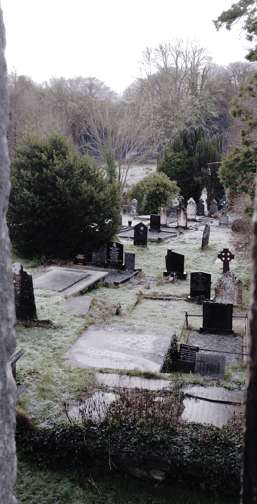
Muckross Abbey Graveyard
The standing masonry itself provides important archaeological evidence. Blocked openings, changes in masonry, inserted tombs, altered floor levels and the points where different parts of the building meet can help identify episodes of construction and alteration. However, a complete archaeological phase plan has not been established, so individual sections of masonry cannot yet be assigned confidently to particular building campaigns.
The graveyard represents another important archaeological resource. Medieval tomb recesses and memorials survive alongside later graves, reflecting centuries of continued burial and commemoration. Repeated use of the cemetery may also have disturbed earlier burials and grave markers, making careful archaeological and osteological investigation essential should future groundworks take place.
Historic accounts, drawings and photographs provide additional evidence for features that may subsequently have disappeared or changed. An account written by Dorothea Herbert following her visit in 1786, for example, records the cloister, yew tree, cells and the presence of human remains. Such records can be compared with the surviving fabric to help reconstruct changes to the monument over time.
Without comprehensive excavation, claims concerning artefacts, diet, industrial activity, occupation deposits or the precise function of every room cannot presently be treated as established fact. Future investigation combining measured building survey, geophysical techniques and archival research could substantially refine our understanding of the friary’s development.
Much of what we know about Muckross comes from archaeology above ground rather than excavation. The surviving walls preserve evidence of alteration and rebuilding, but a comprehensive archaeological phase plan of the friary has not yet been established.
Daily life at Muckross was shaped by the religious observance of the Friars Minor, whose community belonged to the stricter Observant reform of the Franciscan Order. The friars were mendicants rather than enclosed monks: their way of life combined communal worship and religious discipline with preaching and engagement with lay society.
The surviving layout helps us understand how different activities were organised. The church accommodated both friars and lay worshippers. The nave provided the principal public and preaching space, while the choir was used by the community for Mass and the daily religious offices. The sacristy stored vestments, sacred vessels and books, while a chapter or meeting room provided space for communal governance and discipline.
Domestic life occupied the ranges surrounding the cloister. The dormitory was probably located on an upper floor, with access towards the church for night offices. The refectory served as the community’s dining room and was supported by kitchen, storage and service areas. These room identifications are based partly on surviving architectural features and comparisons with other mendicant houses, and not every room at Muckross can be identified with certainty.
The 1468 papal brief provides particularly valuable evidence by specifically recording a dormitory, refectory, gardens and orchards among the facilities provided for the community. The gardens and orchards could supply food and medicinal plants as well as providing contemplative space.
Franciscan life at Muckross was not completely self-sufficient or isolated. The friars depended upon alms and patronage and maintained relationships with the surrounding population. The same papal brief encouraged the faithful to visit and contribute towards completing, enlarging and maintaining the friary, demonstrating the connection between the religious community and wider lay society.
Muckross was not an isolated monastery cut off from the outside world. Its Franciscan community belonged to a mendicant tradition centred on poverty, preaching and pastoral engagement, making interaction with lay communities and dependence upon patronage and alms an important part of friary life.
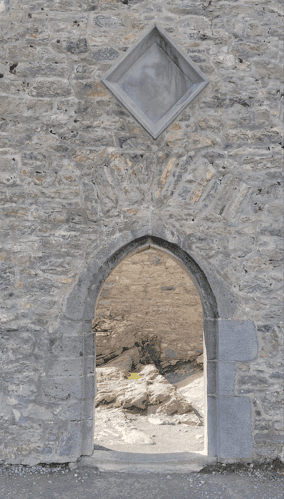
Muckross Abbey Interior Archway
Muckross Abbey stands on the Muckross peninsula between Lough Leane and Muckross Lake, within the landscape now forming part of Killarney National Park. Its setting provided access to water, woodland, cultivable land and regional routes, while the gardens and orchards recorded in the 1468 papal brief demonstrate that the medieval friary occupied a managed landscape rather than an isolated wilderness.
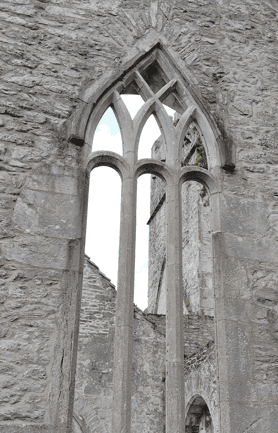
Muckross Abbey Gothic Window
The wider area already possessed considerable religious and political importance before the Franciscans arrived. Innisfallen Abbey, on an island in Lough Leane, represented an earlier ecclesiastical tradition, while the Killarney region lay within the political influence of the MacCarthy Mór lordship. The establishment of Muckross in the fifteenth century added an Observant Franciscan foundation to this established cultural landscape.
The setting experienced another major transformation when the friary became incorporated into the Muckross demesne. During the eighteenth and nineteenth centuries, parkland, woodland, avenues and picturesque routes reshaped the surrounding landscape, with the medieval ruins becoming part of the estate’s scenic composition. The landscape experienced by visitors today therefore reflects both medieval land use and later estate development.
Muckross also lies within a particularly dense concentration of historic sites. Nearby Innisfallen Abbey, Ross Castle and Muckross House represent different periods in the development of the Killarney landscape, from early medieval religious settlement and Gaelic lordship to nineteenth-century estate history.
The natural environment is equally significant. The wider national park contains Old Red Sandstone and Carboniferous limestone geology and internationally important limestone-associated habitats, including yew woodland. This environmental context is particularly relevant to the famous yew growing within the cloister, although the precise age of the individual tree has not been scientifically established.
The woodland setting surrounding Muckross Abbey should not be assumed to have remained unchanged since the Middle Ages. The friary was later incorporated into the designed Muckross demesne, where eighteenth- and nineteenth-century landscaping altered routes, planting and views around the medieval ruins.
Follow Muckross Abbey from its foundation as an Observant Franciscan friary in 1448 through periods of disruption, restoration and renewed Franciscan activity to its later preservation as a National Monument. The surviving ruins reflect more than one phase of construction and centuries of changing religious and social history.
Donal Mac Mór Mac Chartaigh, Prince of Desmond, establishes an Observant Franciscan house at Muckross.
A papal brief records twenty years of Franciscan occupation and encourages support for completing and enlarging the friary.
Two friars, including Donagh O Muirhily, are killed during a raid associated with the concealment of church valuables.
Irrelaghe, together with associated land, orchards and a garden, is granted to Captain Collum.
Franciscan activity resumes and fundraising begins for the restoration of the religious complex.
An inscription records restoration under Friar Thaddeus Hualan; the church and part of the dormitory had been restored.
A guardian is again recorded at Muckross, providing evidence of renewed Franciscan presence.
Viable communal occupation comes to an end, although the precise circumstances of the community’s departure remain uncertain.
The ruins become incorporated into the Muckross demesne and increasingly form part of Killarney’s picturesque visitor landscape.
Muckross Abbey is conserved as a National Monument within Killarney National Park while continuing to serve as a cemetery and visitor site.
Muckross Abbey can be explored independently within Killarney National Park. The surviving friary contains uneven historic surfaces, steps, thresholds and grave slabs, while the surrounding graveyard remains an important part of the monument’s historic setting.
Muckross, Killarney National Park, County Kerry
Free parking is available at the entrance.
Unguided access; uneven historic surfaces, steps, thresholds and grave slabs may restrict mobility.
Free
Daylight hours in good weather
Muckross House, Innisfallen Abbey and Ross Castle
Explore more historic places, monuments and archaeological sites across County Kerry.
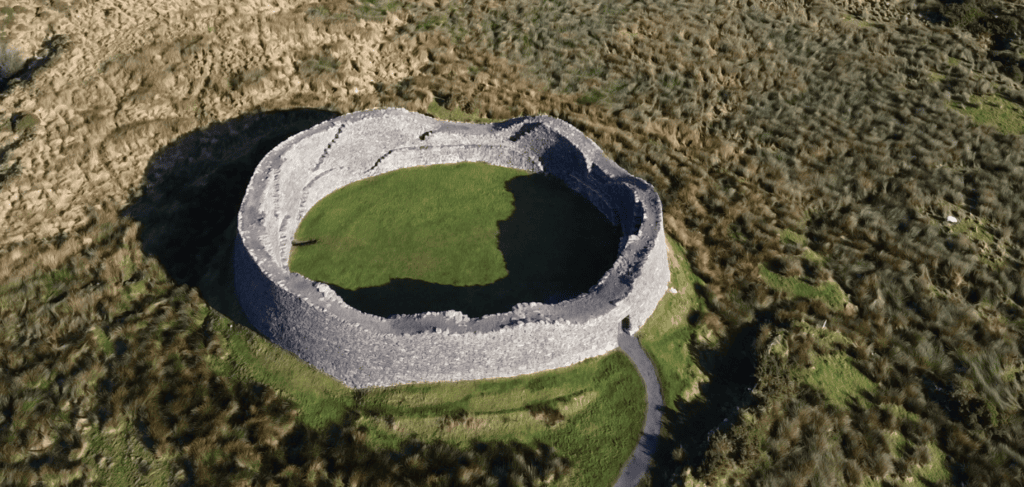
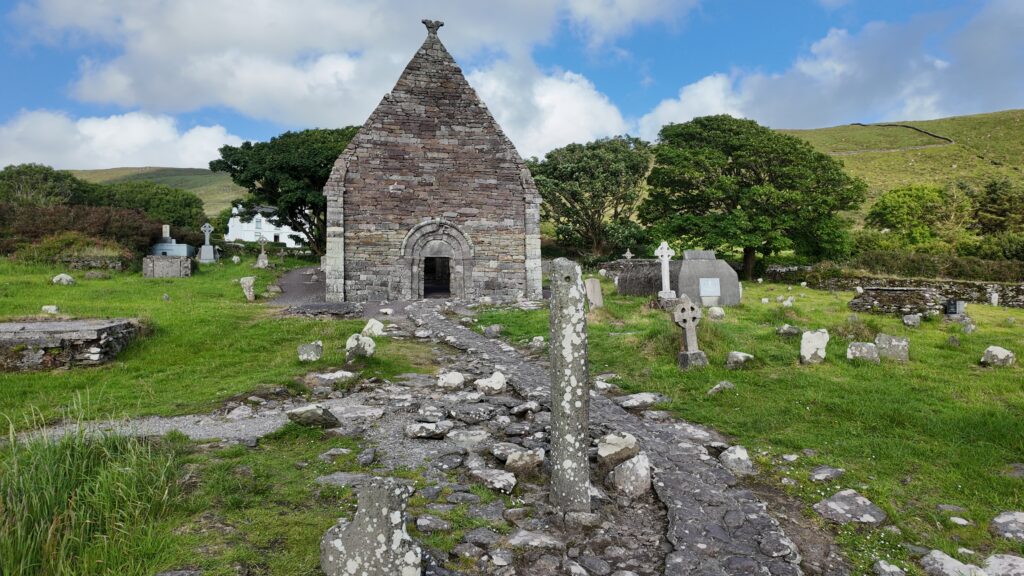
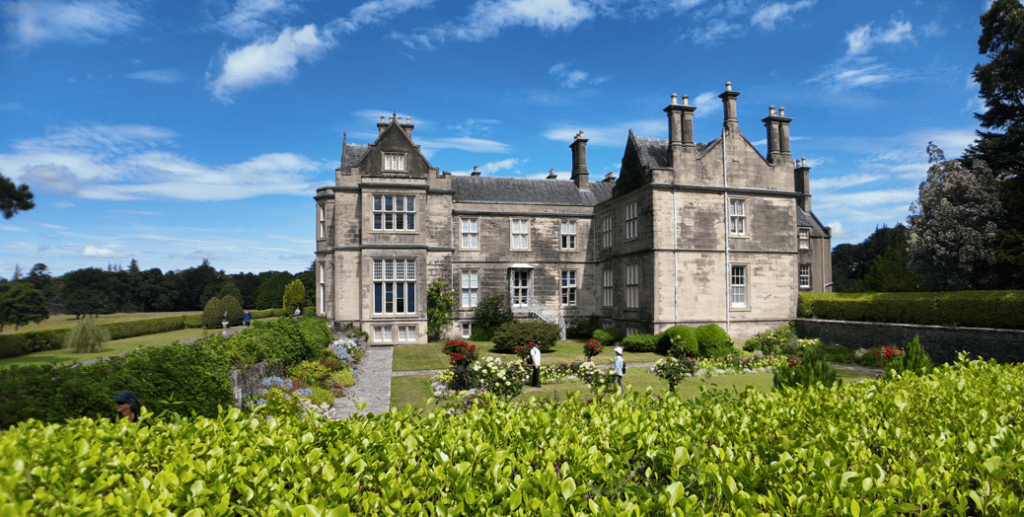
You can experience Muckross Abbey with Steve as part of a private tour of Killarney and its National Park. Exploring the surviving church, cloister, domestic ranges and historic graveyard provides a deeper understanding of the Franciscan community that occupied Muckross and the friary’s place within the wider historic landscape of Killarney.
If you would rather leave the driving behind, I offer private tours across the Dingle Peninsula and County Kerry. Each experience is designed for small private groups, with a relaxed pace, local knowledge and the flexibility to spend more time at the places that interest you most.
A relaxed three-hour private tour around Slea Head and the spectacular western coastline of the Dingle Peninsula.
Explore Slea Head, ancient heritage sites, coastal viewpoints and the landscapes of West Kerry on a private half-day experience.
Discover more of the Dingle Peninsula with a full day to explore its scenery, history, villages and lesser-known places.
Journey around the Iveragh Peninsula, combining the Ring of Kerry with the dramatic landscapes and Atlantic coastline of the Skellig Ring.
Explore Killarney National Park, its lakes, mountain viewpoints, waterfalls and some of the most beautiful landscapes in County Kerry.
Travel north from Kerry for a private day tour through the Burren to the spectacular Cliffs of Moher on Ireland’s Atlantic coast.
Create a private Kerry itinerary around the places, landscapes and experiences that matter most to you.
The information presented on this page is based on archaeological research, official heritage records and published academic studies. Where archaeological evidence is incomplete, uncertainty has been stated rather than resolved through assumption. This approach reflects the editorial standards used throughout the Steve’s Peninsula Tours History Collection.
Office of Public Works / Heritage Ireland
Muckross Franciscan Friary. Official monument description, visitor information and heritage interpretation.
Brendan Jennings, O.F.M.
“The Abbey of Muckross.” Journal of the Cork Historical and Archaeological Society, Vol. 45, 1940, pp. 79–84. A key scholarly study of the foundation, 1468 papal brief and later Franciscan history.
Placenames Database of Ireland
Mainistir Locha Léin / Muckross Abbey and Mucros / Muckross. Official Irish and English placenames and administrative information.
National Parks and Wildlife Service
Killarney National Park Management Plan 2005–2009. Historical landscape, conservation and management context for Muckross Abbey and the wider demesne.
National Parks and Wildlife Service
Killarney National Park SPA and Killarney National Park, Macgillycuddy’s Reeks and Caragh River Catchment SAC documentation. Geological, ecological and yew woodland context.
National Monuments Service
Monuments in State Care: County Kerry. Official record of the monument’s State care and guardianship.
Loading availability…