
HISTORY COLLECTION
Gallarus Oratory is one of Ireland’s best-preserved medieval stone churches and among the finest surviving examples of corbelled stone construction.
Medieval
Probably 9th–12th century
Gallarus Townland
County Kerry
Corbel-vaulted
Stone Oratory
State National Monument
Public access available
Gallarus Oratory preserves an exceptional example of medieval stone construction. Its carefully constructed sandstone walls, corbelled roof and simple interior provide important evidence for the craftsmanship involved in building the monument.
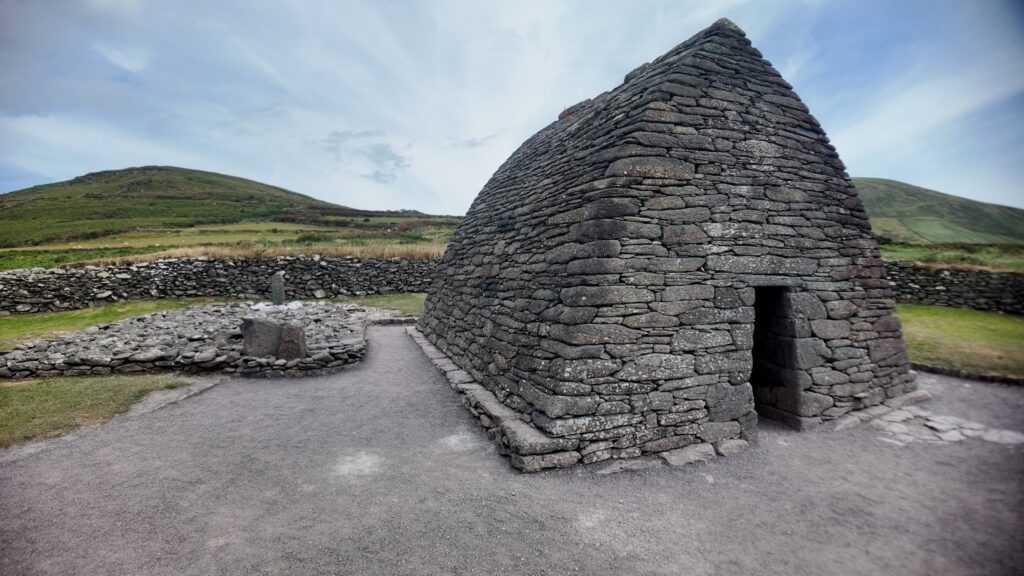
West doorway with its original lintelled entrance and carefully dressed sandstone masonry.
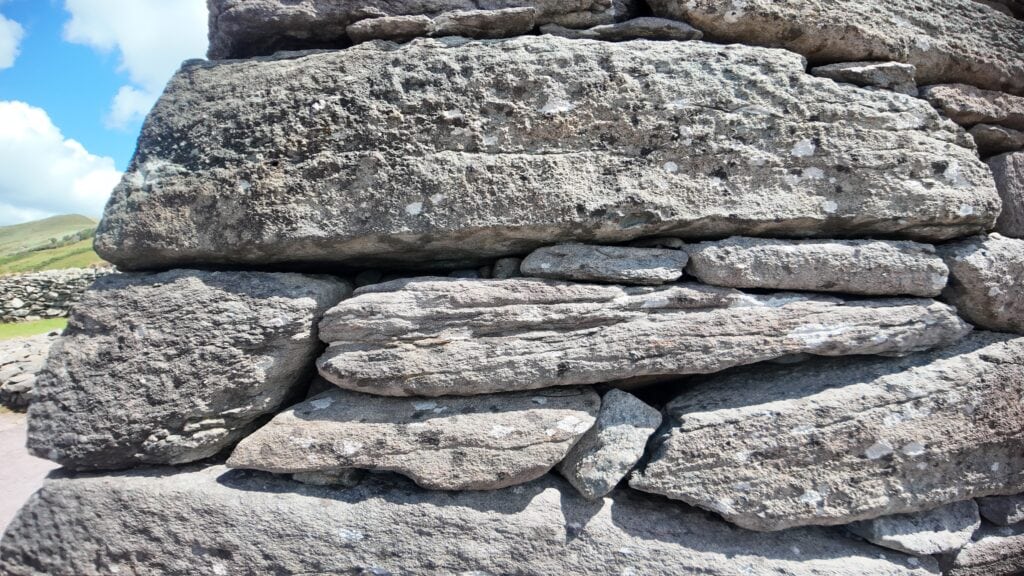
The corbelled stone roof demonstrates exceptional medieval dry-stone engineering.
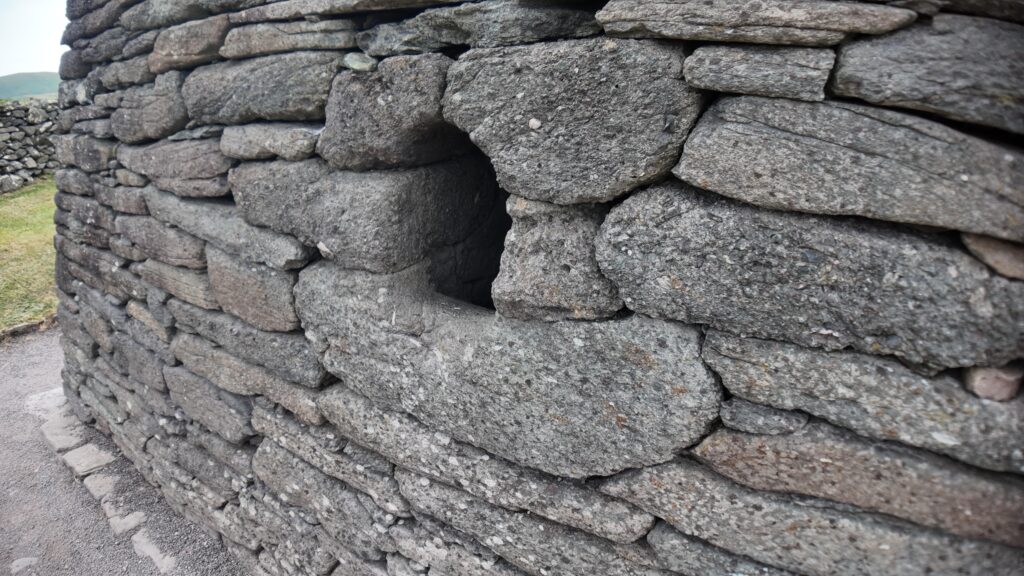
The east window provided light to the interior and remains one of the building’s defining architectural features.
Every historic site has a unique story shaped by its landscape, history and surviving remains. This section provides the key facts you need to understand the monument, including its location, historical importance and defining features, offering a solid foundation before exploring the site in greater depth.
Irish name
Séipéilín Ghallarais
County
Kerry
Monument Type
Corbel-vaulted stone oratory
National Monument Number
No. 66
Historical Period
Medieval
Ownership
State-owned
Date
Probably 9th–12th century
Condition
Exceptionally preserved
Townland
Gallarus (Gallaras)
Archaeological Investigation
Trial excavation
Civil Parish
Kilmalkedar
Public Access
Free OPW access
Latitude
52.172824
Longitude
-10.349536
Address
Gallarus, Co. Kerry
Nearest Town
Ballyferriter
Road access
R559
Gallarus Oratory stands within one of the richest surviving medieval ecclesiastical landscapes on the Dingle Peninsula. Its simple rectangular form and stone construction identify it as an ecclesiastical building, but neither its exact date nor its original role can be established with certainty from the surviving evidence. While the monument has long been described as an early Christian church, modern scholarship has shown that this traditional interpretation is not supported by definitive archaeological evidence.
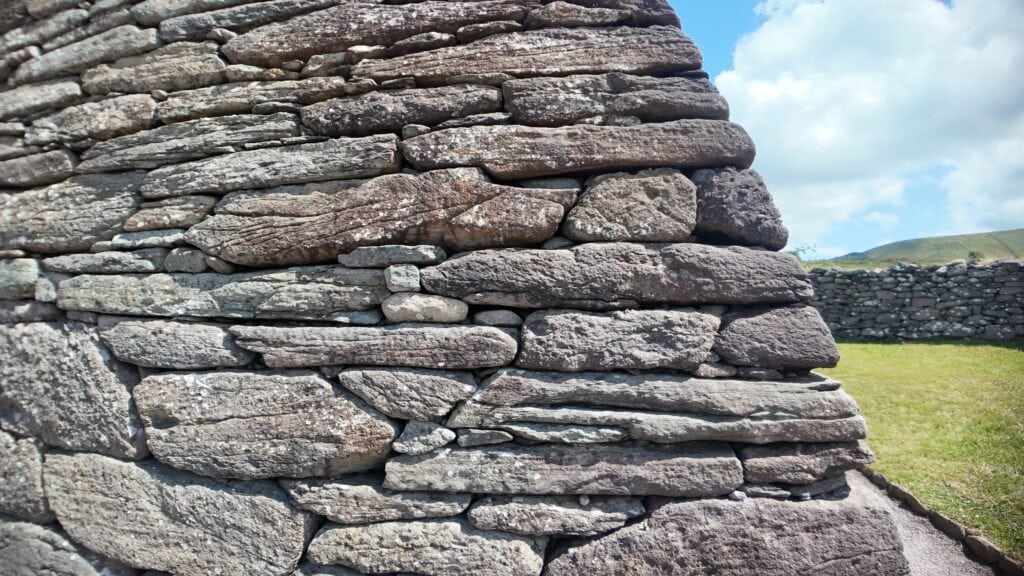
Gallarus Oratory Masonry Close Up
The earliest detailed written descriptions date from the eighteenth century, when Charles Smith recorded the building in 1756 and Richard Pococke visited shortly afterwards. Their accounts confirm that the structure was already recognised as an ancient chapel by this time, but they provide no evidence for when it was originally constructed. During the nineteenth and early twentieth centuries, Gallarus became widely regarded as one of Ireland’s earliest stone churches because of its distinctive appearance and dry-stone construction.
A significant reassessment came in 1970 when archaeologist Peter Harbison argued that the architectural evidence did not require such an early date. Instead, he proposed that the building could belong to the eleventh or twelfth century. This interpretation has since been adopted by the Office of Public Works as the most likely working date, although no scientific dating evidence has yet confirmed when the oratory was built. The monument is therefore best understood as a medieval stone chapel whose exact origins remain one of the outstanding questions in Irish archaeology.
Modern research has transformed our understanding of Gallarus Oratory. Rather than accepting a traditional sixth- or eighth-century origin, current official interpretation considers an eleventh- or twelfth-century construction the strongest working theory while recognising that the building has never been scientifically dated.
Gallarus Oratory is a compact rectangular stone building constructed from carefully selected local sandstone. Unlike many medieval churches, it has survived with its original stone roof intact, making it one of Ireland’s best-preserved examples of a corbel-vaulted oratory. The walls rise with a pronounced inward slope before gradually projecting inwards until they meet at the roof ridge, creating a strong masonry shell built entirely from stone.
The building has a simple plan with a single entrance in the west gable and a small round-headed window in the east gable. The doorway is topped by a stone lintel rather than an arch, while the east window widens towards the interior, allowing daylight to enter the otherwise enclosed space. These carefully proportioned openings reflect practical design as well as medieval ecclesiastical tradition.
The masonry demonstrates exceptional craftsmanship. Long sandstone blocks were carefully selected, dressed and laid in closely fitted courses to produce a durable structure that relies primarily on compression rather than timber supports. Although Gallarus is often described as a dry-stone building, architectural studies have identified traces of fine lime mortar within some internal joints. As a result, describing the monument as entirely mortarless is inaccurate.
The precise sequence of construction is unknown because the building has never undergone a full archaeological excavation. However, the remarkably consistent stonework suggests that most of the surviving structure was completed during a single principal building campaign before later maintenance and conservation work helped preserve it for future generations.
The roof is not a separate structure resting on the walls. Instead, each course of stone projects slightly inwards until both sides meet at the ridge, creating a single self-supporting masonry shell that has remained standing for centuries.
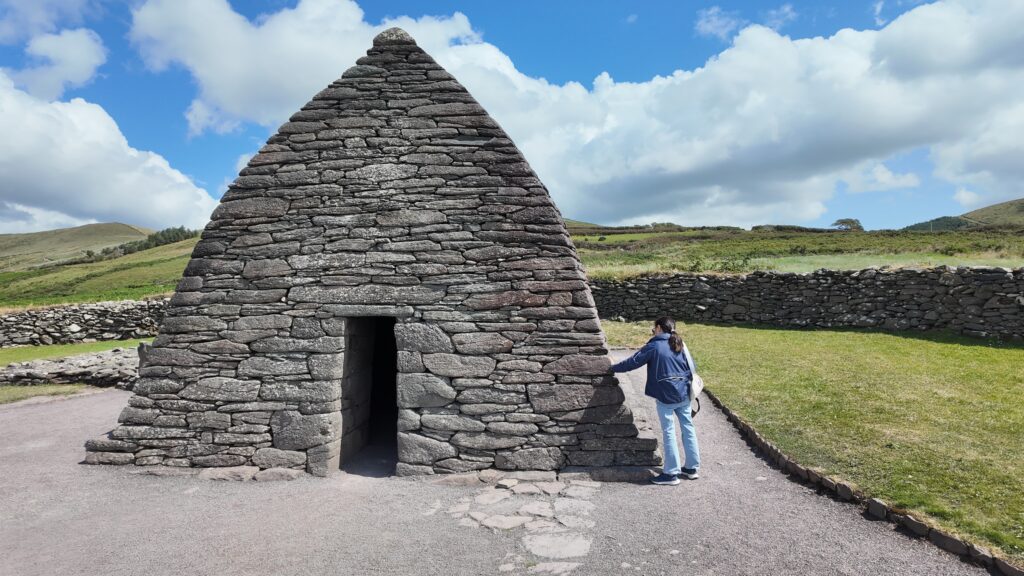
Visitor Beside Gallarus Oratory
Despite its importance, Gallarus Oratory has never been fully excavated. The principal archaeological investigation took place in November 1970, when Tom Fanning directed a series of small trial cuttings before drainage works on behalf of the National Parks and Monuments Branch. These investigations were limited in scale and were not intended as a complete excavation of the monument or its surrounding enclosure.
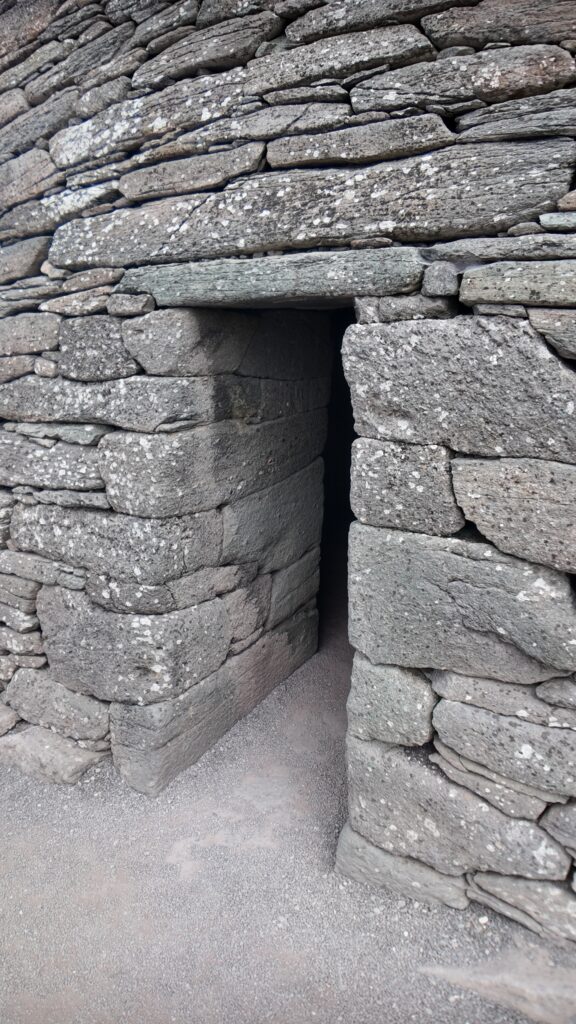
Gallarus Oratory Entrance
The trial cuttings produced no artefacts, structural features or buried deposits capable of determining when the oratory was built or how it was originally used. This absence of dating evidence is one of the most significant findings at Gallarus. As a result, archaeologists cannot rely on scientific dating methods such as radiocarbon analysis or stratified archaeological deposits to establish the building’s age.
Instead, researchers depend largely on architectural comparison. Features such as the corbelled stone roof, the carefully constructed masonry and the form of the east window are compared with other medieval churches to estimate the monument’s date. While this approach suggests that an eleventh- or twelfth-century construction is currently the strongest interpretation, it remains a scholarly conclusion rather than a proven archaeological fact.
Archaeologists have also noted evidence of a historic enclosure and nearby burial activity, but the relationship between these features and the oratory has not been securely established. Likewise, no scientifically dated artefacts, inscriptions or timber suitable for dendrochronology have been recovered from the site. Many questions about Gallarus therefore remain unanswered and await future archaeological investigation.
One of the most important archaeological discoveries at Gallarus was the absence of evidence. The 1970 trial excavation recovered no finds capable of dating the monument, meaning every proposed construction date still depends on architectural interpretation rather than scientific proof.
Little is known with certainty about the people who used Gallarus Oratory because no archaeological evidence has revealed its original congregation or daily activities. The building’s small single-cell plan indicates that it was intended for a limited number of people rather than large gatherings. As an ecclesiastical building, it most likely served religious purposes, but the surviving evidence does not identify whether it functioned as a chapel for a local community, a private place of worship or another form of medieval religious site.
The surrounding landscape contains numerous churches, cross-slabs, burial grounds and other religious monuments, showing that medieval Christian life was well established across this part of the Dingle Peninsula. Within this wider setting, Gallarus formed part of an active ecclesiastical landscape where worship, burial and local religious traditions shaped everyday life. However, the evidence is insufficient to determine the specific role played by this individual building.
Some historians have suggested that Gallarus may have served pilgrims travelling through the Mount Brandon region or functioned as a funerary chapel connected with nearby burials. These ideas are based on architectural comparison, local tradition and the wider devotional landscape rather than direct archaeological evidence. At present, neither interpretation has been proven and both remain scholarly hypotheses rather than established facts.
Although many details of daily life remain unknown, the building itself reflects the importance of Christianity within medieval Corca Dhuibhne. Its careful construction and long survival suggest that it was a valued place of worship that continued to be recognised long after its original community had disappeared.
No archaeological evidence has identified exactly who worshipped at Gallarus Oratory or how the building was used on a daily basis. Suggestions that it served pilgrims or acted as a funerary chapel remain interpretations rather than proven historical facts.
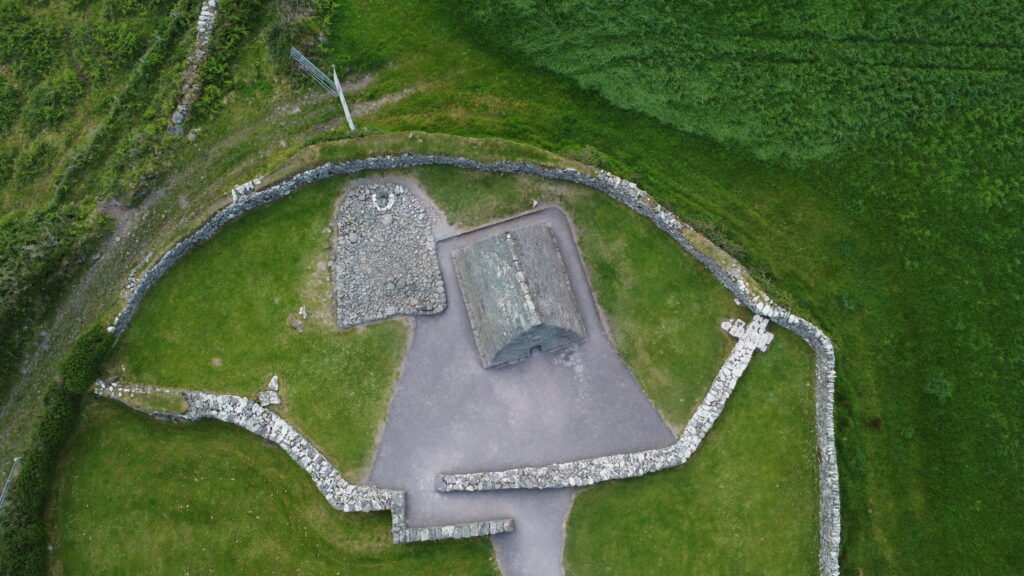
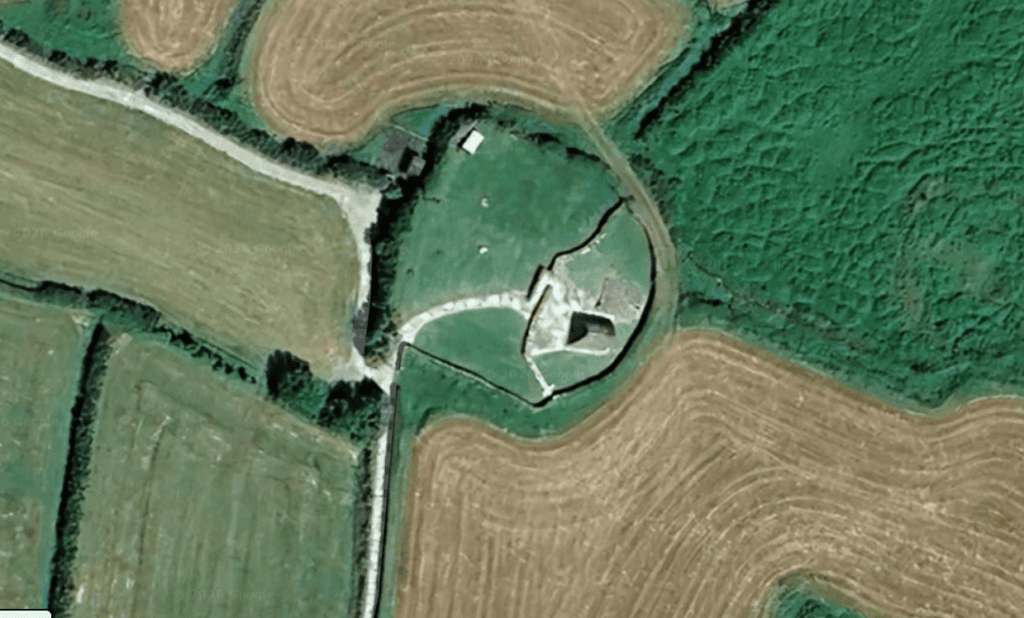
Gallarus Oratory Overhead View
Gallarus Oratory stands in open farmland on the northern side of the Dingle Peninsula, overlooking the wider landscape around Smerwick Harbour and Mount Brandon. Although modest in scale, its position places it within one of Ireland’s richest concentrations of medieval ecclesiastical monuments. The surrounding landscape contains churches, burial grounds, cross-slabs and other religious sites that demonstrate centuries of Christian activity across Corca Dhuibhne.
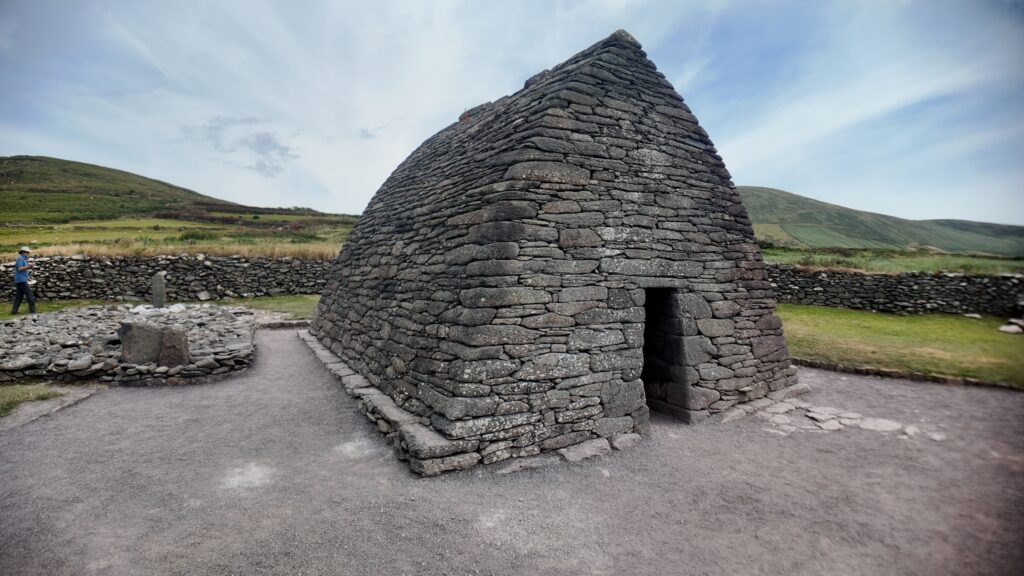
Gallarus Oratory Exterior View
The monument forms part of a wider network that includes Kilmalkedar Church, the early medieval site at Reask and other nearby chapels and ecclesiastical remains. These neighbouring sites provide valuable context for understanding Gallarus, although they do not establish when the oratory itself was built or exactly how it functioned within the medieval landscape. Each monument has its own archaeological history and should be interpreted independently.
The nearby Cosán na Naomh (Pilgrim’s Path) and the long-standing religious importance of Mount Brandon have encouraged suggestions that Gallarus may have been connected with medieval pilgrimage. While this broader devotional landscape is well established, there is no direct archaeological evidence proving that the oratory was constructed specifically for pilgrims or served as a pilgrim hostel. This remains a scholarly interpretation rather than an established fact.
The surrounding agricultural landscape has also changed over many centuries through grazing, cultivation and drainage. Modern field boundaries and visitor facilities may obscure earlier routes, enclosures and archaeological features, meaning the wider setting still has considerable potential to improve our understanding of the monument through future landscape survey and archaeological research.
Gallarus Oratory is best understood as part of a wider medieval religious landscape rather than an isolated monument. Its proximity to Kilmalkedar, Reask and the Mount Brandon pilgrimage region provides important context, but none of these nearby sites can be used to prove the oratory’s original function or date.
Follow the story of Gallarus Oratory from its uncertain medieval construction through its eighteenth-century documentation, changing archaeological interpretation and modern investigation. Although its precise construction date remains unknown, architectural study currently places the strongest interpretation in the eleventh or twelfth century.
The stone chapel is built during the medieval period. Its exact construction date remains unknown.
Modern scholarship and the Office of Public Works consider an eleventh- or twelfth-century construction the strongest interpretation.
Charles Smith records Gallarus Oratory as an ancient stone church in his history of County Kerry.
Richard Pococke documents the local Griffith More tradition associated with the chapel.
Harold G. Leask publishes a detailed architectural study, including observations of fine internal lime mortar.
Peter Harbison challenges the traditional early date, proposing a later medieval construction.
Tom Fanning’s trial cuttings recover no evidence capable of scientifically dating the monument.
Everything you need to know before visiting Gallarus Oratory, including parking, access, admission, facilities and practical information to help you make the most of your visit.
Gallarus, Dingle Peninsula, County Kerry
Free parking is available beside the Office of Public Works right of way (limited spaces). A separate privately operated visitor centre provides a larger car park.
Free public access is available via the Office of Public Works right of way. A separate entrance is also available through the privately operated visitor centre.
Admission is free via the OPW access route. Visitors entering through the privately operated visitor centre pay an admission charge, which includes access to its visitor facilities.
Daylight hours in good weather
Kilmalkedar Church • Reask Ecclesiastical Site • Ballywiheen • St Brendan’s Oratory • Mount Brandon Pilgrimage Landscape
Explore more historic places, monuments and archaeological sites across County Kerry.
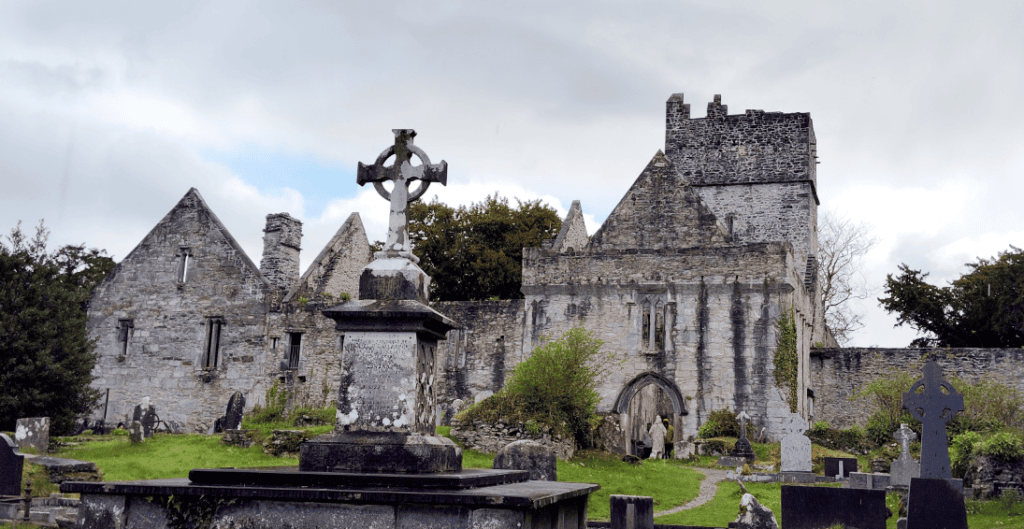
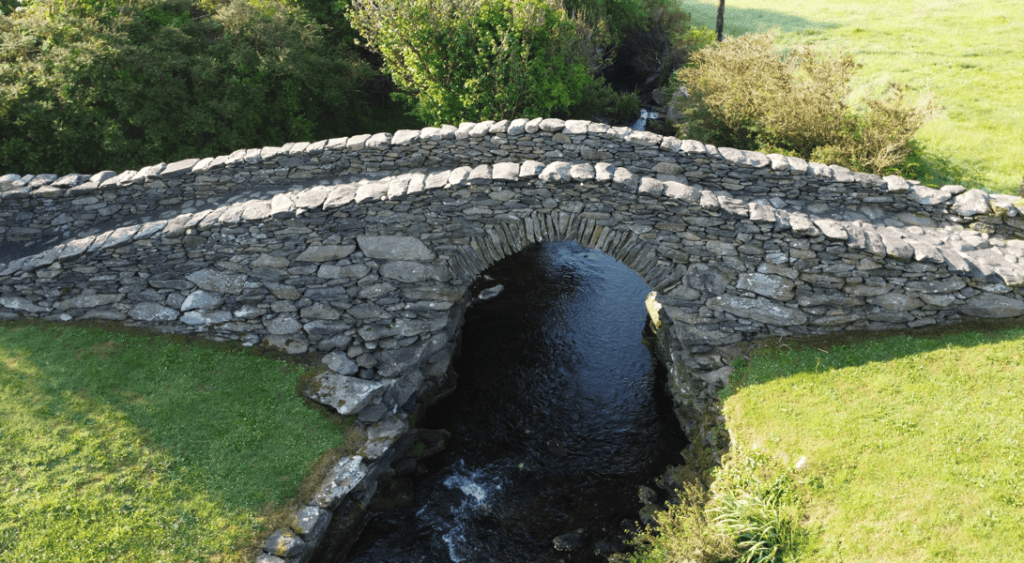
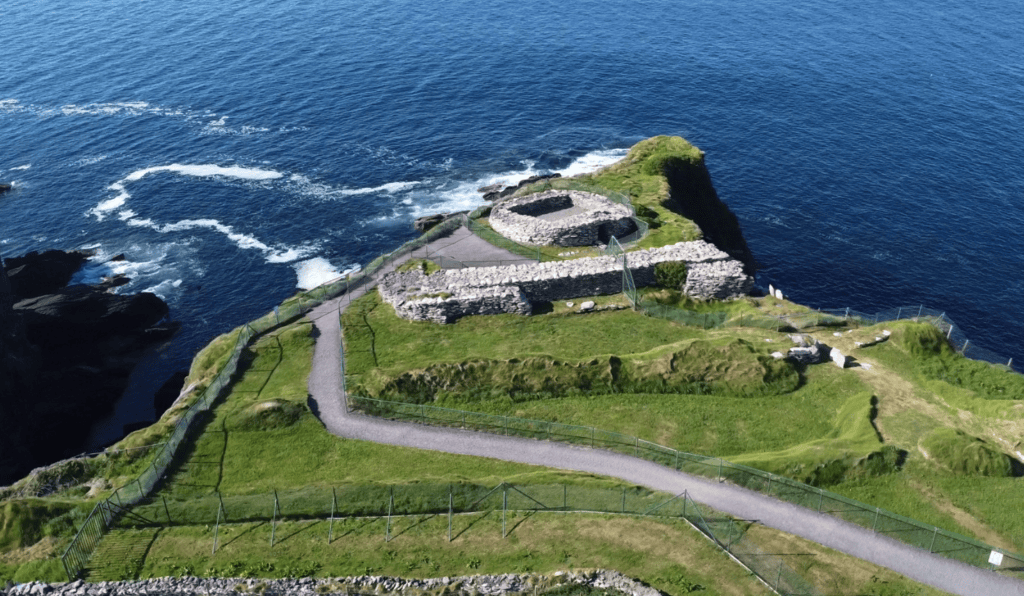
Reading about Gallarus Oratory is only the beginning. Standing inside this remarkable medieval stone chapel offers a completely different perspective, allowing you to appreciate its exceptional craftsmanship, unique corbel-vaulted construction and peaceful setting within the historic landscape of the Dingle Peninsula.
If you would rather leave the driving behind, I offer private tours across the Dingle Peninsula and County Kerry. Each experience is designed for small private groups, with a relaxed pace, local knowledge and the flexibility to spend more time at the places that interest you most.
A relaxed three-hour private tour around Slea Head and the spectacular western coastline of the Dingle Peninsula.
Explore Slea Head, ancient heritage sites, coastal viewpoints and the landscapes of West Kerry on a private half-day experience.
Discover more of the Dingle Peninsula with a full day to explore its scenery, history, villages and lesser-known places.
Journey around the Iveragh Peninsula, combining the Ring of Kerry with the dramatic landscapes and Atlantic coastline of the Skellig Ring.
Explore Killarney National Park, its lakes, mountain viewpoints, waterfalls and some of the most beautiful landscapes in County Kerry.
Travel north from Kerry for a private day tour through the Burren to the spectacular Cliffs of Moher on Ireland’s Atlantic coast.
Create a private Kerry itinerary around the places, landscapes and experiences that matter most to you.
Gallarus Oratory has been studied through archaeological investigation, architectural analysis, official monument records and specialist scholarship. The principal sources below document its architecture, uncertain chronology, 1970 trial excavation and the changing interpretation of the monument since the eighteenth century.
Office of Public Works (Heritage Ireland) — Gallarus Oratory
National Monuments Service — Monuments in State Care, County Kerry
Excavations.ie — Gallarus Trial Excavation (1970)
Placenames Database of Ireland (Logainm.ie)
Harbison, Peter (1970). How Old is Gallarus Oratory? A Reappraisal of Its Role in Early Irish Architecture. Medieval Archaeology, Vol. 14.
Harbison, Peter (1991/1995). Pilgrimage in Ireland: The Monuments and the People.
Leask, Harold G. (1955). Irish Churches and Monastic Buildings, Volume I.
Moss, Rachel (ed.) (2014). Art and Architecture of Ireland, Volume I: Medieval c.400–c.1600.
Smith, Charles (1756). The Antient and Present State of the County of Kerry.
Pococke, Richard (1758). Contemporary travel account, discussed by Harbison.
Loading availability…