
DINGLE PENINSULA · COUNTY KERRY
Clogher Head, known in Irish as Ceann Sratha, is an exposed Atlantic headland on the western Dingle Peninsula. Overlooking Clogher Strand and the dramatic coastline around Ceann Sibéal, it is known for its expansive sea views, ancient geological landscape and connections with major film productions.
Coastal Headland
An Ghráig, Dingle Peninsula
Atlantic Cliffs & Coastal Views
Roadside Viewpoint & Walking Area
Clogher Head is a rugged coastal promontory on the western edge of the Dingle Peninsula, set between Clogher Strand and the imposing outline of Ceann Sibéal. Facing directly into the North Atlantic, the headland offers open views across one of West Kerry’s most exposed and distinctive coastal landscapes.
Known in Irish as Ceann Sratha, the headland forms part of a much older cultural landscape shaped by geology, farming, settlement and the surrounding archaeology of the Clogher and Graigue townlands. Its underlying rocks belong to the ancient Silurian formations of the western peninsula, while nearby Clogher Strand contains fossil-bearing siltstone that records life on an ancient seabed.
Clogher Head also has a place in West Kerry’s screen history. The surrounding landscape was used during the filming of Ryan’s Daughter and Far and Away, with a temporary village constructed here for the latter production. Today, it is best appreciated for its Atlantic setting, coastal views and connection with the wider landscape of the Slea Head Drive.
Clogher Head opens onto one of the most exposed coastal landscapes on the western Dingle Peninsula. From the headland, the Atlantic coastline stretches towards Clogher Strand and the distinctive outline of Ceann Sibéal, while closer views reveal the rugged terrain and ancient rock formations that shape this part of West Kerry.
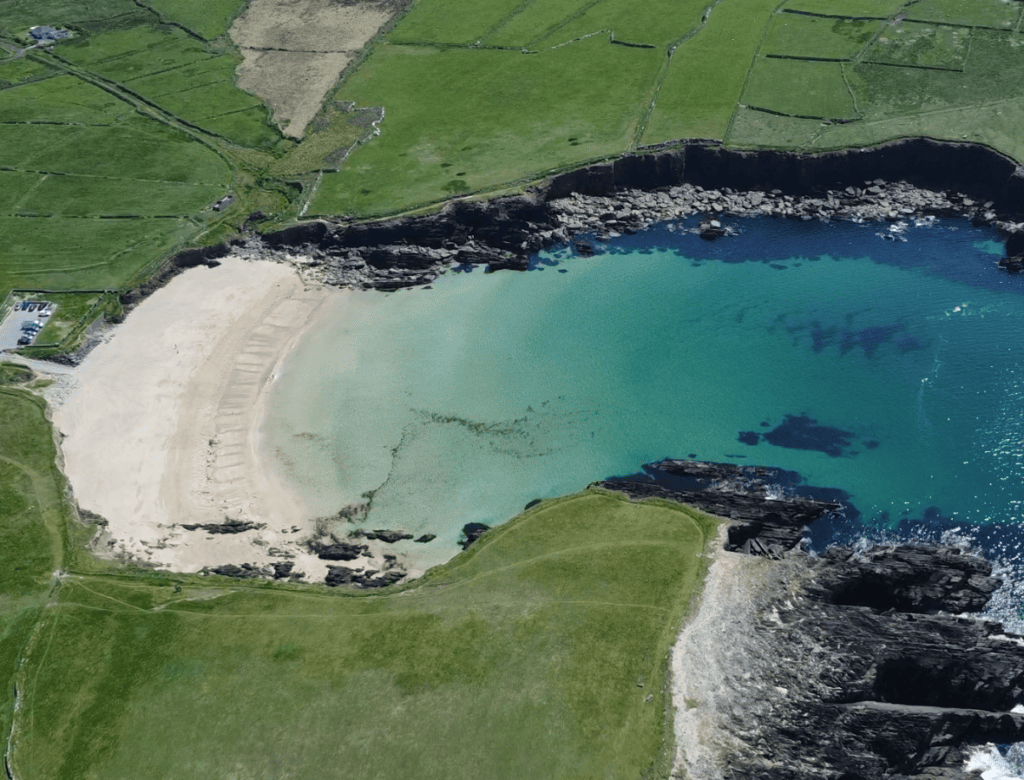
Clogher Strand curves beneath Ceann Sibéal, creating one of the defining coastal views from the Clogher Head area.
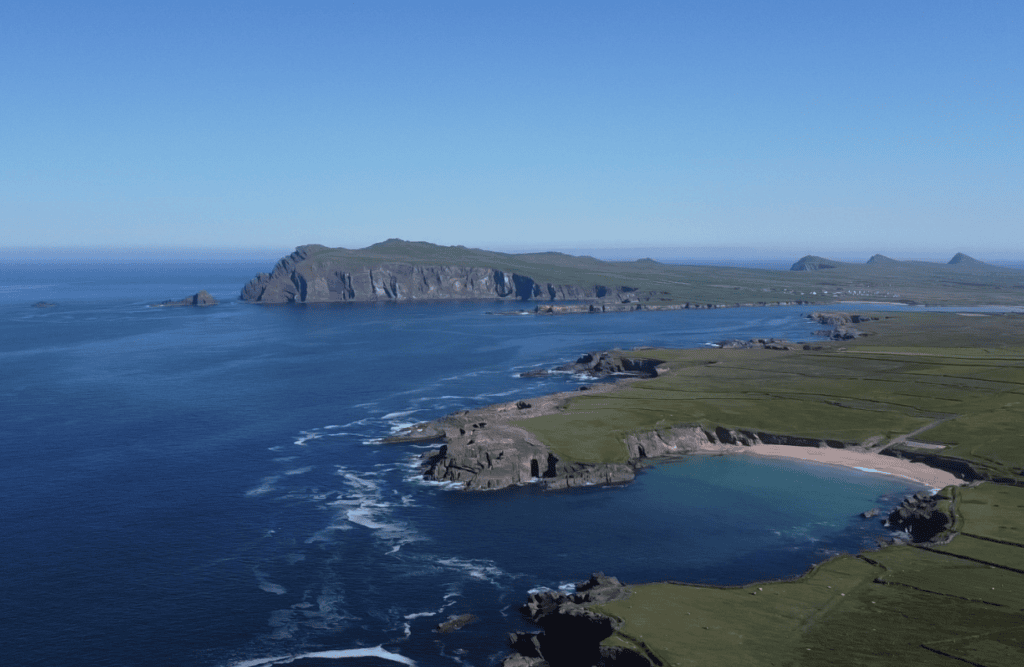
Clogher Head projects into the open Atlantic, where exposed slopes, rocky cliffs and changing weather shape the character of the landscape.
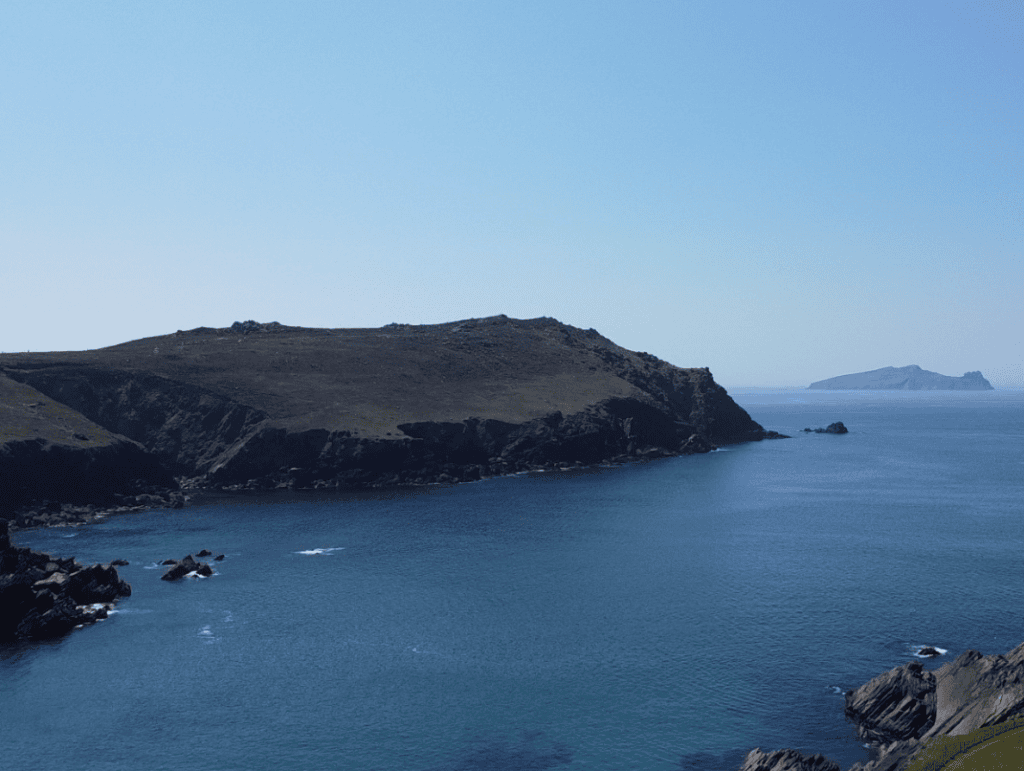
The rocks around Clogher Head form part of the ancient Silurian landscape of the western Dingle Peninsula, shaped over millions of years by geological and coastal processes.
Clogher Head is an exposed coastal viewpoint and walking landscape on the western Dingle Peninsula. Visitors should expect uneven ground, strong Atlantic winds and limited facilities, while access beyond established roadside areas may cross privately owned land.
PLACE TYPE
Coastal Headland & Viewpoint
NEAREST TOWN OR VILLAGE
Ballyferriter
Irish name
Ceann Sratha
PARKING
Limited Roadside Parking Nearby
AREA
An Ghráig, Dingle Peninsula
PUBLIC ACCESS
Roadside Viewpoints; Respect Private Land
FACILITIES
No Visitor Facilities at the Headland
FILM ASSOCIATIONS
Ryan’s Daughter & Far and Away
GEOLOGY
Ancient Silurian Sedimentary & Volcanic Terrain
LANDSCAPE
Atlantic Cliffs, Coastal Slopes & Open Sea Views
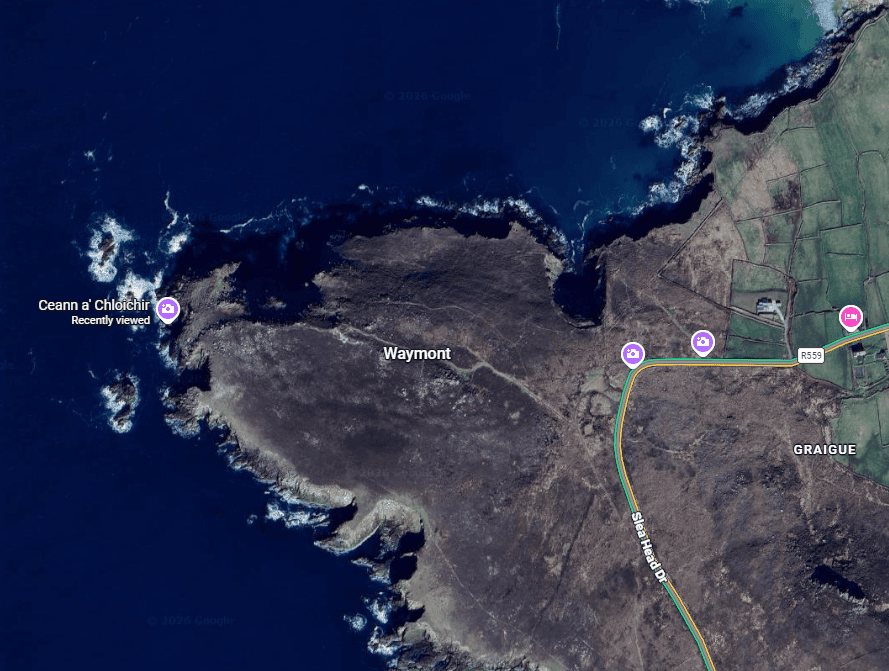
Latitude
52.150380
Longitude
-10.465797
Address
Clogher Head, An Ghráig, Dún Urlann, Dingle Peninsula, County Kerry
NEAREST TOWN OR VILLAGE
Ballyferriter
Road access
Via the R559 Slea Head Drive and a narrow local road approaching Clogher Head. Drive carefully and avoid blocking gateways or passing places.
Clogher Head is a place to slow down and take in the scale of West Kerry’s Atlantic coastline. Its open setting provides far-reaching views across Clogher Strand, Ceann Sibéal and the surrounding headlands of the western Dingle Peninsula.
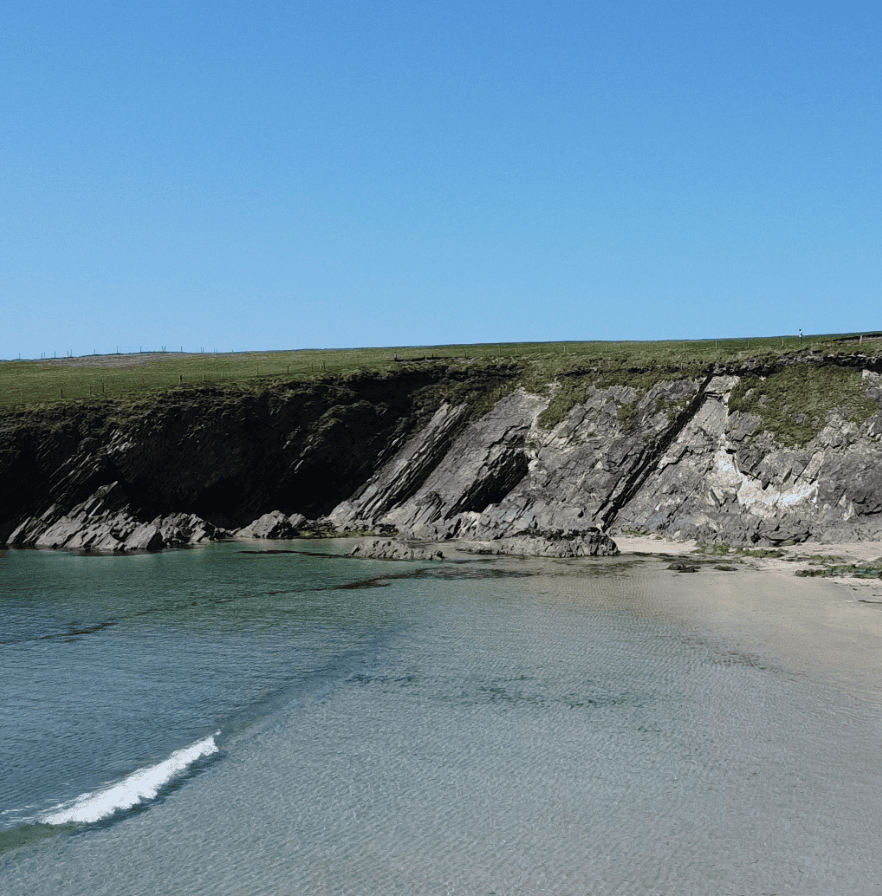
Walking the beach
Standing at Clogher Head, the dominant impression is one of exposure: open ocean, strong Atlantic weather and an uninterrupted coastal landscape shaped over millions of years.
Clogher Head extends into the Atlantic immediately south-west of Clogher Strand. From the surrounding viewpoints, the coastline opens towards Ceann Sibéal and the Three Sisters, with changing light and weather continually altering the appearance of the sea, cliffs and neighbouring headlands.
The landscape belongs to an ancient geological region formed from Silurian sedimentary and volcanic rocks. Nearby Clogher Strand contains siltstone with trace fossils created by organisms living in sea-floor mud hundreds of millions of years ago. These geological features help explain the rugged appearance and scientific interest of the wider Clogher landscape.
The headland also sits within a long-settled cultural landscape. Recorded archaeological features in the surrounding Clogher and Graigue townlands include a rath, a historic path, hut sites, a mound and a possible stone alignment. These features demonstrate the depth of human activity in the area, although Clogher Head itself should not be described as a confirmed ancient fort or settlement.
More recently, the headland became part of West Kerry’s screen history. The landscape appeared in productions connected with Ryan’s Daughter and Far and Away, with a temporary village constructed here for Far and Away. Visitors should remember that former film-set features are part of modern cultural history and should not be mistaken for ancient ruins.
Clogher Head is highly exposed to Atlantic wind and rapidly changing weather. Remain well back from cliff edges, wear secure footwear on wet or uneven ground, and do not enter fields or cross private land without clear permission.
Clogher Head is an informal coastal stop rather than a developed visitor attraction. Plan for exposed weather, limited roadside space and uneven ground, and always respect private property and working farmland.
Clogher Head is reached from the R559 Slea Head Drive through the Clogher and Ballyferriter area. The final approach follows a narrow local road where drivers should proceed slowly and be prepared to meet oncoming traffic.
Parking is limited and informal. Use a safe roadside space only where your vehicle is fully clear of traffic, gateways, farm entrances and passing places.
Allow time for a relaxed viewpoint and photography stop. A brief visit may be sufficient for the main coastal views, while additional time can be allowed for exploring established accessible areas.
The headland is directly exposed to Atlantic wind, rain and rapidly changing conditions. Check the forecast before visiting and be prepared for conditions to feel colder and windier than in nearby villages.
Wear secure footwear with good grip, particularly after rain. Keep well back from cliff edges and supervise children closely on exposed or uneven ground.
There are no dedicated visitor facilities at the headland. Roadside views may be enjoyed without crossing fields, but access across surrounding land should never be assumed where no clear public route is marked.
Clogher Head combines far-reaching Atlantic views with ancient geology, a rich surrounding archaeological landscape and a distinctive place in West Kerry’s film history.
Look across Clogher Strand towards the dramatic outline of Ceann Sibéal. This relationship between beach, headland and mountain forms one of the defining views of the Clogher coastline.
The exposed slopes and rocky coastline reveal the full force and scale of the North Atlantic. Changing weather, sea conditions and light ensure that the landscape rarely appears the same twice.
Clogher Head forms part of the western Dingle Peninsula’s Silurian geological terrain. Nearby rocks at Clogher Strand contain trace fossils left by small organisms living in ancient sea-floor mud.
Clogher Head and the surrounding landscape are associated with Ryan’s Daughter and Far and Away. A temporary village was constructed here for Far and Away, adding a modern cultural layer to this much older landscape.
The rugged appearance of Clogher Head reflects geological events that took place hundreds of millions of years ago. Its rocks belong to the complex Silurian formations of the western Dingle Peninsula, where sediments and volcanic materials accumulated as an ancient ocean gradually closed.
During the Silurian period, approximately 443 to 419 million years ago, the area that would become the Dingle Peninsula was affected by major geological activity connected with the closure of the ancient Iapetus Ocean. Sediments accumulated on the sea floor while volcanic activity produced ash, lava and other volcanic deposits.
Over immense periods of time, these materials were compressed, folded and uplifted. Later erosion and continuous exposure to Atlantic wind, rain and waves helped shape the headlands, cliffs and rocky coastal slopes visible around Clogher today.
Nearby Clogher Strand contains Silurian siltstone with Chondrites trace fossils. These branching patterns are not the fossilised bodies of animals but preserved burrow systems created by small organisms moving through soft sediment on an ancient sea floor.
The landscape should not be described as recently volcanic or formed by a single event. What visitors see today is the result of ancient marine sedimentation, volcanic activity, tectonic movement and millions of years of weathering and erosion.
The rocks around the western Dingle Peninsula developed during the closure of the Iapetus Ocean, long before the Atlantic Ocean existed in its present form.
Clogher Head forms part of a complex landscape of ancient sedimentary and volcanic rocks dating from the Silurian period.
Nearby siltstone preserves Chondrites trace fossils created by organisms burrowing through sea-floor sediment hundreds of millions of years ago. Access to exposed rocks can depend on tide, weather and sea conditions.
Continue exploring Kerry’s landscapes, coast, mountains and remarkable places, with more locations worth discovering across the county.
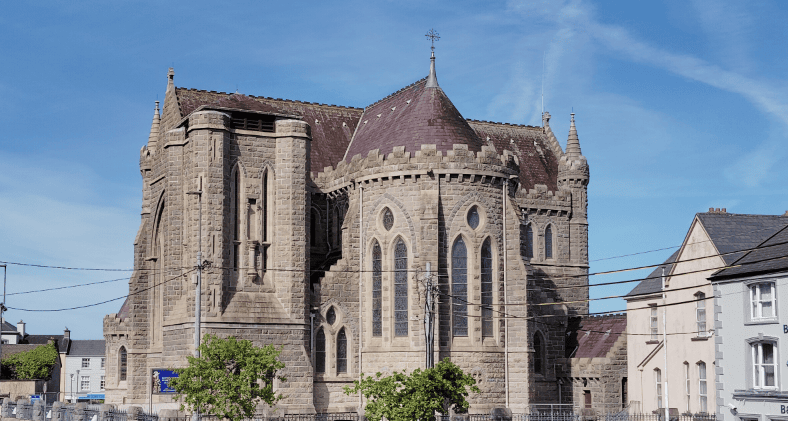
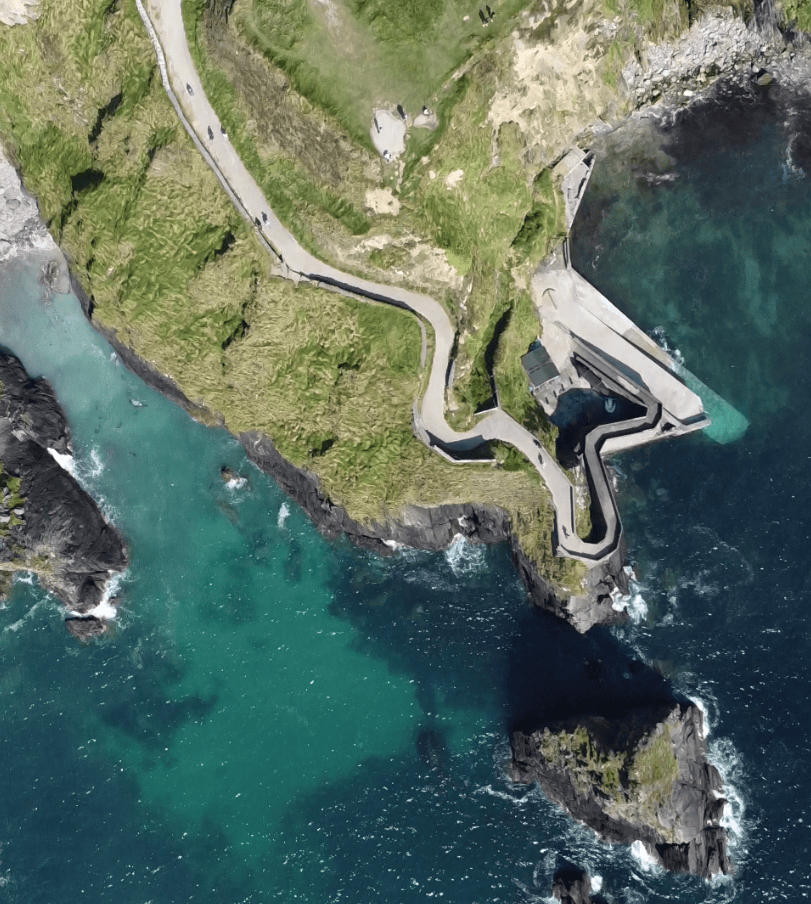
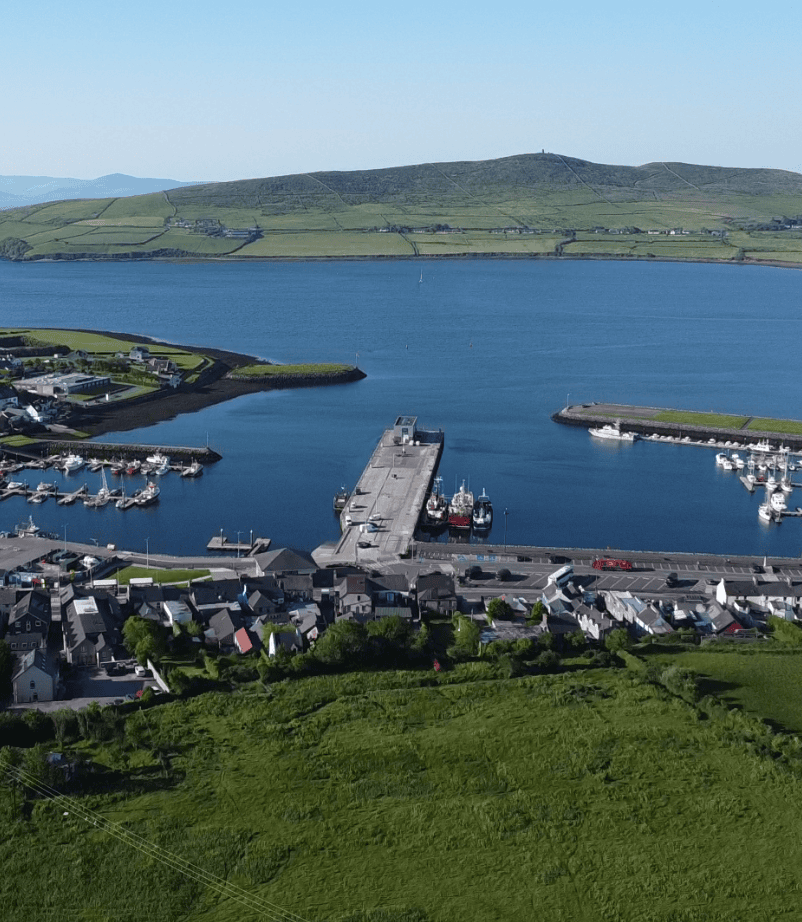
Clogher Head sits within the wider landscape of the Slea Head Drive, where Atlantic viewpoints, beaches, ancient sites and Gaeltacht villages come together along one of County Kerry’s most rewarding coastal routes.
If you would rather leave the driving behind, I offer private tours across the Dingle Peninsula and County Kerry. Each experience is designed for small private groups, with a relaxed pace, local knowledge and the flexibility to spend more time at the places that interest you most.
A relaxed three-hour private tour around Slea Head and the spectacular western coastline of the Dingle Peninsula.
Explore Slea Head, ancient heritage sites, coastal viewpoints and the landscapes of West Kerry on a private half-day experience.
Discover more of the Dingle Peninsula with a full day to explore its scenery, history, villages and lesser-known places.
Journey around the Iveragh Peninsula, combining the Ring of Kerry with the dramatic landscapes and Atlantic coastline of the Skellig Ring.
Explore Killarney National Park, its lakes, mountain viewpoints, waterfalls and some of the most beautiful landscapes in County Kerry.
Travel north from Kerry for a private day tour through the Burren to the spectacular Cliffs of Moher on Ireland’s Atlantic coast.
Create a private Kerry itinerary around the places, landscapes and experiences that matter most to you.
Loading availability…