Listowel
Discover Listowel
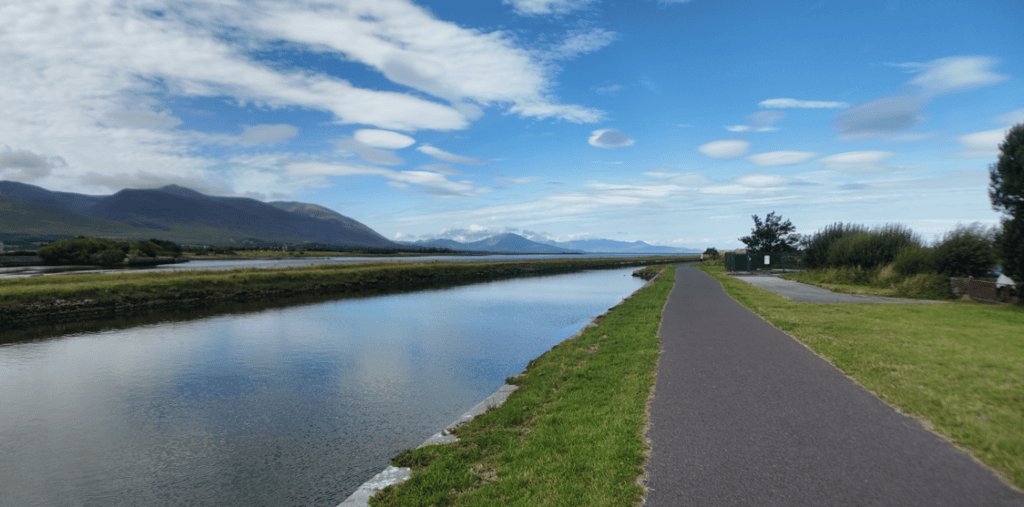
Listowel is the principal market and service town of North Kerry, set on the banks of the River Feale approximately 27 km north of Tralee. Its official Irish name, Lios Tuathail, is generally interpreted as meaning “Tuathal’s ringfort” or “Tuathal’s enclosure”, although the particular person or early enclosure behind the name has not been identified.
The town has an unusually strong combination of medieval heritage, traditional streetscapes and living cultural traditions. Listowel Castle rises above an historic crossing of the Feale, while the broad Square and surrounding commercial streets reflect the town’s later development as the economic and administrative centre of a productive agricultural hinterland.
For visitors today, Listowel is particularly associated with literature, theatre, storytelling and horse racing. Its connections with writers including John B. Keane and Bryan MacMahon are explored through museums, memorials and cultural venues, while Listowel Writers’ Week has reinforced a literary tradition that reaches well beyond the town itself. The River Feale, Listowel Racecourse and the surrounding North Kerry countryside add another dimension to a town whose character is distinctly different from Kerry’s better-known coastal and mountain destinations.
About Listowel
Listowel developed at a strategically important crossing of the River Feale, where the Fitzmaurice Lords of Kerry established their stronghold. The surviving Listowel Castle, probably built around 1400, still occupies an elevated position overlooking the river. In 1600, during the Nine Years War, it became the last Fitzmaurice bastion to resist the forces of Queen Elizabeth I, enduring a 28-day siege before its capture.
As the castle’s military importance declined, Listowel developed into the principal commercial and administrative centre of North Kerry. Fairs and markets brought livestock, agricultural produce and people into town from the surrounding countryside, while the Square, churches, courthouse, shops, banks, schools and other civic buildings gradually created the townscape visitors encounter today. Traditional shopfronts and nineteenth-century commercial buildings remain an important part of its character.
Transport brought another period of change. Conventional railway services connected Listowel with the wider North Kerry and Limerick network, but the town is particularly remembered for the extraordinary Listowel–Ballybunion Lartigue Monorail. Opened in 1888, its trains travelled on an elevated central rail and required a specialised balancing system for passengers and freight. The railway operated until 1924, and its story is now interpreted by the Lartigue Monorail and Museum.
Listowel’s modern identity is equally shaped by writing, storytelling and performance. John B. Keane and Bryan MacMahon are among the figures most closely associated with the town, while the wider North Kerry literary tradition includes writers and storytellers such as Maurice Walsh, Brendan Kennelly and Eamon Kelly. Kerry Writers’ Museum, St John’s Theatre and Arts Centre and Listowel Writers’ Week continue that cultural tradition, while the annual Harvest Festival at Listowel Racecourse brings another long-established strand of North Kerry social life into the heart of the town.
Top Experiences in Listowel
Listowel rewards exploring on foot, with many of its principal attractions concentrated around the Square and River Feale. Visitors can explore the medieval Listowel Castle, discover North Kerry’s literary tradition, experience the unusual story of the Lartigue Monorail, follow the riverside walk through Childers Park and the Garden of Europe, or simply spend time among the historic streets and traditional shopfronts that give the town much of its character.
HISTORY & HERITAGE
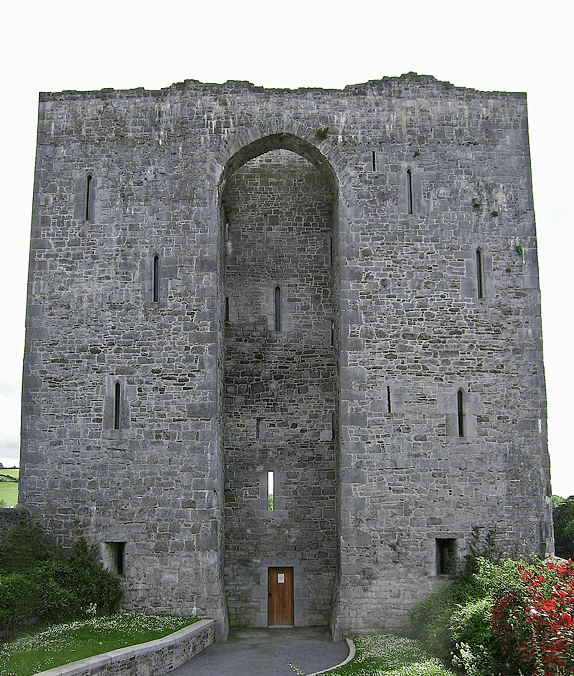
Listowel Castle
Standing above the River Feale beside the town centre, Listowel Castle is the most important surviving reminder of the medieval lordship that shaped the early development of the town. The present Fitzmaurice castle dates from around 1400 and preserves two of its original four square towers, joined by a high curtain wall and distinctive arch.
The castle played a significant role during the Nine Years War. In 1600, it was the last Fitzmaurice stronghold to resist Elizabethan forces and endured a 28-day siege before being captured by Sir Charles Wilmot. Today, guided visits provide an opportunity to explore the surviving structure and understand Listowel’s position within the changing political landscape of late-medieval and early-modern Munster.
From Medieval Stronghold to Literary Town
Listowel’s history begins with its position beside the River Feale. The Irish placename Lios Tuathail preserves the memory of an earlier ringfort or enclosure associated with a personal name, Tuathal, although neither the individual nor the original enclosure can now be identified with certainty. The later medieval settlement developed around an important river crossing controlled by the Fitzmaurice family, Lords of Kerry.
The surviving Listowel Castle was built or developed around 1400. Its commanding position above the historic crossing demonstrates why the site mattered strategically. The castle’s most dramatic recorded episode came in 1600 during the Nine Years War, when its garrison resisted the forces of Sir Charles Wilmot for 28 days. After the castle fell, the captured defenders were executed, marking the end of Listowel’s role as a major Fitzmaurice stronghold.
During the eighteenth and nineteenth centuries, the focus of the town shifted from military power to commerce and administration. Listowel grew into the principal market centre for a wide North Kerry hinterland. The Square, commercial streets, churches, civic buildings and traditional shopfronts reflect this period, while fairs and markets established the town as a regular meeting place for farming communities throughout the region.
The nineteenth century also brought rail transport. Alongside a conventional railway connection, Listowel became the terminus of one of Ireland’s most unusual transport experiments when the Listowel–Ballybunion Lartigue Monorail opened in 1888. It remained in operation until 1924 and is now interpreted through a heritage demonstration railway and museum.
During the twentieth century, Listowel’s literary identity became increasingly prominent. Writers including John B. Keane and Bryan MacMahon drew extensively on the speech, characters and social life of North Kerry. Listowel Writers’ Week was founded in 1970, with the first festival taking place in 1971, helping establish the town as a nationally important gathering place for writers, readers and performers. Together with theatre, storytelling and the continuing traditions surrounding Listowel Races, this cultural life remains central to the town’s identity today.
EARLY LISTOWEL
The Irish name Lios Tuathail preserves an association with a ringfort or enclosure and the personal name Tuathal. The precise enclosure behind the placename has not been identified, but the name points towards a landscape with roots considerably earlier than the surviving medieval castle.
FITZMAURICE STRONGHOLD
The surviving Listowel Castle was built or developed around 1400 by the Fitzmaurice family, Lords of Kerry. In 1600 it became their last major stronghold against Elizabethan forces, resisting a 28-day siege before its capture by Sir Charles Wilmot.
MARKET TOWN
Listowel expanded into the principal commercial and administrative centre of North Kerry. Markets and fairs drew people from the surrounding agricultural hinterland, while churches, civic buildings, shops and commercial streets established much of the historic townscape that survives today.
AGE OF THE RAILWAYS
Railways connected Listowel with the wider North Kerry and Limerick network. In 1888 the remarkable Listowel–Ballybunion Lartigue Monorail opened, using an elevated central rail and specialised rolling stock. The monorail operated until 1924 and remains one of the town’s most distinctive transport stories.
LITERARY LISTOWEL
Listowel Writers’ Week was founded in 1970 and held its first festival in 1971, building on an established North Kerry tradition of writing, theatre and storytelling. Together with Kerry Writers’ Museum and St John’s Theatre, it helped make literature a defining part of Listowel’s modern cultural identity.
Things to Do
From literary landmarks and historic streets to riverside walks, museums and family attractions, discover some of the best experiences and activities in and around Listowel.

Kerry Writers’ Museum
Lartigue Monorail and Museum
St John’s Theatre and Arts Centre
Kingdom of Kerry Greenway
History & Heritage
Explore the rich history through ancient monuments, medieval ruins, historic buildings and places that tell the story of generations who shaped this remarkable corner of County Kerry.
Listowel Castle
Shopping
Browse independent shops, local craft stores, galleries and speciality retailers offering everything from handmade gifts and artisan food to everyday essentials and unique souvenirs.

Where to Eat & Drink
Enjoy the flavours of Kerry with traditional pubs, cosy cafés, award-winning restaurants, artisan bakeries and local producers. Whether you’re looking for a quick coffee or an unforgettable meal, there’s something for every taste.

Lizzy’s Little Kitchen
Lynch’s Bakery and Coffee Shop
Behan’s Horseshoe Bar and Restaurant
John B. Keane’s Pub
Listowel Arms Hotel Restaurant
Christy’s Bar “The Well”
Where to Stay
Discover carefully selected hotels, guesthouses, B&Bs, self-catering cottages and unique places to stay. Whether you’re planning a short break or a longer holiday, you’ll find accommodation to suit every style and budget.

Listowel Arms Hotel
Behan’s Horseshoe Accommodation
North County House
Discover More Towns & Villages
Explore more of County Kerry’s towns and villages, from colourful coastal communities and historic market towns to welcoming bases for discovering the county’s landscapes, culture and heritage.
ATLANTIC VILLAGE & COASTAL RETREAT
HERITAGE TOWN & SCENIC BASE