Glenbeigh
Discover Glenbeigh
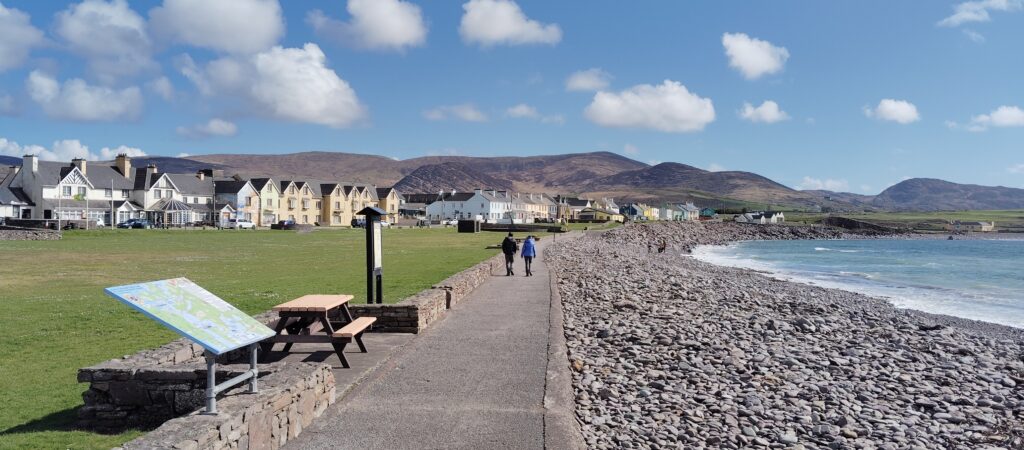
Glenbeigh is a small village on the northern side of the Iveragh Peninsula, set directly on the N70 Ring of Kerry road between Killorglin and Cahersiveen. Its Irish name, Gleann Beithe, combines the words for glen and birch, while the River Behy runs along the western side of the settlement towards Rossbeigh Creek and Castlemaine Harbour.
The village sits where the mountains of northern Iveragh descend towards the coast, giving Glenbeigh a character shaped equally by upland and maritime landscapes. Seefin and the surrounding hills rise behind the village, while Rossbeigh Strand lies approximately 4 km to the north-west. The beach is a separate place rather than part of the village itself, but its dunes, long strand and setting on Dingle Bay are closely connected with Glenbeigh’s visitor identity.
For travellers following the Ring of Kerry, Glenbeigh is more than a roadside stop. The Kerry Way passes through the village, the developing South Kerry Greenway begins here, and nearby landscapes include Rossbeigh, Caragh Lake, Dooks and Mountain Stage. Together with the village’s nineteenth-century streetscape and the striking ruins of Glenbeigh Towers, these connections make Glenbeigh a useful base for exploring northern Iveragh.
About Glenbeigh
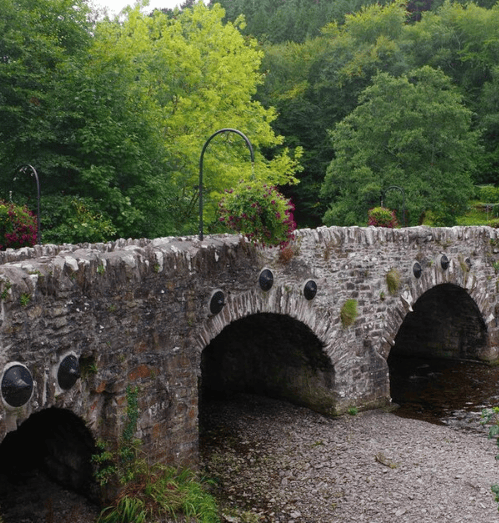
Glenbeigh is principally a nineteenth-century village, developing as a linear settlement along the road that now forms part of the N70. Traditional two-storey buildings, old red sandstone masonry and historic structures still contribute to the character of its main street. Although prehistoric monuments are recorded across the wider parish, there are no recorded archaeological monuments within the defined village settlement itself, making the distinction between Glenbeigh and its much older surrounding landscape important.
One of the strongest influences on the village’s history was the Wynn estate. Glenbeigh Towers, also known as Wynn’s Castle or Headley Towers, was constructed between 1867 and 1871 as a large Medieval Revival country house. Its ruins remain prominent above the village, but the building also represents a difficult period in local social history. During the Land War, evictions on the Wynn estate attracted parliamentary attention and national and international press coverage, leaving a lasting association between Glenbeigh and the land struggles of the late nineteenth century.
Transport also played an important part in the village’s development. Glenbeigh railway station opened in 1893 on the Farranfore–Valentia Harbour line, connecting the area more directly with the rest of Kerry until the railway closed in 1960. Part of that former railway corridor is now being given a new purpose through the South Kerry Greenway, with Glenbeigh serving as its eastern trailhead.
Today, Glenbeigh combines its role as a local village with a strong connection to walking, cycling and the surrounding landscape. The Kerry Way passes through the settlement, Rossbeigh provides its principal coastal connection, and the mountains, lakes and valleys of northern Iveragh lie close by. Its scale is modest, but Glenbeigh occupies an important position between the Ring of Kerry’s mountain interior and the shores of Dingle Bay.
Top Experiences in Glenbeigh
Glenbeigh is particularly well placed for visitors who want to combine landscape, walking and local history. Explore the village and its nineteenth-century heritage, follow the Kerry Way or an open section of the South Kerry Greenway, discover the story of Glenbeigh Towers, or travel out towards Rossbeigh Strand and the wider coastal landscape of Dingle Bay.
HISTORY & HERITAGE
Glenbeigh Towers
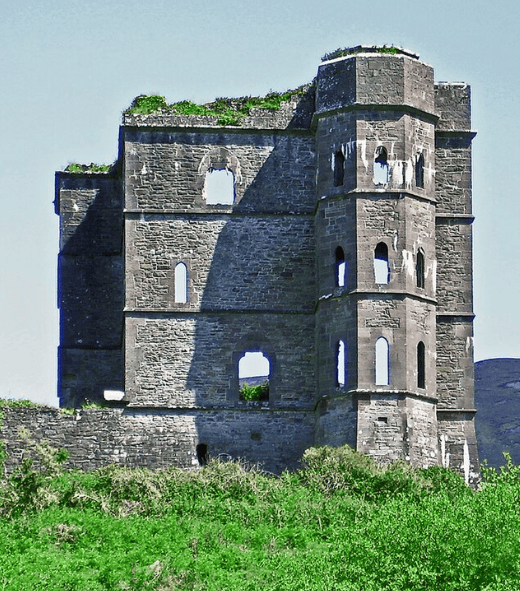
Standing on elevated ground outside the village, Glenbeigh Towers is one of Glenbeigh’s most distinctive landmarks. Also known as Wynn’s Castle or Headley Towers, the building was constructed between 1867 and 1871 as a large Medieval Revival country house associated with the Wynn estate.
Its ruined outline is an impressive feature of the landscape, but the significance of Glenbeigh Towers extends beyond its architecture. The estate became closely associated with the Glenbeigh evictions during the Land War, when disputes between landlord and tenants attracted parliamentary debate and widespread press attention. Viewed within this wider history, the Towers provide an important connection between the landscape visitors see today and the social upheaval experienced in nineteenth-century rural Ireland.
From Estate Village to Railway and Greenway
The wider Glenbeigh parish has a much longer human history than the present village. Prehistoric rock art, standing stones, ringforts and other monuments survive across the surrounding countryside, although no recorded archaeological monuments currently lie within the defined village settlement boundary itself. Glenbeigh’s present-day streetscape is principally the result of later road and estate development during the eighteenth and nineteenth centuries.
The nineteenth century left the strongest historical imprint. Glenbeigh Towers was built between 1867 and 1871 for the Wynn family, while St James’s Catholic Church dates from around 1880. During the Land War, the Wynn estate became the focus of a major eviction controversy. Parliamentary debate in 1887 recorded 31 eviction cases involving 45 tenants in the operation under discussion, while contemporary reporting brought the events at Glenbeigh to a much wider audience. The surviving Towers remain a visible reminder of that period, although the history of the evictions is more complex than some later accounts suggest.
Another transformation arrived with the railway in 1893, when Glenbeigh station opened on the branch extending towards Valentia Harbour. The line served the area until 1960 and helped connect western Iveragh with the wider rail network. More than sixty years after its closure, the old railway corridor is once again influencing how people travel through Glenbeigh. Sections have been incorporated into the developing South Kerry Greenway, creating a new walking and cycling connection while preserving an important part of the village’s transport landscape.

EARLY LANDSCAPE
Rock art, standing stones, ringforts and other monuments demonstrate a long history of settlement across the wider Glenbeigh parish. The present village itself developed much later, and no recorded archaeological monuments currently lie within its defined settlement boundary.

ESTATE & VILLAGE
Road and estate development helped shape Glenbeigh into the linear village seen today. Traditional two-storey buildings and local red sandstone became characteristic features of the streetscape, while the surrounding estate landscape strongly influenced local life.

LAND WAR
Glenbeigh Towers was built between 1867 and 1871 as a Medieval Revival mansion for the Wynn family. During the 1880s, disputes and evictions on the Wynn estate became part of the wider Land War and attracted parliamentary and press attention.

RAILWAY ERA
Glenbeigh railway station opened in September 1893 on the Farranfore–Valentia Harbour branch. For more than six decades the railway carried passengers, goods and livestock through western Iveragh before the line and station closed in February 1960.
TRAILS & GREENWAY
Tourism increasingly connected Glenbeigh with Rossbeigh Strand, the Kerry Way and the wider Ring of Kerry. The former railway corridor is now being repurposed through the South Kerry Greenway, giving the village a renewed role as a walking and cycling trailhead.
Things to Do
From coastal walks and cycling routes to historic landmarks, beaches and outdoor activities, discover some of the best experiences in and around Glenbeigh.

Rossbeigh Strand
Kerry Bog Village Museum
Rossbeigh Hill Loop Walk
Dooks Golf Links
History & Heritage
Explore the rich history through ancient monuments, medieval ruins, historic buildings and places that tell the story of generations who shaped this remarkable corner of County Kerry.

The Old Station House
Shopping
Browse independent shops, local craft stores, galleries and speciality retailers offering everything from handmade gifts and artisan food to everyday essentials and unique souvenirs.

Where to Eat & Drink
Enjoy the flavours of Kerry with traditional pubs, cosy cafés, award-winning restaurants, artisan bakeries and local producers. Whether you’re looking for a quick coffee or an unforgettable meal, there’s something for every taste.

Emilie’s Wood-Fired Kitchen
The Glenbeigh Hotel
Ashes Bar
Where to Stay
Discover carefully selected hotels, guesthouses, B&Bs, self-catering cottages and unique places to stay. Whether you’re planning a short break or a longer holiday, you’ll find accommodation to suit every style and budget.

The Glenbeigh Hotel
The Towers Hotel
Liosderrig House B&B
Mountain View B&B
Emir View House B&B
Discover More Towns & Villages
Explore more of County Kerry’s towns and villages, from colourful coastal communities and historic market towns to welcoming bases for discovering the county’s landscapes, culture and heritage.
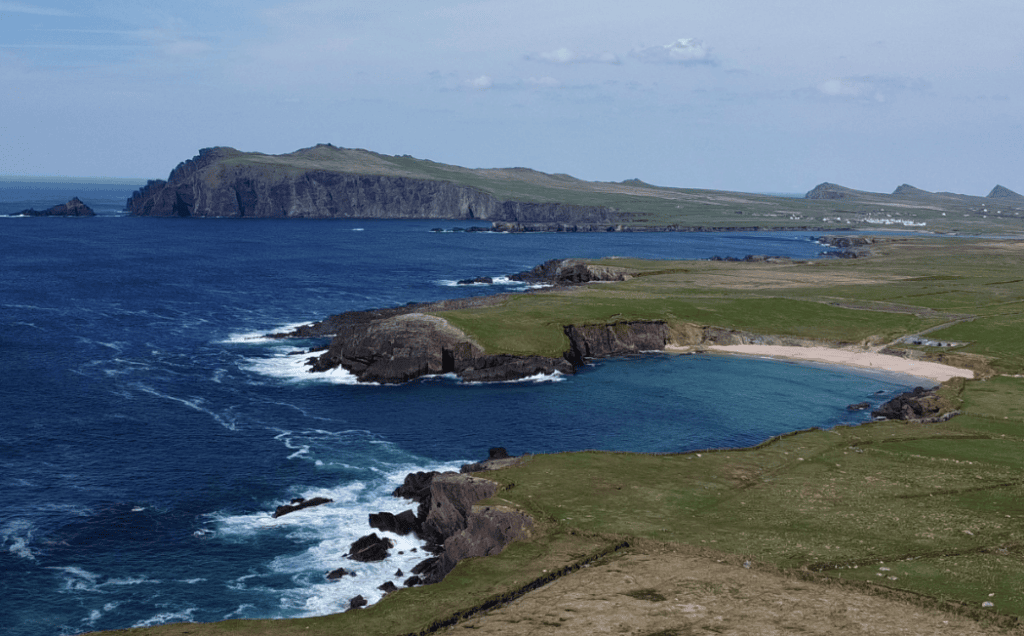
Atlantic Coast & Gaeltacht Heritage
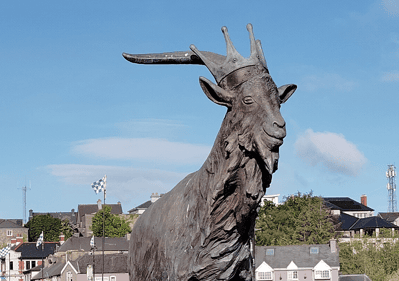
RIVERSIDE TOWN & RING OF KERRY