The Blasket Centre in Dún Chaoin tells the story of the Irish-speaking community who lived on the Blasket Islands and created one of the most remarkable bodies of autobiographical literature in twentieth-century Ireland.
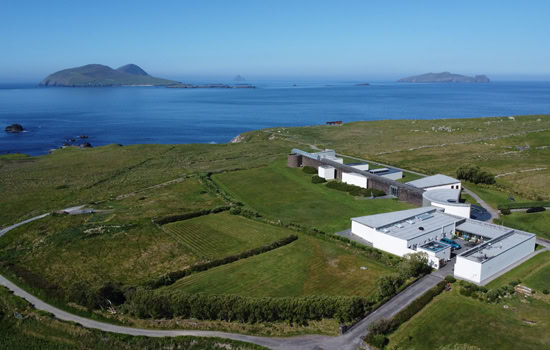
Known in Irish as Ionad an Bhlascaoid Mhóir, the Centre stands on the mainland opposite Great Blasket Island at the western end of the Dingle Peninsula. Its exhibitions explore island life, language, emigration, folklore and literature through objects, photographs, recordings, archive material and audiovisual displays.
The setting is important. After learning about the islanders inside, you can step outside and look directly across the water towards the place where their community once lived.
For anyone trying to understand the culture of the western Dingle Peninsula rather than simply see its scenery, the Blasket Centre is one of the most valuable places to spend time.
What Is the Blasket Centre?
The Blasket Centre is a heritage museum and cultural centre in Dún Chaoin, on the western tip of the Dingle Peninsula.
It is dedicated to the history and cultural legacy of the people who lived on the Blasket Islands, particularly Great Blasket Island, until the remaining community left in 1953.
The Centre explores much more than the physical hardships of island life.
It preserves a story involving the Irish language, fishing, farming, emigration, oral tradition and an extraordinary group of island writers whose accounts of everyday life became important works of Irish literature.
Today the Centre is operated as part of Ireland’s heritage network and combines museum exhibitions with archive material, research resources, a bookshop, visitor facilities and views towards the Blasket archipelago.
Life on Great Blasket Island
Great Blasket lies several kilometres off the western end of the Dingle Peninsula.
For generations, families lived there without the roads, electricity and modern infrastructure most visitors now take for granted.
The sea connected the community with the mainland but also isolated it.
Islanders depended on fishing, small-scale farming and the resources available around them, while journeys between the island and mainland were dictated by Atlantic weather and sea conditions.
Life was demanding, but it was also socially and culturally rich.
Irish was the everyday language of the island, and storytelling, song, folklore and oral history formed part of community life long before the islanders’ experiences began appearing in books.
That language and storytelling tradition eventually gave the Blaskets a cultural significance far beyond their size. The guide to the history and culture of the Blasket Islands explores the community and its legacy in greater detail.
Why Was Great Blasket Island Evacuated?
The island’s population had been declining for decades before the final evacuation in 1953.
Emigration played a major part.
Many younger islanders left for the United States or mainland Ireland, reducing the number of people available to sustain the community.
Isolation also became increasingly difficult as the population declined. Access to medical care and essential services was complicated by the island’s exposed location, particularly during poor weather.
By the early 1950s, maintaining a viable permanent settlement had become increasingly difficult.
In November 1953, the remaining residents left Great Blasket and resettled on the mainland.
The island has had no permanent community since.
The Extraordinary Blasket Literary Tradition
What makes the Blasket story particularly unusual is the literature produced by people who had grown up within a small, remote, Irish-speaking island community.
During the late nineteenth and early twentieth centuries, scholars interested in the Irish language and folklore began travelling to the Blaskets.
They encountered people whose knowledge of Irish, oral tradition and everyday island life offered an extraordinary record of a culture that was already changing.
Some islanders were encouraged to write or dictate their own life stories.
The resulting books preserved ordinary experiences that historical records often overlook: childhood, fishing, storms, courtship, wakes, emigration, hunger, humour and the relationships between neighbouring families.
These were not outsiders describing the islanders.
Increasingly, the islanders were describing themselves.
Tomás Ó Criomhthain
Tomás Ó Criomhthain was born on Great Blasket in the nineteenth century and became one of its most important writers.
His best-known work, An tOileánach, translated as The Islandman, records life within the island community from the perspective of someone who had spent his life there.
The book is important precisely because of its ordinary detail.
Fishing trips, family relationships, weather, work and local customs create a record of a way of life that was already disappearing when the work was written.
Ó Criomhthain’s famous desire was that some record of island life should remain so that people in the future would understand what that community had been like.
The Blasket Centre is, in many ways, part of the fulfilment of that wish.
Peig Sayers
Peig Sayers became one of the best-known storytellers associated with the Blaskets.
Born on the mainland at Vicarstown near Dún Chaoin, she married Pádraig Ó Guithín and moved to Great Blasket, where she spent much of her adult life.
Her autobiography, Peig, became familiar to generations of Irish schoolchildren, although that association can sometimes overshadow her broader importance.
Peig was an accomplished oral storyteller.
Scholars recorded a substantial body of folklore, stories, songs and traditions from her, preserving material that might otherwise have disappeared.
Understanding Peig as part of an oral storytelling culture rather than simply as the author of a school text gives a much better sense of her significance.
Muiris Ó Súilleabháin
Muiris Ó Súilleabháin was born on Great Blasket in 1904.
His autobiography, Fiche Bliain ag Fás, translated as Twenty Years A-Growing, describes his childhood and youth on the island.
His perspective differs from that of Ó Criomhthain.
Where The Islandman records the reflections of an older islander, Twenty Years A-Growing captures much of the energy, friendship and experience of growing up within the community during the early twentieth century.
Together, these works allow readers to encounter the Blaskets through different generations and different voices.
What Will You See at the Blasket Centre?
The Centre underwent a major redevelopment, reopening with renewed exhibitions in 2022.
The visitor experience now uses a combination of objects, photographs, archive material, artworks, audiovisual presentations and interactive displays to tell the story of the islands and their people.
Rather than presenting island history as a simple chronological timeline, the exhibitions help visitors understand different aspects of everyday life.
These include:
- family and community
- fishing and working at sea
- farming and domestic life
- Irish-language culture
- storytelling and folklore
- emigration
- the island writers
- the decline and eventual evacuation of the community
Allow time to read and listen.
This is an attraction that becomes considerably more rewarding when you do not rush through it.
Objects From Island Life
Some of the most interesting material in the Centre is extremely ordinary.
That is precisely why it matters.
The collections include objects connected with everyday island life, including a naomhóg, the traditional canvas-covered boat used around this coastline.
Other surviving material includes household and working objects, manuscripts and personal belongings associated with island families and writers.
One particularly valuable item is a handwritten song manuscript connected with Tomás Ó Criomhthain.
Objects such as these create a bridge between the written history and the physical lives behind it.
A fishing boat, manuscript or simple household object can sometimes explain more about the island than a page of dates.
Listening to the Voices of the Blaskets
The oral tradition of the islands was central to their culture, so recordings and audiovisual material are particularly important within the Centre.
Hearing Irish spoken in the dialect of Corca Dhuibhne gives visitors another way of understanding the community.
The books associated with the Blaskets are now available in translation and have reached readers around the world.
But the original language matters.
These stories emerged from an Irish-speaking community, and much of their rhythm, humour and cultural meaning belongs to that linguistic world.
The Blasket Archive
The Centre also has a role beyond ordinary visitor interpretation.
Its archive preserves material relating to the island communities, including manuscripts, first editions, newspaper material, genealogical information, folklore and other historical records.
That makes Ionad an Bhlascaoid more than a museum about an abandoned island.
It is also a centre for preserving and researching the cultural record of the Blaskets.
For descendants of island families and researchers interested in the community, that archival role is particularly important.
Looking Across to Great Blasket Island
One of the most powerful aspects of visiting the Centre is simply looking outside.
Great Blasket is visible across the water.
The island is not an abstract historical location represented by maps and photographs.
It is physically present in front of you.
This changes the experience.
After reading about families crossing the sound in naomhóga, children growing up on the island or residents leaving for the final time, you can look across towards the slopes and shoreline where those events took place.
The geography connects the museum to the story.
The Clifftop Viewing Platform
The redeveloped Centre includes an accessible clifftop viewing area overlooking the Atlantic and the Blasket archipelago.
If visibility is good, allow time here rather than leaving immediately after the exhibitions.
The view helps explain the physical separation between the mainland and island.
On a calm summer day, that stretch of water may not appear particularly intimidating.
In Atlantic storms or heavy swell, it becomes much easier to understand why isolation affected almost every aspect of life on Great Blasket.
Nearby Coumeenoole Beach provides another mainland perspective on the Blaskets and the exposed Atlantic coastline.
How Long Should You Allow at the Blasket Centre?
For most visitors, I recommend allowing around 90 minutes.
That gives you enough time to explore the exhibitions properly, listen to some of the audiovisual material and spend time looking towards the island.
If you are particularly interested in Irish history, literature or the Irish language, you could easily stay longer.
Visitors who simply walk through the exhibits quickly will miss much of what makes the Centre worthwhile.
Guided Tours
Guided visits are available and normally take approximately one hour.
If you have a strong interest in the Blasket story, a guided visit can help connect individual objects and exhibits to the wider history of the community.
Check directly with the Centre for current tour arrangements before visiting.
Tickets and Opening Hours
For the 2026 visitor season, the Blasket Centre currently lists opening from 6 March until 8 November, from 10am to 6pm, with last admission at 5.15pm.
Current admission is:
- Adult: €5
- Student: €3
- Family: €13
- Children under 12: free
Heritage Cards are accepted.
Opening dates, times and admission charges can change, so check the official Blasket Centre information before travelling.
Accessibility
The Blasket Centre is one of the more accessible heritage attractions on the Dingle Peninsula.
Current facilities include:
- full wheelchair access
- designated accessible parking
- accessible toilets
- an accessible clifftop viewing platform
This makes the mainland Centre a particularly useful way to engage with the Blasket story for visitors who would find the physical demands of travelling to Great Blasket Island difficult.
Café and Visitor Facilities
The Centre has an on-site café and restaurant, An tIascaire, as well as toilets and a bookshop.
The bookshop is particularly relevant here.
If the exhibitions leave you wanting to understand the islanders in their own words, consider continuing with one of the major Blasket books rather than treating the museum as the end of the story.
The Islandman, Twenty Years A-Growing and works associated with Peig Sayers provide a much deeper connection with the voices introduced inside the Centre.
The Blasket Centre or Great Blasket Island?
This is one of the most important distinctions for visitors.
The Blasket Centre and Great Blasket Island are not the same attraction.
The Centre is on the mainland at Dún Chaoin.
It offers exhibitions, archives, visitor facilities, accessible viewing areas and interpretation of the islands’ history.
Visiting Great Blasket Island requires a separate boat journey with a private ferry operator.
The two experiences complement each other, but they are very different.
Choose the Blasket Centre If:
- you want to understand the island’s history, literature and culture
- you have limited time
- the weather prevents an island crossing
- you require accessible facilities
- you want an introduction before visiting the island itself
Choose Great Blasket Island If:
- you want to physically explore the former settlement and island landscape
- you are comfortable with boat travel and uneven terrain
- you have enough time for a longer excursion
- sailing conditions allow
If your schedule permits, experiencing both gives the fullest understanding.
But if you can only choose one and cultural history is your priority, I would visit the Centre.
Visiting Great Blasket Island
Boat services to Great Blasket are privately operated and separate from the Blasket Centre.
They generally operate during the visitor season and are highly dependent on sea and weather conditions.
There is no conventional harbour or jetty on the island, and landing arrangements can involve transferring from a larger vessel to a smaller inflatable boat.
The island itself also involves uneven ground and considerably fewer facilities than the mainland Centre.
Do not assume that because the Centre is open, boats will be sailing.
Always check directly with ferry operators.
Is the Blasket Centre Good for Children?
Yes, although how much children enjoy it will depend on their age and interest.
The interactive exhibitions, films, recordings, objects and views towards the island can make the story easier to understand than a conventional museum consisting mainly of text panels.
Older children who enjoy stories, history or imagining how people lived without modern conveniences may find it particularly interesting.
For younger children, I would keep the visit moving and focus on boats, island life, objects and the view outside rather than expecting them to absorb every literary detail.
The Irish Language and the Blasket Story
The Blasket story cannot really be separated from the Irish language.
The islands belonged to the wider cultural landscape of Corca Dhuibhne, one of Ireland’s important Gaeltacht regions.
Irish was the everyday language of the islanders.
It was also one reason scholars travelled to the Blaskets during the nineteenth and twentieth centuries: they wanted to learn from native speakers and record language and folklore.
The famous Blasket books were originally created within that Irish-speaking world.
That matters.
Translations allow readers everywhere to encounter the stories, but the literature began as the expression of a living Irish-language community.
Dún Chaoin and the western peninsula remain part of that Gaeltacht landscape today.
Why the Blasket Centre Matters
The Centre’s importance is not simply that it remembers an abandoned island.
It preserves the voices of ordinary people whose lives might otherwise have survived only through outside descriptions and official records.
Instead, people such as Tomás Ó Criomhthain, Peig Sayers and Muiris Ó Súilleabháin left accounts from inside the community.
Their writing recorded work, family, humour, loss, language, emigration and everyday life during a period of enormous change in Ireland.
The Centre connects those voices with manuscripts, objects, recordings and the landscape itself.
That is what makes it worth visiting.
Is the Blasket Centre Worth Visiting?
Yes—particularly if you are interested in Irish history, literature, language or the culture of the Dingle Peninsula.
I would also recommend it to visitors making the Slea Head journey who want to understand what lies behind the scenery.
Without context, the Blasket Islands can become another photograph.
After visiting the Centre, they become the former home of identifiable people, families, writers and storytellers.
That changes what you see when you look across the water.
If you only have a very short Slea Head visit and your main priority is scenery, you may prefer to remain outdoors.
But if you have enough time to give the western peninsula a full day, the Blasket Centre deserves serious consideration.
What Else Is Nearby?
The Centre fits naturally into a wider exploration of the western Dingle Peninsula.
Dún Chaoin
Spend some time exploring Dún Chaoin itself rather than treating it only as the location of the Centre.
The village and surrounding townlands form part of the living Gaeltacht community that gives the Blasket story its mainland context.
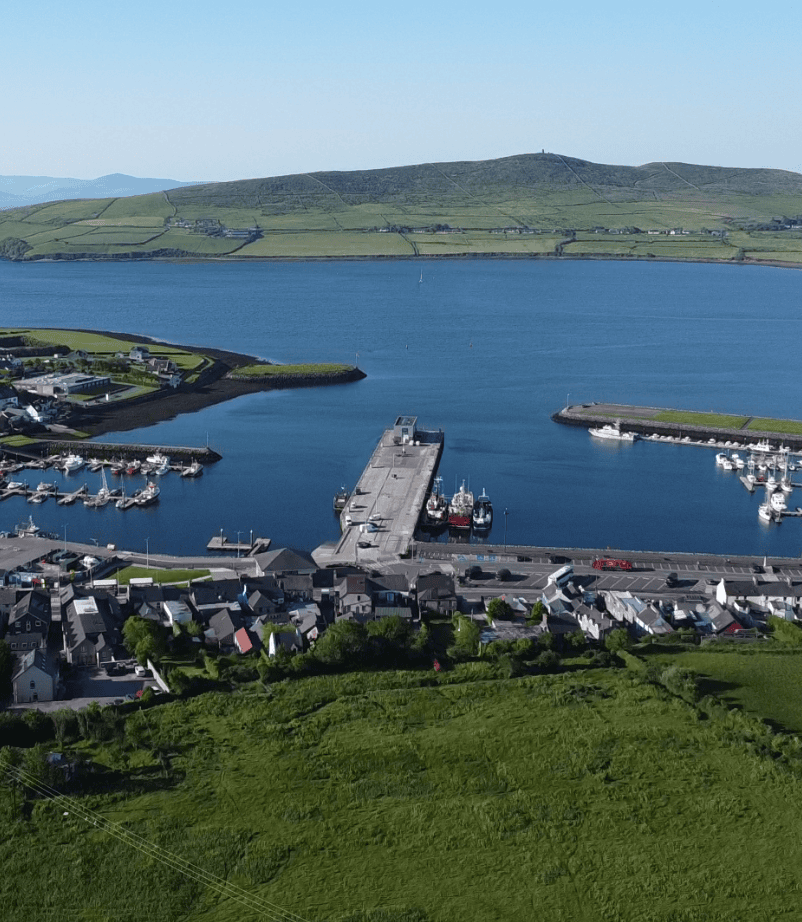
Dunquin Pier is nearby and provides one of the clearest physical connections between the mainland and the islands offshore.
Coumeenoole Beach
Coumeenoole lies nearby on the Slea Head route and provides one of the clearest views towards the Blasket Islands from the coastline.
Slea Head
Continue around Slea Head Drive to understand the wider geography of the peninsula and the relationship between mainland communities and the Atlantic.
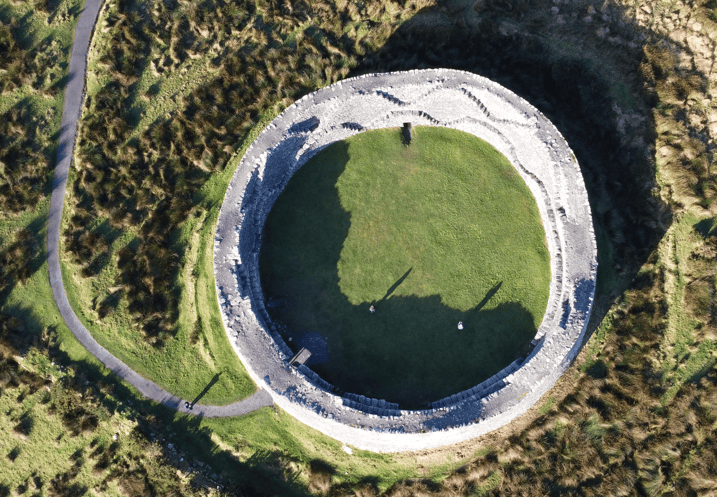
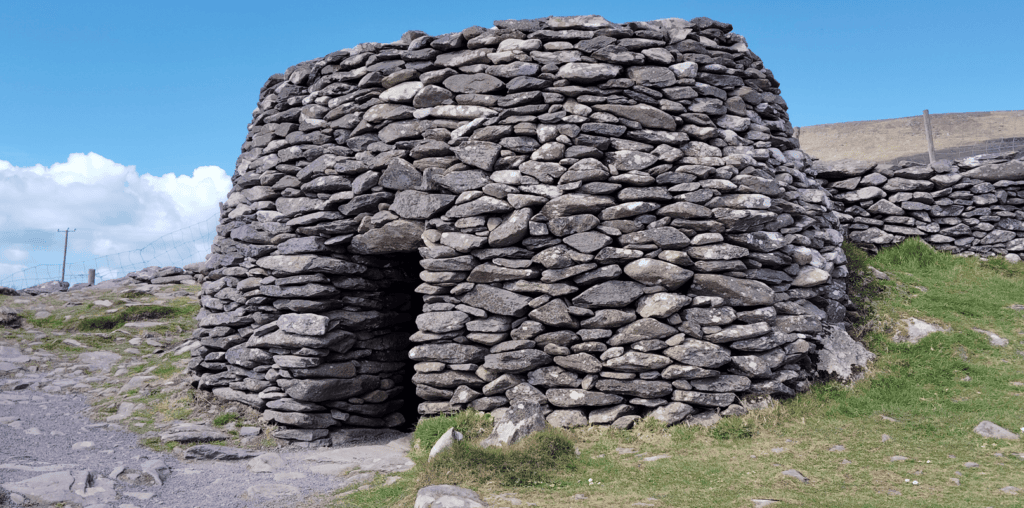
Travelling from Dingle, the route also passes places such as Ventry Beach, the Fahan Beehive Huts and Dún Beag Promontory Fort.
Ballyferriter and Clogher
Ballyferriter is another important centre within the Corca Dhuibhne Gaeltacht and makes a natural continuation of the journey.
Farther west, Clogher Strand and Clogher Head provide a different perspective on the peninsula’s exposed Atlantic coastline.
Gallarus Oratory and Kilmalkedar
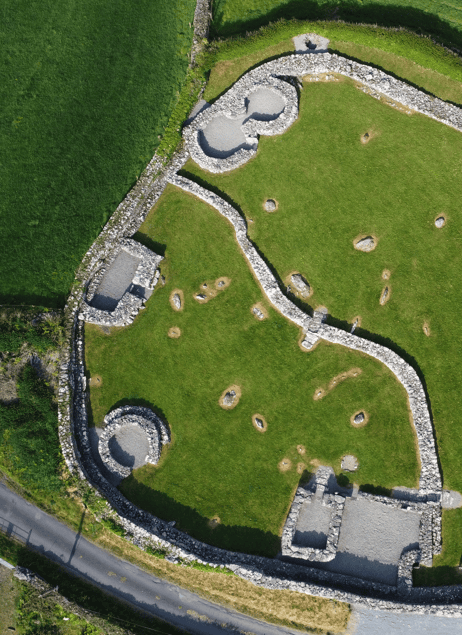
Farther around the peninsula, Gallarus Oratory and Kilmalkedar Church reveal a much earlier layer of West Kerry’s cultural landscape.
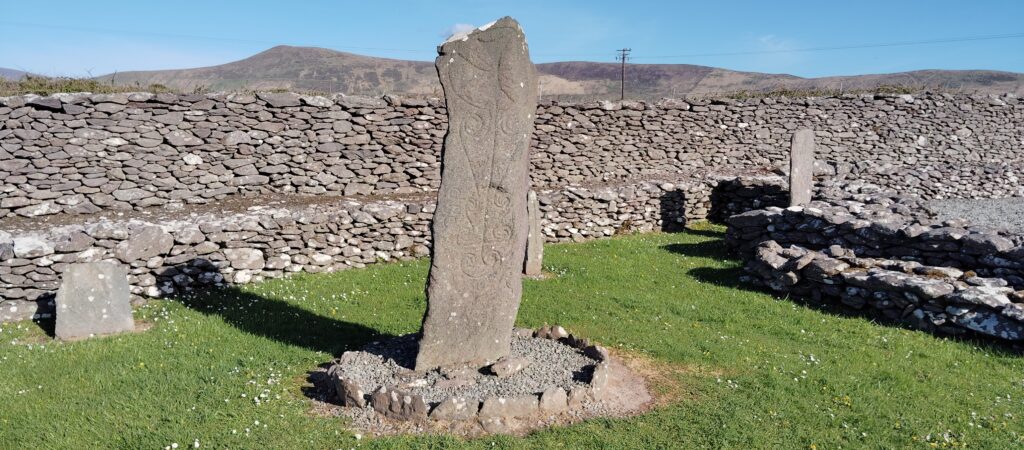
Riasc Monastic Settlement provides another valuable connection for visitors interested in early Christian history.
Taken together, the Blasket Centre, Gaeltacht communities and historical sites show that the western peninsula is not simply a scenic drive.
It is a landscape shaped by centuries of language, belief, work and human settlement.
Continue Exploring the Blasket Landscape
The Blasket Centre works best when it is connected with the surrounding landscape rather than treated as an isolated indoor attraction.
Before or after the visit, stop at the mainland viewpoints, look towards Great Blasket and notice how weather changes the apparent distance between the island and shore.
Visitors staying several days can use the three-day Dingle Peninsula itinerary to give the Blasket story enough time without rushing the other parts of the peninsula.
Those with only one day can use the guide to planning a perfect day in Dingle to choose a more selective route.
Steve’s Peninsula Tours’ private full-day Dingle Peninsula tour can include the Blasket Centre when seasonal opening, available time and the interests of the group make it appropriate.
Frequently Asked Questions About the Blasket Centre
Where is the Blasket Centre?
The Blasket Centre is in Dún Chaoin on the western Dingle Peninsula, overlooking Great Blasket Island and the Blasket archipelago.
What is the Blasket Centre about?
The Centre tells the story of the people who lived on the Blasket Islands, with particular emphasis on their everyday lives, Irish language, culture, folklore, emigration and literary tradition.
When was Great Blasket Island evacuated?
The remaining permanent residents left Great Blasket Island in 1953 after decades of population decline, emigration and increasing difficulties sustaining the isolated community.
Who were the main Blasket writers?
The best-known writers include Tomás Ó Criomhthain, author of The Islandman; Peig Sayers; and Muiris Ó Súilleabháin, author of Twenty Years A-Growing.
How long do you need at the Blasket Centre?
Around 90 minutes is a good allowance for most visitors. Allow longer if you have a strong interest in history, literature or the Irish language.
Is the Blasket Centre accessible?
Yes. The Centre currently provides full wheelchair access, accessible parking and toilets, and an accessible clifftop viewing platform.
Is there a café at the Blasket Centre?
Yes. The Centre currently has an on-site café and restaurant called An tIascaire.
Can you take a ferry to Great Blasket Island from the Centre?
The Centre does not operate the island ferries. Boat services are provided separately by private operators and are weather-dependent.
Can I visit the Centre without going to Great Blasket Island?
Absolutely. The Centre is a complete visitor attraction in its own right and is one of the best ways to understand the island community without travelling offshore.
Can you visit the Blasket Centre and Great Blasket Island on the same day?
Potentially, depending on ferry schedules, weather and the time available. Because an island trip can take a substantial part of the day, check current sailing times before trying to combine both.
Is Irish spoken at the Blasket Centre?
The Centre is located within the Corca Dhuibhne Gaeltacht, and Irish is central to its interpretation of the island community and literary tradition.
Is the Blasket Centre worth visiting on Slea Head Drive?
Yes, particularly if history, literature or Irish culture interests you. Allow enough time for the exhibitions rather than treating it as a quick roadside stop.